
Recruit and Retain Top Talent with a Software Engineer Fellowship

It’s 2026, and many companies are finding it tough to hire great people for their software teams. There’s a big need for skilled workers, especially for important jobs in software development and specialized roles like software quality engineer jobs. This is where a software engineer fellowship comes into play. It’s a special program designed to help grow new talent or make current employees even better.
A software engineer fellowship is a paid chance for people to develop their skills and make real contributions within a company for a set time, often a few months to a few years. It’s different from other ways companies bring in new talent. For example, an internship is usually shorter and more about students learning basic skills on the job under close guidance. Fellowships are often more competitive and for people who want to dive deeper into a specific area or project, making important contributions to the organization’s goals What’s the difference between a fellowship and an internship?.
Think of it this way: an apprenticeship is a mix of learning in a classroom and getting hands-on work experience to prepare you for a certain job, often with the idea you’ll stay on afterwards Apprenticeships, fellowships, co-ops and internships: the differences …. A fellowship, however, is often about helping someone pursue deeper knowledge or contribute to a specific mission or research goal Differences Between Internships, Fellowships & Apprenticeships: InternBaba. It’s more about professional growth and making meaningful impacts. Grad hiring, on the other hand, is simply hiring new graduates directly into entry-level jobs without a structured development program like a fellowship.
Today, enterprise leaders are looking at software engineer fellowships to close the gap between the skills people have and the skills their companies need.

These programs help companies develop new talent and keep good workers, especially in a fast-changing field like jobs software development. Leaders see fellowships as a smart way to get the right people with the right skills for their teams.
This article will help you understand more about these programs. We will give you a clear plan for how to look at, run, or work with software engineer fellowship programs effectively.
Want to stay informed about the latest tech trends affecting enterprise leaders? The AI Newsletter Worth Reading delivers clear daily AI updates right to your inbox.
Now that we know what a software engineer fellowship is, let’s look at the different kinds. These programs can be set up in many ways to help big companies meet their specific needs for skilled workers. Finding the right type helps businesses grow new talent and keep their teams strong.
Types of Fellowships: Models that Scale for Enterprise Needs
Companies today use a few main types of software engineer fellowship programs. Each one helps with a different goal.
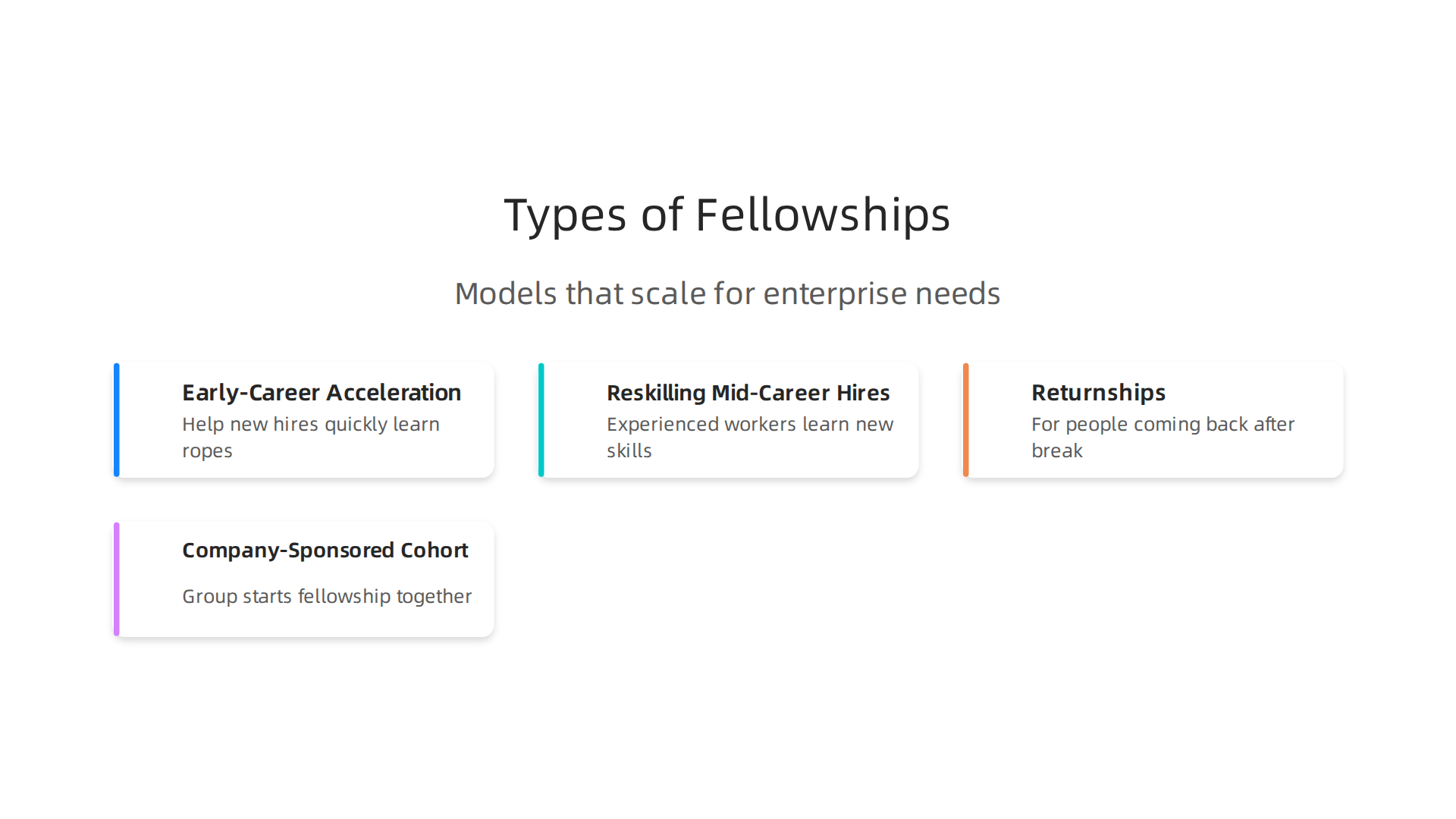
- Early-Career Acceleration: These fellowships are for people who are just starting out in their careers. They help new hires quickly learn the ropes and become productive members of the team. It’s a fast track to becoming a valuable software engineer.
- Reskilling for Mid-Career Hires: Sometimes, experienced workers want to learn new skills or move into a different tech area. A fellowship can help them switch from older ways of working to newer ones, like learning new programming languages or tools. This helps companies keep good employees and fill new jobs in software development.
- Returnships: These are special fellowships for people coming back to work after a long break. Maybe they took time off to raise a family or care for someone. Returnships help them get back up to speed with the latest technology and work practices.
- Company-Sponsored Cohort-Based Fellowships: Here, a group of people starts a fellowship together at the same company. They learn and grow as a team, often tackling projects that are important to the company’s goals. This way, the company can shape many new workers at once. Companies often define the purpose and expectations for fellows in these programs to ensure they meet organizational objectives Organizational Sponsor Checklist for Developing a Fellowship Program.
How Fellowships Are Built
To make a fellowship work well, companies think about a few key things:
- How Many People? This is called the cohort size. A bigger group might cost less per person, but it also needs more people to guide them.
- Learning Style: Do fellows mostly learn in a classroom setting with specialized courses, or do they learn by doing actual work on company projects? Many fellowships blend these, with some time for formal learning and a lot of hands-on practice guidelines for constructing proposing medical fellowship programs.
- How They Are Paid: Are fellows given a monthly stipend, or are they paid a full salary like other employees? How this is set up can change how people view the program.
- How Long It Lasts: Fellowships can be short, like a few months, or longer, sometimes lasting a year or more. The length depends on what the company wants the fellows to achieve.
Picking the Right Model: What Companies Think About
When choosing a fellowship model, companies face some choices. They need to think about:
- How Fast People Become Useful: How quickly will the fellows be able to work on important projects on their own? This is called speed-to-productivity.
- The Cost: Running a fellowship costs money. Companies need to balance the cost with the benefits they get from having highly skilled workers.
- Keeping Good People: Will the fellows stay with the company after their program ends? Keeping talented people is a big goal for any company, and fellowships can be a great way to build your engineering workforce from within. Learn more about IT talent 2026 and how to develop your staff.
After looking at different kinds of software engineer fellowship programs, the next step is to design one that truly helps a company’s engineering team. This means making sure the fellowship teaches the right skills and fits into how the company already works.
Designing a fellowship that meets enterprise engineering requirements
When a big company decides to start a software engineer fellowship, they need to think about how to build it well. It’s like building a strong house; you need a good plan and the right tools.
Key Parts of a Good Fellowship Design
A successful software engineer fellowship has a few important parts:
- What Skills to Learn (Competency Frameworks): Companies need to list the exact skills fellows should gain. These are like a checklist of what a successful software engineer needs to know and do in specific jobs, like those in software quality engineer roles. For example, a company might outline the skills needed for an AI engineer roadmap for 2026.
- Checking Progress (Assessment Gates): It’s important to check if fellows are learning properly. This can be done through small tests, project reviews, or other checkpoints along the way. Think of them as gates you pass through after showing you’ve learned something important. These gates help make sure everyone is on the right track, much like how companies set exit criteria for scaling AI agents in engineering to make sure they are ready for production use Scaling AI Agents in Engineering: From Pilot to Production.
- Help from Experienced People (Mentorship Structure): Fellows learn best when they have experienced engineers guiding them. A strong mentorship program pairs new fellows with older, wiser team members who can teach them and answer questions.
- Working on Real Stuff (Integration with Product Teams): Fellows should not just learn in a classroom. They should work on real company projects from day one. This helps them see how their learning applies and makes them useful to the company faster. This is also a key part of how companies master agile software development for enterprise technology leaders.
Matching Learning to Company Needs
The training in a software engineer fellowship must be closely tied to the company’s own technology. This means teaching about:
- Cloud Systems: How to use big online computer systems like AWS, Azure, or Google Cloud.
- APIs: How different software programs talk to each other.
- Security: Keeping company data and systems safe from hacks.
- Data Management: How to collect, store, and use large amounts of information. For instance, a fellowship might teach how to build a Snowflake data lake that works in 2026.
By focusing on these areas, fellows learn skills that are directly helpful for the company’s current and future work. This also helps companies plan for the 2026 AI jobs landscape.
How to Run the Fellowship Smoothly
Besides teaching, there are practical things to consider for a fellowship:
- Finding the Right People (Recruiting Pipelines): How will the company find good candidates for the fellowship? This might involve working with universities or using online job boards.
- Official Standing (Legal and Employment Status): Are fellows full-time employees, contractors, or something else? This affects pay, benefits, and legal matters.
- Checking Success (Performance Metrics): How will the company know if the fellowship is doing well? They need ways to measure if fellows are learning, becoming productive, and staying with the company. Using software can help manage these programs from start to finish, including tracking how participants perform. This is why many organizations use Fellowship Management Software to track progress.
By planning these parts carefully, a company can create a strong software engineer fellowship program. It helps new talent grow into skilled engineers who truly meet the company’s needs.
Are you looking for more insights into the fast-changing world of enterprise AI and technology?
Get clear daily AI updates from The AI Newsletter Worth Reading.
Once a company has built a strong software engineer fellowship program, the next big step is to know if it’s actually working. For big company leaders like CIOs and product managers, this means looking at special numbers called metrics and Key Performance Indicators, or KPIs. These numbers show how well the fellowship is doing and how it helps the company reach its goals.
Measuring success: metrics and KPIs that matter to CIOs and product leaders
Knowing if your software engineer fellowship is a success means keeping an eye on important details. It’s like checking the pulse of the program to make sure it’s healthy and strong.
Key Numbers to Watch for Your Fellowship
Here are some important numbers that help leaders see the real value of a software engineer fellowship:
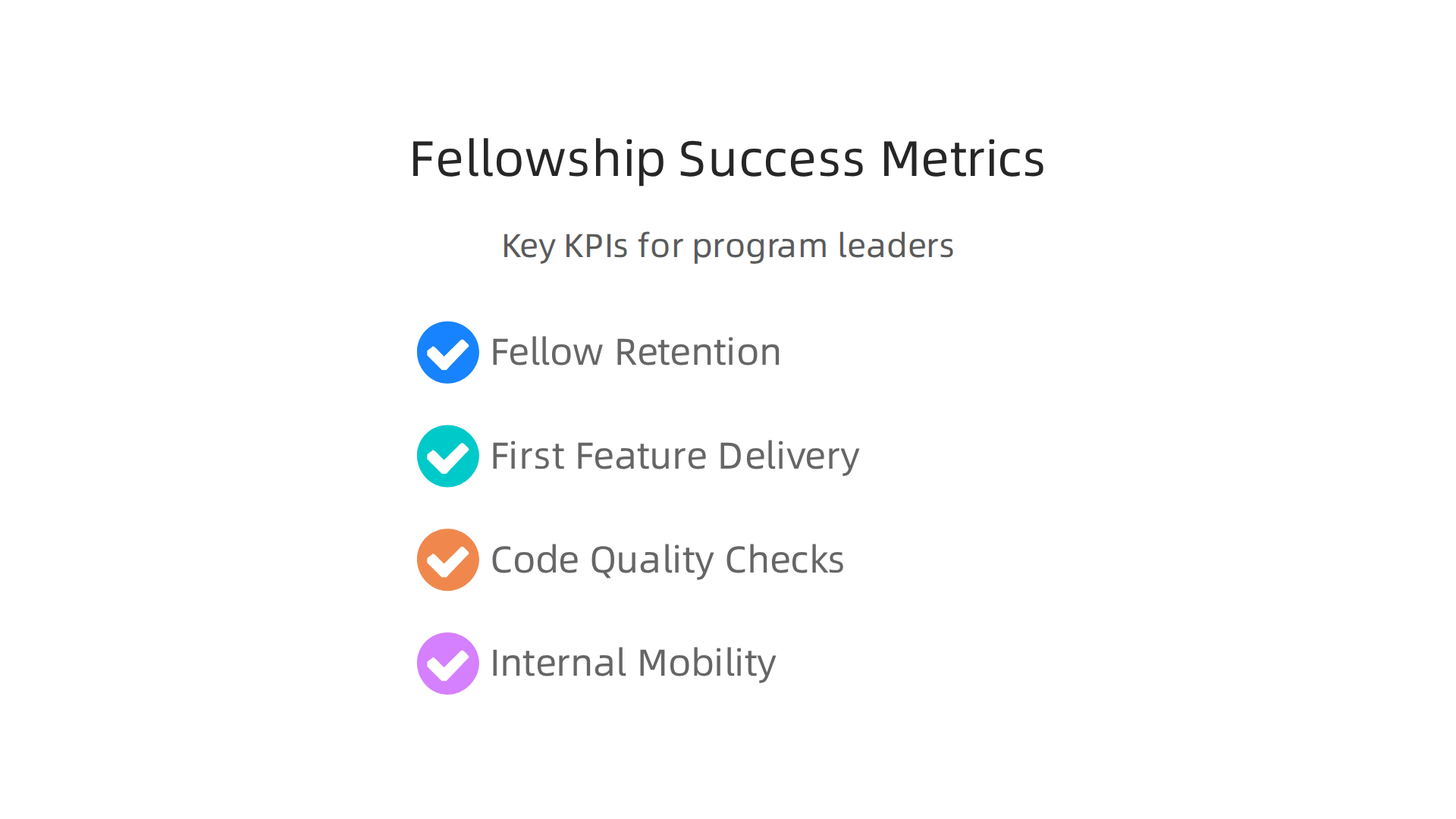
- How Long Fellows Stay (Retention): Companies want fellows to stay and grow with them. Tracking how many fellows are still with the company after 6 months, 1 year, or even 2 years shows if the program is good at keeping talent. Good retention means the fellowship helps people find great jobs in software development within the company. This kind of retention is a key HR metric for 2026, helping measure overall employee stability and happiness in new hires 25 Essential HR Metrics to Track in 2026.
- First Feature Delivery Time: How quickly can a fellow make their first real contribution to a project, like completing a small part of new software? This is called "time-to-first-feature." It shows how fast they learn and become useful to the product team. Experts often call this "time to productivity," measuring how long until a new hire makes their first meaningful impact Measure Onboarding Success: KPIs & Metrics.
- Code Quality Checks: When fellows write code, other experienced engineers review it. Looking at feedback from these reviews helps understand how well fellows are learning to write good, clean code. This is super important for roles like software quality engineer jobs.
- Moving into Important Roles (Internal Mobility): Does the fellowship help fellows move into critical product roles within the company after they finish the program? This shows that the fellowship is building future leaders and experts who can help the company make better products.
Measuring Without Too Much Extra Work
You don’t want to spend all your time just tracking numbers. Companies should try to collect this information easily, using tools they already have. For example, HR systems can track how long people stay, and project tools can track when a fellow delivers their first feature. The key is to make measuring a normal part of the program, not a big extra task.
Connecting Fellowship Success to Company Goals
The best part is showing how a successful software engineer fellowship helps the whole business. When you have good fellowship numbers, you can tell leaders things like:
- Saving Money on Hiring: If more fellows stay with the company, you don’t have to spend as much money looking for and hiring new people from outside. This lowers overall hiring costs.
- Faster Project Delivery: Fellows who quickly learn and contribute help product teams build new features and tools faster. This means the company can get new ideas and products to customers sooner, helping the business grow.
By tracking these important numbers, leaders can see that investing in a software engineer fellowship is a smart choice. It helps the company grow its own talent, save money, and build better software faster.
After seeing how a successful software engineer fellowship can help your company grow and save money, the next question is how to get one started. Companies have a few ways to build these important programs. You can either create one yourself, or you can get help from outside partners.
Partnership options: building vs. buying fellowship programs
Deciding how to set up your software engineer fellowship is a big choice. It’s like deciding if you want to bake a cake from scratch or buy one from a bakery. Each way has its good points and not-so-good points.
1. Building Your Own Fellowship (In-House)
This means your company does everything. You design the program, find the teachers, and guide the fellows.
- Good points: You get full control. The program can be perfectly matched to your company’s needs and culture. Fellows learn exactly what your teams need for jobs in software development. This approach builds a strong internal talent pipeline for critical roles, even specialized ones like software quality engineer jobs. Setting up clear rules for how the program is run, also known as governance, is key for in-house programs to succeed Employee Development & Experience Governance Model.
- Things to think about: It takes a lot of time and effort from your own staff. You need to have experts inside your company who can teach and guide new fellows. It can also cost a lot of money to set up from the ground up.
2. Buying a Fellowship (Vendor-Run or Academic Partners)
Instead of building it yourself, you can work with another company or school to run your software engineer fellowship.
- Working with a Vendor: Some companies specialize in training new engineers. They can create and run a fellowship program for you.
- Good points: It can be much faster to get started. You tap into outside experts who know how to train people. It means less work for your own teams. If you need help finding and working with such external experts, you might consider reading our guide on hiring a software engineer consultant.
- Things to think about: You might have less control over the daily lessons. The program might not be a perfect fit for your unique company needs. Make sure your contract includes clear rules called Service Level Agreements (SLAs) so you know exactly what to expect. This ensures the training meets your company’s quality standards for future jobs software development.
- Partnering with Schools or Non-Profits: You can work with universities or other organizations that already train new talent.
- Good points: This can bring great credibility to your program and give you access to a wide range of new talent, helping you prepare for the 2026 AI jobs landscape. Many schools offer "enterprise academy fellowships" that connect students with real-world industry needs Convene-Enterprise-Academy-Fellowships-Final-Report-October-2025.
- Things to think about: These partnerships might move slower, and you might have less say in the specific things taught. However, organizations like the National Association of Colleges and Employers provide Professional Standards for Early Talent Recruiting which can help guide these collaborations.
How to Choose the Best Way
When you pick a partner for your software engineer fellowship, think about:
- Speed: How fast do you need new talent?
- Customization: How much do you need the program to be exactly for your company?
- Credibility: How important is it for the program to have outside recognition?
- Talent Pipeline: How much control do you want over where your future engineers come from in the long run?
Making the right choice helps your company get the best new software engineers ready to make an impact.
Want to stay informed about the latest tech trends affecting enterprise decisions?
The AI Newsletter Worth Reading delivers clear daily AI updates.
Once you decide how to set up your software engineer fellowship, the next important step is to think about the money. How much will it cost, and how will it help your company make more money or save money in the long run? Looking at the costs and benefits, also known as ROI (Return on Investment), helps you plan smartly.
Cost, ROI, and budgeting: a financial lens on fellowships
Starting a software engineer fellowship means planning for different costs. It’s like planning for a big project; you need to know where all the money will go.
What Costs to Plan For
Here are the main things you’ll need to budget for:
- Stipends or Salaries for Fellows: This is the money you pay to the people in the fellowship program. Some programs, like an AI alignment research fellowship, might offer a $12,000 stipend for the whole program, while others, such as the Interledger Fellowship Program, offer around $72,000 in total support for their fellows in 2026. Different kinds of fellowships have different costs. For example, a Science and Technology Policy Fellowship might provide a $5,000 stipend, and some university programs offer up to $22,500 for a 24-week fellowship program to faculty and research staff.
- Time for Teachers and Mentors: Your own expert staff will spend time teaching and guiding the fellows. Their time is valuable and should be counted as a cost.
- Tools and Software: Fellows will need certain software, tools, and computer access. You might need to buy new licenses or access for these. Thinking about Strategic IT asset management fuels enterprise success can help manage these costs.
- Getting Started Costs: This includes things like helping new fellows get set up, giving them workspaces, and the general costs of running projects they work on. Some general fellowship programs have overall costs ranging from $5,900 for an employer-supported fellow to even $97,500 for some three-year programs to cover stipends. Even applying for external fellowships can have costs, like a $165 token fee or a $250 application fee for certain programs.
Seeing the Value: Short-Term Costs vs. Long-Term Gains
At first, a software engineer fellowship might seem like a big expense. But it’s important to look at the bigger picture and the long-term benefits. This is called ROI.
- Less Money Spent on Contractors: When your fellows become full-time employees, you won’t need to hire as many outside contractors for jobs software development. This saves money in the long run.
- Faster Project Work: New, well-trained engineers can help your teams get projects done quicker. This means new products or features get to customers faster, which can make your company more money.
- Stronger Team: You build a group of smart, skilled people who know your company well. This makes your whole engineering team stronger and more able to handle future challenges.
- Building Talent from Within: A fellowship helps you grow your own talent, which is key for future company needs, especially for roles like those in software quality engineer jobs. This approach to IT talent 2026: building your engineering workforce from within is very important.
To understand the full value, you can use methods to model how your investment will pay off. Looking at how well you select and use your data to see these returns is like Mastering Enterprise Analytics Platform Selection for 2026 ROI.
Creating a Budget and Getting Everyone on Board
To make sure your software engineer fellowship is successful, you need a clear budget. This plan should list all the costs and show how the fellowship will bring value.
It’s a good idea to work with your finance team and the people who handle hiring (talent acquisition). When everyone understands the plan and how it helps the company, it’s easier to get the support and money you need.

This teamwork ensures that the fellowship program is not just a training expense, but a smart investment in your company’s future.
A software engineer fellowship is not just about bringing in new skills; it’s also a smart way to make your company stronger by welcoming different kinds of people and keeping good talent for a long time. This is a very important part of how a fellowship becomes a smart investment for your company’s future.
Diversity, equity, and long-term retention: who fellowships help and how
Companies do best when they have many different viewpoints and skills. A software engineer fellowship can help achieve this by finding people who might not have taken the usual path into tech.

Think about those with unique backgrounds, or groups of people who are not often seen in tech jobs. Fellowships can open doors for these talented individuals, giving them a chance to show what they can do. This helps your team become richer in ideas and experiences.
When you bring in people from many different backgrounds, it’s important to make sure they truly feel like they belong. This means creating a fair and welcoming place for everyone. The goal is real inclusion, not just having a few diverse faces. Policies in your fellowship program should help everyone succeed and feel valued, avoiding the mistake of simply having a certain number of diverse employees without fully including them.
Keeping Your Best Talent for the Long Haul
Bringing in new talent is one thing, but keeping them is just as important. Fellowships are great because they often lead to new hires who already know your company well. They’ve learned your ways, your tools, and your team. This makes them more likely to stay than someone hired from outside without that deep connection.
To keep these talented people, companies should:
- Plan Their Career Path: Show fellows what their future at your company could look like. Help them see how they can grow into roles like those in Key Software Development Engineering Roles and Skills in 2026.
- Give Them Mentors: Keep strong mentors involved even after the fellowship ends. Having someone to guide them helps them grow and feel supported. This is true for all kinds of computer engineering and IT careers.
- Assign Meaningful Projects: From day one, give fellows work that matters. This helps them feel like a true part of the team and shows them their work has a real impact. This can apply to all sorts of jobs in software development.
By doing these things, your company builds a loyal team. This is great for handling future needs and making sure you have strong people ready for new challenges, especially as you navigate the 2026 AI jobs landscape.
To truly understand how well your software engineer fellowship helps with diversity and retention, you should look at the numbers. Are people from diverse backgrounds applying? Are they staying with the company? Are they moving up? This check-in helps make sure your program is working as it should and truly making a positive difference.
Keeping up with fast changes in technology, especially AI, is key for leaders today.
Get clear daily AI updates from The AI Newsletter Worth Reading.
Staying on top of new technology and planning for the future is a big job for leaders today. A smart way to do this is by setting up a clear plan for new programs. For a successful software engineer fellowship, you need a step-by-step guide. This helps make sure your program works well from the start and can grow over time.
Operational playbook: 9-step checklist to pilot and scale a fellowship
Starting a new software engineer fellowship program needs a good plan. Here’s a simple guide to help you pilot it, which means trying it out on a small scale first, and then growing it larger.
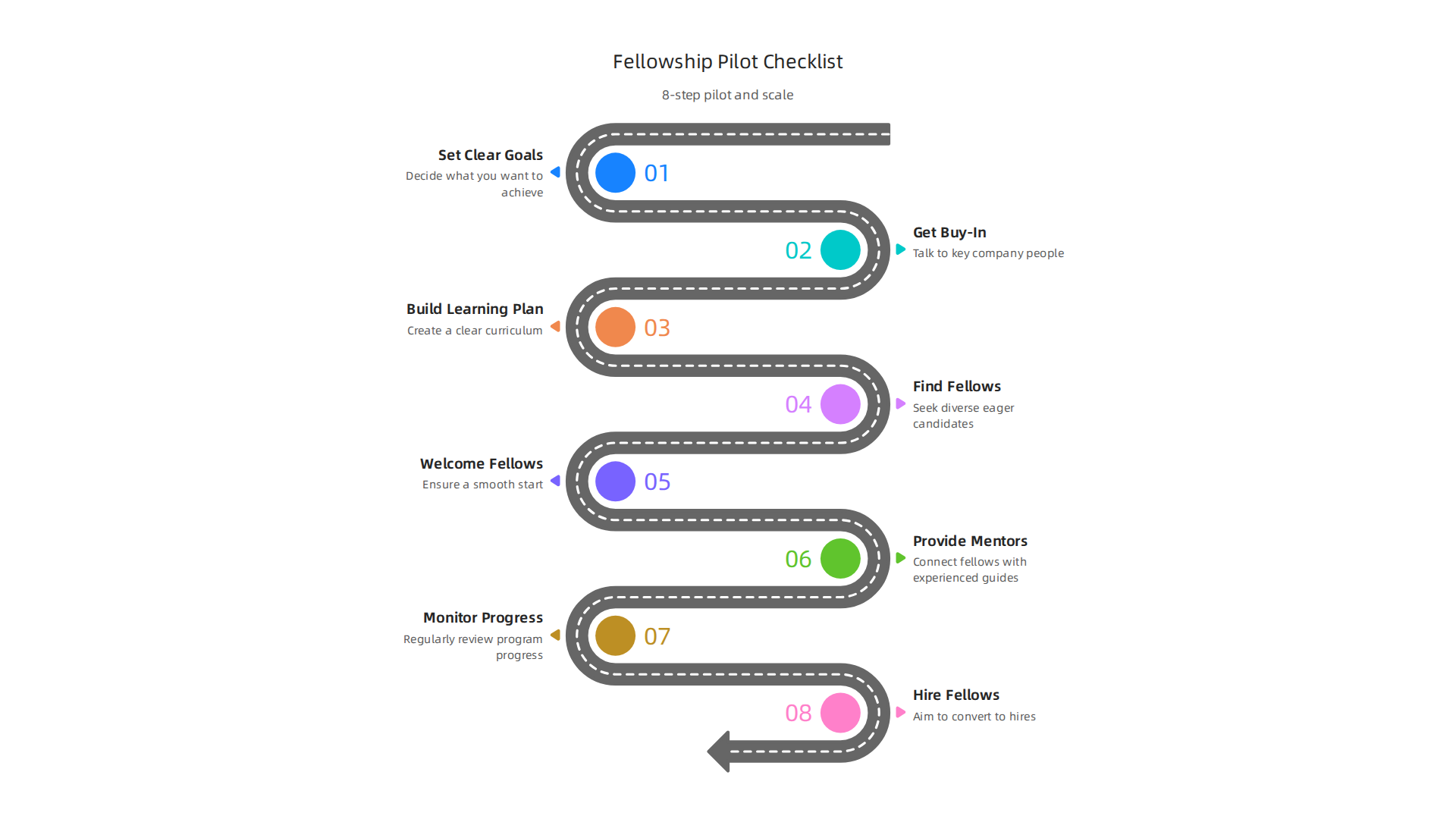
Your 9-Step Fellowship Checklist
- Set Clear Goals for Your Pilot: Before you begin, decide what you want to achieve with your first small group of fellows. Do you want to bring in new ideas, fill specific skill gaps, or test new ways of training? Knowing your goals will help you measure success later.
- Get Everyone on Board: Talk to key people in your company, like HR, engineering managers, and top leaders. Make sure everyone understands why the fellowship is important and how it will work. Good leadership and clear decision-making are key for any big program to succeed. Think of it like a governance model for talent management that helps everyone stay on the same page.
- Build Your Learning Plan: What skills will your fellows learn? Create a clear curriculum that teaches them what they need for common jobs software development roles. This might include coding, problem-solving, and working in a team. You could also focus on specialized areas like software quality engineer jobs.
- Find the Right People: Look for diverse candidates who are eager to learn and grow. Your recruiting process should be welcoming and fair to everyone. Think about using a structured way to find early talent, as described in Professional Standards for Early Talent Recruiting.
- Welcome Them Well: When fellows join, make sure they have a smooth start. Good onboarding helps them feel like part of the team right away. This can also speed up their "time to productivity," which means how fast they start making real contributions, a key metric for onboarding success.
- Provide Mentors: Connect each fellow with an experienced person who can guide them. This mentorship is vital for their learning and helps them feel supported.
- Check How It’s Going: Regularly look at how well the fellowship is working. Are fellows learning new skills? Are they happy? You can use special software to track progress and see if goals are being met, which is often done with fellowship management software. Also, tracking key HR metrics helps measure success, as noted in the 25 Essential HR Metrics to Track in 2026.
- Turn Fellows into Employees: At the end of the program, aim to hire fellows who have shown great potential. They already know your company, which makes them great new hires.
- Grow Your Program: Once your pilot is a success, you can start to expand it. This means bringing in more fellows and maybe even trying it in different parts of your company.
How to Avoid Problems
Sometimes, things don’t go as planned. Here are common issues and how to fix them:
- Mentor Burnout: Mentors can get tired if they have too many fellows or too much work. Make sure they have enough time for mentoring and give them support. Maybe rotate mentors or offer training.
- Poor Project Alignment: If fellows work on projects that don’t matter or don’t use their skills, they might get bored. Always give them meaningful tasks that help the company and fit their learning goals. This is important for all jobs in software development.
- Unclear Success Rules: If no one knows what "success" looks like, it’s hard to tell if the fellowship is working. Set clear goals from step one and define what good performance means for fellows. You can track their skills and how fast they learn using metrics like "time-to-competency" to show if your training is effective, according to how to prove L&D impact quickly.
When to Start Small and When to Grow
A pilot program should be short and focused. For instance, a small pilot could run for 4 to 6 weeks with one team, as seen in guides for scaling AI agents from pilot to production.
You know it’s time to scale your software engineer fellowship when:
- Your pilot met its goals.
- Fellows learned well and produced good work.
- Both fellows and mentors gave positive feedback.
- Your company leaders are ready to invest more.
By following this playbook, your company can build a strong software engineer fellowship that brings in fresh talent and helps your team stay ahead in 2026.
Summary
This article explains what a software engineer fellowship is and why enterprise leaders are using fellowships to close critical talent gaps in 2026. It covers common fellowship models—early-career acceleration, reskilling, returnships and cohort programs—and outlines how to design one with competency frameworks, assessment gates, mentorship, and product-team integration. The guide reviews practical operational choices such as cohort size, pay model, duration, recruiting pipelines, legal status and vendor partnerships, and offers a financial lens on expected costs and ROI. You will learn which KPIs to track (retention, time-to-first-feature, code quality, internal mobility), how to align training to cloud, API, security and data needs, and when to pilot versus scale. The article also shows how fellowships can improve DEI and long-term retention and gives a nine-step checklist to run a successful pilot and expand the program. After reading, leaders will be able to plan, budget, and measure a fellowship that builds skilled engineers tailored to their enterprise goals.