
Future-Proof Your Enterprise: Navigating the 2026 AI Jobs Landscape

Why AI and Jobs Matter Right Now
Today, in 2026, many people are talking about how Artificial Intelligence (AI) is changing the world. This is especially true for how it affects jobs. On one hand, AI tools are becoming very smart, very fast. This makes some wonder if machines will take over many jobs. On the other hand, businesses need stable workforces and smart people to help them grow. This creates a big question: how will AI and jobs really work together?

It’s clear that AI is already a big part of how we work. A recent study shows that about 20% of paid jobs involve tasks that are at least 50% automated, and 21% use AI tools for at least half their work SHRM Research Finds AI and Automation Exposure Is Rising. This means that for many, AI is already changing their daily tasks. The rise of new tools, like generative AI jobs, means that companies are always looking at how these changes will affect their teams.
This guide is for leaders like CIOs, CTOs, product managers, people who start SaaS companies, and investors. You need to know how to handle these big changes in the world of enterprise AI. We will give you simple plans to look at the risks that come with AI, find new chances, and decide what steps to take. It’s not about being scared, but about being smart. We will use real facts and clear advice to help you get ready for the future. You’ll learn how to best use AI to help your company grow and how to prepare your workforce.
To stay on top of daily changes in the AI and technology world, many leaders find value in staying informed.
The AI Newsletter Worth Reading can give you clear updates.
For a broader look at how AI impacts jobs and what skills are needed, check out our guide on The 2026 AI Jobs Landscape.
How AI Is Reshaping Roles Today: Patterns and Signals
As AI continues to grow, it’s really changing what jobs look like. In 2026, we see clear patterns in how AI and jobs are working together. It’s not just about AI taking over tasks, but more about how it changes what people do every day.
Common Patterns of AI in the Workplace
Here are the main ways AI is reshaping jobs:
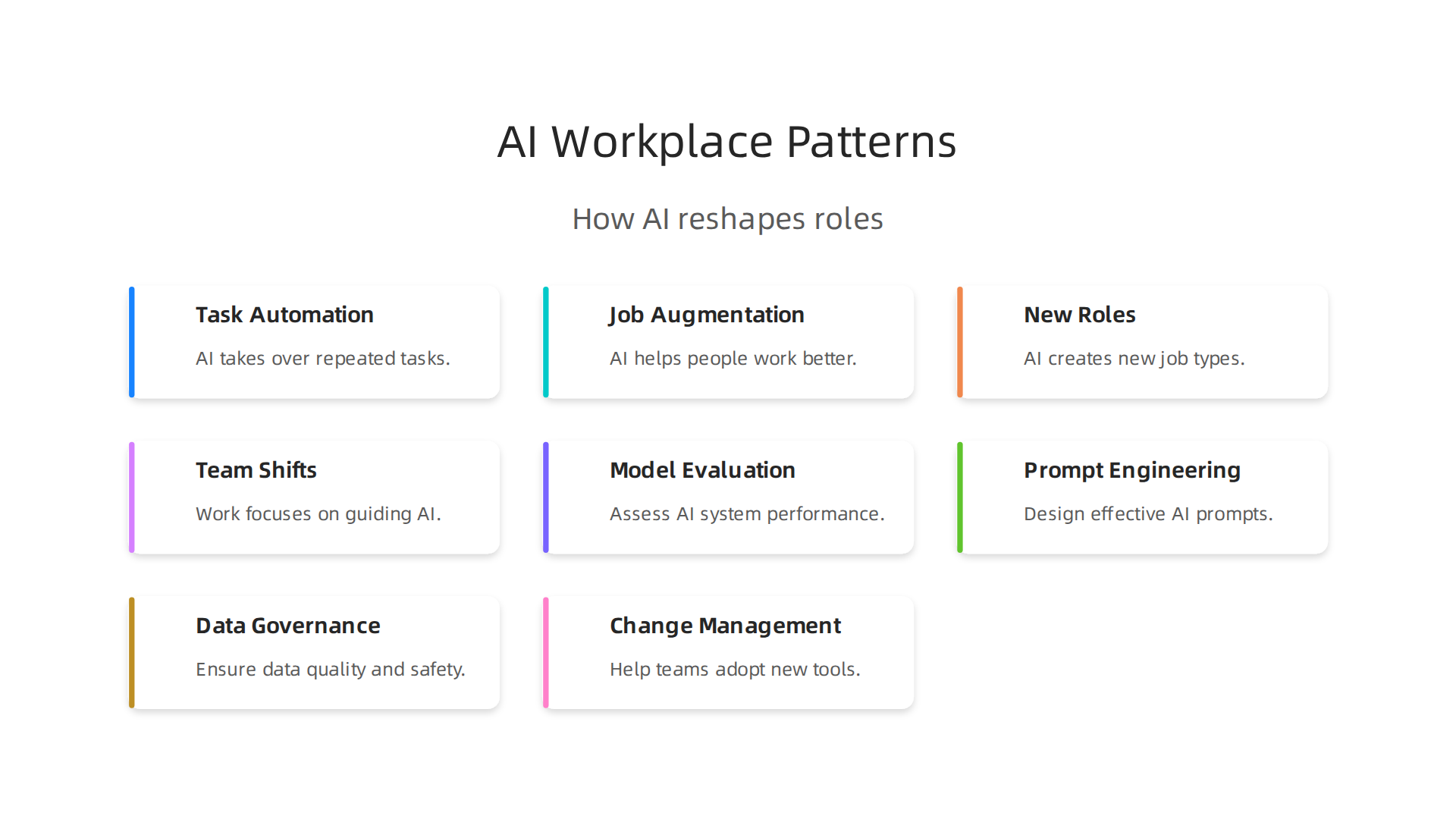
- Task Automation: AI often takes over simple, repeated jobs. Think of tasks that follow clear rules, like sorting emails or basic data entry. This frees up people to do more complex work that needs thinking and judgment.
- Job Augmentation: This is when AI helps people do their jobs better and faster. For example, a marketing expert might use AI to write first drafts, or a customer service agent might get quick answers from an AI assistant. This makes human workers more productive. Actually, companies that use AI often expand hiring faster than others, emphasizing human skills like judgment and creativity AI reshapes global labour market into two distinct paths.
- New Roles Emerge: AI also creates entirely new jobs. We’re seeing more needs for roles like prompt engineers for generative AI jobs, or experts in AI ethics jobs who make sure AI is used fairly and safely. Some reports even show that many employers expect AI to increase their total number of workers More Jobs, Higher Bar: The 2026 AI Employer Report.
- Shifts in Teamwork: How different teams work together is also changing. Jobs become more about guiding AI, checking its results, and focusing on interactions that truly need a human touch. This leads to new ways of working, moving from just doing tasks to managing and directing AI processes Organizational Transformation in the Age of AI.

Signals for Enterprise Leaders to Watch
For leaders in enterprise AI, keeping an eye on these signals can help you understand the real impact of AI on your workforce:
- Productivity Metrics: Are your teams getting more done with the same people, or even fewer, thanks to AI? Watching these numbers can show where AI is boosting output.
- Hiring Trends: Look at what skills you’re hiring for. Are you looking for more AI-specific skills? Are existing job descriptions changing to include AI tools? Many companies are finding that a lack of skilled workers is the biggest challenge to using AI well The State of AI in the Enterprise – 2026 AI report.
- Internal Task Audits: Regularly check which tasks AI is now handling and what humans are spending their time on. This helps you understand how daily work is really changing.
Short-Term vs. Medium-Term Effects on Teams
The changes from AI happen at different speeds.
- Engineering Teams: In the short term, AI helps engineers with things like writing code faster, finding bugs, and testing software. In the medium term, engineers will likely spend more time designing new AI systems and making sure they work safely and ethically. Understanding these evolving skills is key for key software development engineering roles and skills in 2026.
- Customer Success Teams: For customer success, AI chatbots can answer easy questions quickly in the short term. Over the medium term, human agents can focus on solving complex customer problems, building strong relationships, and teaching the AI to be even better. Using tools like cloud-based CRM software can help blend AI and human efforts.
- Operations Teams: In the short term, AI can help with daily tasks like scheduling, managing inventory, and improving supply chains. In the medium term, operations roles will be more about making AI-driven processes work perfectly and using AI information to make smart, strategic choices.
Overall, the impact of AI on jobs is more about changing roles and tasks than simply eliminating them. Companies that adopt AI are more likely to reorganize jobs, making human work focus on things where people are best The impact of AI on the workplace: Evidence from OECD case studies. This means enterprise leaders need to think about how to train their teams and reshape jobs to make the most of AI.
Historical Patterns: Automation, Productivity, and Employment
When we think about AI changing jobs today, it’s helpful to look back at how other new technologies have changed work in the past. This isn’t the first time machines have taken over tasks. Understanding these older patterns can help enterprise leaders think more clearly about what’s happening with AI and jobs in 2026.
The Long View of Automation’s Impact
For a long time, new technologies like factory machines or computers have reshaped the workplace. Here’s what we’ve learned from history:
- Task Changes, Not Just Job Losses: Historically, automation often meant that some tasks in a job were taken over by machines. But this rarely led to whole jobs disappearing right away. Instead, people’s jobs changed. They started doing different, often more complex, tasks that machines couldn’t do. For example, a worker might have moved from manual labor to overseeing machines.
- Boosting Productivity: A big reason for new technology is to help us get more done with less effort. This boost in productivity means businesses can create more goods or services. While this can make some jobs more efficient, it also often leads to economic growth and new opportunities elsewhere.
- New Jobs Always Appear: Every big wave of automation has led to new types of jobs. Think of car mechanics after cars became popular, or software developers after computers. These new roles often need different skills, creating a need for training and learning. Even today, the US Bureau of Labor Statistics expects that the increasing use of AI will boost demand for workers in some fields, even as other jobs might see a decrease Artificial intelligence, information technology, and employment, 2024 ….
Actually, reports show that the short-term impact of AI on overall employment has been quite small. Many experts believe AI has not led to big cuts in the total number of jobs, nor is it expected to in the near future Working Paper 34984. Instead, it’s more about jobs changing. One report even suggests that AI will reshape more jobs than it completely replaces AI Will Reshape More Jobs Than It Replaces | BCG.
Why AI is Both Similar and Different
So, historical patterns tell us that new tech changes jobs, boosts productivity, and creates new roles. These ideas still hold true for AI and jobs in 2026. However, AI is also different in some important ways:
- Pace of Change: AI, especially generative AI, is advancing very fast. The speed at which it can learn new tasks and improve is much quicker than older technologies.
- Scope of Change: Past automation mostly focused on physical or very repetitive tasks. AI can handle cognitive tasks, like writing, analyzing data, or even making decisions. This means a wider range of jobs are seeing changes.
- Cognitive Tasks: AI can now do things that used to need human thought. This means jobs that require mental effort are now also being augmented or changed. This creates new opportunities, like generative ai jobs for content creation or ai ethics jobs to ensure fair use.
Despite these differences, many underlying patterns remain. For example, some research shows that about 20% of paid jobs involve tasks that are at least 50% automated, but the risk of losing jobs completely due to this has actually gone down slightly SHRM Research Finds AI and Automation Exposure Is Rising, but …. This highlights that augmentation is more common than full replacement.
What Historical Evidence Teaches Enterprise Leaders
For leaders making plans for enterprise AI, here are some key lessons from history:
- Reskilling is Essential: Just like in past tech shifts, workers will need to learn new skills. Companies need to provide good training programs to help their teams adapt to working with AI. This gives people "reskilling windows" to learn what they need for the future. You can find more insights in The 2026 AI Jobs Landscape.
- Identify Vulnerable Tasks: Jobs with many simple, repeatable tasks are more likely to be automated. Leaders should look at what tasks their teams do and see where AI can take over the boring parts, freeing up humans for more valuable work.
- Focus on Human-AI Teams: History shows that technology works best when it helps people, not just replaces them. With enterprise AI, the goal should be to create strong human-AI teams where each brings their best skills.
In the end, while we can’t say "ai is bad" just because it changes jobs, history helps us understand that adaptation is key. The current impact of AI on jobs is still modest for many firms, with most reporting no major changes to employment or productivity so far Firm Data on AI. However, it’s important for leaders to prepare for ongoing changes by investing in their people and embracing new ways of working.
To stay on top of all the fast-moving changes in AI and technology, consider getting daily updates.
Get clear daily AI updates from The AI Newsletter Worth Reading.
Skills and Roles Likely to Grow: Where to Hire and Train
As enterprise leaders look to the future of AI and jobs, a big part of preparing is knowing which skills will be most important. It’s not just about what jobs AI can do, but what new skills people will need to work with AI. Actually, many companies are finding that the biggest challenge to using AI is not having enough workers with the right skills The State of AI in the Enterprise – 2026 AI report | Deloitte US.
New Skills That Work Well with AI
Instead of replacing everyone, AI often works best when it helps people do their jobs better. This means new skills are needed to team up with AI. Here are some key skills that are growing in importance:
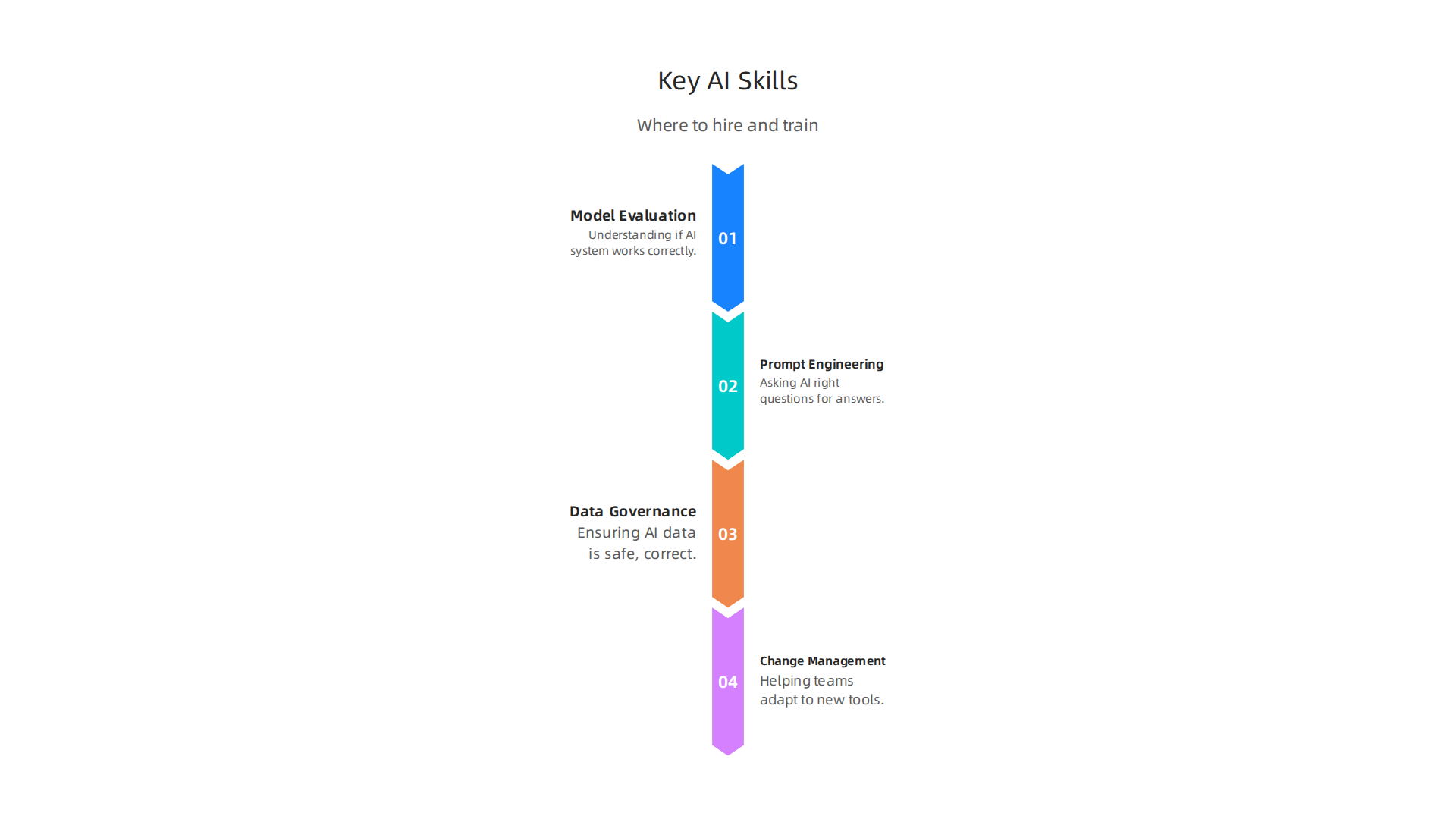
- Model Evaluation: This is about understanding if an AI system is working correctly and fairly. People with this skill check the AI’s results and make sure they are useful and unbiased.
- Prompt Engineering: This involves knowing how to ask an AI, especially generative AI, the right questions to get the best answers. It’s like learning to speak the AI’s language to get the most out of it. You can learn more in The 2026 Prompt Engineering Guide for Enterprise Teams.
- Data Governance: This skill is about making sure the data AI uses is safe, correct, and used in the right ways. It’s really important for building enterprise AI trust with human oversight and guardrails.
- Change Management: As AI changes how we work, people need to be good at helping teams adapt to new tools and processes. This involves good communication and understanding.
Beyond these technical skills, human skills like judgment, creativity, and leadership are becoming even more valuable, according to PwC’s 2026 report AI reshapes global labour market into two distinct paths … – PwC. These are things AI can’t easily replicate.
Training Your Team vs. Hiring New People
Leaders must decide if it’s better to train their current staff or bring in new talent for these emerging AI jobs.
- Reskilling Your Current Workforce: Many companies are choosing to train their existing employees.

This is often a good idea because current staff already know the company and its goals. Providing good training programs can lead to big benefits. For example, some companies see a 250% return on investment from AI training within 18 months AI Corporate Training Statistics 2026. Plus, workers are often very willing to learn new skills to adapt to AI The Adecco Group Workforce Trends 2026 Report. This helps build "AI literacy" across the company.
- Hiring New Talent: Sometimes, a company might need very specialized skills right away. In these cases, hiring new people who already have strong AI backgrounds might be necessary. It’s true that jobs needing AI skills are seeing higher demand, and 74% of employers see AI skills as a strong plus for job seekers More Jobs, Higher Bar: The 2026 AI Employer Report. This can bring fresh ideas and deep knowledge to your team.
Many organizations are preparing workers for AI, but it’s important to focus on teaching skills that improve business results, not just basic AI knowledge Report: Most Organizations Are Preparing Workers for ….
A Simple Checklist for Workforce Planning
To manage the changes in ai and jobs, here’s a simple checklist for enterprise leaders:
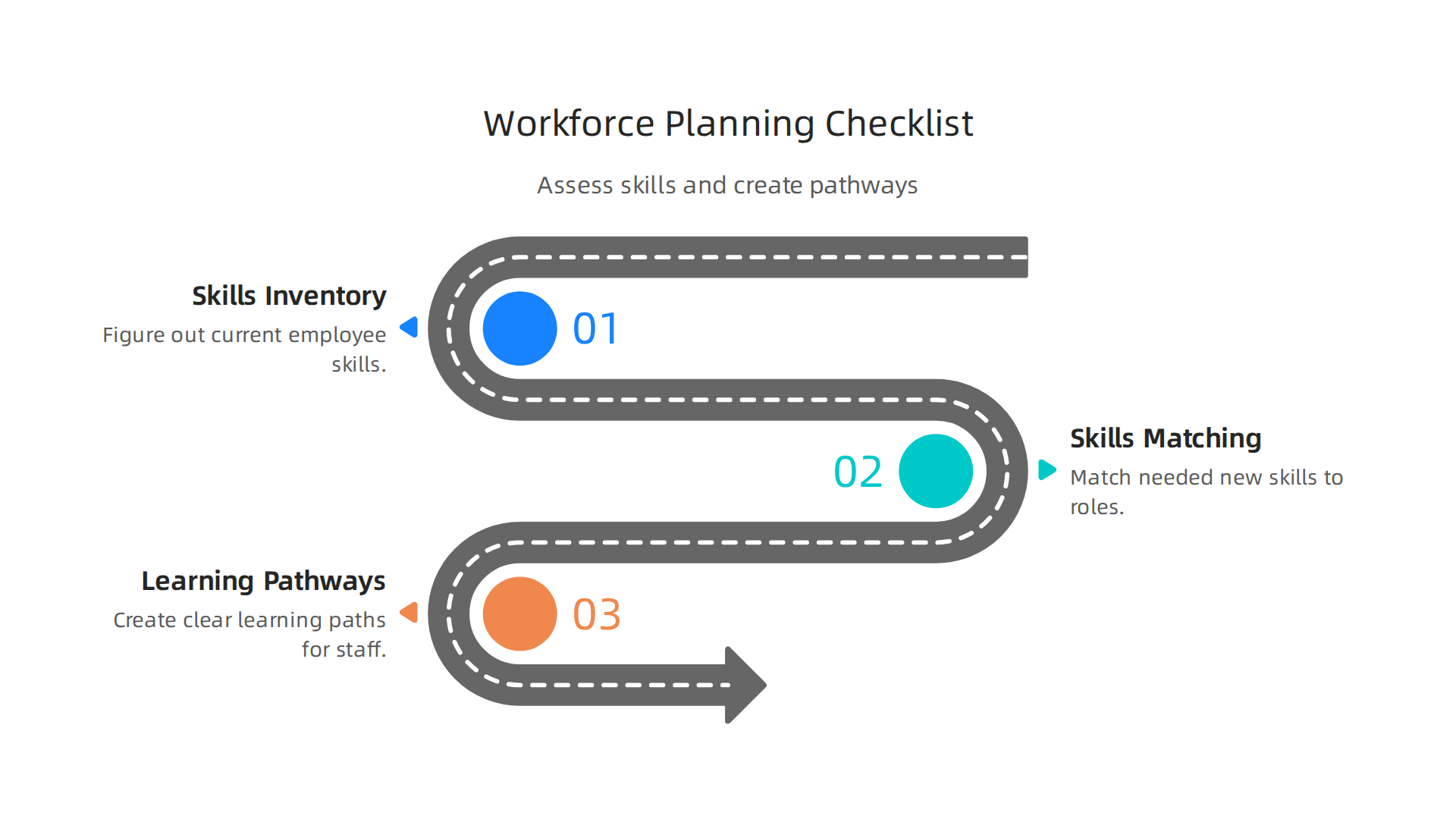
- Skills Inventory: First, figure out what skills your current employees have. What are they good at? What do they know about AI today?
- Skills Matching: Next, look at the jobs that are changing or growing because of AI. What new skills are needed for these roles? How do these match up with what your team already knows? This can help you find those important generative ai jobs and ai ethics jobs for the future.
- Learning Pathways: Create clear paths for your employees to learn these new skills. This could mean online courses, special workshops, or even mentoring. Using AI-powered learning tools can boost how much employees learn and how much they engage with training Top 40 AI Training Stats in 2026 (for Corporate and …).
By following these steps, companies can build a stronger workforce ready for the future of enterprise AI.
Thinking about how AI changes jobs means we also need to look at roles that might be affected. While some jobs will grow, others might shrink or change a lot because of AI. It’s not about fearing that AI is bad, but understanding the shifts so leaders can plan well.
How to Check Which Roles Are at Risk
To understand how AI might affect different jobs in your company, it helps to use a simple way to check. This is called a risk-assessment framework. It helps you see clearly where changes might happen.
Here’s a way to think about it:
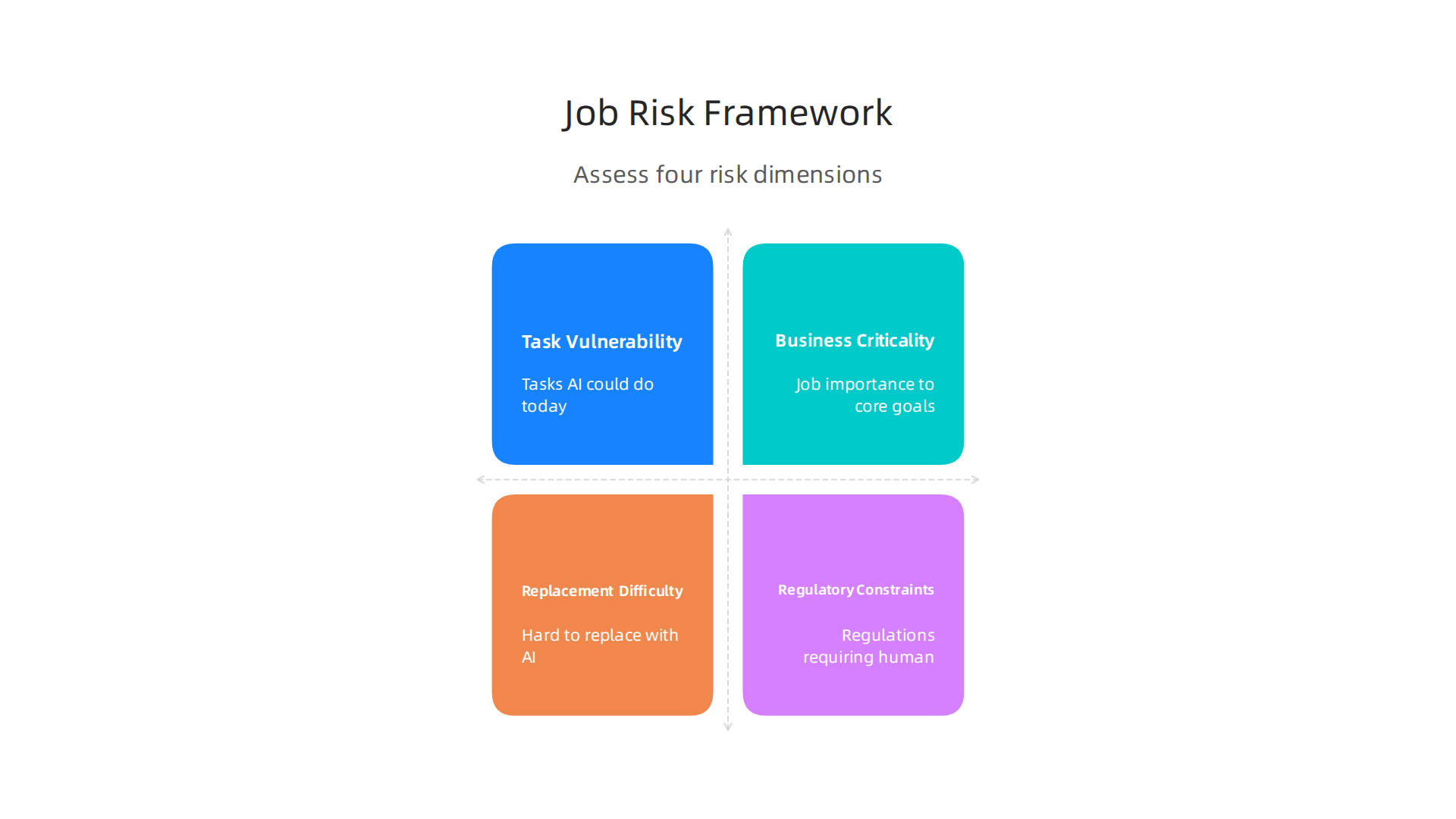
- Task-Level Vulnerability: First, look at what tasks a job involves. How many of these tasks could AI do today, or in the near future? For example, AI can often handle repetitive tasks quickly. Some reports show AI can improve how fast tasks are done by 15% to 56% AI Automation ROI Benchmark Report 2026 – Alice Labs. If a job mostly has tasks AI can do, it has high vulnerability.
- Business Criticality: How important is this job to the main goals of your business? If a job is super important and needs human judgment, it’s less likely to be fully replaced, even if some tasks can be automated.
- Replacement Difficulty: How hard would it be to replace the person in this role with AI or another person? Does the job need special human skills like creativity, empathy, or complex problem-solving that generative ai jobs are still developing? Jobs needing these human skills are harder to replace.
- Regulatory Constraints: Are there rules or laws that say a human must do this job? For example, in some fields, only a licensed person can make certain decisions. This creates a safeguard for human roles.
When Will AI Change These Roles?
It’s natural to wonder about the timelines for these changes. The truth is, things are moving fast, but full job replacement is often slower than people think. Many experts believe that AI will reshape more jobs than it completely replaces AI Will Reshape More Jobs Than It Replaces | BCG.
- Short-Term (Next 2-3 Years): We will see many jobs get "reshaped." This means parts of jobs will be done by AI, making people’s work different. About half of all jobs in the US might see some change from AI in this timeframe. For example, AI might help with writing reports or analyzing data, changing how people in those roles spend their time.
- Longer-Term (5 Years and Beyond): The full replacement of jobs will be slower. Only about 10% to 15% of jobs might be completely taken over by AI in five years or more. It’s also worth noting that only about 9% of workers in the US face a high risk of automation, meaning more than 70% of their tasks could be automated Revisiting the Risk of Automation. Jobs that are highly repetitive, like some entry-level or factory jobs, are at higher risk than jobs needing complex decisions or human interaction. Roles like professionals, scientists, managers, and technicians are typically at lower risk 4.2 Automation Index….
Uncertainty should make leaders act now. Understanding these shifts is key for any enterprise AI strategy. For more details on this topic, check out The 2026 AI Jobs Landscape: Critical Insights for Enterprise Leaders.
How to Help People in At-Risk Roles
Even if a role is at risk, there are many ways companies can help. This is where good planning comes in.
- Redesigning Roles: Instead of removing jobs, companies can change them. This means focusing on the parts of the job that AI can’t do well, like creative thinking, human connection, or high-level problem-solving. AI becomes a tool that helps people, not a replacement.
- Phased Automation: Bringing in AI slowly allows time for employees to learn new skills and adapt. This smooths the transition and helps keep teams happy and productive. It’s also important to think about the right AI engine evaluation framework for enterprise leaders in 2026 to make smart choices.
- Human-in-the-Loop Safeguards: For important tasks, keeping a human involved to check AI’s work is a smart idea. This helps ensure quality, safety, and fairness, especially in sensitive areas where ai ethics jobs are growing in importance. It’s about using enterprise AI wisely.
By thinking through these points, leaders can prepare for the future of ai and jobs in a helpful and smart way, focusing on how people and AI can work together.
Get clear daily AI updates with The AI Newsletter Worth Reading from The Deep View Newsletter.
Enterprise Strategies: Reskilling, Hiring, and Organizational Design
Now that we understand how AI will affect different tasks and when these changes might happen, let’s talk about what companies can actually do. Leaders need a clear plan for how people and AI can work together. This means thinking about current staff, how to hire new talent, and how to pick the right AI tools.
Crafting Your Operational Playbook
A good plan, or operational playbook, starts with knowing your team.
First, perform a deep workforce assessment to see what skills your employees have and what new skills they will need for the age of enterprise AI. It’s a fact that a lack of AI skills is often the biggest hurdle for bringing AI into a business, according to a 2026 Deloitte report The State of AI in the Enterprise – 2026 AI report | Deloitte US.
Next, set up special projects to teach people new skills, known as prioritized reskilling pilots. The good news is that most employees are happy with such training. About 71% of workers are satisfied with the upskilling and reskilling training their employers offer The State of Upskilling & Reskilling: 2024 Research – TalentLMS. Companies should focus on helping employees learn practical skills that directly improve business results, not just general AI knowledge. When done well, companies see a big return on investment, averaging 250% on AI training within 18 months AI Corporate Training Statistics 2026.
It also helps to work with outside groups like schools and technology companies. These partners can offer training programs or special tools that make learning easier. For example, AI-powered learning tools can help employees learn faster and remember more. This type of learning can increase engagement by 30% and improve learning outcomes by 25% Top 40 AI Training Stats in 2026 (for Corporate and …). Lastly, always track how well these efforts are working to make sure you are getting a good return on your investment.
Smart Hiring for AI-Ready Teams
As AI changes the landscape of ai and jobs, companies need to think differently about hiring. While AI might shift some routine jobs, it also creates new needs for people with skills that work well with AI. These "AI-complementary" skills are highly valued, and employers are willing to pay more for them More Jobs, Higher Bar: The 2026 AI Employer Report. This means looking for human skills like judgment, creativity, and leadership, which AI still struggles with. In 2026, AI is making companies look for more of these human traits in their staff AI reshapes global labour market into two distinct paths … – PwC.
You should also plan to build cross-functional teams. This means putting people with different skills and backgrounds together to work on AI projects. Such teams can help maximize how much AI helps everyone. For leaders looking to bring these new talents into their company, understanding how to hire effectively is key. Consider exploring a cloud engineer career and hiring guide for 2026 for insights on bringing in specialized tech roles. This also creates opportunities for new generative ai jobs and ensures that the focus remains on useful enterprise ai rather than fearing that ai is bad.
Picking the Right AI Vendors
Choosing the right AI tools and partners is a big decision for any enterprise. When you look at different vendors, think about a few key things:
- Integration: How easily will their AI tools work with your existing computer systems and programs? You want a smooth fit, not more headaches.
- Change Management: Will the vendor help your team learn how to use the new AI? Good support for this transition is crucial for success.
- Upskilling Support: Does the vendor offer training or resources to help your employees develop new skills needed for their AI tools? This can be very helpful for your reskilling efforts.
- Long-Term Viability: Is the vendor stable and likely to be around for many years to offer ongoing support and updates?
Taking these steps will help your company successfully navigate the changes that AI brings. For more advice on choosing the right tools, check out how CIOs and CTOs should evaluate AI companies in 2026.
As companies plan how to use AI and bring new tools into their everyday work, it’s also really important to look at the bigger picture. This means understanding how governments, ethical rules, and even social safety nets play a part. Leaders need to keep an eye on these things because they can greatly impact how AI changes jobs and how smoothly new technologies are accepted.
Government’s Role in Shaping AI and Jobs
Governments around the world are getting involved in how AI affects jobs. They are trying to help workers and businesses get ready for the changes. Here are some key ways they do this:
- Training and Education: Many governments offer money or programs to help people learn new skills needed for jobs working with AI. For example, the US Department of Labor is working to add AI skills to training programs across the country in 2026, including apprenticeships US Department of Labor launches landmark initiative to integrate AI skills into Registered Apprenticeship programs. There are big efforts like the "US National AI Talent Pipeline Initiative" which aims to train many new AI-capable workers by 2029 The US National AI Talent Pipeline Initiative: What $2B in Federal Funding Means. Staying aware of these programs can help companies find trained employees or access funding for their own reskilling efforts.
- Worker Support: Governments also think about how to support people whose jobs might change a lot because of AI. This includes looking at unemployment benefits and other ways to help workers during career shifts.
- Setting Rules: Sometimes, governments create rules about how AI can be used, especially in areas like hiring or data privacy. These rules are very important for businesses to follow to avoid legal trouble and keep public trust.
Companies should track these government actions. They can help companies plan better for the future of "ai and jobs" and make sure they are doing things the right way.
Ethical AI: Playing Fair and Being Clear
When businesses use AI, especially generative AI, they also have to think about ethics. Ethics means doing what is right and fair. If AI tools are not used carefully, they can lead to problems like unfair decisions or biased results. This can hurt a company’s good name and trust with customers and employees.
Here are some ethical points companies must consider:
- Fairness: Does the AI treat everyone fairly? For example, in hiring, an AI should not favor one group of people over another.
- Transparency: Can you understand how the AI makes its decisions? It’s important to know why an AI suggests something, especially in serious situations.
- Human Oversight: Even with AI, people should still be in charge. This means having humans review AI decisions and step in if something seems wrong. Building enterprise AI trust means focusing on human oversight and guardrails.
- Reputational Risk: If a company’s AI is seen as "bad" or unfair, it can really harm how people view the business. More and more, companies are seen as responsible for the ethical use of their AI, and not showing how they prepare employees for an AI future can cause problems Corporate AI Governance Report 2025. This has also led to a growing need for "ai ethics jobs," where people work to make sure AI is used responsibly.
Working Together for a Better Future
No single group can figure out the future of AI alone. Businesses, governments, industry groups, and even worker unions need to talk and work together.

This teamwork can help shape clear rules and support systems for everyone. By working together, they can make sure the changes from AI are helpful and fair, rather than scary. This kind of cooperation can help everyone get ready for the future of "enterprise ai" and make sure that AI benefits society.
To stay on top of the fast-changing world of AI and its impact on your business and career, you need reliable, daily insights.
Stay informed with valuable, daily AI updates. The AI Newsletter Worth Reading delivers clear, in-depth analysis directly to your inbox.
Summary
This article explains how AI is already changing work and what enterprise leaders — CIOs, CTOs, product heads, investors and founders — should do now to manage the shift. It reviews common workplace patterns (automation of repeat tasks, job augmentation, new AI roles), historical lessons from past automation waves, and clear short- and medium-term timelines for change. The guide shows which skills will grow (prompt engineering, model evaluation, data governance, change management) and offers a simple workforce checklist: skills inventory, skills matching, and learning pathways. It also covers practical strategies for reskilling versus hiring, picking vendors, building human-in-the-loop safeguards, and assessing role vulnerability. Finally, it highlights government programs and ethical rules that affect deployment and stresses collaborative approaches to make AI adoption productive and fair. After reading, leaders will be able to assess risk, design reskilling pilots, choose vendors, and build an operational playbook for enterprise AI adoption.