Mastering Agile Software Development for Enterprise Technology Leaders

Why ‘Agile Software Development’ Still Matters for Enterprise Technology Leaders
In 2026, you hear the word "agile" everywhere in the world of technology. From small startups to huge companies, everyone talks about agile software development. But what does agile software development means for a large business, especially for leaders like you?

Sometimes, this word can be confusing. It might seem like a buzzword, or people might have different ideas about what it truly involves. This confusion can make it hard to use agile methods effectively, especially when you are managing big projects and many teams across a large organization.
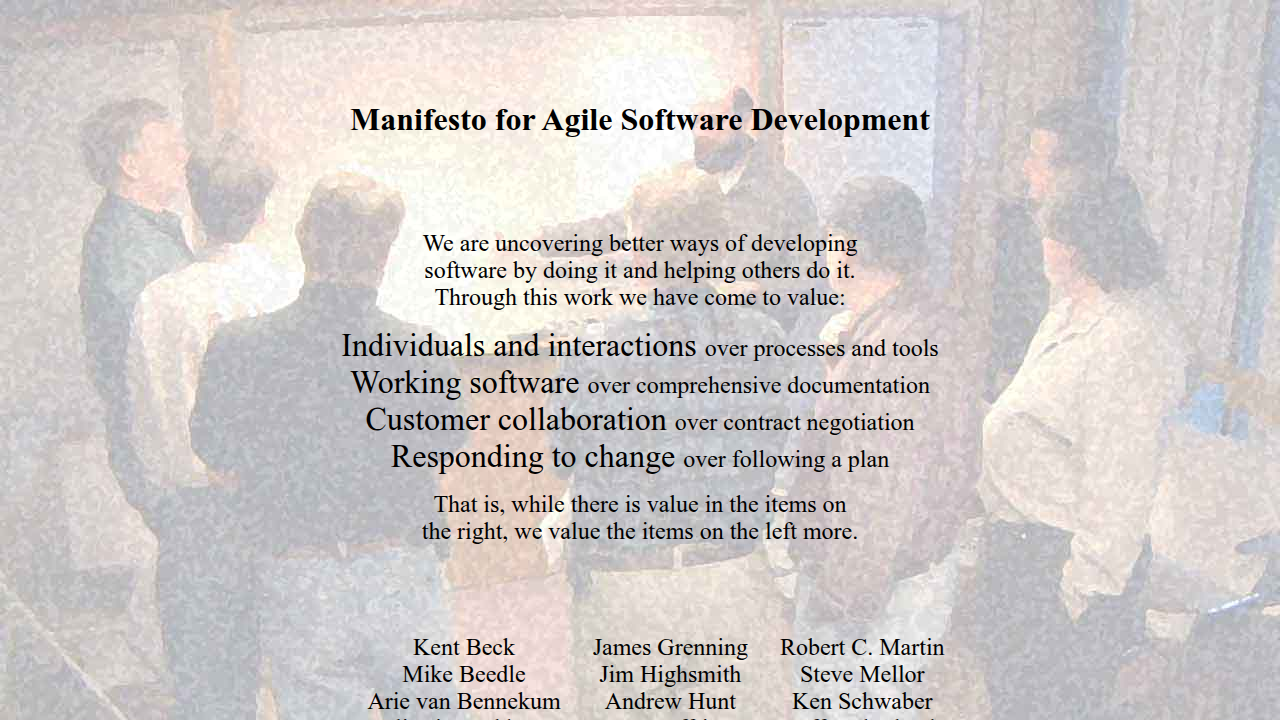
The truth is, understanding agile is more important than ever for enterprise technology leaders. Agile is not just a trend; it’s a way of thinking that helps teams build better software faster by being flexible and working closely with customers. It focuses on delivering working software often, instead of waiting a long time for one big release Manifesto for Agile Software Development.
This article will help clear things up. We will look at what agile really means, how different agile methods work, and how they are different from older ways of building software. We will give you practical guidance on how to use agile in your large company, whether you are dealing with software for android app development or big internal systems. We will also touch on how modern tools, like source code management systems such as aws codecommit, fit into the agile way of working. By the end, you will have a clearer picture of how agile can help your business be more competitive and efficient. It’s about helping your teams build great things quickly and adapt to changes easily, which is key for success in today’s fast-moving tech world. Understanding how to choose the right SDLC methodologies for enterprises is a big part of making this happen.
To stay on top of all the exciting changes in enterprise technology, including the role of AI, make sure you don’t miss out. Get clear daily AI updates from The AI Newsletter Worth Reading.
Agile Fundamentals: Core Values and Principles
When we talk about agile software development, it’s easy to get lost in all the different terms like Scrum or Kanban. But before we get to those, it’s really important to understand what agile software development means at its heart. It’s not just a set of rules; it’s a way of thinking, a special mindset that guides how teams build things. This way of thinking comes from something called the Agile Manifesto, written back in 2001 by a group of smart software people.
The Four Core Values of Agile
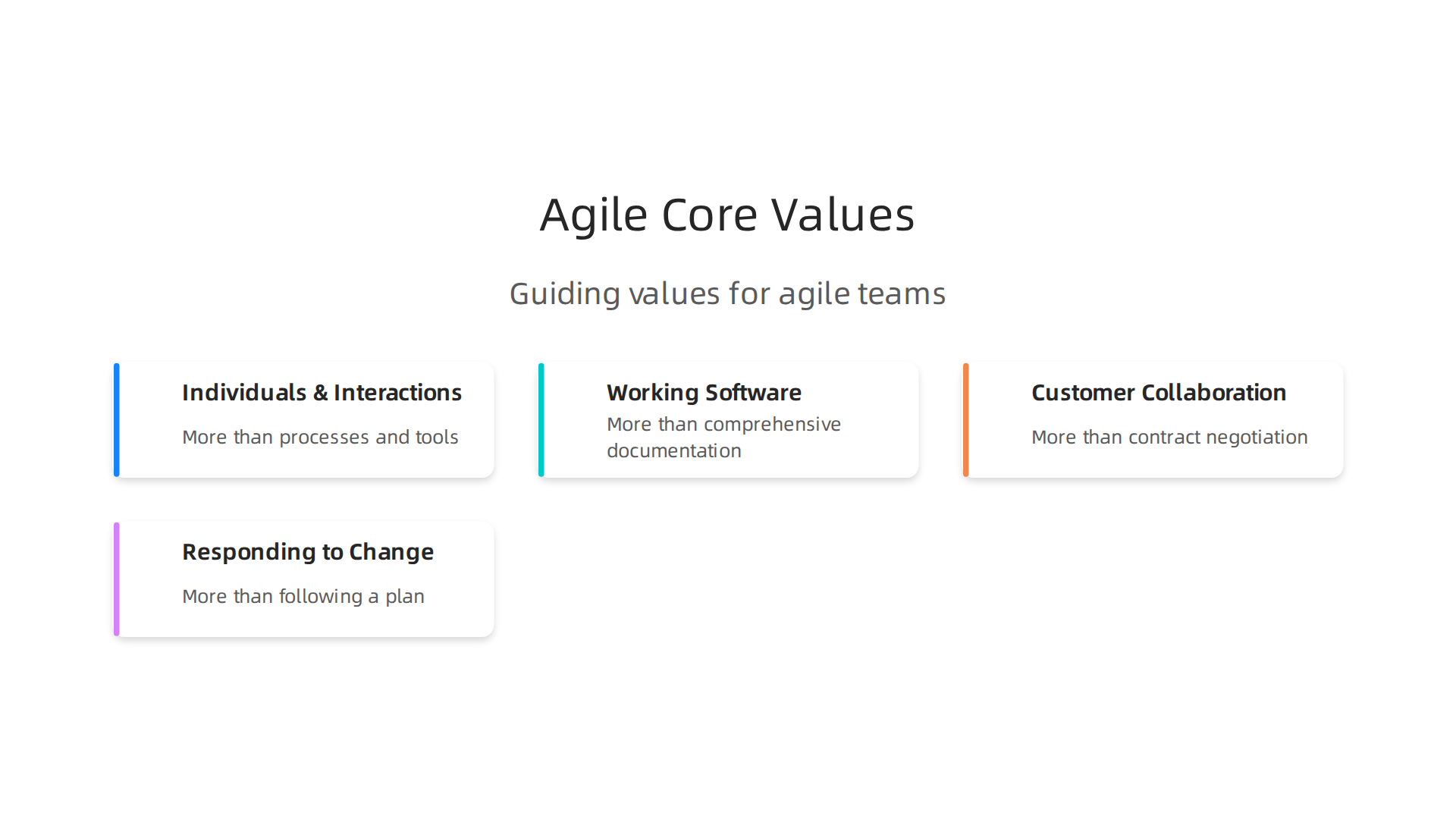
The Agile Manifesto laid out four main values. These values help teams make good choices and build better software.
Think of them as guiding lights for your enterprise technology teams.
- People and how they work together are more important than processes and tools. This means that having good conversations and strong teamwork matters more than following every single step of a plan or using a fancy piece of software.

It’s about empowering your teams to talk and solve problems together.
2. Working software is better than a lot of documents. While some documents are important, the main goal is to deliver software that actually works and helps customers. Teams should focus on building and showing working parts of the project often, instead of just writing long reports about it. This is key for fast development, whether it’s software for android app development or large business tools.
3. Working with customers is better than sticking strictly to a contract. This means your teams should talk with customers all the time to make sure they are building exactly what is needed. Customer feedback is a gift that helps make the software better.
4. Being ready for change is better than always following the first plan. In the tech world, things change fast. Agile teams expect changes and can adapt to them easily. This helps businesses stay ahead and deliver what the market truly needs right now. This flexible approach helps your enterprise unlock enterprise efficiency with adaptive software development.
These values show that agile is about being flexible, working together, and focusing on real results. As Atlassian explains, it prioritizes people and working solutions over rigid processes and heavy documentation What is Agile? – Atlassian.
The Twelve Principles that Guide Agile Teams
Along with the four values, there are also twelve principles that go deeper into what agile software development means. These principles are like helpful tips for putting the values into practice. For example, one big principle is to make customers happy by giving them useful software often and early. Another one says that teams should welcome changes, even late in the project. This is because changes can actually help a company gain an edge over others 12 Principles Behind the Agile Manifesto.
Other important principles tell us to:
- Deliver working software in short, regular cycles, like every few weeks.
- Make sure business leaders and developers talk every day.
- Trust and support the people doing the work.
- Measure how much progress is made by looking at working software, not just reports.
- Keep the work simple and focus on what’s most important.
- Let teams organize their own work.
- Help teams find ways to get better all the time.
Tools like source code management systems, for example, aws codecommit, help teams keep track of these frequent changes and working parts of the project.
Why Mindset Beats Just Following Rules
For enterprise leaders, it’s easy to think of agile as just a set of new meetings or steps to follow. But the truth is, the mindset behind agile is far more important than just doing the rituals. It’s about truly believing in teamwork, being open to change, and always putting the customer first. If your teams just go through the motions of agile meetings without really understanding or believing in these core ideas, you won’t see the big benefits.
The real goal of agile is to help your business build better things faster and react to market changes quickly. When teams truly adopt the agile mindset, they are more likely to create valuable software that helps your business grow. This helps your company accelerate enterprise software delivery with agile SDLC and stay competitive in 2026 and beyond.
Now that we understand the core ideas behind agile, let’s look at the different ways teams actually put these ideas into practice.
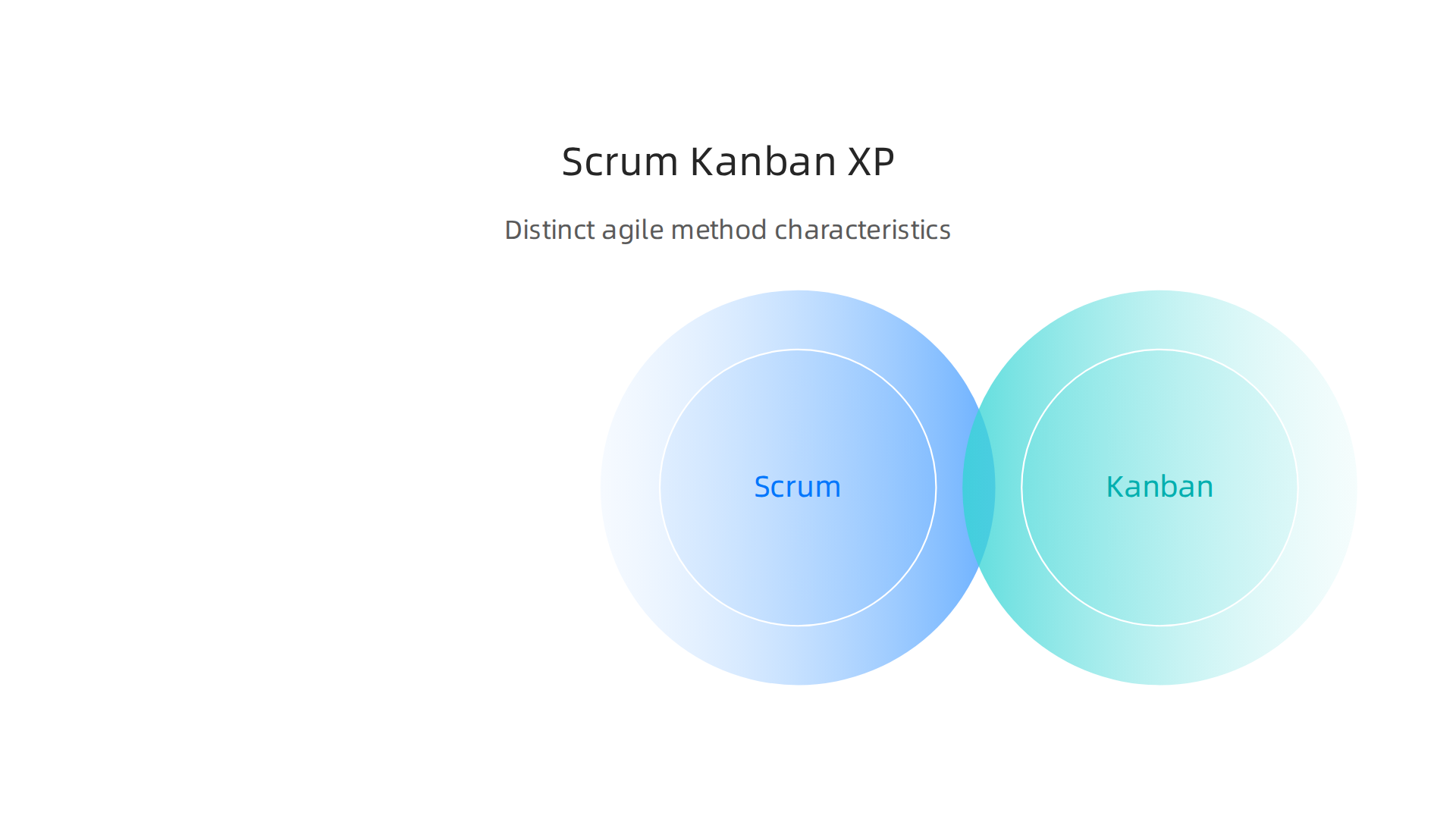
There are several popular methods that help teams develop software in an agile way. These methods share the same basic agile values, but they have their own special steps and rules. Three of the most common ones you’ll hear about are Scrum, Kanban, and Extreme Programming (XP). Each has a slightly different approach to how teams work, how often they deliver things, and what roles people play.
Comparing Popular Agile Methods
Let’s break down what each of these methods means for your enterprise teams in 2026.
Scrum
Scrum is probably the most well-known agile method. It helps teams work in short, focused bursts called "sprints." These sprints usually last one to four weeks. During a sprint, the team works on a small part of the project, aiming to finish it completely.
- Cadence: Teams work in fixed-length "sprints," often 1-2 weeks long.
- Roles:
- Product Owner: Decides what needs to be built next, based on customer needs.
- Scrum Master: Helps the team follow Scrum rules and removes any roadblocks.
- Development Team: Builds the software. This team might include people who do design, coding, and testing, perhaps even working on software for Android app development.
- Artifacts:
- Product Backlog: A list of all the things the team might build, in order of importance.
- Sprint Backlog: The list of items the team promises to finish in the current sprint.
- Increment: The usable piece of software built during a sprint.
Scrum also has regular meetings, like daily "stand-ups" where everyone quickly shares what they did, what they’ll do, and if they have any problems.
Kanban
Kanban is different because it doesn’t use sprints or have fixed roles. Instead, it focuses on a continuous flow of work. Think of it like a highway where cars keep moving steadily, instead of waiting for a big batch to leave at once. Kanban uses a visual board to show all the work in progress, from start to finish.
- Cadence: Continuous flow, no fixed time boxes. Work is pulled as soon as there is capacity.
- Roles: No set roles like in Scrum, but people still have jobs to do.
- Artifacts: The main tool is the Kanban board, which visually tracks work items.
- Key Idea: Limit "Work in Progress" (WIP) to make sure teams don’t start too many things at once. This helps keep things moving smoothly and speeds up delivery. Many compare Kanban with Scrum to show these differences in workflow and roles Kanban vs Scrum: Which Agile Suits You? (2026).
Extreme Programming (XP)
Extreme Programming, or XP, is all about making really good software through strong engineering practices. It’s less about project management and more about how developers code.
- Cadence: Short development cycles, with frequent releases.
- Practices: XP focuses on things like:
- Pair Programming: Two developers work together at one computer.
- Test-Driven Development (TDD): Writing tests before writing the actual code.
- Continuous Integration: Merging code changes often to find problems early.
- Simple Design: Keeping the code as simple as possible.
XP is great for teams that need to deliver high-quality code and respond to changes very quickly. It helps ensure the actual agile software development means a robust final product.
Choosing the Right Agile Method for Your Enterprise
Selecting the right agile method depends on your team, project, and what you want to achieve.
- Choose Scrum when: You have a stable team, a clear product goal, and want to deliver working software in predictable, short cycles. It’s great for complex projects where you need to manage many parts. Scrum is best when you need structure and predictability in your delivery Choosing the Right Agile Framework for Your Program.
- Choose Kanban when: Your priorities change often, or you have a steady flow of incoming work like bug fixes, support tasks, or general maintenance. It’s also good for operations teams. Kanban does not require fixed roles and allows teams to pull new work whenever they are ready Agile vs Scrum vs Kanban: What’s the difference?.
- Choose XP when: You need to focus heavily on the technical quality of the code, especially for small teams building new software from scratch or working on highly complex systems.
Sometimes, teams even mix and match parts of these methods. For example, a team might use Scrum for overall project management but use Kanban boards to visualize their work within a sprint. No matter which method you pick, the important thing is to stick to the core agile values of working together, being flexible, and always aiming to deliver useful software. You might also want to explore how different project management tools like Trello vs Jira 2026 fit with these agile methods.
Understanding these methods is a big step for enterprise leaders aiming to make smart choices in a fast-changing tech world. To keep up with the latest advancements in AI and technology that affect these decisions, consider subscribing to our focused updates.
Get clear daily AI updates from The AI Newsletter Worth Reading.
Moving from a single team using agile to many teams working together on a huge project can be tricky. When your company is big, or your projects are very complex, you need ways to make agile work for everyone. This is called "scaling agile." It helps large groups of teams stay in sync and deliver big results.
Scaling Agile: Frameworks, Trade-offs, and Governance
Scaling agile is all about helping many teams work as one big team. It brings together the good parts of agile, like being flexible and working quickly, and makes them work for the whole company. In 2026, there are a few main ways to do this, known as scaling frameworks. They help define what agile software development means at a larger level.
Popular Agile Scaling Frameworks
Let’s look at three popular ways large companies use agile: SAFe, LeSS, and Nexus.
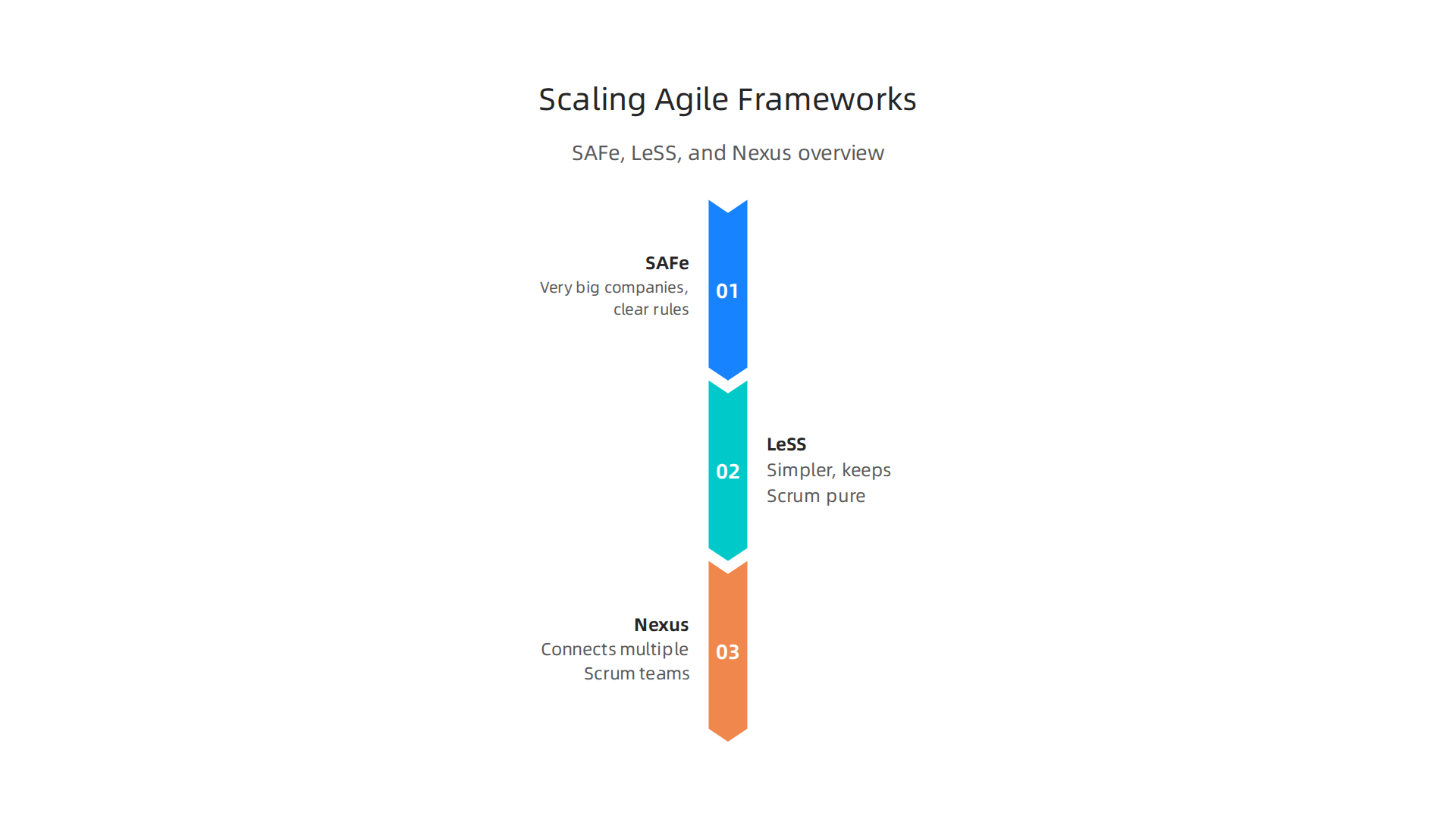
These frameworks help guide many teams working on the same big goal. You can also explore a visual guide to these frameworks with this Scaling Agile: SAFe, LeSS or Nexus (The Truth About Frameworks) video.
-
SAFe (Scaled Agile Framework)
SAFe is often used by very big companies. It gives a lot of clear rules and steps for everyone, from the top leaders to the individual teams. Think of it like a big instruction manual that helps hundreds of people work together. It helps align many teams and plan things over a longer time. SAFe is known for being very structured and helps with things like following company rules and legal requirements, known as compliance. It offers detailed guidance on roles, meetings, and project steps, helping businesses implement scaled agile in a very organized way SAFe vs LeSS: Which Agile Scaling Framework Should You Choose. This is especially good for companies that need high predictability and alignment across many teams. -
LeSS (Large-Scale Scrum)
LeSS stands for Large-Scale Scrum. It’s a simpler way to scale agile. LeSS tries to keep Scrum pure, even when many teams are involved. It says, "Let’s use the same Scrum rules but for more teams." This means fewer new roles and processes compared to SAFe. It works well if your teams are already good at Scrum and your company is ready for some big changes in how it works. LeSS is a more minimal approach to scaling agile SAFe® vs LeSS vs Nexus: Honest Framework Comparison. -
Nexus
Nexus is another framework that helps multiple Scrum teams work together. It’s lighter than SAFe and focuses on helping these teams create one finished product. Nexus adds just a few new ideas to Scrum to help teams integrate their work and find problems early. It’s like a connector for several Scrum teams. It’s often seen as an additive, lightweight framework Nexus Framework: Scaling Agile with Scrum Teams | UAE.
Trade-offs and Challenges
Choosing the right framework means thinking about what your company needs. SAFe offers a lot of control and structure, which is good for very large or highly regulated companies. But it can also be complex to set up. LeSS is simpler but needs your whole company to really embrace its way of working. Nexus is great for connecting several Scrum teams without adding too much extra complexity. All these frameworks aim to make agile software development means effective for large organizations, but they each have different demands and rewards. Implementing any large-scale agile framework can come with challenges, often requiring changes to existing work processes Implementing Large-Scale Agile Frameworks: Challenges and Recommendations.
Governance and Compliance
For big companies, especially those in industries like banking, healthcare, or government, there’s more to consider than just getting software built. You also need to make sure you follow all the rules and laws. This is called governance and compliance.
Scaling frameworks like SAFe are often picked because they offer ways to track progress, manage risks, and ensure that all work meets legal and industry standards. This is important for big programs where many people and different parts of the business are involved. It’s about keeping things in order and making sure everything is done correctly. Different frameworks have different levels of focus on organizational structure and governance Agile Scaling Frameworks: SAFe, LeSS, and Nexus Framework | Jile. Tools that help manage enterprise data architecture or handle security, like certain aws codecommit setups, can be helpful here to keep track of changes and approvals.
Understanding these scaling options is key for enterprise leaders. It helps them pick the best way for their many teams to work together effectively, meet goals, and follow all necessary rules. It’s about finding the balance between agility and control. When looking at tools for large-scale software projects, consider how they fit with your chosen framework, whether you need project development software free or paid solutions, and how they support practices like software for android app development at scale. You might find it helpful to look into how to optimize enterprise software with strategic software development lifecycle models.
After understanding how different scaling frameworks like SAFe, LeSS, and Nexus help big companies organize their work, the next step is to choose the right tools. These tools are super important because they help teams actually do the work, stay connected, and keep everything running smoothly.
The Agile Tools Ecosystem: Choosing Tooling for Enterprise Workflows
For companies using scaled agile, picking the right software tools is just as important as picking the right framework. These tools make sure everyone knows what to do, how far along tasks are, and if there are any problems. In 2026, the market for enterprise agile planning tools is quite large, valued at around $3 billion, and it’s expected to grow a lot by 2035 Enterprise Agile Planning Tools Market Size [2026-2035]. This shows just how crucial these tools are for modern businesses.
Let’s look at the main types of tools that help make agile software development means successful for large groups.
Common Tool Categories for Agile Teams
- Issue Trackers and Backlog Management: These are tools where teams keep track of all their tasks, user stories (what the customer wants), and bugs. They help manage the list of work that needs to be done. Jira is a very popular choice for many companies, seen as a standard in 2026 for large IT organizations Agile tools 2026: a review of top platforms and Uspacy. For comparing common options, you might find it helpful to look at Trello vs Jira 2026.
- Continuous Integration/Continuous Delivery (CI/CD): These tools help teams build, test, and release software automatically and often. They make sure that new changes work well with the existing code. Tools like
aws codecommitare used for version control, where developers store their code, and then connect to other tools for automated testing and deployment. - Observability Tools: Once software is released, these tools help teams watch how it’s working in the real world. They can spot problems quickly, like if an app crashes or runs slowly, so teams can fix them fast.
- Collaboration Platforms: When many teams work together, good communication is key. Tools like Microsoft Teams or Slack, along with visual whiteboards like Miro, help teams talk, share ideas, and work together easily Skills, Tools and Services Research Survey Report 2026.
- Development Environments: If you’re doing
software for android app developmentor other specialized projects, specific development environments provide the necessary tools for coding, debugging, and testing applications.
Picking the Right Tools: What Big Companies Look For
Choosing the right tools for a big company means thinking about a few important things:
- Integration: Can the new tools work well with the tools you already have? It’s important that all your systems, from planning to deployment, can talk to each other without problems.
- Security: For businesses, keeping data safe is critical. You need tools that protect sensitive information and meet strict security rules.
- Licensing and Cost: Large companies often need many licenses, which can get expensive. It’s important to understand the costs and how they fit your budget, whether you are looking for
project development software freeoptions or paid enterprise solutions. - Scalability: The tools must be able to handle many teams, projects, and users as your company grows.
- Governance and Compliance: Just like with scaling frameworks, tools also need to help you follow company rules and industry laws. Some platforms offer features specifically for tracking changes and approvals to ensure compliance. In fact, evaluating tools often means checking their alignment with your chosen framework, like SAFe 10 Best Enterprise Agile Planning Platforms for SAFe and ….
The world of agile tools is always changing, with new ideas like AI-driven planning becoming more common in 2026. Keeping up with these changes helps leaders make smart choices for their teams. To stay informed about the latest in technology, especially AI, you might be interested in reading The AI Newsletter Worth Reading.
Choosing the right agile tools is a big step, but actually getting everyone in a large company to use them effectively can be tricky. Even when leaders make smart choices, putting these tools into practice comes with its own set of challenges. In 2026, many companies are using scaled agile methods, but not all of them are happy with the results. For instance, a report from May 2026 showed that while most big companies use some form of scaled agile, only about 38% are truly satisfied with how it’s working Agile at Scale 2026: How Enterprises Are Adapting Agile …. This gap shows that simply having the tools isn’t enough; successful adoption requires overcoming some common roadblocks.
Common Roadblocks to Agile Tool Adoption
- Skill Gaps: One big problem is that people might not know how to use the new tools or work in the
agile software development meansway. Teams might be used to older methods, and learning new software or a completely different way of doing things can be hard. This is especially true for specialized areas likesoftware for android app development, where specific coding skills must now connect with new agile workflows. For example, knowing how to useaws codecommitis one thing, but understanding how it fits into a larger agile project flow needs extra training. - Vendor Complexity and Fragmentation: Big companies often have many different software tools from various providers. This can lead to a mess where tools don’t talk to each other well. Imagine trying to run a team meeting when some people are on one platform and others are on another. This "vendor fragmentation" makes work slow and confusing. Even if some
project development software freeoptions seem good at first, they might not integrate well with other important systems, causing bigger headaches later. - Organizational Change and Legacy Processes: Changing how a big company works is like turning a large ship; it takes time and effort. Old habits, existing rules, and ways of working (called "legacy processes") can make it tough to switch to agile. Sometimes, the way a company is set up doesn’t match the flexible nature of agile, which can make new tools feel out of place.
Practical Steps to Overcome Challenges
To make sure new agile tools and ways of working succeed, companies can take specific actions:

- Training Programs: Invest in good training. Help people learn not just how to click buttons in a new tool, but also the "why" behind agile ways of thinking. This helps everyone understand the new
agile software development meansand how their daily work fits into the bigger picture. If you’re looking to strengthen your team’s expertise, consider how to improve your existing workforce by exploring resources on IT talent 2026 building your engineering workforce from within. - Vendor Rationalization: Simplify the tools you use. Try to pick tools that work well together and from fewer providers. This reduces confusion and makes sure all your systems can share information easily. This might mean saying goodbye to some less useful
project development software freesolutions that don’t fit the overall plan. - Pilot Strategies: Don’t roll out everything at once. Start small. Try new tools and methods with one or two teams first. Learn what works and what doesn’t, then make changes before expanding to the whole company. This "pilot" approach helps spot problems early and makes big changes less risky.
After putting solutions in place to handle problems like skill gaps and too many different tools, the next big question is: How do we know if these agile changes are actually working?

It’s not enough to just use new tools; you need to see real improvements. This is where measuring success comes in.
Measuring Agile Success: Metrics and KPIs That Matter
When you use agile methods, especially for complex tasks like software for android app development, you need to look at different kinds of numbers. Some numbers show how well a team is doing its daily work. These are called delivery metrics. Other numbers show if the company is reaching its bigger business goals. These are called Key Performance Indicators, or KPIs. It’s important to know the difference.
Team Delivery Metrics
Team-level delivery metrics help you understand how fast and smoothly work is getting done. They focus on the journey of a task from start to finish.
- Lead Time: This metric measures the total time from when a new idea or request is made until it’s actually in the hands of the users. Think of it as the full journey from customer idea to finished product [https://agilealliance.org/resources/experience-reports/metrics-understanding-flow/]. A shorter lead time means you are delivering value faster.
- Cycle Time: This is a bit different. Cycle time looks at how long a specific piece of work takes from when someone starts working on it to when it’s completely finished. It shows how efficient your team is while the work is "in progress" [https://www.atlassian.com/agile/project-management/metrics].
- Throughput: This simply counts how many tasks or items a team finishes within a certain period, like a week or a month [https://agileseekers.com/blog/understanding-art-metrics-throughput-lead-time-cycle-time]. It gives you a clear picture of how much work your team can handle.
By tracking these, companies can see how their agile software development means are helping teams deliver more effectively. To truly speed up how quickly your company delivers software, focusing on these metrics is key for efficient workflows. If you want to dive deeper into making software delivery quicker with agile, learn how to Accelerate Enterprise Software Delivery with Agile SDLC.
Outcome-Focused Business KPIs
While delivery metrics are important for teams, business KPIs show if the agile work is actually helping the company’s bigger picture. These focus on the value delivered, not just the work done. For example, if a team using aws codecommit delivers new features faster, a business KPI might measure if those features lead to more happy customers or higher sales.
When choosing metrics, it is vital to pick ones that truly reflect progress and avoid "vanity metrics." These are numbers that might look good on paper but don’t tell you anything useful about how your business is actually improving. For instance, counting the number of lines of code written doesn’t tell you if the software is good or if it solves a customer problem. Instead, focus on metrics that connect directly to customer satisfaction, cost savings, or new revenue.
In 2026, understanding and using the right metrics is crucial. It helps make sure that the investment in agile software development means translates into real success for the business, not just busy work.
To keep up with the latest advancements in technology and strategy, including how AI impacts enterprise decisions, leaders need reliable insights. Stay informed with The AI Newsletter Worth Reading for clear daily updates from The Deep View Newsletter.
Now that we know how to measure success, the next step is to put agile software development means into practice in a smart way. It’s like having a map to reach your goal. For big companies, this means following a clear plan to make sure agile works well across all their teams.
Practical Implementation Roadmap for Enterprise Teams
Moving to agile ways of working needs a clear path, especially in a large company. This roadmap helps everyone, from top leaders to project teams, know what to do at each step.
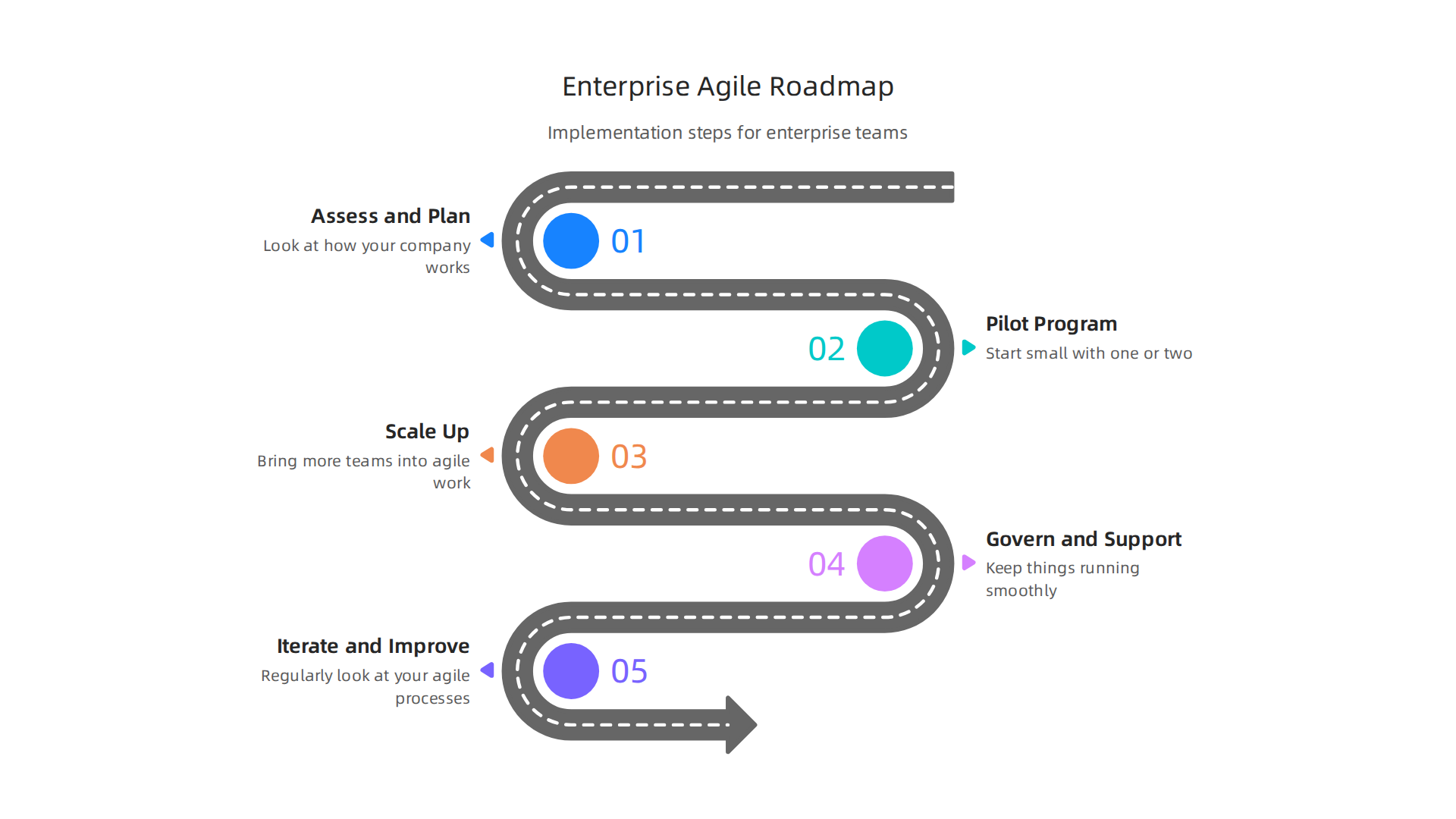
Step 1: Assess and Plan
First, look at how your company works now. What are your teams good at? What needs to get better? This "assess" step is about finding out what kind of agile approach makes the most sense for you. There are different types like Scrum, Kanban, or Extreme Programming (XP), each with its own rules and roles Agile vs. Waterfall: A Full Guide to Scrum, Kanban, and XP. Think about your projects, like if you are working on software for android app development, and pick the best fit. Leaders should decide on clear goals for what agile will achieve. You might also consider what project development software free options are available or specific tools like aws codecommit that can help.
Step 2: Pilot Program
Don’t change everything at once. Start small with one or two teams. This "pilot" phase lets you try out the new agile methods and learn what works and what doesn’t without big risks. It’s a chance to fix problems early and show quick wins. This also helps build excitement for the change.
Step 3: Scale Up
If the pilot works well, it’s time to expand. This "scale" step means bringing more teams into the agile way of working. It’s important to make sure all teams work together smoothly, especially when many groups depend on each other. Executive sponsors need to support this growth and remove any roadblocks.
Step 4: Govern and Support
As agile spreads, you need ways to keep things running smoothly. This "govern" step means setting up ways to check progress, share knowledge, and make sure everyone follows the chosen agile software development means. Product leaders should regularly review how teams are doing and offer help. Remember, clear guidelines prevent confusion. To learn more about choosing the best way to develop software, explore SDLC Methodologies for Enterprises.
Step 5: Iterate and Improve
Agile is all about getting better over time. The "iterate" step means regularly looking at your agile processes and making small changes to improve them. This isn’t a one-time change; it’s a continuous journey. Teams and leaders should always look for ways to work more efficiently and deliver more value.
Summary
This article explains why agile software development still matters for enterprise technology leaders in 2026 and how to make it work at scale. It defines the agile mindset through the Manifesto’s four values and twelve principles, then compares common methods—Scrum, Kanban, and Extreme Programming—and how to choose between them. The piece covers scaling options (SAFe, LeSS, Nexus), the trade-offs between structure and flexibility, and governance needs for regulated businesses. It then walks through the enterprise tooling landscape—issue trackers, CI/CD, observability and collaboration—and what to look for when selecting vendors. Common adoption roadblocks (skills, fragmentation, legacy processes) are paired with practical fixes like pilot programs, training, and vendor rationalization. Finally, the article describes useful delivery and outcome metrics and offers a step-by-step implementation roadmap so leaders can deploy agile across teams with measurable results.