
Mastering Enterprise Analytics Platform Selection for 2026 ROI

In 2026, businesses are swimming in more data than ever before. Every day, tons of information comes in from all sides. To win in today’s fast world, companies need to make smart choices very quickly. This is why enterprise analytics and business intelligence (BI) are so important. They are no longer just nice-to-have tools; they are essential for success.
Think about it: how can a company understand its customers, improve its products, or find new ways to grow without really knowing what its data is saying? This huge amount of data, combined with the need for speed, makes it tough for leaders. CIOs, CTOs, and other enterprise buyers often feel overwhelmed by all the different software options and vendors out there. It’s hard to know which tools will actually help and which ones will just add more problems.

Many companies struggle to get real value from their data. For example, even with a lot of money put into data and AI, only a small number of organizations report their analytics efforts as "highly successful" in terms of business impact [PDF] Enterprise Analytics ROI](https://sranalytics.io/wp-content/uploads/2025/10/Enterprise-Analytics-Lead-Magnet.pdf). A big reason for this challenge is the sheer volume of data, the need for better data retention strategies, and the speed at which decisions must be made. Businesses want tools that offer long-term scalability and make data easy to move around Data, AI & Analytics Trends Across Organizations in 2026. Most enterprises want better decision making and faster insights from their data and AI tools Data Modernization and AI, 2026.
This article will help enterprise leaders understand the world of analytics platforms. We will look at how to properly evaluate different tools, including powerful solutions like Clearwater Analytics. You will learn how to spot possible risks and, most importantly, how to measure the real return on investment (ROI) for your analytics programs. This way, you can make sure your technology choices truly help your business grow.
Do you want to stay updated on the latest AI and tech trends affecting businesses like yours?
Get clear daily AI updates from The AI Newsletter Worth Reading.
Choosing the right enterprise analytics platform starts with a clear understanding of your strategic priorities. Before looking at specific tools, like Clearwater Analytics, leaders must first define the exact business outcomes they want to achieve.
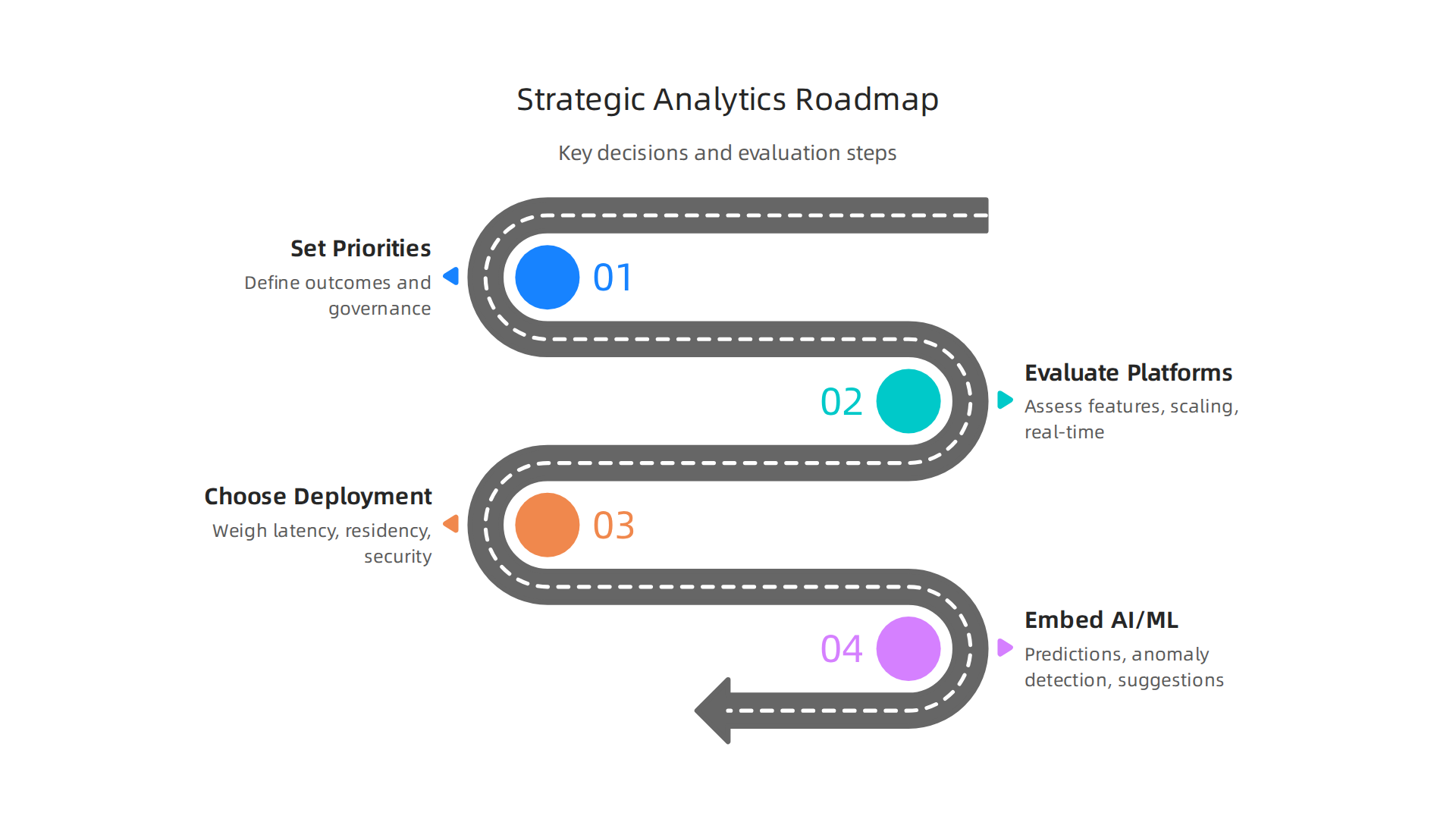

What problems are you trying to solve? What new opportunities do you hope to uncover?
Define Business Outcomes
It’s not enough to say "we want better data." You need to be very specific. For example, do you need faster ways to make decisions? Do you want to embed analytics directly into your daily software so everyone can use insights easily? Or is your main goal to improve how you report important data to meet legal rules?
Many companies boost their use of business intelligence (BI) and analytics by focusing on self-service tools and embedded analytics. This means giving more people easy ways to work with data and putting insights directly where they are needed most New Study Identifies Drivers of BI and Analytics Adoption in … – BARC. For example, embedded analytics increase user adoption rates quite a bit compared to just having separate dashboards. When you know these goals, you can better pick a platform that fits. For a deeper dive, it helps to understand the general analytics definition what enterprise leaders must know for 2026 in today’s business world.
Governance and Organizational Readiness Checks
Even the best analytics platform won’t work well if your company isn’t ready for it. Leaders need to set up clear rules, known as governance, for how data is used and managed. This includes thinking about data quality, security, and ethical use. It also means looking at your company’s culture. Do people share data easily? Do they trust the insights they get?
Another big part of readiness is having the right skills. In 2026, many companies find that a lack of AI skills is a major hurdle for using new technologies The State of AI in the Enterprise – 2026 AI report | Deloitte US. This skill gap means you might need to train your team or hire new experts.
When you’re ready to buy, use checklists and guides to make sure you’re picking the right tool. These can help you compare vendors, check for important features, and understand the full cost over time. For example, a Predictive Analytics Tools LMS: Procurement Checklist can ensure you cover all bases from integration to data access. Considering these points before you start looking at tools like Clearwater Analytics will save you time and money, making sure your investment truly pays off. This is a critical step for how CIOs and CTOs should evaluate AI companies in 2026 and other tech providers.
Now that you know what your company needs, it’s time to look closely at the different analytics platforms available. This is where you compare what tools like Clearwater Analytics can actually do against your goals.
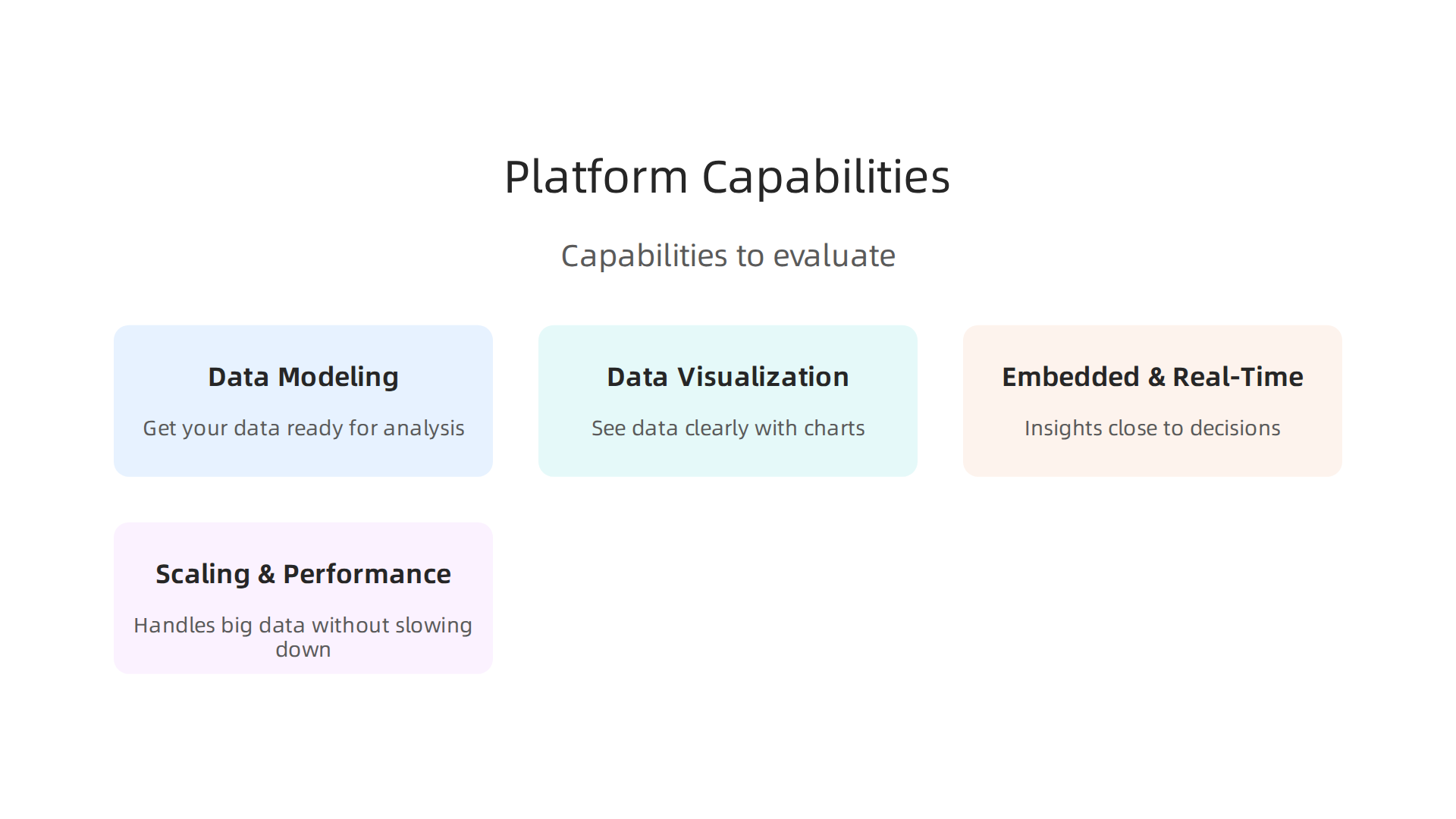
You need to check their features and how well they perform.
Let’s break down the main things to look for:
Data Modeling and Preparation
This is about how the platform helps you get your data ready. Think of it like organizing all your messy papers before you can draw any conclusions. A good platform should let you:
- Bring in data easily: Can it connect to all your different data sources, like databases, spreadsheets, or even social media platforms for things like Twitter analytics?
- Clean and combine data: Does it help you fix errors and put different pieces of data together smoothly?
- Structure data: Can it help you set up your data in a way that makes sense for answering your business questions? This is key for good analysis.
You want a platform that makes these steps simple, so your team doesn’t spend all their time just getting the data ready.
Data Visualization and Reporting
Once your data is clean, you need to see it clearly. This is where visualization comes in.
- Easy-to-understand charts and graphs: Can the platform create clear pictures from your data? You want dashboards that are simple to read and share.
- Customizable reports: Can you make reports that look exactly how you need them to, for different teams or for outside groups?
- Self-service options: Does it let different people in your company explore data on their own, without needing a data expert for every little question? Many platforms are evaluated on how well they let users explore and create their own reports Evaluating Microstrategy Mobile and Competing Business Intelligence Solutions.
Tools like Tableau Cloud or Power BI are known for their strong visualization features, often running in the cloud for easy access Cloud Based Bi Solutions.
Embedded and Real-Time Analytics
These features bring insights closer to where decisions happen.
- Embedded analytics: Can the platform put charts and data insights right inside the software you use every day? This means you don’t have to switch between different programs to get answers.
- Real-time analytics: Can you see data as it comes in, right now? For example, if you’re tracking customer actions, you might want to see them as they happen. This is crucial for quick decisions, unlike looking at old data. Many modern platforms focus on enabling real-time insights Transforming Business Intelligence in the Cloud Era. A good example of needing real-time data is often seen in data pipeline 2026 blueprint for building real-time reliable infrastructure.
Scaling and Performance
Your analytics platform needs to grow with your company and handle lots of data without slowing down.
- Handles big data: Can it work with huge amounts of information, whether you have a little data now or expect much more in the future? Some systems are built to manage extremely large data sets and offer flexible deployment options HentAI AI Top Picks and Alternative Platforms Reviewed.
- Speed: Does it run fast? No one likes waiting for reports or dashboards to load.
- Cloud or on-site: Where will the software live? Many companies now choose cloud-based options for their flexibility and power, like solutions that leverage AWS open data services, but some prefer to keep everything on their own servers for more control over data retention.
- Security: How well does it protect your sensitive data?
When you look at different business intelligence platforms, like comparing Amazon QuickSight, Microsoft Power BI, and Google Looker, it’s important to weigh these points

EVALUATION OF TOP CLOUD SERVICE PROVIDERS’ BI TOOLS. Make a list of your specific needs for each area and see which platform fits best.
For deeper insights into enterprise technology and AI, subscribe to our daily newsletter:
Subscribe to The Deep View Newsletter
After looking at what different tools can do, it’s just as important to think about where your analytics platform will actually live. This is what we call the "deployment model." It’s like deciding if you want your store in a big shopping mall, a small local spot, or a mix of both. Each choice has its own good and bad points for your business.
Cloud Deployment
Many companies today choose cloud options. This means your analytics software runs on powerful computers owned by another company, like Amazon, Google, or Microsoft. You access it over the internet.
- Pros of Cloud:
- Easy to start: You don’t need to buy or set up any big computer equipment.
- Scales easily: If your data grows a lot, the cloud platform can handle it without you doing much.
- Updates itself: The company running the cloud service takes care of all the software updates.
- Cost-effective for many: You often pay for what you use, which can save money compared to buying everything yourself. Some platforms are available as a Software-as-a-Service (SaaS) option, making them very accessible Magic Quadrant for Analytics and.
- Cons of Cloud:
- Less control: You have less direct say over the computer servers and how things are set up.
- Data residency: Your data might be stored in a country different from your own, which can be an issue for legal rules.
- Internet needed: If your internet goes down, you might not be able to get to your data.
- Vendor lock-in: It can be hard to switch to a different cloud provider later if you don’t like the one you picked.
For data that isn’t super sensitive, like public social media data for your company’s twitter analytics, a cloud platform can be a smart choice. Cloud options can also offer access to public data sets, like those available through aws open data.
On-Premises Deployment
This means you install and run the analytics software on your own computers and servers, right in your own office or data center.
- Pros of On-Premises:
- Full control: You have complete power over your data, its security, and how the system works. This is good for very sensitive information.
- Data residency: Your data stays exactly where you want it.
- No internet needed for core function: Once set up, you don’t always need an active internet connection to use it internally.
- Cons of On-Premises:
- High costs: You have to buy all the hardware, software licenses, and pay staff to manage it. These setups can require significant investment 9+ Biz Intel Software Pricing Plans (2024) – umn.edu ».
- Hard to scale: If your data grows or more people need to use the system, adding more power can be slow and expensive.
- Maintenance: Your team is fully responsible for all updates, security, and fixing problems.
Hybrid and Private Cloud Options
Some companies choose a mix. A hybrid approach means you keep some data and analytics on your own servers (on-premises) and use the cloud for other parts. For example, if your company uses a tool like clearwater analytics, you might keep very private financial data on-premises but use the cloud for less sensitive reports.
A private cloud is like having a cloud just for your company. It offers more control than a public cloud but still gives you some of the flexible benefits. This type of setup is often purchased as an on-premise and private cloud implementation Compare and Contrast ERP: PeopleSoft vs … – Digital Repository.
Key Things to Think About
When choosing a deployment model, remember these operational points:
- Latency: This is how fast your data moves. On-premises systems often have very low latency if users are nearby. Cloud systems are usually fast, but if your data center is far away, there might be slight delays.
- Data Residency: Where your data is physically kept is very important for privacy laws and company rules. Cloud providers let you pick regions, but on-premises gives you exact control. Companies also have rules about
data retention, meaning how long they must keep certain information, which impacts where data is stored. - Security: How well is your data protected? Cloud providers have strong security, but you still need to make sure your access and usage are safe. With on-premises, you are fully in charge of everything.
Understanding the different cloud provider options and how they fit into your overall company plan is a big step. To learn more about this, check out this guide on the Cloud Provider Ecosystem Enterprise Strategy For 2026.
Choosing where your data lives is a big decision, but it’s only one part of the puzzle. Once you know if your analytics platform will be in the cloud or on your own servers, you also need to think about how you bring all your information together, keep it safe, and make sure it follows all the rules. This is what we call data integration, governance, and security. These things are like the strong bones that hold up any good analytics system, making sure you can trust the information you use.
The Power of Data Integration
Imagine your business collects information from many different places: sales records, customer feedback, website visits, and maybe even social media like twitter analytics. To make sense of all this, you need to bring it together. Data integration is the process of combining data from various sources into one clear view.
This isn’t always easy. Sometimes data from one system doesn’t "talk" well with data from another. You might find different formats, missing pieces, or information that just doesn’t match up. These are common pitfalls. For instance, a complex financial tool like clearwater analytics needs to pull exact numbers from many places, and if those connections aren’t perfect, your reports won’t be right. Good integration means setting up strong pipelines to move data smoothly, as highlighted in a 2026 guide on data integration best practices.
Building Trust with Data Governance
Data governance is like having a rulebook for all your data. It sets down policies and steps for how data is managed, protected, and used across your whole company. This is super important because it ensures everyone understands where data comes from, what it means, and who can see it.
A good governance framework helps you manage things like data retention, which means deciding how long you need to keep certain data based on laws or company needs. In 2026, modern data governance means using tools that gather information about your data automatically and track its journey, along with clear rules for who owns what data What Modern Data Governance Actually Looks Like in 2026.
Part of data governance is understanding data lineage. This tracks data from its very beginning, through all the changes it goes through, to its final use in a report. Knowing the full story of your data helps build trust and makes it easier to fix problems if something goes wrong. Experts suggest that to build a strong base for your data, you should automate how you capture this lineage, instead of trying to write it all down by hand The Foundation of Enterprise Data Infrastructure (2026 Guide).
Another helpful tool for governance is a data catalog. Think of it as a library for all your company’s data. It helps people find the data they need and understand what it is. It also helps enforce rules about who can use which data and keeps track of its journey Why Data Catalog is a Must in 2026.
Keeping Data Safe with Security and Access Controls
Data security is about keeping your information safe from harm, whether it’s stored on your own computers or in the cloud. Even when using public data sets through services like aws open data, ensuring proper security around how you access and use that data is key. This means putting rules in place for who can see, use, or change your data.
Access controls are specific ways to do this. For example, you might have:
- Role-based access control: This means people can only see the data they need for their job. A sales manager might see sales data, but not employee salary information.
- Masking sensitive data: This is like blurring out private parts of data, so only certain people can see the full details.
These controls are super important for protecting sensitive company secrets and making sure you follow privacy laws. For a deeper look into protecting your enterprise data, consider exploring insights on Strategic Data Migration Service, which often involves handling security during data transfers.
Ultimately, strong data integration, clear governance, and solid security are not just good ideas. They are essential for any business wanting to use its data wisely in 2026. They help you make smart choices, stay safe from threats, and earn trust with your customers and partners.
5) Embedding AI and ML into BI workflows: opportunities and risks
Now that we’ve talked about getting your data in order, keeping it safe, and following the rules, let’s think about how to make that data even smarter. This means bringing in new technologies like Artificial Intelligence (AI) and Machine Learning (ML) into your Business Intelligence (BI) tools. It’s like giving your regular reports a superpower, allowing them to do much more than just show what happened in the past. In 2026, many businesses are looking to do this to make better choices.
How AI and ML Make Your Data Smarter
AI and ML models can help your analytics platforms in many practical ways. They can look at your information and find patterns that people might miss.
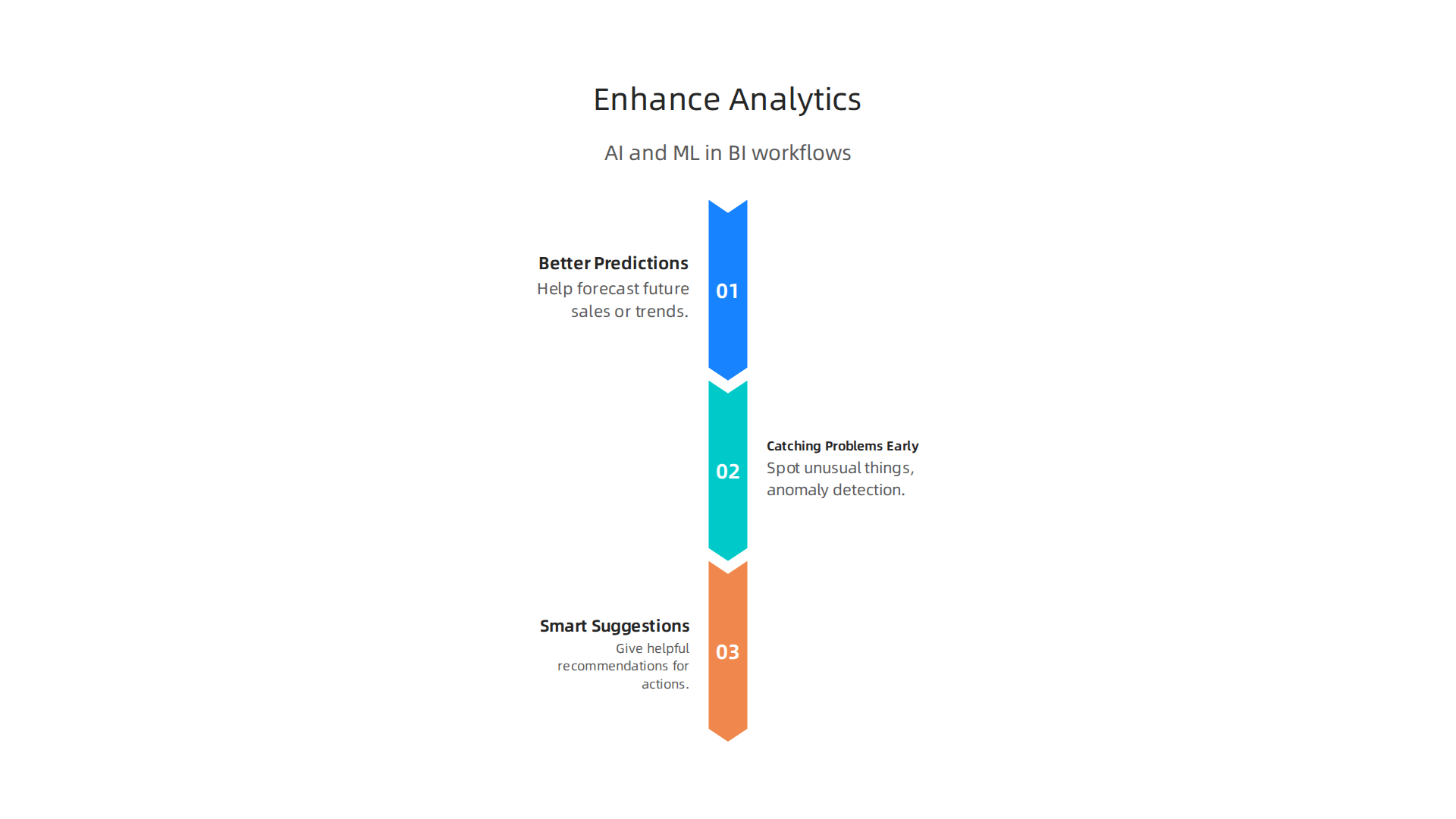
- Better Predictions: Instead of just reporting last month’s sales, AI can help predict what sales might look like next month or even next year. This is called forecasting. It helps businesses plan better for the future.
- Catching Problems Early: Imagine an unexpected drop in website visits or a strange change in customer behavior. ML models can spot these unusual things, known as anomaly detection, much faster than a person can. For example, if your
twitter analyticssuddenly show a weird spike in mentions, an ML model could flag it right away. This gives you time to react before a small problem becomes a big one. - Smart Suggestions: AI can also give helpful recommendations. Think of how online stores suggest products you might like. In a business setting, this could mean recommending which customers to contact next, or which parts of a business process could be made better.
For leaders looking to use these tools, understanding how to build a smart strategy for these technologies is key. You can learn more in a guide on best AI for business enterprise strategy.
Making Sure AI and ML Work Well: MLOps and Model Governance
Bringing AI and ML into your daily work also brings new things to think about. This area is called MLOps, which stands for Machine Learning Operations. It’s about how you manage, run, and keep your AI and ML models working correctly over time.
One big challenge is model drift. Imagine you train an AI model using lots of data from last year. But people’s habits change, and new things happen in the world. This means the model might not be as good at making predictions as time goes on. This fading accuracy is called model drift. There are two main types of drift to watch out for:
- Data drift: This happens when the new data coming into the model is different from the data it learned from. For instance, if you trained a model on
aws open datafrom five years ago, and now the world has changed a lot, the model might not work as well. - Concept drift: This is when the rules of the game change. For example, what made a customer buy something last year might not be true this year. The relationship between your inputs and outputs changes.
To prevent model drift and keep your AI models accurate, you need to monitor them constantly. MLOps involves using tools to watch how well your models are performing and retraining them when needed. For instance, continuous monitoring helps to detect and overcome model drift in MLOps so your models stay sharp.
Model governance is like the rulebook for your AI models. It sets policies for how models are built, tested, used, and updated, similar to how data retention rules apply to your information. This is very important for making sure your AI is fair, secure, and works as expected. It also helps with ethical concerns, like making sure your AI doesn’t accidentally make unfair decisions or misuse data. A good governance plan includes checking for any unfairness or biases in the model’s choices. This ensures that the AI helps your business fairly and responsibly.
To keep up with the latest in AI and technology, consider joining a community that provides daily insights.
Ready to get smarter about AI every day? The AI Newsletter Worth Reading provides clear, daily updates from The Deep View Newsletter.
6) Measuring ROI and building a vendor selection checklist
After thinking about how AI and Machine Learning can make your data smarter, the next important step is to make sure these investments truly pay off. This means carefully measuring the Return on Investment (ROI) and having a clear plan for choosing the right tools and partners. In 2026, many companies are still working on how to best measure the value they get from their data projects.
How to Estimate Value and ROI for Analytics
When you put money into new analytics tools or platforms, like clearwater analytics solutions, you want to know what you’ll get back. This is where ROI comes in. ROI helps you see if the benefits outweigh the costs.
First, you need to understand the Total Cost of Ownership (TCO). This isn’t just the sticker price of the software. It includes all the costs over time, like:
- The initial cost to buy or license the software.
- Costs for setting it up and integrating it with your existing systems.
- Training your team to use it.
- Ongoing maintenance, support, and upgrades.
- Costs for data storage and processing, perhaps on platforms like those that use
aws open dataprinciples for sharing.
You can find tools and guides to help you create a Free TCO Calculator + Complete Guide (2026) to figure out these expenses.
Next, you need to look at the business value you expect to gain. This can be:
- More Revenue: Maybe the analytics help you find new customers or sell more to existing ones.
- Cost Savings: Perhaps it helps you run your operations more efficiently, reducing waste or manual work.
- Risk Avoidance: Better data can help you avoid problems, like losing customers or making bad decisions. For example, if improved
twitter analyticshelp you catch negative trends early, you save your brand.
Measuring ROI requires defining what "success" looks like, connecting each analytics use case to a specific business owner, and proving the financial impact. Companies that do this well typically see better results from their analytics investments, according to research on Measuring ROI from analytics & BI investments. This involves looking at both near-term gains (what you see quickly) and long-term benefits (value that builds up over years). You can learn more about how to set up your analytics programs for success in a guide on ROI of Analytics: Measuring the Value of Your Data Investment.
Building a Smart Vendor Selection Checklist
Choosing the right analytics vendor is a big decision. To make sure you pick the best fit for your business, you need a good checklist. This checklist helps you compare different options fairly.
Here are some important things to include in your checklist:
-
Procurement Criteria:
- Pricing Structure: How will they charge you? Is it clear?
- Contract Terms: What are the rules for using their service?
- Implementation Support: How much help will they give you to get started?
- Time-to-Value: How quickly can you expect to see results?
- Scalability: Can the system grow with your business? This is a top priority for data leaders in 2026, according to a report on Data, AI & Analytics Trends Across Organizations in 2026.
-
Legal and Compliance Criteria:
- Data Security: How do they protect your information? This is super important.
- Data Privacy: How do they handle sensitive data to meet rules like GDPR?
- Data Retention Policies: What are their rules for keeping or deleting your data? You want to make sure their policies match your
data retentionneeds. - Bias and Fairness: For AI-powered tools, how do they ensure fair outcomes and avoid unfairness in decisions? A vendor checklist can help with your People Analytics RFP.
-
Technical Gating Criteria:
- Integration: Can it connect easily with your other business software?
- Performance: How fast and reliable is the system?
- User-friendliness: Is it easy for your team to use?
- Features: Does it have all the specific tools you need for your analytics?
- Support for AI: If you plan to use AI, how well does their platform support it, including things like AI governance?
Using a detailed template, such as a Business Intelligence RFP Template, can simplify this process and help you compare vendors side by side. For leaders looking to deploy and measure the value of advanced AI, understanding the impact on your business is key, and you can explore more about Enterprise LLM Adoption in 2026 How to Deploy Fine Tune and Measure ROI.
Summary
This article explains how enterprise leaders should evaluate analytics and BI platforms in 2026 so their investments deliver real business value. It walks through setting clear business outcomes, assessing governance and organizational readiness, and the technical capabilities to compare — from data modeling and visualization to embedded and real‑time analytics. You’ll learn how deployment choices (cloud, on‑premises, hybrid) affect cost, control, and latency, plus best practices for data integration, lineage, and security. The piece also covers embedding AI/ML into BI, the MLOps and governance needed to prevent model drift, and practical methods to estimate TCO and measure ROI. By the end you’ll have a checklist-driven approach to pick vendors, reduce risk, and improve time‑to‑value for analytics programs.