Drive Enterprise Growth with AI-Powered Software Development in 2026

Why AI-powered software development is a strategic priority for enterprises in 2026
In 2026, thinking about using AI in software development isn’t just a new idea, it’s a must-do for big companies.

It’s like asking if your car needs wheels. AI has grown so much that it’s now a core part of how software teams work. We’re seeing huge changes in how fast developers can build things, how quickly new products come out, and how well businesses do overall. Companies that use AI well are pulling ahead, while others might get left behind.
Actually, reports from last year already showed that leaders are no longer asking if they should use AI, but how to get the most value from it. Research points to AI being a major amplifier, making a company’s strengths even stronger and helping fix weaknesses too Announcing the 2025 DORA Report. This means that AI-powered software development is not just about making small improvements. It’s about changing the game completely. It helps developers create better code faster, test more thoroughly, and even write documentation with less effort. For example, studies in 2026 have found that generative AI greatly helps in design, implementation, testing, and documentation, with over 70% of developers seeing its benefits The State of Generative AI in Software Development.
This article will help enterprise leaders understand why AI is so important right now. We’ll look at the best technologies out there and how to measure if they are working. We’ll also talk about how to fit AI tools into your current systems, what risks to watch out for, and how to make sure your team has the right skills for this new world. We’ll also touch on things like global work AI and the importance of explainable AI so you understand how these systems make decisions. By the end, you will have a clear picture of how to use AI-powered software development to boost your company’s success.
To make sure you stay updated on all the latest in AI and technology, consider reading The AI Newsletter Worth Reading. It provides clear daily AI updates from The Deep View Newsletter. Also, to dive deeper into how companies are bringing AI into their day-to-day operations, check out our guide on Enterprise AI Adoption in 2026: A Data-Backed Roadmap for Business Leaders.
How AI is reshaping software development workflows
AI is not just a helper; it is truly changing how software teams work every day. Imagine developers getting smart suggestions as they type code, almost like a super-smart partner working with them. This is part of what AI-powered software development brings to the table. These tools can automatically write parts of the code, find mistakes, and even create the notes that explain how the code works. This means developers can spend less time on repetitive tasks and more time on solving big problems and creating new features. Studies in 2026 show that AI agents and tools like GitHub Copilot are now part of the daily routine for many developers, speeding up their work significantly A Case Study with GitHub Copilot and Other AI Assistants.
One of the biggest impacts is in code generation and completion. Tools use AI to guess what you want to type next, suggesting whole lines of code or even entire functions. This is like a very advanced auto-correct for programming. It is often called "pair-programming augmentation" because it feels like having another programmer helping you in real-time. This does not just make coding faster; it can also help reduce errors and make sure the code follows best practices. For enterprises looking to stay competitive, understanding and adopting The Modern Software Development Toolkit for Enterprise Teams in 2026 is vital.
Beyond writing code, AI-powered software development also shines in other parts of the software creation process.
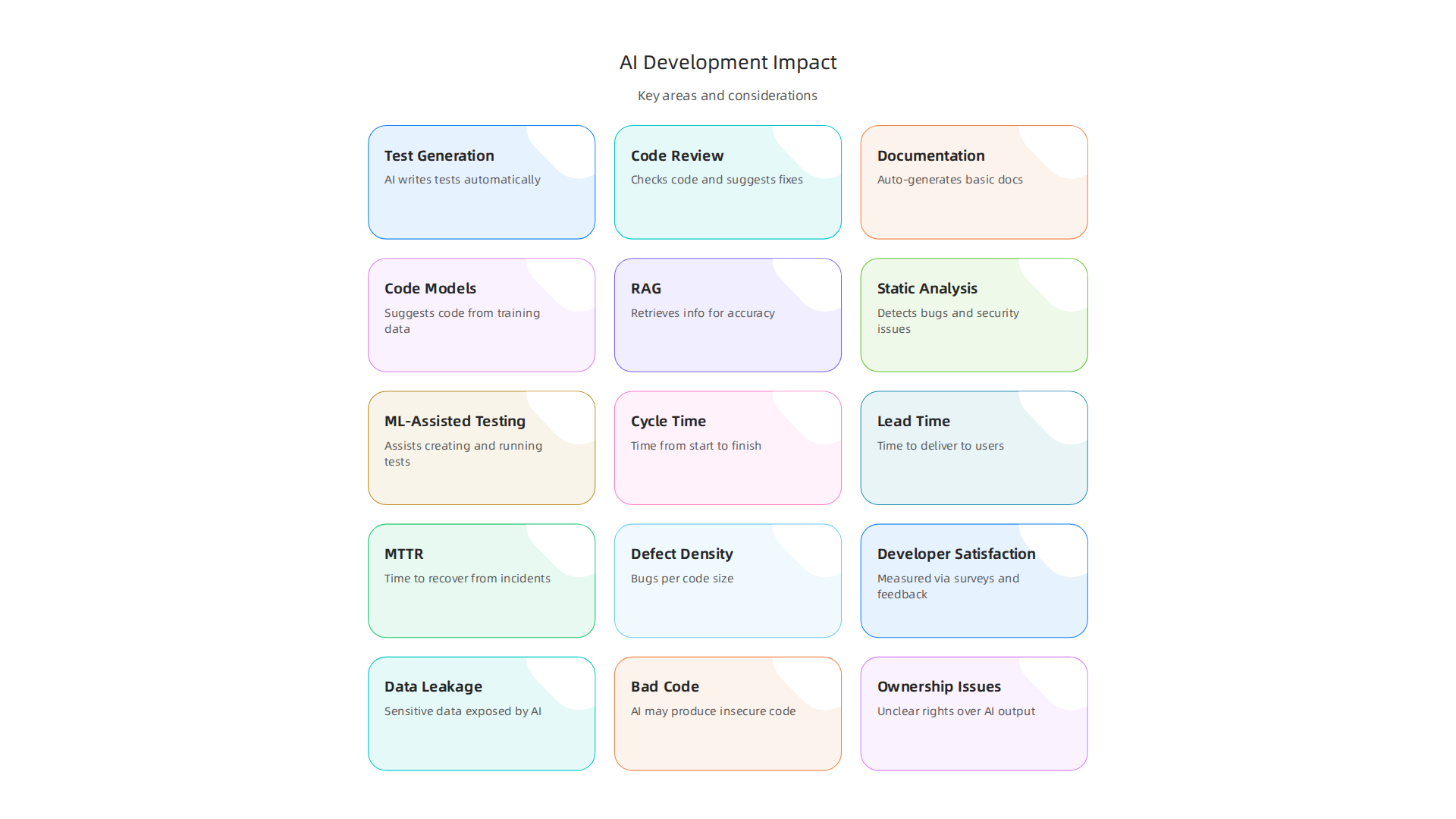
- Test Generation: AI can look at your code and automatically write tests for it. This helps find bugs earlier and makes sure the software works as it should.
- Code Review: When developers finish writing code, others usually review it. AI can help here by checking for common mistakes, suggesting improvements, and making sure the code is easy to read. This makes the review process faster and more thorough.
- Documentation: Writing clear explanations for complex code can take a lot of time. AI tools can create basic documentation automatically, freeing up developers to focus on higher-value tasks.
These changes are making development cycles much shorter. The DORA 2025 State of AI-assisted Software Development Report points out that AI acts as an amplifier, improving existing strengths in an organization DORA | State of AI-assisted Software Development 2025. This means companies that already have good development practices can see even greater gains from using AI. To fully benefit, enterprise leaders should look into how to Master Generative AI Tools for Enterprise Productivity.
The power behind AI-powered software development comes from different kinds of smart tools and models. These are the building blocks that let AI help developers in all the ways we just talked about. Understanding these key technologies is important for any enterprise looking to make the most of AI in 2026.
Here are some of the main technologies driving these changes:
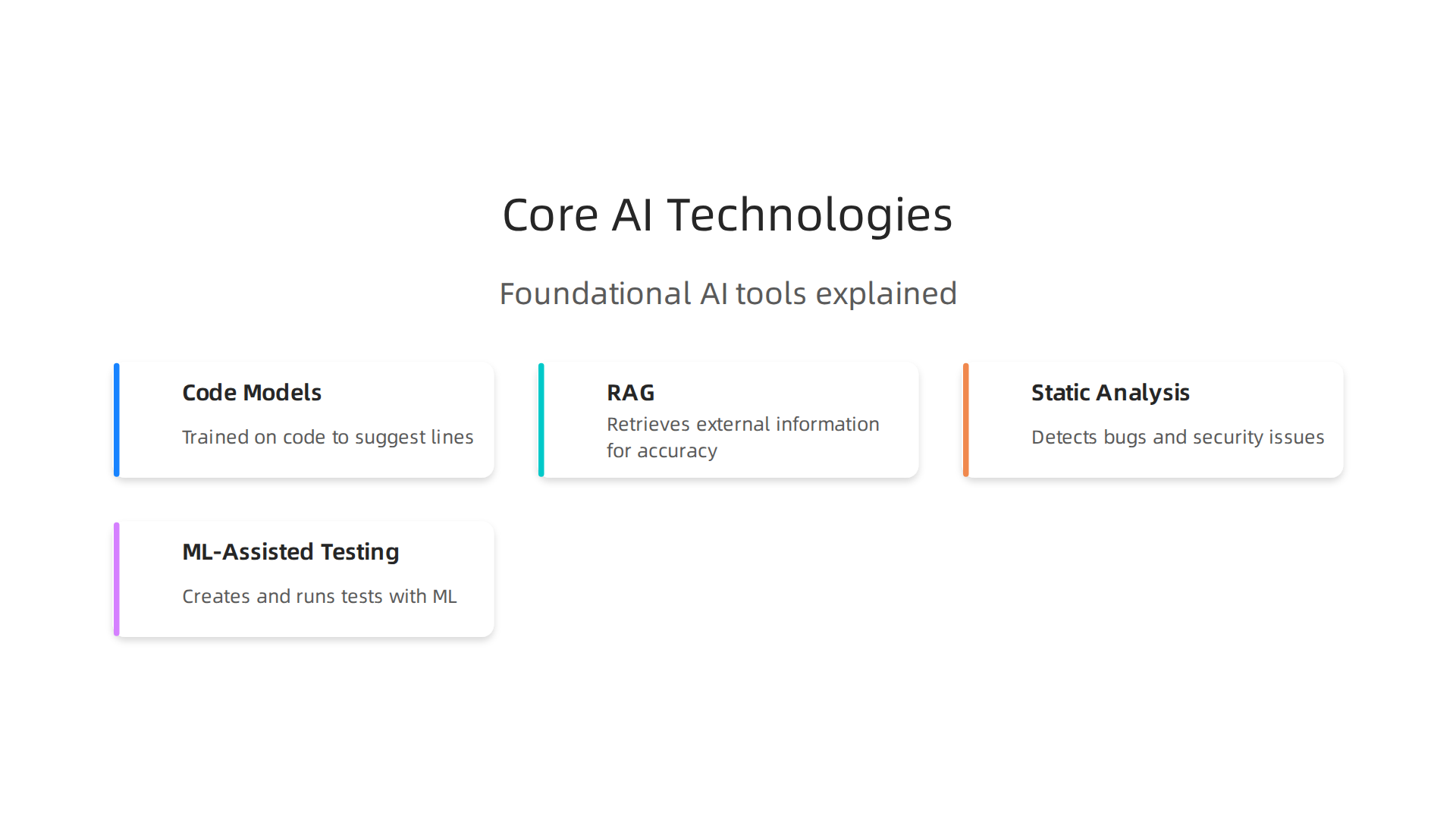
- Code Models: These are like very smart brains trained on tons of existing code. They learn how code is written, what it usually does, and how different parts fit together. When you use them, they can suggest new lines of code or even whole functions. They are at the heart of tools that write code for you, making coding faster and more efficient. In fact, generative AI, which includes these code models, is having its biggest impact in areas like design and implementation, with over 70% of developers seeing its benefits today The State of Generative AI in Software Development.
- Retrieval-Augmented Generation (RAG): Imagine an AI that not only knows a lot but can also quickly look up specific, fresh information when it needs to. That is RAG. It helps AI give more accurate and up-to-date answers or code suggestions by finding relevant documents or code snippets. This approach often makes the AI’s suggestions more reliable and can lead to more explainable AI because it can show where its information came from.
- Static-Analysis AI: This kind of AI acts like a super-detector for mistakes. It looks at your code without running it and finds possible errors, security issues, or bad practices. It is like having an expert reviewer check your work instantly, pointing out problems before they cause bigger headaches.
- ML-Assisted Testing: Machine learning helps create and run software tests. It can learn from past tests and code changes to figure out what new tests are needed or what parts of the software are most likely to break. This helps developers find bugs faster and ensure the software works reliably.
Choosing the Right AI Models for Your Enterprise
When an enterprise decides to use AI-powered software development, they also need to choose where these AI models will live and how they will be used. There are a few main options, each with its own pros and cons:
- Open-Source Models: These are AI models that anyone can use and change for free. They offer a lot of flexibility and control. You can customize them to fit your exact needs. However, managing and updating them often requires more effort and skilled people. Research shows that open-source AI is becoming more popular in software engineering Artificial Intelligence in Open Source Software Engineering.
- Commercial Hosted Models: Many companies offer AI models as a service. You pay a fee, and they handle all the complex technical parts. These are easy to use and get started with, but you have less control over the model itself and how it works. You might rely on these services from the select top AI companies in 2026 that lead the market.
- On-Premise/Private Model Deployment: This means running the AI models on your own computers and servers, or in a private cloud environment. This gives you the most control over data privacy and security, which is super important for sensitive enterprise information. But, it is also the most expensive and complex option to set up and maintain.
Making the right choice depends on your company’s specific needs for security, cost, and control. It is a big part of successful enterprise LLM adoption in 2026.
Want to stay on top of the latest AI trends and how they impact businesses like yours? Get clear daily AI updates from The AI Newsletter Worth Reading.
Measuring Productivity Gains: Metrics That Matter
After picking the right AI models and how to use them, the next big step is to know if your AI-powered software development efforts are truly helping.

It is not enough to just use AI; you need to measure its impact clearly. This means looking at certain numbers that tell you if your team is working faster, better, and happier.
Here are some important ways to measure if AI is boosting your team’s work:
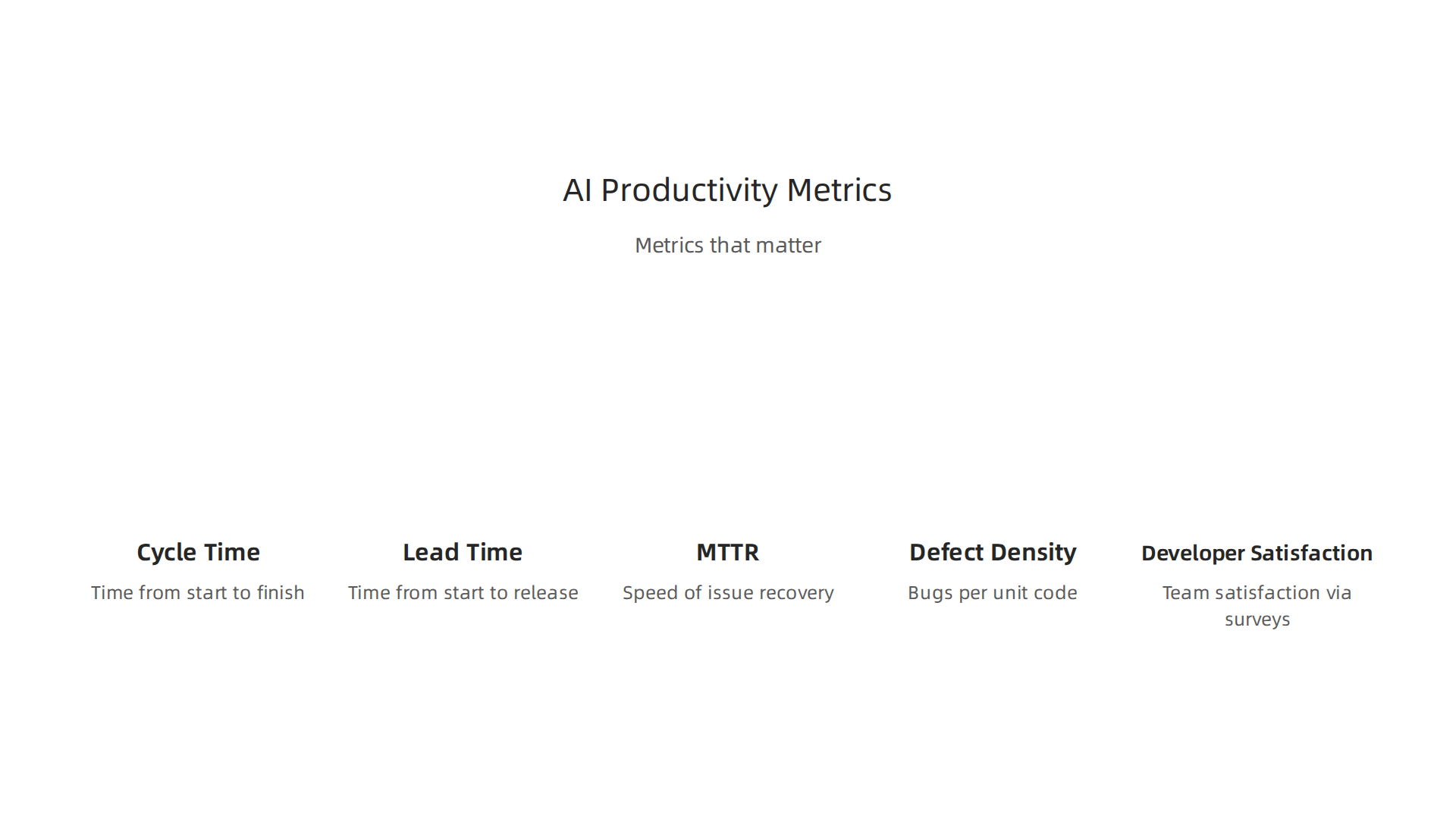
- Cycle Time: This is how long it takes for a task, like writing a new piece of code, to go from start to finish. If AI helps developers write code quicker, this time should get shorter.
- Lead Time for Changes: This measures the time from when a developer starts working on a change until that change is live for users. AI tools can speed up this whole process, from writing code to testing and sending it out. Experts agree that lead time for changes is a key measure of how well software teams deliver value Developer Productivity Metrics 2026.
- Mean Time to Recovery (MTTR): When something goes wrong in the software, this is how fast your team can fix it and get things back to normal. AI can help here by quickly finding issues or suggesting fixes. This metric is part of a set of common measures known as DORA metrics, which help track software delivery performance DORA Metrics Explained: The Complete Guide (2026).
- Defect Density: This looks at how many bugs or errors are found in the code. If AI helps developers write better code from the start, you should see fewer defects.
- Developer Satisfaction: Happy developers often make better software. You can measure this through surveys or feedback. If AI-powered software development tools make their jobs easier and less frustrating, they will be more satisfied. Google uses measures like speed, ease, and quality to gauge developer productivity Moving from AI adoption to effective SDLC use.
How to Know if AI Is Really Helping
It is important to be sure that any good changes you see are actually because of the AI tools, and not something else. To do this, companies often use special tests, much like science experiments.
One common way is to set up what is called an A/B test. Imagine you have two groups of developers:
- Group A uses the new AI tools.
- Group B does not use the AI tools (or uses the old way).
Both groups work on similar tasks. You then compare their performance using the metrics listed above. For instance, researchers have run studies comparing tasks completed with and without AI to measure the average time needed We are Changing our Developer Productivity Experiment. This kind of testing helps enterprises understand the true impact of their AI investments and ensures that positive changes are directly linked to the AI tooling. Some studies even use a careful research design, like those used in clinical drug trials, to measure AI’s impact on developer productivity AI Coding Productivity 2026.
By carefully measuring these things, enterprises can clearly see the value that AI-powered software development brings to their teams and overall business. For more on improving your software delivery, consider exploring ways to accelerate enterprise software delivery with agile SDLC.
Integrating AI tools into your existing enterprise stack
Once you know that AI-powered software development is working, the next step is to actually put these helpful AI tools into your company’s daily work. This means making sure they fit smoothly with all the systems and processes you already have. It is not just about buying new tools; it is about making them a natural part of how your team builds software.
Here is how companies are adding AI tools and what they need to think about:
Practical Ways to Add AI Tools
AI tools can be woven into different parts of your software development process:
- Right Inside Your Coding Tool: Many AI tools can be used directly within the programs developers use to write code, called IDEs (Integrated Development Environments). This means developers get help with coding, fixing errors, or suggesting improvements without having to switch between different apps. This kind of direct link helps developers work faster without getting distracted Top 12 AI Developer Tools in 2026 for Security, Coding ….
- In Your Automated Build Process: Companies use something called CI/CD pipelines to automatically test and release new software. AI can be added here to do things like check for bad code, find security risks, or even help with setting up releases. Special AI agents can work within these pipelines to handle different tasks, making the process faster and more reliable Agent-Operated CI/CD: The Architecture Making AI Coding …. Building these pipelines is also key for systems that use AI to generate content from your company’s data RAG infrastructure for generative AI applications in Google Cloud.
- As Code Review Helpers: Before new code becomes part of the main project, other developers usually look at it. AI can act like a smart assistant here, helping to review the code. AI bots can spot common mistakes or suggest better ways to write code, which saves human reviewers time and makes the code stronger.
- Within Developer Platforms: Many large companies have their own internal platforms to make it easier for developers to do their jobs. Adding AI to these platforms can give developers smarter tools, like asking questions about project rules or getting quick answers from past project knowledge. This improves the overall developer experience. For more on creating better tools for your team, consider learning about platform engineering in 2026 a strategic guide for CIOs and CTOs.
What Data and Engineering You Need
To make AI-powered software development work well, you need to set up certain things behind the scenes:
- Collecting Data on Usage: It is important to gather information about how the AI tools are being used and how well they are performing. This "telemetry" data helps you understand if the AI is truly helping and where it can be made better.
- Secure AI Data Pipelines (RAG): If your AI uses your company’s own information to give answers, like in a Retrieval-Augmented Generation (RAG) system, you need special pipelines. These pipelines handle bringing in documents, breaking them into smaller parts, and making sure the AI can find the right information to generate responses. It is crucial to build these in a way that keeps your company’s data safe and private AI Engineering Blueprint for On-Premises Retrieval …. This process involves many steps, from ingesting documents to generating answers RAG in 2026: A Practical Blueprint for Retrieval- ….
- Rules for AI Model Versions: Just like software, AI models change over time. You need a clear system to keep track of all the different versions of your AI models. This "governance" makes sure you know which model is being used, that it meets company rules, and that any changes are done safely. This includes checking data quality and keeping track of all model changes AI Governance in GitHub CI/CD: Essential Controls for Secure …. You also need to follow security best practices when using AI in your automated development processes Top CI/CD Pipeline Security Best Practices for AI-Powered ….
By thinking carefully about these integration patterns and technical needs, companies can truly make AI a powerful part of their software development efforts.
Stay informed on all the latest advancements in AI and technology.
The AI Newsletter Worth Reading
Even when AI tools are smoothly added to your software development, new worries about safety and rules pop up. Using AI-powered software development comes with its own set of risks. Companies need to be careful about these new challenges to keep their work safe and follow all necessary rules.
Risks with AI-Powered Software Development
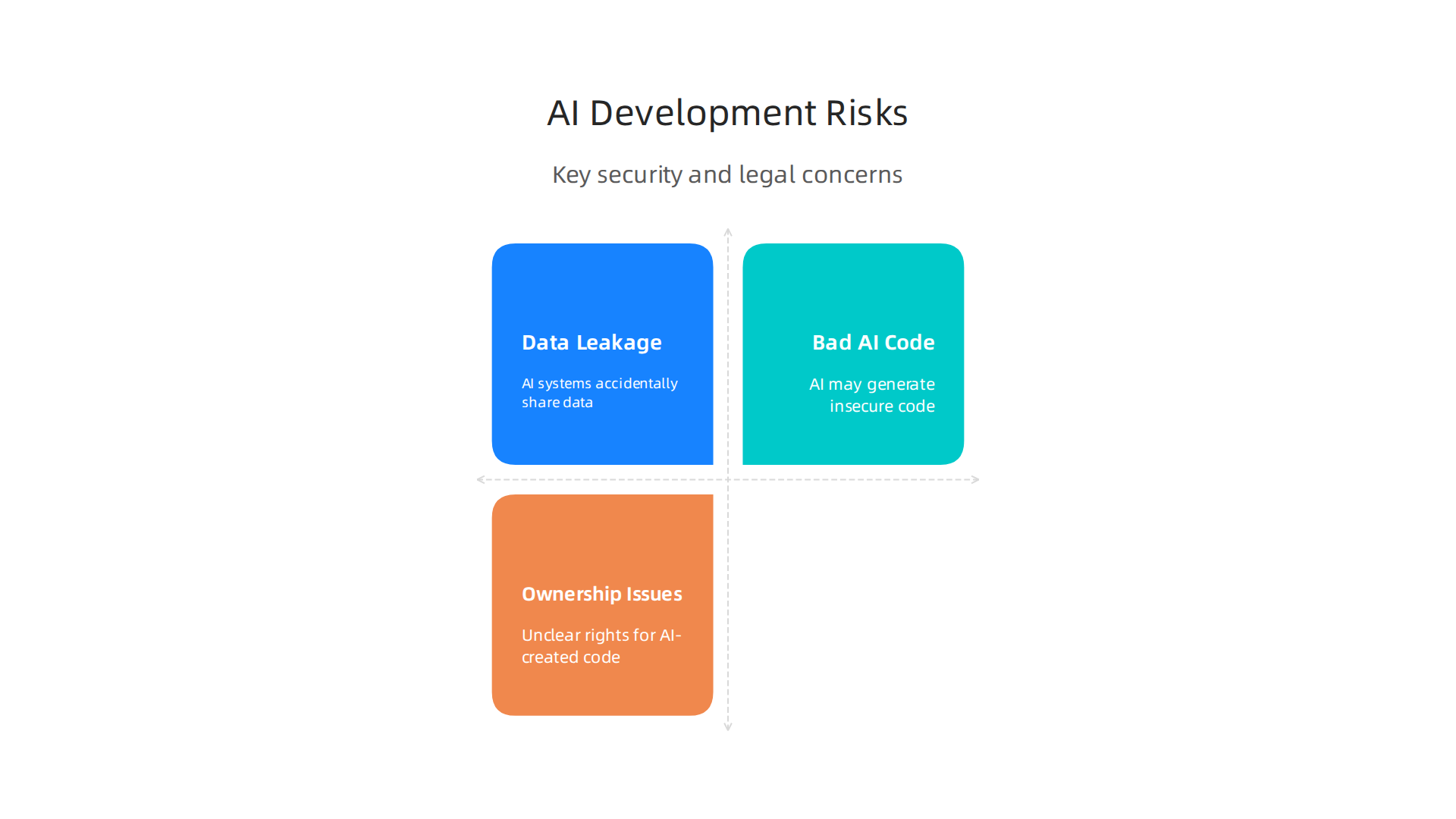
Let’s look at the main risks you need to think about:
-
Data Leakage: AI systems that use your company’s private information, like Retrieval-Augmented Generation (RAG) systems, can sometimes accidentally share sensitive data. This can happen if these systems are not set up properly, creating a high risk of information getting out Preventing Data Leakage with Provenance and Policy Enforcement. This sensitive data might come from your internal documents or from what users type into the system Privacy Risks and Mitigations in Retrieval-Augmented Generation. There’s also a risk called "prompt leakage," where bad actors can trick the AI into revealing company secrets Agentic Security-Threats, Mitigations and Challenges.
-
Bad Code from AI (Hallucinations): AI can sometimes make up information or create code that is not quite right or is even insecure. This is often called an AI "hallucination." When AI writes code, it can introduce mistakes or create new security weak spots. Many experts agree that AI models do not produce safe code and can lead to new kinds of vulnerabilities in software AI Code in the Wild: Measuring Security Risks and Ecosystem Shifts of AI-Generated Code in Modern Software. For example, studies in 2026 found that almost half of AI-generated code samples contained serious security flaws known as OWASP Top 10 vulnerabilities Vibe Coding’s Security Debt: The AI-Generated CVE Surge. This means every piece of code an AI generates needs a human to check it. In fact, mandatory developer review is considered the main way to prevent security problems. Companies also need to understand how AI-generated code impacts the overall Cybersecurity Risks of AI-Generated Code.
-
Ownership and Legal Issues: When AI creates new code or content, who owns it? This question about intellectual property and licensing can be complicated. If AI learns from open-source code, does the new code it makes have to follow those same open-source rules? Companies need clear rules and legal guidance about using and owning anything created with AI. For a broader view on AI strategy, consider the AI for Business 2026 Enterprise Strategy Guide.
Rules and Checks for AI Software Development
To manage these risks, companies need good rules and processes:
- Who Can Access What (Access Governance): You need strong rules about who can use your AI tools and what information they can put into these tools. This helps stop private company data from being accidentally or purposely shared.
- Tracking Code’s Journey (Provenance Tracking): It is important to know where every piece of code comes from, especially if AI helped create it. This means keeping a clear record of which AI model was used, what data it was trained on, and any changes made by people. This helps you understand why the AI did what it did (this is sometimes called explainable AI) and trace back any problems.
- Checking AI-Made Code (Validation Workflows): Before any AI-generated code goes into your live systems, it must be thoroughly checked. This can include automatic tests, human code reviews, and special security scans. The main goal is to catch any mistakes or security issues that the AI might have added. The Artificial Intelligence Risk Management Framework offers good advice on how to review AI system outputs for safety and quality.
By carefully managing these risks and setting up good controls, companies can use AI-powered software development more safely and smartly in 2026.
When companies use more AI-powered software development, they also need to think about their people.

It’s not just about the tools; it’s about building the right teams and teaching them new skills. In 2026, this means changing how people work together and what they need to know.
Shifting Skills for AI Development
The world of software development is changing fast because of AI. Now, developers need a mix of skills that go beyond just coding. They must understand not only traditional engineering but also new areas like:
- Machine Learning Operations (ML Ops): These skills help teams manage the AI models from start to finish. This means making sure AI tools run smoothly and reliably.
- Prompt Engineering: This is a new skill about knowing how to talk to AI. It means writing the right questions or instructions (called "prompts") so the AI gives the best answers or code.
- Product and Security Skills: Even with AI doing more work, people still need to guide what products are built and make sure they are safe. Security is more important than ever, especially with the risks AI can bring.
Combining these different skills helps teams work better with AI-powered software development. It also opens up new possibilities in the 2026 AI jobs landscape. Measuring how well these new ways of working perform is also key, and companies are now looking at different ways to track engineering effectiveness with AI-aware DORA metrics for 2026.
New Ways to Organize Teams
Companies are also finding different ways to set up their teams to get the most out of AI. Here are some popular models:
- Centers of Excellence (CoE): These are special groups that focus only on AI. They help other teams learn about AI, set best practices, and make sure everyone uses AI tools safely and well. They can also help explain how AI makes decisions, which is sometimes called "explainable AI."
- Embedded AI Engineers: Instead of a separate AI group, some companies place AI experts directly within existing product teams. These engineers help their specific team use AI every day to build software better and faster.
- Platform Teams: These teams build shared tools and platforms that everyone can use to work with AI. This helps scale AI solutions across the whole company, making it easier for many teams to benefit from AI-powered software development.
These new team structures help companies use AI more effectively. They also ensure that while AI helps with coding, the human touch remains strong for product vision, security, and making sure the AI truly helps the business.
To stay on top of all the latest changes and insights in AI and technology, consider subscribing to The AI Newsletter Worth Reading.
When companies are ready to bring AI-powered software development tools into their work, picking the right platforms is a big step.

It’s like choosing the right tools for a builder. You want them to fit well, be safe, and actually help you get things done.
Key Things to Look For in AI Platforms
Before you buy any AI development platform, think about these important points:
- How it Fits with What You Have: Does the new AI platform work easily with your existing computer systems, databases, and other tools? It should connect smoothly to avoid problems later. Companies often need platforms that can link with their everyday tools like GitHub or Jira for smooth operations.
- How Secure It Is: AI tools can make code, but sometimes that code might have hidden problems or security risks. Studies show that AI models can create code with known weak spots. So, it’s very important to check how well the platform protects your data and code. Look for things like strong access controls and ways to check code quality. This helps prevent new "AI-induced vulnerabilities" from spreading across your projects.
- Support and Guarantees: What kind of help will you get if something goes wrong? Make sure the company selling the AI platform offers good support and stands by their product.
- Where the AI Came From: It’s good to know how the AI model was built and what data it used. This is called "model provenance." Understanding this can help you trust the AI and know if it meets certain rules or standards.
- Proof It Works: Can the AI platform show that it actually helps your company? You want to see real results, like faster work or fewer mistakes. Make sure there are ways to measure its success.
These points help you find an AI platform that not only works but also adds real value to your business. When thinking about buying, consider seeking advice on how CIOs and CTOs should evaluate AI companies in 2026.
How to Evaluate AI Vendors
To choose the best platform, it’s smart to have a plan for checking out different sellers. Here’s a simple checklist for evaluating AI vendors:
- Design a Small Test (Pilot): Before you buy big, try out the AI platform on a small project. This "pilot" helps you see if it truly solves your specific problems. Pick a small, low-risk task for this test.
- Guess Your Return on Investment (ROI): Think about how the AI platform will save you money or help you earn more. This is your "ROI hypothesis." It gives you a clear goal to measure against during your pilot.
- Run Comparison Tests: Don’t just take the vendor’s word for it. Test the AI platform against others using your own data and problems. This helps you compare how well each platform performs. You should check how well it fetches information (retrieval metrics) and how good its answers are (generation metrics), using special tools to evaluate AI like RAGAS-style metrics.
- Plan Your Exit: What if the platform doesn’t work out? Have a plan for how you would switch to a different tool or stop using it. This helps you be ready for anything.
In 2026, companies often use a checklist-driven approach to evaluate AI vendors, looking at things like data handling, security, and how the model behaves. This careful process ensures you pick the best AI-powered software development tools for your company. You can find more helpful information in a guide on AI vendor evaluation checklist and comparison criteria.
Summary
AI-powered software development has moved from optional to strategic for enterprises in 2026, accelerating coding, testing, documentation, and product delivery. This article explains how AI tools—code models, RAG, static-analysis AI, and ML-assisted testing—change developer workflows and where they add the most value. It walks through deployment choices (open-source, commercial hosted, on-premises), the technical plumbing needed for safe RAG pipelines, and practical integration patterns like IDE plugins and agent-operated CI/CD. The piece also shows how to measure impact with cycle time, lead time for changes, MTTR, defect density, and developer satisfaction, and how to validate gains with A/B-style experiments. It highlights key risks such as data leakage, hallucinated or insecure AI-generated code, and ownership questions, and recommends governance, provenance tracking, and mandatory review workflows. Finally, it covers shifting skills, team models (CoEs, embedded AI engineers, platform teams), and a vendor-evaluation checklist to pilot and scale AI safely across the enterprise.