
Master Generative AI Tools for Enterprise Productivity

Why Senior Leaders Must Treat Generative AI Tools as a Core Productivity Upgrade
In 2026, the business world is changing fast, and generative AI tools are a big reason why. These smart computer programs are not just fancy new tech; they are now a must-have for companies that want to do well. Leaders need to see these tools as a main way to make their teams work better and faster.

Think about it: Many studies show how much these tools help. For example, some tasks in customer support can see productivity go up by 14% to 15%, and in software development, it can jump by 26% Economy.

Other reports even say that generative AI can cut the time it takes to finish tasks by 15% to over 50%, while also making the quality of work better AI, Productivity, and Labor Markets: A Review of the …. Businesses are reporting clear gains in efficiency and productivity, with two-thirds of organizations already seeing benefits from using AI The State of AI in the Enterprise – 2026 AI report. Some companies have even doubled or more their employee productivity because of generative AI.
These powerful generative AI tools are changing how work gets done across many parts of a company. From writing reports and helping customers to developing new software and handling finances, AI is stepping in. It takes over the parts of jobs that are often dull or repetitive. This frees up human workers to focus on more creative and important tasks. It’s not just about doing things faster; it’s about doing them smarter. For example, some AI tools, like those you might think of as similar to Mindgrasp AI or Brainly AI for learning, can quickly process information and help teams find answers or create content more efficiently. This shifts workflows in big ways, making companies more agile and able to adapt quickly.
However, bringing these new tools into a company is not always easy. Leaders have to figure out which tools are best, how to put them in place without causing problems, and how to deal with any risks. It can be tricky to pick the right generative AI tools and make sure they really help the business grow.
This article will give you a clear, step-by-step guide. We will show you how to choose, set up, and manage generative AI tools in your business. We will help you understand how to get the most out of these tools while keeping your company safe and strong. You can learn more about how to set up your overall plan in our guide to enterprise AI adoption in 2026.
Stay up-to-date with the latest advancements in AI and technology. Get clear daily AI updates from The AI Newsletter Worth Reading.

Generative AI tools are truly changing the game for businesses in 2026. They are not just for doing simple things; they are helping companies work much smarter across almost every part of the business.

Many companies are seeing big jumps in how much work their teams can get done. Some reports show that these tools can even help double employee output or more in organizations that use them well A global survey of enterprise.
Here are some real ways generative AI tools are boosting productivity in different areas:
Engineering and Product Teams
In engineering, generative AI tools are like having an extra helper for your most skilled workers. They can quickly write parts of computer code, suggest ways to fix problems, or even help test new software. This means engineers can spend less time on repetitive coding and more time on creating new and exciting features. For product teams, these tools can quickly put together many ideas for new products or features. They can also sort through lots of customer feedback to find out what people really want. This helps product managers make better choices faster. If you want to learn more about how AI helps these roles, check out our guide on key software development engineering roles and skills in 2026.
Sales and Marketing
Sales and marketing teams also get a big boost from generative AI tools.
- Sales: Salespeople can use these tools to write personalized emails to many customers at once. The AI can also help draft proposals or answer common questions, making sure every message is clear and helpful. This frees up sales teams to focus on building strong relationships with customers.
- Marketing: For marketing, generative AI helps create all sorts of content, from social media posts and blog articles to ideas for new ad campaigns. It can quickly make many versions of an ad, so marketers can find what works best. Tools similar to Mindgrasp AI or Brainly AI can help marketing teams quickly research topics and come up with fresh ideas for content.
Operations and Customer Service
In operations, generative AI tools automate many tasks that used to take a lot of time. This includes sorting data, writing reports, and managing schedules. Imagine a tool that can look at all your staffing needs and suggest the best shifts, making your existing workforce management software even more powerful. These tools help leaders make smarter choices because they can quickly get the right information. They can also make customer service much better by answering simple questions instantly, so human agents can help with harder issues. This focus on workflow automation and decision support truly scales business operations.
When Gains Are Harder to See
While generative AI tools offer amazing benefits, it’s good to remember they are not a magic fix for everything. They work best for tasks that have clear rules, lots of data, and where the results can be easily measured. For tasks that need a lot of human creativity, deep personal understanding, or face-to-face problem solving, AI tools might help, but the gains might be smaller or take more effort to achieve. Building trust in these AI systems is also very important. You can find out more about that here: building enterprise AI trust with human oversight and guardrails. The biggest gains come when people and AI work together, with AI handling the routine parts and humans focusing on the unique, strategic work.
Generative AI tools are not all the same. They come in different types, each built to help with specific business needs. Knowing these types helps companies choose the right tools for the job. Here are the main kinds of generative AI tools you’ll see in businesses today:
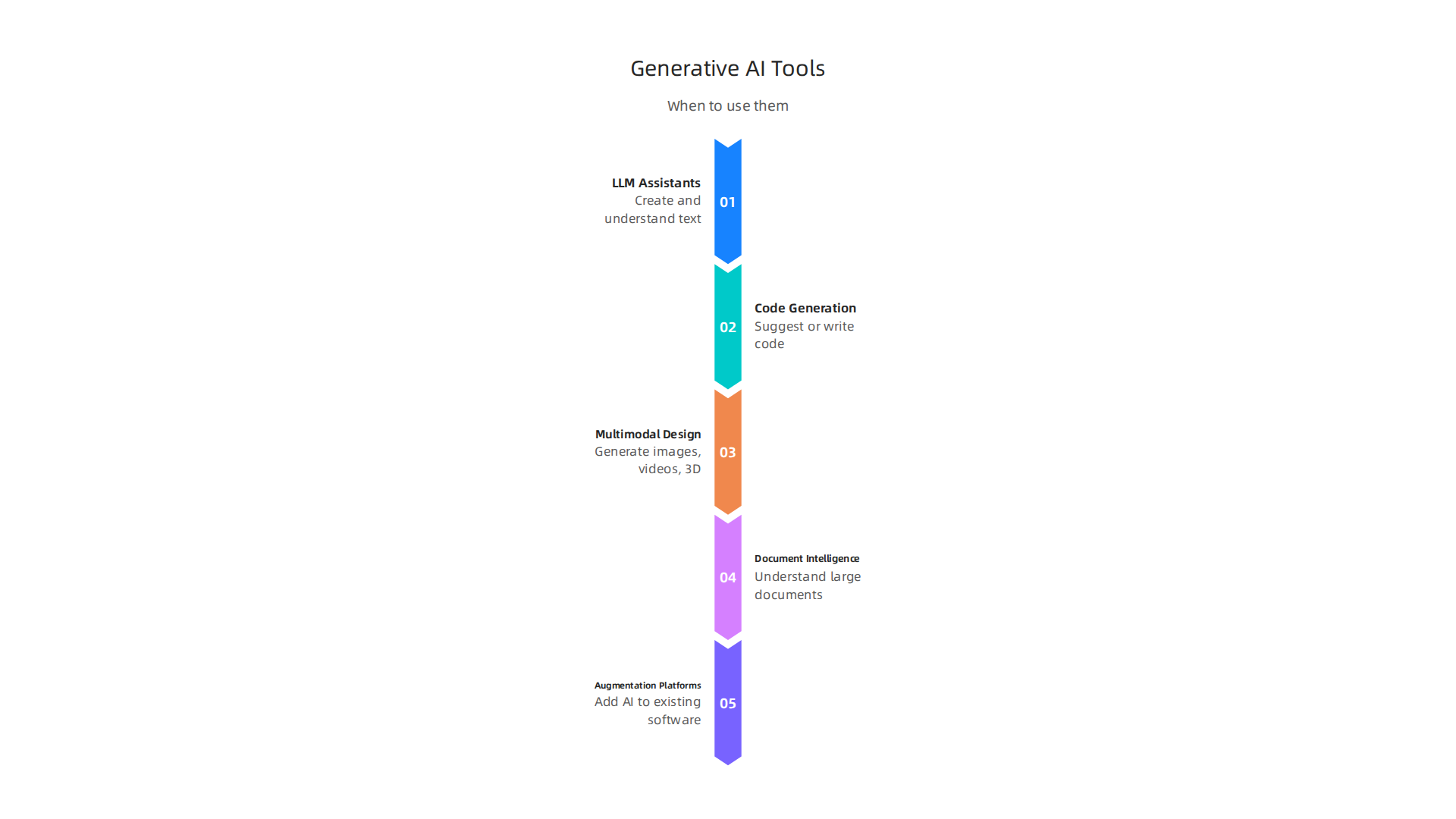
Large-Language Model (LLM) Assistants
These are like smart writing and talking helpers. They can understand and create human-like text. Businesses use them for many things, such as:
- Answering questions: Providing quick answers to customer questions.
- Creating content: Writing reports, summaries, or marketing materials.
- Managing knowledge: Helping employees find information faster.
They are great for common problems like improving customer support and making knowledge management easier. Many employees already use AI tools for content creation and customer service in 2026, showing how helpful LLMs are becoming what’s driving business technology decisions in 2026?. For businesses thinking about using these big language models, there’s a lot to learn about Enterprise LLM adoption in 2026.
Code Generation Tools
These generative AI tools are designed to help computer programmers. They can suggest or even write parts of computer code, making the coding process much faster. This helps companies boost their developer velocity, meaning engineers can build new software and features more quickly.
Multimodal Design Agents
These tools are creative helpers. They can generate many kinds of content, like images, videos, and even 3D models. Marketing teams love these for quickly creating visual content, and product teams can use them to brainstorm new product looks.
Document Intelligence
This type of generative AI helps businesses understand and use information from large amounts of documents. It can quickly read and pull out important facts from legal papers, financial reports, or research studies. This makes tasks like legal review and financial analysis much faster and more accurate.
Augmentation Platforms
These are tools that add AI power to existing software. They don’t replace your old systems, but make them smarter. For example, an augmentation platform could connect to your existing workforce management software to suggest better staff schedules or help automate reporting tasks. This improves what you already have.
Important Things to Consider
While generative AI tools offer amazing help, choosing the right ones means thinking about a few things:
- Accuracy: How correct are the answers or creations from the AI? You need tools that are reliable.
- Latency: How fast do the tools work? Some tasks need quick answers, while others can wait a bit longer.
- Integration Complexity: How hard will it be to connect these new AI tools with your current computer systems? You want them to work together smoothly.
- Vendor Lock-in: Can you easily switch to a different tool or company if the one you picked doesn’t work out? It’s good to avoid being stuck with one choice forever.
Thinking about these points carefully helps businesses make smart choices about their generative AI tools. If you’re looking for guidance on how to pick the best AI for your company, explore an AI engine evaluation framework for enterprise leaders in 2026.
Want to stay informed about all the latest in AI and technology? Get clear daily AI updates.
The AI Newsletter Worth Reading
After understanding the different types of generative AI tools and the general things to think about, the next big step is picking the right vendor. This means looking closely at what each company offers and how their tools will truly help your business grow. In 2026, many companies are jumping into AI, but smart leaders know that a good plan for picking and measuring these tools is key.
Practical Vendor Evaluation Checklist
When you’re looking at different vendors for generative AI tools, it’s helpful to have a checklist.
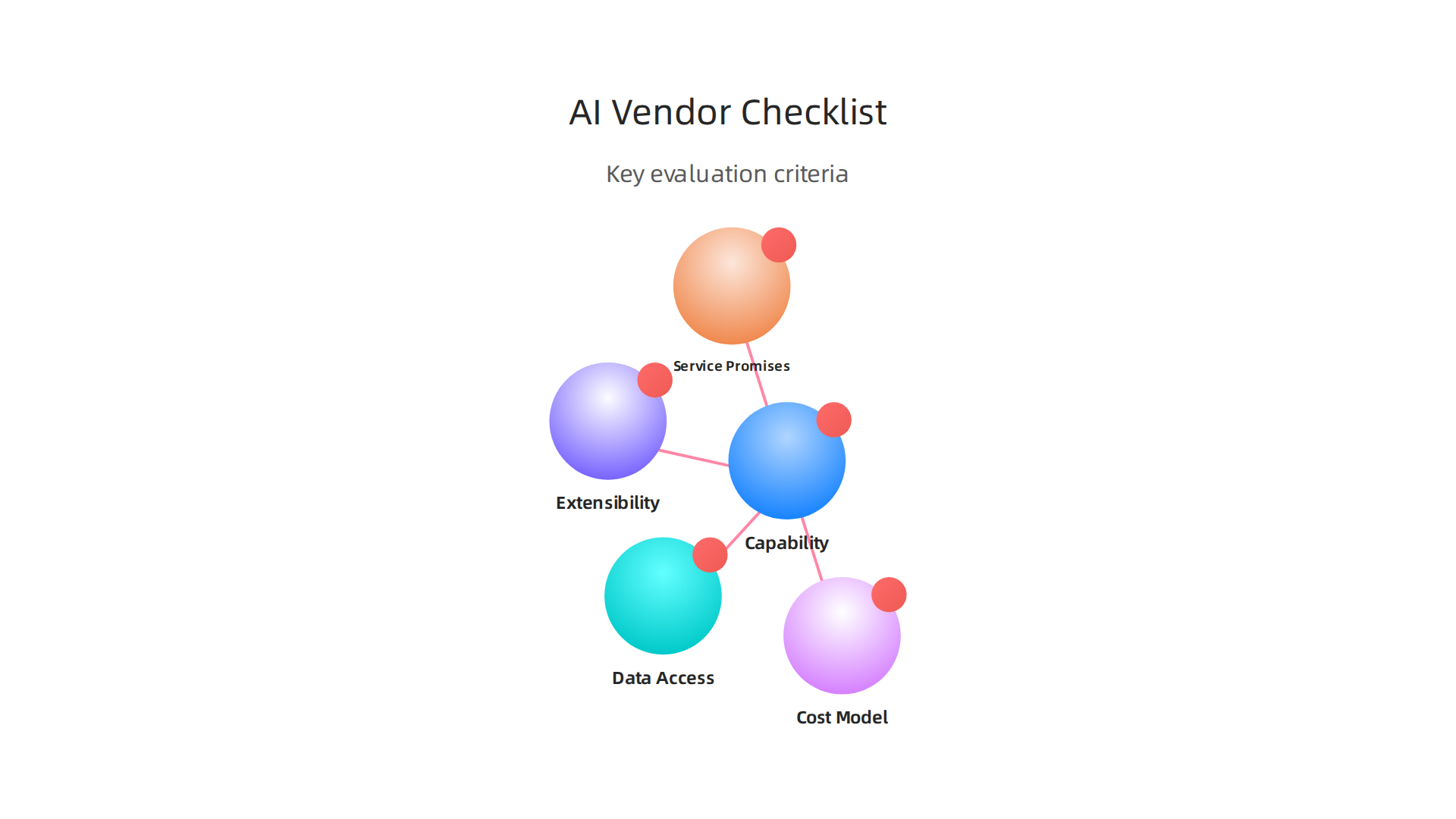
This helps you compare them fairly:
- What it can do (Capability): Does the generative AI tool actually solve your problem? In 2026, the best generative AI tools often have many features, like creating images, videos, and text, not just one thing. These are often called multimodal tools Best Generative AI Tools 2026: Enterprise-Grade Platforms …. You also want to know if it can work like a smart agent, handling tasks on its own.
- How it uses your data (Data Access): It’s super important to understand how the vendor will keep your company’s private information safe. Will they use your data to make their AI better for everyone, or will it stay private just for you?
- Service Promises (SLAs): What kind of support will you get? How fast will problems be fixed? Good Service Level Agreements (SLAs) mean you know what to expect if something goes wrong.
- How much it costs (Cost Model): Make sure you understand how the vendor charges. Is it by how much you use the tool, or a flat fee? Costs can add up, so be clear about this from the start.
- Can it grow with you (Extensibility): As your business changes, can the generative AI tool change too? Can it easily connect with your existing systems, like your enterprise technology domains every leader must understand in 2026? You don’t want to get stuck with something that can’t keep up.
Methods to Estimate ROI and Set Measurable KPIs for Pilots
It’s not enough to just buy a generative AI tool. You need to know if it’s really making a difference for your money. To do this, you should:
- Start with your goals: Before you even try a pilot project, know exactly what business problem you’re trying to solve. Is it to save time, make customers happier, or create new products faster?
- Set clear measures: How will you know if the tool is working? For example, if you want to save time, measure how much less time a task takes. If you want happier customers, look at customer feedback. Setting these Key Performance Indicators (KPIs) early helps show the real value Enterprise AI Adoption in 2026: From Pilot Purgatory to ….
- Run small tests: Start with a pilot project. This lets you test the generative AI tool in a small way and see its impact before rolling it out everywhere. This careful step-by-step approach is crucial for enterprise AI success.
Questions for RFPs and Vendor Demos
When you’re talking to different generative AI vendors, ask smart questions to make sure you’re comparing apples to apples:
- "How does your solution specifically help us achieve [mention your business goal]?"
- "Can you show us a real-life example of a company like ours that used your generative AI tools and saw clear results?"
- "What data do you need from us, and how do you protect it?"
- "What happens if we need to switch to another vendor later on?"
By asking these questions and checking these points, you can make a much better choice for your business’s generative AI future. Choosing the right partners can really define your data-backed enterprise AI strategy roadmap for 2026.
Now that you know how to pick the right vendors for generative AI tools, the next big step is putting those tools to work. It’s not about just flipping a switch. To make sure your generative AI tools really help your business, you need a smart plan for how you roll them out, connect them to your other systems, and keep them working well.
Implementation Best Practices: Pilots, Integration Patterns, and Scaling
Getting generative AI right in your company means taking careful steps. You want to grow slowly and smartly.
A Step-by-Step Rollout Approach
Think of it like learning to ride a bike. You don’t start on the freeway.
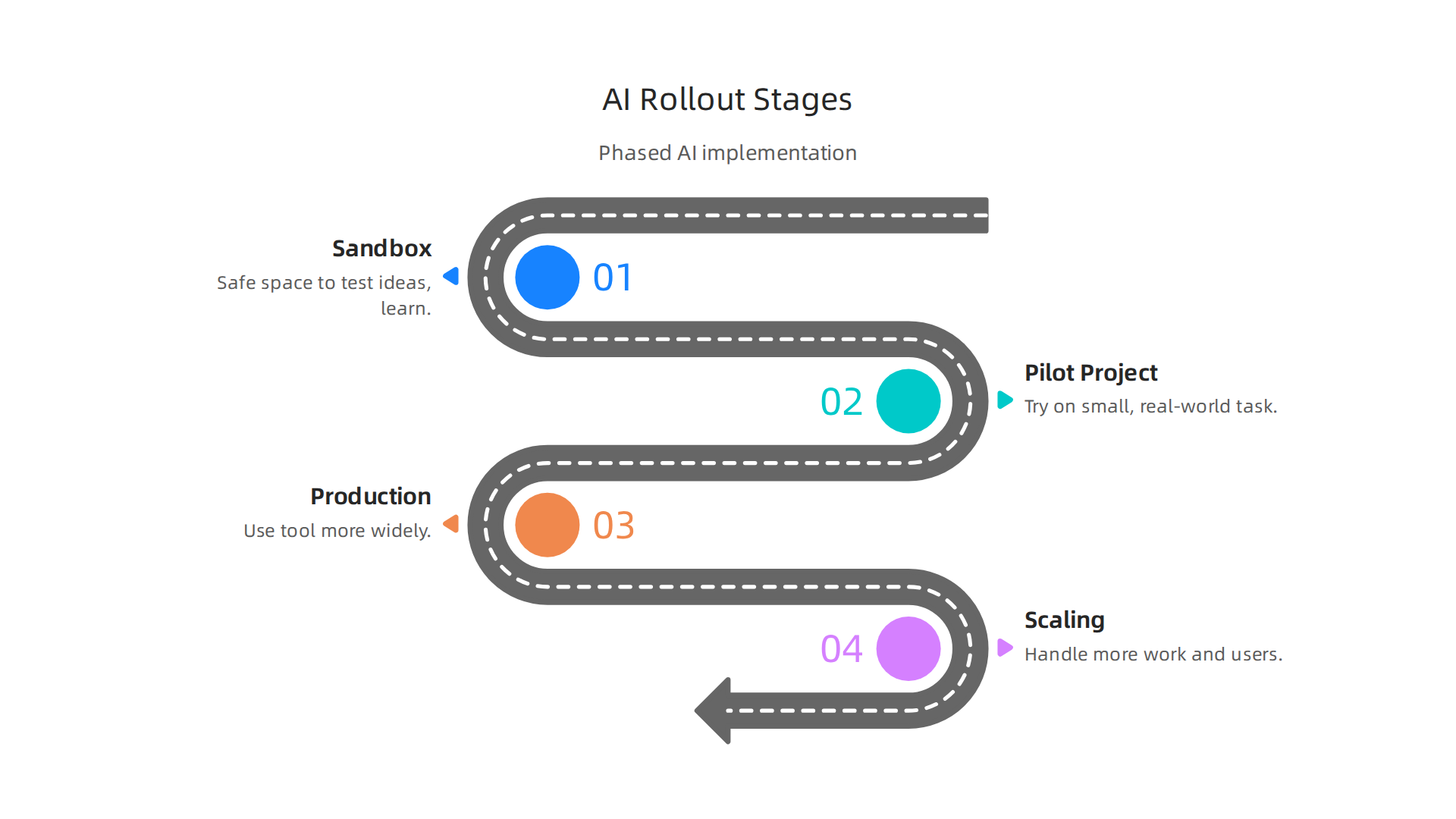
- Sandbox: First, set up a "sandbox." This is a safe, separate space where your teams can play with the generative AI tools, test ideas, and learn without any risk to your real business operations. It’s where you get comfortable.
- Pilot Project: Next, move to a pilot. This means trying out the generative AI tool on a small, real-world task. For example, maybe you test it with one small team to help them write reports faster. This helps you see how the tool works in action and if it truly solves the problem you picked. A smart, step-by-step approach like this is key for success when bringing generative AI into your company in 2026 Generative AI for Enterprise: From Pilot to Production In 2026.
- Production and Scaling: If the pilot goes well, then you can start using the generative AI tool more widely. This is called "production." As you use it more, you’ll want to make sure it can handle more work and more users. This is where "scaling" comes in. A good scalable generative AI strategy involves choosing platforms that connect well with what you already use and building reusable parts that can be used across your company 30 Best Generative AI Tools for Enterprises in 2026.
Smart Ways to Connect Your AI Tools
Generative AI tools won’t work alone. They need to talk to your other systems. Here are some ways businesses are connecting them:
- Data Integration: Your AI needs information. This means making sure data flows smoothly from your existing databases to your generative AI tools, and sometimes back again.
- Identity and Access: You need to control who can use the AI and what information they can access. This keeps your data safe and makes sure people only use the AI for approved tasks.
- Observability: This is about watching how your AI tools are performing. Are they giving good answers? Are they fast enough? Having good ways to watch them helps you catch problems early.
- Common Patterns: In 2026, many companies use smart ways to connect AI. One popular way is called "Retrieval-Augmented Generation" (RAG). This helps generative AI tools give answers based on your company’s own information, making them more accurate and useful Enterprise LLM Integration Patterns and Architectures in …. Another common way is "Augmented Workflow," where AI acts like a smart helper inside the software your team already uses, perhaps even connecting with your platform engineering in 2026 efforts.
Keeping Your AI Smart: Monitoring and Feedback
Even after your generative AI tools are running, your work isn’t done. You need to keep an eye on them and make them better over time.
- Watch and Learn: Continuously monitor your AI’s performance. Are the results good? Are there any unexpected issues?
- Feedback Loops: Set up ways for people using the AI to give feedback. This helps you understand what’s working and what needs fixing. Using this feedback, you can improve the AI’s "prompts" (the instructions you give it) and even train the models to be better. For more on improving those instructions, check out the 2026 prompt engineering guide for enterprise teams.
- Stay Legal: New rules and laws about AI are coming out all the time, like the EU AI Act or guidelines from the US National Institute of Standards and Technology (NIST) AI Governance & Compliance Regulatory Guide 2026 – Insentra. You need to make sure your AI tools always follow these rules, especially if they handle important or sensitive data. This also includes thinking about human oversight to build trust, as discussed in building enterprise AI trust with human oversight and guardrails.
Staying on top of these details helps ensure your generative AI strategy is a lasting success.
Get clear daily AI updates from The AI Newsletter Worth Reading.
After you have your generative AI tools set up and working, keeping them safe and following the rules is super important. Think of it like a new car. You need to know how to drive it safely and make sure it passes all the checks. For generative AI, this means focusing on security, making sure you follow all the laws, and having clear rules for how people use it.
Security, compliance, and risk mitigation for generative AI deployments
Bringing generative AI tools into your business means you also need to think about new risks. It’s not just about what the tools can do, but what could go wrong if they are not used carefully.
Guarding Against AI Security Risks
Generative AI, while powerful, comes with its own set of security challenges.
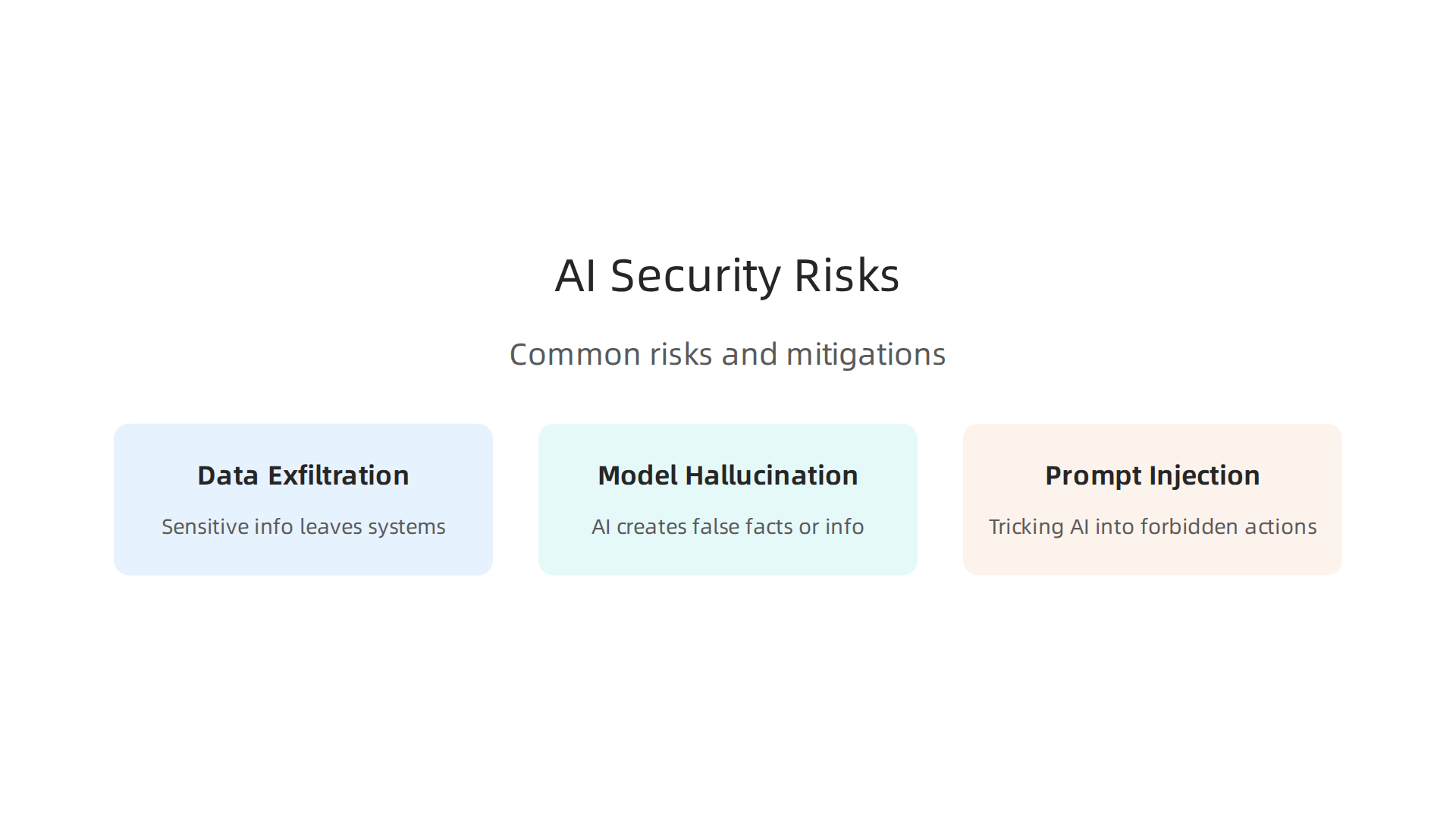
Here are some top risks and how to deal with them:
- Data Exfiltration: This happens when sensitive company information accidentally leaves your systems through the AI tool. For example, if an employee asks the AI about a secret project, and the AI sends that info to an outside service. To stop this, keep sensitive data separate and control who can access the AI.
- Model Hallucination: Sometimes, AI tools make things up. They can create facts or information that aren’t true, which can be very harmful if used for important business decisions. Setting up human checks and using methods like Retrieval-Augmented Generation (RAG), which pulls from your own trusted data, can help reduce this.
- Prompt Injection: This is when someone tricks the AI into doing something it shouldn’t, by giving it tricky instructions (prompts). This could lead to the AI sharing information it shouldn’t, or performing actions it’s not approved for. You can fight this with careful system design that limits what the AI can do and with ongoing monitoring.
Having strong security is key for protecting your business as you use these new generative AI tools.
Following the Rules: Compliance and Regulations
The world of AI is getting more rules every day. In 2026, companies must pay close attention to compliance to avoid big problems.
- Data Residency: This means knowing where your data is stored and processed. Some laws require certain data to stay in specific countries or regions. Your generative AI tools must respect these rules.
- Logging and Auditability: You need to keep good records of how your AI tools are used and what they produce. If something goes wrong, you need to be able to trace back what happened. This is called auditability and it’s a big part of meeting regulatory expectations, especially for "high-risk AI" systems that affect people’s rights or safety AI Compliance Guide 2026: Global Regulations.
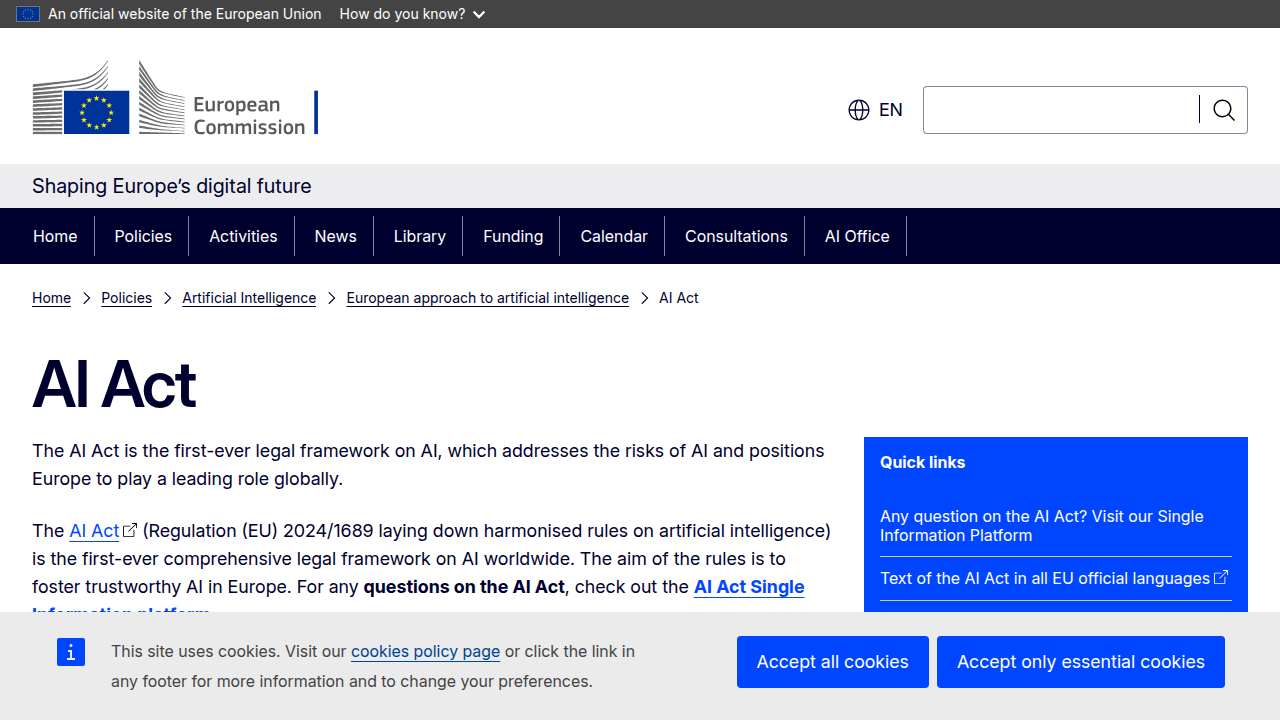
- Regulator Expectations: Governments are creating new laws for AI. The EU AI Act, for example, is a big one that affects many businesses, even outside Europe AI Act | Shaping Europe’s digital future – European Union.
In the US, frameworks like the NIST AI Risk Management Framework guide how companies manage AI risks, and new initiatives like the NIST AI Agent Standards Initiative are setting future requirements NIST AI Agent Standards Initiative. Staying updated on these changing rules is important for any enterprise using AI AI Risk & Compliance in 2026: What Enterprises Must Prepare For. This includes understanding how different rules like GDPR and SOC 2 apply to your AI AI Agent Governance: Policy and Compliance 2026 Guide.
Setting Up Smart AI Governance
Good governance is about having clear rules and people responsible for making sure the generative AI tools are used wisely and safely.
- Clear Roles: Decide who is in charge of managing, checking, and approving AI usage. This might involve roles like an AI Ethics Committee or specific enterprise AI engineer roadmap for 2026 roles.
- Approval Gates: Before new generative AI tools or uses are rolled out widely, they should go through checks and get approval. This makes sure they meet all your company’s security and compliance standards.
- Model Usage Policies: Create easy-to-understand rules for how employees can and cannot use AI. This might cover things like what kind of data can be put into an AI, and how AI-generated content should be checked before being used. This includes making sure any AI tool, even something like Mindgrasp AI or Brainly AI, fits into your overall workforce management software strategy and follows company guidelines. Setting these rules helps your company stay on the right path with AI.
Now that your company has set rules for generative AI tools and made sure they are safe, the next big step is getting your people ready. This means making sure your team has the right skills, setting up how different parts of your company will work with AI, and helping everyone get used to these new tools. It is all about preparing your organization from the inside out.
Organizational readiness: talent, change management, and operating models
Bringing in new generative AI tools changes how people work. For your business to truly benefit, you need to think about your staff, how your teams are set up, and how you will help everyone adapt. This "readiness" is key to making AI work for you.
Getting the Right People: Skills and Training
One of the biggest hurdles for companies using AI in 2026 is finding people with the right skills. Many businesses feel there’s a big gap in what their teams know about AI and what they need to know. For example, a report showed that the lack of AI skills is a major problem for integration, with only 31% of organizations saying their talent is highly prepared for AI adoption The State of AI in the Enterprise – 2026 AI report.
To fix this, companies are doing a few things:
- Hiring New Talent: Bringing in people who already have AI skills, like data scientists or machine learning engineers. You can also look at the bigger picture of the 2026 AI jobs landscape to understand what roles are most needed.
- Upskilling Current Employees: Teaching existing staff how to use generative AI tools. This often means giving them training on new software and concepts.

Learning to "study AI with purpose" helps business leaders and their teams build real AI literacy and adapt their skills for the future. Many companies are focusing on building their IT talent from within.
- AI-Augmented Teams: This is where humans and AI work together. Employees use generative AI tools like smart assistants to do their jobs better and faster. This way, the AI helps people, instead of replacing them.
Making sure your team has the right skills is super important for successful AI use.
How Teams Work: Operating Models for AI
Once you have the right people, you need to decide how your company will use generative AI tools across different departments. There are two main ways to set this up:
- Centralized AI Platform: In this model, one main team or department manages all the AI tools and projects for the whole company. This can make sure everyone uses the tools in a standard way and follows the rules. It often involves building a unified AI infrastructure that everyone can tap into AI Trends in Enterprise Software 2026.
- Federated Teams: Here, different departments or teams have their own AI specialists and use generative AI tools in ways that make the most sense for their specific work. This allows for more freedom and speed but needs good communication to avoid doing the same work twice or having different standards. This approach often involves embedding AI capabilities directly into core systems The State of AI Enterprise Adoption in 2026.
Choosing the right operating model depends on your company’s size, goals, and how much you want to control AI use. Many successful companies follow common generative AI enterprise integration patterns for 2026 to weave these tools into their daily work.
Helping Everyone Adapt: Change Management
Bringing in generative AI tools isn’t just about technology; it’s also about people. If employees do not understand or trust the new tools, they will not use them. This is where change management comes in. It is all about helping people feel comfortable and positive about the changes.
- Foster Trust and Transparency: People need to understand why these new tools are being used and how they will help, not hurt, their jobs. Leaders should focus on building trust through open talks about how AI will change the workplace The 5 faces of human readiness for AI adoption.
- Clear Communication: Explain what the generative AI tools do, how to use them, and what benefits they bring. If you use tools like Mindgrasp AI or Brainly AI for tasks, make sure employees know how they fit into the company’s overall workforce management software strategy.
- Training and Support: Offer clear training sessions and ongoing support so employees feel confident using the new AI tools.
- Measure Adoption: Keep an eye on how well people are using the new tools and if their work habits are changing in positive ways. This helps you see if your efforts are working and where more help might be needed. Sometimes, tracking ROI for AI across the board needs more development Adobe 2026 AI and Digital Trends Report.
Overall, organizational readiness means preparing your entire company, from individual skills to how teams are structured and how people feel about change. It is a big job, but it is necessary for AI success.
Want to keep up with the latest in AI and technology without all the noise? The AI Newsletter Worth Reading delivers clear daily updates right to your inbox.
After getting your team and company ready for generative AI tools, the next big step for leaders is to look ahead. This means understanding what new AI tools are coming, how they will change the market, and planning for different futures. By thinking 12 to 24 months in advance, businesses can stay strong and lead the way.
Emerging Capabilities and Vendor Trends
The world of generative AI tools changes very fast. What’s new today might be old tomorrow. In 2026, we are seeing some clear trends. Many generative AI tools are no longer just for creating text. They are becoming "multimodal," meaning they can work with text, pictures, sounds, and even videos. Also, "agentic" AI is growing. These are like smart helpers that can do many steps of a task on their own, not just one. For example, some tools can help with creating reports or complex designs by doing several actions in a row. These advanced tools are becoming the new normal for businesses Best Generative AI Tools 2026: Enterprise-Grade Platforms ….
Also, the market for generative AI tools is settling down. A few big companies are becoming leaders, offering wide-ranging platforms. But there are also many specialized tools that are very good at one thing. For example, tools like Mindgrasp AI or Brainly AI might offer specific help for learning or content creation, fitting into a larger company’s workflow or workforce management software system. This mix means companies have many choices, from big all-in-one solutions to smaller, focused ones. In fact, many software makers are adding AI to their products. Experts say that by 2026, about 80% of software vendors will include generative AI features in their programs 80% of software vendors to offer gen AI by 2026 – Accounting Today. This means AI will be everywhere.
Scenario Planning: Preparing for Different Futures
Because things change so quickly, leaders need to plan for more than one future. This is called scenario planning. It means thinking about what might happen if generative AI tools are adopted very quickly (best-case), at an average speed (mixed-adoption), or very slowly (slow-adoption).
- Best-Case: What if your teams quickly adopt AI and find new ways to work faster? You might need to invest more in new tools and training to keep up.
- Mixed-Adoption: If some parts of your company use AI well, but others struggle, you would need to adjust. This could mean more focused support for those falling behind.
- Slow-Adoption: If AI tools aren’t used much, your company might fall behind competitors. You would need plans to boost interest and show the benefits more clearly.
Creating a data backed enterprise AI strategy roadmap for 2026 that looks at these different scenarios helps you stay ready for anything.
Embedding Continuous Monitoring into Your Roadmap
To keep up with all these changes, your company’s plan needs to be flexible. This means building in a way to continuously watch for new technologies and market signals. Think of it like a radar always scanning for new information. You need to keep an eye on what new generative AI tools are coming out, what other companies are doing, and how the market is shifting.
This continuous monitoring should be a regular part of your strategic roadmap. It means having people whose job it is to look for these signals, try out new tools, and report back. This way, your company can quickly adjust its plans and make smart choices about which new generative AI tools to adopt and how to use them best. Staying informed is key to making the right moves in the fast-changing world of enterprise technology. Understanding enterprise technology analyst insights 2026 can help leaders refine this monitoring process.
Summary
Generative AI is no longer experimental tech but a core productivity upgrade that senior leaders must treat like vital enterprise software. This article explains where generative AI delivers measurable gains across engineering, product, sales, marketing, operations and customer service, and reviews the main tool types—from LLM assistants and code generators to multimodal design agents and document intelligence. It shows how to evaluate vendors with a practical checklist (capability, data use, SLAs, cost, extensibility), how to run sandboxed pilots and set KPIs to estimate ROI, and which integration patterns and monitoring practices matter for scaling. The piece also covers security, compliance, and governance risks (data exfiltration, hallucination, prompt injection), plus the people side—hiring, upskilling, and operating models. Finally, it outlines how to plan for fast-moving vendor trends and embed continuous monitoring into your AI roadmap so your organization can adopt safely and get the full productivity upside.