Select Top AI Companies in 2026 Beyond Hype for Enterprise Growth

Why enterprise leaders need a practical guide to the top AI companies in 2026
In 2026, artificial intelligence, or AI, is everywhere. It has changed how businesses work, from tiny startups to big companies. In fact, AI touches almost every part of business technology, as shown in the 2026 Tech Trends report from Deloitte
[PDF] Tech trends 2026 – Deloitte. This is great news, but it also means there are so many AI companies and tools available.
For business leaders, this can be a real headache. You might feel like you’re drowning in too much information, with new vendors popping up every day.

It’s hard to know which solutions are truly good and will help your business grow. How do you find the best AI tools without wasting time and money on the wrong ones? How do you even begin to sort through the many companies offering AI-powered learning platforms or other smart systems? Deciding which AI partner to choose for your company’s future is a big task.
This guide is here to help you cut through all that noise. We will give you a clear, easy-to-understand look at the top AI companies in 2026. Our focus is on what matters most to businesses like yours. We will help you understand the most important AI vendors and their learning platforms so you can make smart decisions when buying new technology. This way, you can pick the right tools to make your business stronger and smarter. If you’re looking for a wider overview on bringing AI into your business, check out our guide on Enterprise AI Adoption in 2026.
To help you stay on top of the fast-changing world of AI, you can also get daily, clear updates.
The AI Newsletter Worth Reading
2026 enterprise AI market overview: size, segments, and what ‘top’ means
The world of AI is truly massive in 2026, and it keeps getting bigger. To make smart choices for your business, it helps to understand this huge market. The Artificial Intelligence Index Report for 2026 shows just how fast AI is growing and how many areas it touches Artificial Intelligence Index Report | Stanford HAI.

It’s not just one big thing, but many different parts that all work together.
Let’s look at the main segments of the AI market that are important for businesses like yours:
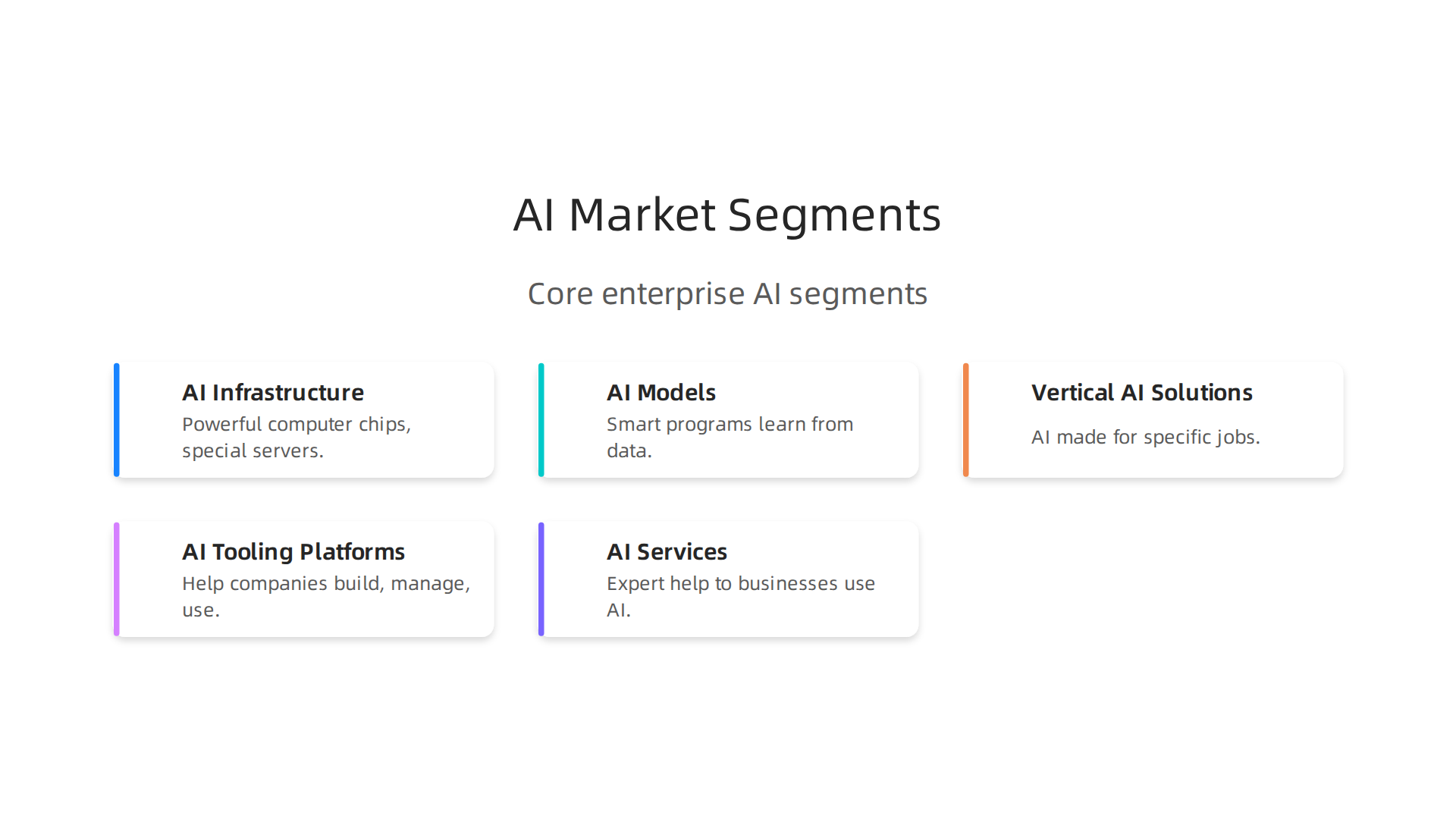
- AI Infrastructure: Think of this as the basic building blocks. It includes powerful computer chips, special servers, and cloud services that let AI run fast. Without strong infrastructure, complex AI systems can’t work well.
- AI Models: These are the "brains" of AI. They are the smart programs that learn from data to do things like understand speech, recognize pictures, or make predictions. Businesses often use pre-made models or build their own from scratch.
- Vertical AI Solutions: This is AI made for specific jobs or industries. For example, there’s AI for healthcare to help doctors, AI for banks to spot fraud, or AI for factories to improve production. These solutions are built to solve problems in a very focused way.
- AI Tooling and Platforms: These are the tools that help companies build, manage, and use AI. They can be for writing AI code, testing AI, or keeping AI running smoothly. This segment also includes specialized ai-powered learning platforms that help AI systems get better over time, or ai powered learning platforms that train employees on new AI tools.
- AI Services: This includes companies that offer expert help to businesses that want to use AI. They might help with setting up AI, making custom AI tools, or teaching staff how to use new AI systems.
When we talk about the "top 10 ai companies" or finding the best AI partners, what does "top" actually mean for an enterprise leader in 2026? It’s not just about who has the flashiest technology. For businesses, "top" means a company that delivers real value and can be a reliable partner. Here are the key things we look at:
- Enterprise Traction: Does the company work with many big businesses already? This shows they know how to handle the needs of large companies.
- Technical Differences: What makes their AI truly special? Do they have unique technology that solves problems better than others?
- Integration Stack Fit: Can their AI tools easily connect with the other software your business already uses? It’s important for new AI to fit smoothly into your current setup. For more on this, check out our guide on Enterprise AI Apps: A Research-Backed Roadmap for Selection, Integration, and ROI.
- Financial and Viability Signals: Is the company strong and stable? You want a partner that will be around for the long haul to support your AI investments.
By keeping these points in mind, you can better understand which AI companies truly stand out and why they might be the right fit for your business.

How to interpret a ‘Top 10 AI Companies’ list for enterprise decisions
When you see lists like "the top 10 ai companies," it’s easy to get excited. But for a business leader like you, a simple ranking isn’t enough. These lists often get attention because of buzz or new consumer gadgets, not because they solve big business problems. What makes an AI company "top" for an everyday person buying a smart speaker is very different from what makes one "top" for a large company.
For enterprise use, we need to dig deeper. It’s not about who’s flashiest, but who can be a truly helpful partner. The real challenge is finding an AI vendor that fits your company’s specific needs and goals. Many leaders are looking at how to make smart choices for AI spending in 2026 to get the most return on investment AI Spending in 2026: How Exactly Enterprises Can Maximize ROI.
Here’s a simple way to look at any "top 10 ai companies" list for your business:
- Think About Your Specific Needs: Before even looking at a list, know what problems you want AI to solve. Do you need an ai-powered learning platform to train your staff? Or maybe AI for customer service? Each company on a "top" list might be great at one thing but not another.
- Look Beyond the Hype: Many AI companies get a lot of media attention. But this doesn’t always mean they are the best fit for complex enterprise tasks. Companies should look for strong track records with other large businesses, not just exciting new tech. Deloitte’s 2026 report on the state of AI in enterprises shows that understanding these real-world impacts is key The State of AI in the Enterprise – 2026 AI report | Deloitte US.
- Match Vendors to Your Use Cases: Don’t just pick a company because it’s number one on a list. See if their AI solutions directly solve your company’s problems. Does their technology fit how your business works? You’ll want to map each vendor to your specific business needs and consider any risks. For example, some AI might work well for small jobs but not for big, complex data. A good checklist can help you evaluate AI vendors properly AI Vendor Evaluation: Enterprise Procurement Checklist.
- Ask the Right Questions: When you talk to AI companies, ask them practical questions about how their AI will work with your current systems. How will it be kept secure? What kind of support will they offer? Knowing which questions to ask is important for choosing the right partner Enterprise AI Vendor RFP: 40 Questions to Ask (2026). It’s also wise to think about how AI will change roles in your company. Will software engineers be replaced by AI? Actually, many see AI as a tool that helps engineers do their jobs better, requiring new skills and training. Building your team’s skills is important IT Talent 2026: Building Your Engineering Workforce From Within.
Picking the right AI partner is a big decision. It means looking past the popular "top 10 ai companies" lists and really understanding what each vendor offers for your business needs.
Staying updated on the fast-moving world of enterprise AI is key to making informed choices.
Get clear daily AI updates from The AI Newsletter Worth Reading.
Vendor selection criteria: a checklist for enterprise buyers
Moving beyond simple "top 10 AI companies" lists means really looking at what each vendor offers. For businesses, choosing an AI partner is a big job. You need a clear checklist to make sure the AI solution fits your company well.

This means checking both how the AI works every day and how sound its technology is.
Here are important things to look for:
Operational Criteria
These points help you understand how an AI company will work with your business on a daily basis:
- Service Agreements (SLAs) and Support: How much help will the vendor offer? What happens if something goes wrong? Make sure you understand their promise for keeping the AI running smoothly and how quickly they will fix problems. Clear service agreements are a must for any vendor, not just those dealing with advanced technology Vendor Selection Process: Steps, Criteria & Checklist Guide [2026].
- Integration: Can the AI system easily connect with your company’s existing tools and software? You don’t want a new AI tool to be a separate island. Good integration means the AI works with your other systems without a lot of extra work. This is vital for a smooth flow of information. To get a comprehensive view, you might want to look at a broader enterprise AI apps roadmap.
- Deployment Models: How will the AI be set up in your company? Will it be in the cloud, on your own servers, or a mix of both? Each option has pros and cons for security, cost, and how you manage it.
- Ease of Use and Training: Is the AI simple for your team to use? Does the vendor offer good training? Even the best AI is useless if your staff can’t figure out how to work with it. If you’re building an ai-powered learning platform for employees, ease of use is even more important.
Technical Criteria
These points look at the nuts and bolts of the AI technology itself:
- Model Performance: Does the AI do what it’s supposed to do accurately and quickly? You need to see proof that the AI models perform well for tasks similar to yours. Don’t just trust claims; ask for real-world results. Evaluating AI vendors needs careful thought, looking at six key areas 6 AI Vendor Evaluation Dimensions for Enterprise RFPs.
- Data Governance: How does the AI handle your company’s data? Is it kept safe and used properly? Strong data governance means the AI follows all rules about data privacy and how data is managed. This helps prevent big problems later on.
- Explainability: Can you understand how the AI makes its decisions? For many business uses, it’s not enough for an AI to give an answer; you need to know why it gave that answer. This is called explainable AI and it’s especially important in fields like finance or healthcare.
- Security: This is super important. How secure is the AI system against attacks or data leaks? You need to know your sensitive company information is protected. Any AI solution must meet your company’s high security standards. Many companies are making security a top concern as they look at enterprise AI adoption in 2026.
Choosing the right AI vendor goes far beyond who’s popular in a "top 10 AI companies" list. It means asking tough questions and making sure the vendor truly understands and can meet your specific business needs.
AI-powered learning platforms: what they offer enterprises in 2026
After thinking about how to pick the best AI tools, let’s look at a special kind of AI solution: learning platforms. In 2026, many companies are finding that AI can greatly help their teams learn new things.

But it’s good to know that not all AI learning platforms are the same.
There are two main types of AI-powered learning platforms for businesses:
- Corporate Training Platforms with AI: These are like smart teachers for all your employees. They use AI to make learning more personal. For example, if someone is struggling with a topic, the AI can give them extra help or different ways to learn it. This helps everyone in the company, from sales to HR, learn new skills faster. Studies show that AI tools can make learning more helpful and even more fun than old ways of teaching The Evidence Base on AI in K-12: A 2026 Review.
- AI-Native Learning Platforms for ML Teams: These are for the special teams in your company that build and work with AI models. Think of your software engineers or data scientists. These platforms help them understand complex AI topics, learn new coding skills for AI, and keep up with the newest AI ideas. They might offer simulations or special tools to practice with AI models.
How AI Learning Platforms Help Your Business
These smart learning tools can really change how your company works for the better. Here’s how:
- Closing the Talent Gap: Many companies struggle to find enough people with the right AI skills. AI-powered learning platforms help train your current employees to fill these important roles. This means you don’t always have to hire new people. Instead, you can grow your own talent. If you are looking to build up your team, you might want to look at how to grow your IT talent in 2026.
- Faster Model Adoption: When your teams understand AI better, they are more likely to use new AI tools and models in their daily work. This speeds up how quickly your company can use AI to solve problems and grow. AI-powered tools have shown clear benefits for learners, making it easier for people to get comfortable with new tech Guidelines for Designing AI Technologies to Support Adult Learning.
- Keeping Up with AI Changes: The world of AI changes very fast. An ai-powered learning platform makes it easy for your staff to always have the latest information and skills. This helps ensure your company stays ahead and isn’t left behind by new advancements. This is also important for helping employees see that AI can be a tool to enhance their jobs, rather than thinking "will software engineers be replaced by AI?".
By investing in the right AI learning platform, you’re not just buying a tool; you’re investing in your team’s future and your company’s ability to use AI smartly.
Get clear daily AI updates from The Deep View Newsletter.
Enterprise adoption: governance, procurement, and the operations of AI
After thinking about how to pick the best AI tools and how they can help your team learn, it’s time to talk about using AI wisely in your whole company. In 2026, many businesses want to use AI more and more. But it’s super important to do it in a safe and smart way. This means having clear rules and good plans for everything from buying AI tools to making sure they work correctly every day.
One big part of using AI smartly is called AI governance. Think of this as the set of rules and guidelines for how your company uses AI. It’s like a roadmap that makes sure AI tools are used fairly, safely, and in a way that helps your business without causing problems. It’s also about making sure your AI systems follow all the necessary laws and company policies. Keeping up with the best ways to use AI is a constant job, as researchers are always looking into how AI impacts us and how to make sure new tech helps everyone Charting the Technological, Ethical, and Academic Concerns and ….
Next, your company needs good plans for procurement and vendor management. This is about how you choose and buy AI tools and services from other companies. It’s not just about finding the "top 10 ai companies" that are famous. You need to look closely at what each vendor offers, how secure their tools are, and if their ways of working fit your company’s rules. This helps lower risks in the long run. Many businesses are trying to figure out the best way to choose the right AI solutions for their needs in 2026, often weighing the costs of making their own AI tools versus buying them ready-made Enterprise AI Agent Build vs Buy: The 2026 Decision. For more help with this process, check out our guide on Enterprise AI Apps: A Research-Backed Roadmap for Selection, Integration, and ROI.
Finally, cross-functional operating models are key. This means different teams in your company need to work together. People from your IT department, legal team, and various business groups should all be involved in planning how AI will be used. This teamwork ensures that AI tools, whether it’s an advanced AI-powered learning platform or a simple automation tool, are set up to work well for everyone. A good plan helps make sure that using AI leads to positive results and helps your company grow stronger. For more insights on this, you can read about AI Adoption: The Complete Enterprise Workbook 2026.
Security, compliance, and data residency: checklist items for procurement and legal
When you are picking AI tools, whether from the top 10 ai companies or a smaller vendor, it’s super important to think about security, rules, and where data lives. These are big checklist items for your procurement and legal teams. You want to make sure the new AI tools help your business without causing problems with sensitive information or breaking any laws.
First, let’s talk about security. You need to ask AI vendors how they handle your company’s data. This means checking things like:
- How do they keep your data safe from hackers?
- Do they use strong encryption, which is like a secret code, to protect your data?
- Do they have special badges or certificates that show they follow good security practices?
- How often do they check their systems for weaknesses?
It’s also about making sure the AI itself is fair and safe to use. For instance, when using an ai-powered learning platform, you want to know it treats all users fairly and doesn’t have hidden unfairness built in Artificial Intelligence and the Future of Teaching and Learning (PDF).
Next comes compliance. This means making sure your AI tools follow all the right laws and rules for your industry. Some industries, like healthcare or banking, have very strict rules about how customer information must be handled. Your legal team will want to review these rules carefully. They will make sure that any AI system you buy, big or small, helps your company stay on the right side of the law.
Finally, think about data residency. This is about where your data is stored. Some countries have laws that say certain types of data must stay within their borders. If your company deals with customers in different parts of the world, you need to know if the AI vendor stores data in the right places. This helps avoid legal trouble and keeps your customers’ information safe according to their local laws. For a closer look at what to expect, check out our insights on the Genspark AI Enterprise Platform 2026 Review: Security and Real-World Use Cases.

Keeping up with all the changes in AI can be tough. That’s why many business leaders look for ways to get the latest information. Get clear daily AI updates from The AI Newsletter Worth Reading.
When picking AI tools, like those from the top 10 ai companies, you also need to think about how they will fit with your existing systems. This is called "integration." You also need to know how they will be set up and what they will truly cost over time. This is called "total cost of ownership," or TCO.
Integrations, deployment patterns, and total cost of ownership
Choosing how to set up your AI tool is a big decision. There are a few main ways to do this:
- SaaS/API (Cloud-based): This is like renting software over the internet. The AI tool lives on the vendor’s computers, and you just use it. It’s often easier to start with because you don’t have to install anything big on your own systems. This is great for many
ai-powered learning platformtools or simple AI assistants. - On-premise (On your computers): This means you install and run the AI software on your company’s own servers and computers. You have more control over it, but your team has to do more work to set it up and keep it running.
- Hybrid: This is a mix of both. Some parts of the AI system might be on your computers, and other parts might be in the cloud. This can give you flexibility but also adds a bit more complexity.
No matter which way you choose, you need to think about how the new AI tool will talk to all your other company programs. This integration effort is a key part of choosing the right path for your business and can change a lot depending on the system you pick How to Choose the Right AI Automation Platform for Enterprise-Wide Deployment.
Next, let’s talk about the total cost of ownership (TCO). This is much more than just the price tag of the AI software. You need to look at all the costs involved over a long time.
Here are some things to think about when figuring out TCO:
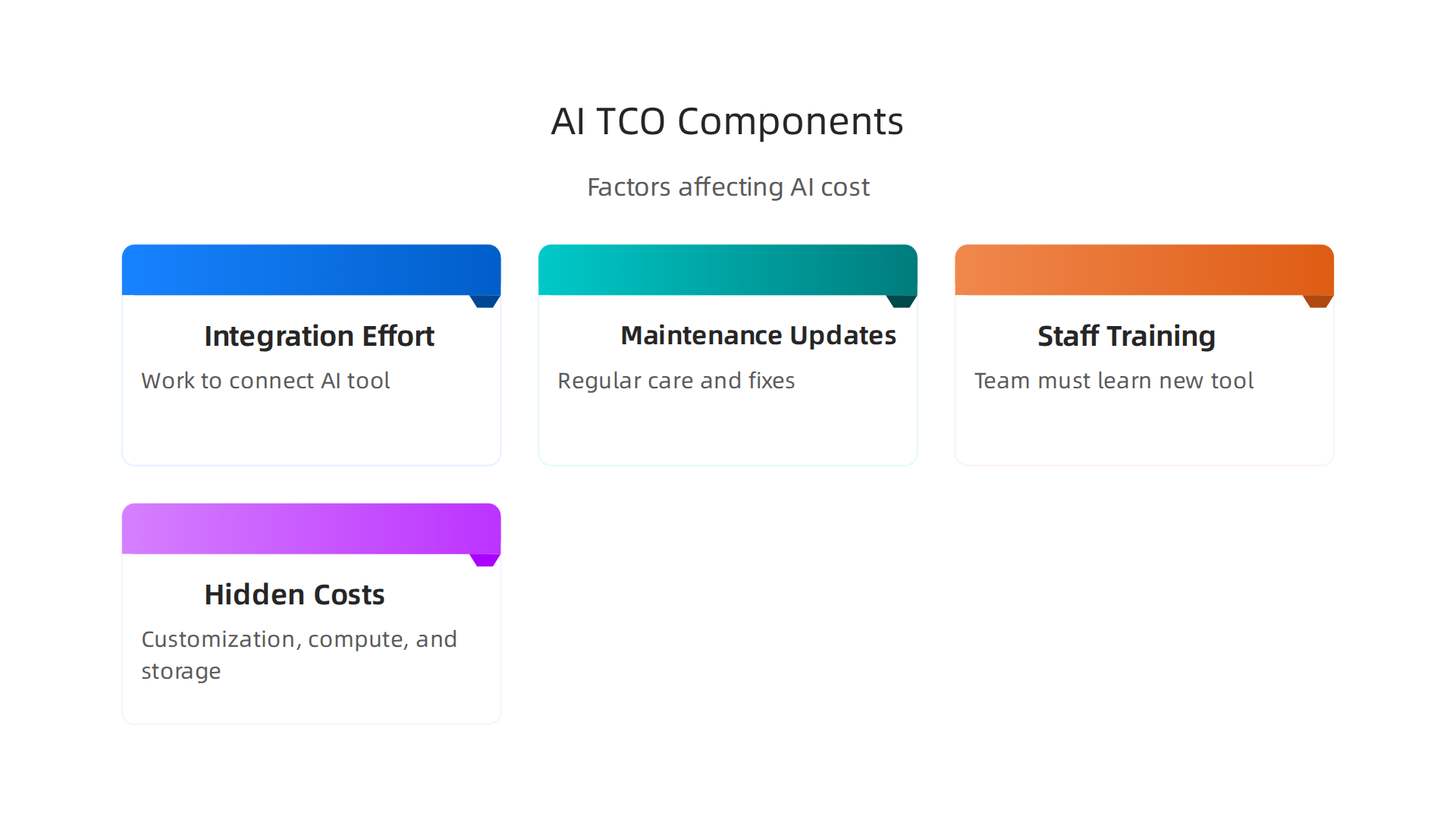
- Integration Effort: How much work will it take to connect the AI tool to your other systems? This can mean hiring special help or having your own IT team spend many hours on it.
- Maintenance and Updates: AI tools need regular care, just like a car. They need updates and sometimes fixes. Who will do this work? This is an ongoing cost.
- Staff Training: Your team will need to learn how to use the new AI tool. Training takes time and can cost money.
- Hidden Costs: There can be costs you don’t see right away. These might include making the AI tool fit your exact needs (customization), buying more powerful computers (especially for on-premise), or paying for lots of data storage. You might also need new staff to manage complex AI systems, which shows that skilled human input remains crucial, so don’t worry too much about
will software engineers be replaced by aientirely. Many companies find that building or buying AI agents can have many hidden costs that add up over time AI Agent Development Cost 2026: The Hidden TCO Breakdown.
Looking at the full TCO helps you make smart choices and avoid surprises later on. Understanding these costs is important for any business leader planning for Enterprise AI Adoption in 2026: A Data-Backed Roadmap for Business Leaders.
Knowing the full cost of an AI tool is just one part of making a smart choice. You also need to look ahead to what’s coming next in the world of artificial intelligence.
Future trends, where investors are placing bets, and what enterprise buyers should watch
The AI world is changing very fast. In 2026, we see huge amounts of money flowing into new AI ideas and companies. People are spending more than ever before on AI, with global investment expected to reach trillions by 2028 AI Market Trends 2026: Global Investment, Risks, and Buildout. This growth means big changes for businesses and how they work.
Investors, the people who put money into companies, are looking for strong signals. They want to see AI tools that can truly help businesses make more money, cut costs, or work better. For example, many are watching how enterprise AI helps companies improve what they do every day How AI Is Driving Revenue, Cutting Costs and Boosting Productivity. They are especially interested in AI solutions that fit well into existing company operations and offer clear benefits. You can find more details on these shifts in the State of AI 2026 – AI Market Size, Investment, and Industry Data.
So, what should enterprise buyers, like you, look for?
- Vendor Longevity and Stability: It’s not just about finding the hottest new AI tool. You want to pick a company that will still be around in a few years to support its product. Look for companies with steady funding, clear business plans, and strong customer reviews. Reports like the Enterprise Software Report 2026: AI & VC trends can give you clues about which AI companies are getting solid investment. You’ll want to avoid companies that seem to pop up and disappear quickly.
- Clear Use Cases and ROI: Does the AI tool solve a real problem for your business? Can you measure how much it helps? Investors are betting on AI that delivers a clear "return on investment," or ROI. Companies want to know that their AI spending will pay off AI Spending in 2026: How Exactly Enterprises Can Maximize ROI.
- Adaptability and Future-Proofing: The best AI tools can grow and change with your business needs. They should be flexible enough to handle new tasks or integrate with other tools you might add later. This is key for picking a product from the current
top 10 ai companiesor an up-and-comer.
Understanding these trends helps you make smart choices. If you want to dive deeper into how enterprise leaders are making technology decisions, check out these Enterprise Technology Analyst Insights 2026. It’s all about finding AI solutions that not only work today but will also support your business for many tomorrows.
To stay on top of the latest advancements and investment shifts in the AI landscape, make sure you’re getting trusted information.
The AI Newsletter Worth Reading
Summary
This article is a practical guide for enterprise leaders who need to evaluate AI vendors and learning platforms in 2026. It explains the size and key segments of the AI market, clarifies what