
Data Warehouse vs Data Lake Enterprise Decision Guide for 2026

Why the warehouse vs. lake debate matters for enterprise leaders
In 2026, data helps businesses make smart choices every day. To do this, companies need good systems to store and use their data. This is where the big question comes up for many leaders: should we use a data warehouse or a data lake?

This decision is very important for how a business grows and stays competitive.
Think of it like this: a data warehouse is like a very neat and tidy library. All the books (data) are sorted by type and topic, and everything is perfectly organized. This makes it super easy to find specific information quickly for reports and business analysis. Data in a warehouse is structured, meaning it’s cleaned and put into a clear format even before it’s saved. This method is called "schema-on-write" because the rules for the data are set when it’s first brought in. Data warehouses are great for making quick business reports and seeing how things are going right now.
On the other hand, a data lake is like a huge storage room where you keep everything. You can put all kinds of stuff in it: boxes of old papers, new digital files, pictures, and even videos. It’s all there, in its original form, no matter how messy or organized it is. This means a data lake can store raw data of any type, whether it’s structured, semi-structured, or completely unstructured. The rules for how the data is organized are only decided when you want to look at it, which is called "schema-on-read" Data Lake vs. Data Warehouse: Definitions, Key …. This makes data lakes very flexible for new types of analysis or working with machine learning projects.
For leaders like CIOs, CTOs, product managers, and anyone buying software for their company, choosing between a data warehouse and a data lake is a big deal. It’s not just a technical choice. It’s about making sure your data strategy matches what your business wants to achieve. Are you aiming for fast, reliable reporting, or do you need a flexible space for new discoveries and AI projects? Being data driven means understanding these differences. The right choice helps you manage risks, make better decisions, and even helps your data architect architect software programs that truly support your company’s goals. Picking the best system is key to making smart investments and getting a good return on your technology spending. To learn more about how to choose the best systems for your business, check out our guide on Mastering Enterprise Analytics Platform Selection for 2026 ROI.
Staying informed about these critical technology decisions is essential for all enterprise leaders. For daily insights into the world of AI and technology, consider subscribing.
Get clear daily AI updates from The AI Newsletter Worth Reading.
What is a Data Warehouse? Core characteristics and typical uses
Following our look at the main ideas behind both data warehouses and data lakes, let’s dive deeper into what makes a data warehouse special. A data warehouse is a very organized place made just for storing and managing data that has a clear structure. Think of it as a super-powered database designed for serious analysis, not for daily business tasks.
The biggest idea behind a data warehouse is something called "schema-on-write." This means that before any data even gets stored, it must fit into a pre-set plan or structure. It’s like building a house where you decide exactly where every wall, window, and door will go before you start laying bricks. Data is cleaned, changed, and put into a specific format to match this plan Data Lake Versus Data Warehouse Explained. This careful preparation ensures that when you need to use the data later, it’s already neat and ready. This is different from a data lake, which we talked about before.
Here are the main things that make a data warehouse unique:
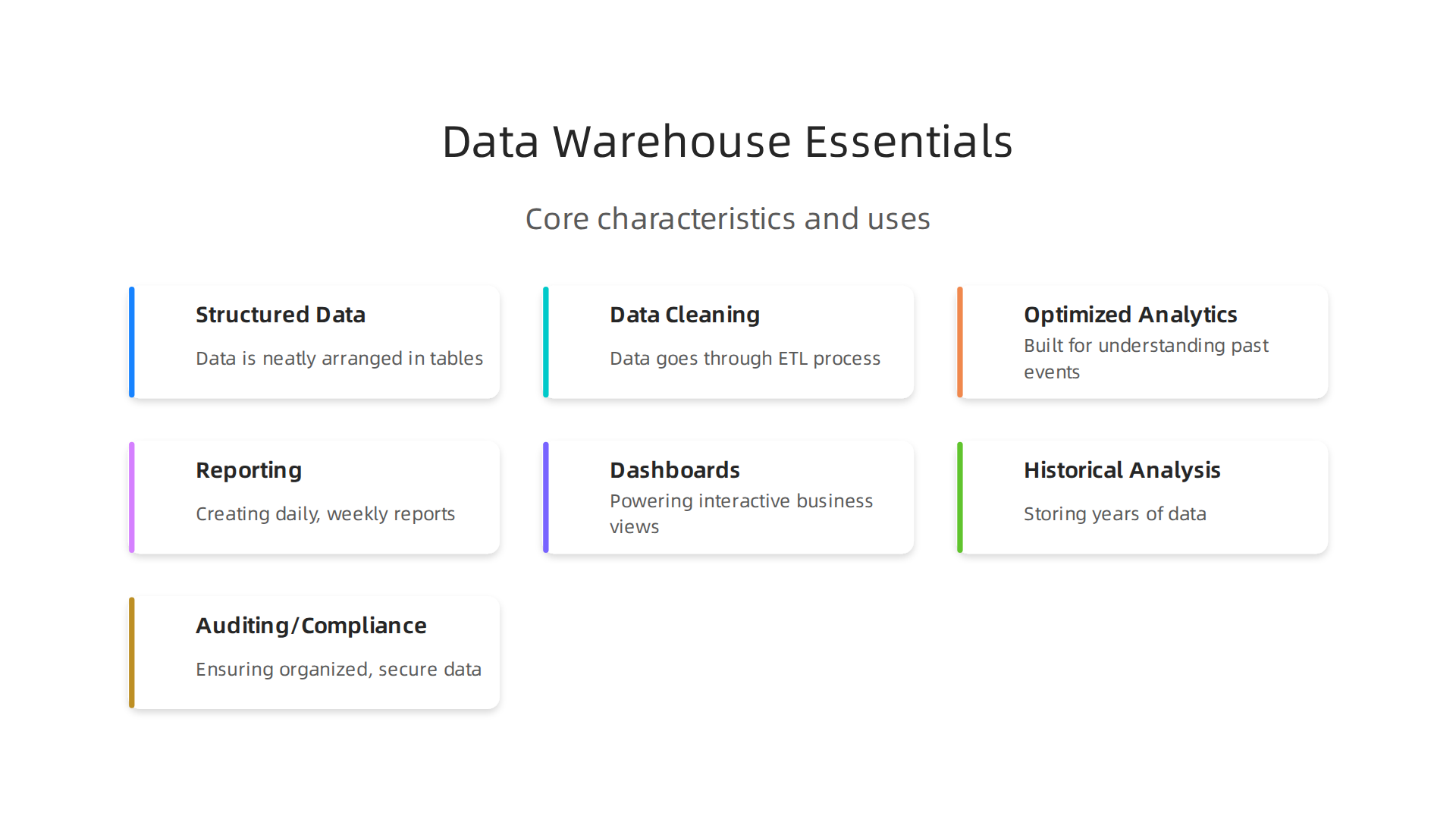
- Structured Data: Data warehouses mostly hold structured data. This means the data is neatly arranged in tables with rows and columns, just like a spreadsheet. Examples include sales records, customer information, financial reports, and inventory numbers. This data is usually numerical or text that fits into clear categories.
- Data Cleaning and Preparation: Before data enters a warehouse, it goes through a process often called ETL (Extract, Transform, Load). This means data is taken from its original spot (extracted), cleaned up and changed to fit the warehouse’s structure (transformed), and then saved there (loaded). This careful work makes sure the data is of high quality and reliable for making important decisions. This process is key for a good data pipeline blueprint.
- Optimized for Analytics: Data warehouses are built to help businesses understand what has already happened and why. They are very fast at running complex queries and creating reports.

This makes them perfect for business intelligence (BI) tasks. These tasks include looking at sales trends, understanding customer buying habits, or checking how different parts of the business are performing. The structure is set up to make these kinds of questions easy to answer quickly Data lake vs. data warehouse – SAP.
Typical Uses of a Data Warehouse
In 2026, many companies rely on data warehouses for their core data driven operations. They are often used for:
- Reporting: Creating daily, weekly, or monthly reports on various aspects of the business, such as sales figures, marketing campaign results, or financial performance.
- Dashboards: Powering interactive dashboards that give leaders a quick view of important business numbers and trends.
- Historical Analysis: Storing years of data, allowing businesses to look back and understand how things have changed over time. This helps predict future trends and plan better.
- Auditing and Compliance: Ensuring that data is kept in an organized and secure way, which is important for meeting legal and industry rules.
A skilled data architect plays a big part in setting up and maintaining a data warehouse. They architect software programs to make sure data flows correctly, is stored efficiently, and can be accessed easily by business users. The goal is to provide a consistent, trustworthy source of truth for all business decisions.
Now, let’s explore the other side of the coin: the data lake. While a data warehouse is like a library with carefully cataloged books, a data lake is more like a giant storage area where you can dump all sorts of things. It’s built to hold a huge amount of raw data, no matter its shape or size.
The main idea for a data lake is called "schema-on-read." This means that you don’t need to put data into a strict format before you store it. Instead, you only decide what the data looks like and how to use it when you’re ready to read it or ask questions about it Data Lake in System Design: Architecture, Schema-on-Read, and …. It’s like storing all your toys in one big box and then deciding which ones you want to play with and how to organize them only when you pull them out. This makes it very flexible and fast to get new data into the lake.
Here are the key things that make a data lake unique:
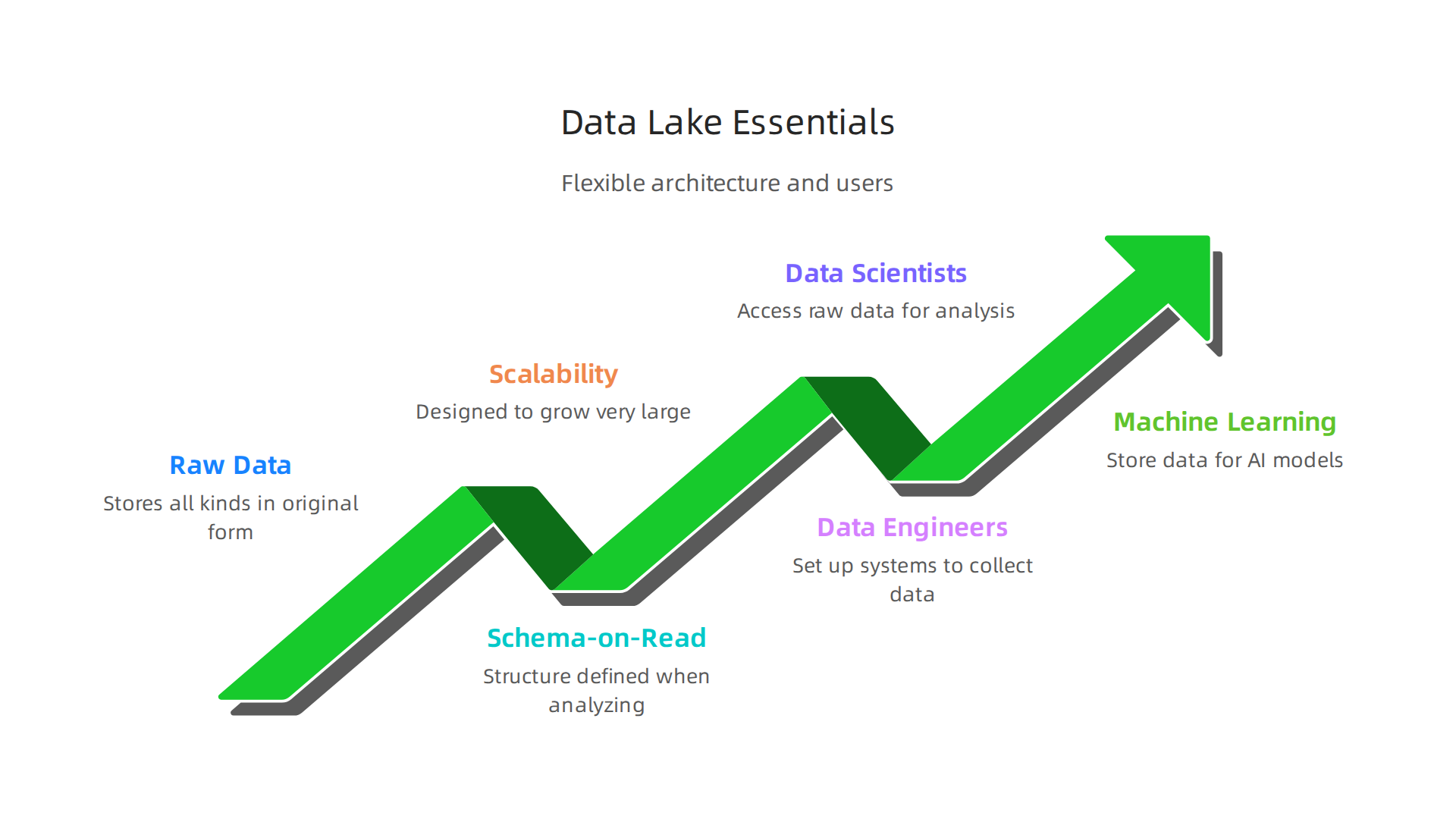
- Raw and Diverse Data: Data lakes can store all kinds of data in its original form. This includes structured data (like spreadsheets), semi-structured data (like emails or social media posts), and even unstructured data (like photos, videos, or audio files). They keep everything as-is, meaning you get the full, untouched picture.
- Schema-on-Read: As we said, the structure is not set when the data comes in. It’s only defined when someone wants to analyze it. This lets you bring in new types of data very quickly without needing to plan out every detail beforehand. This is a big difference in the
data warehouse vs data lakediscussion Key characteristics of data…. - Scalability for Big Data: Data lakes are designed to grow very large, holding petabytes (a huge amount) of data. They often use low-cost storage, which makes it cheaper to store everything. This means businesses can keep all their data, even if they don’t know exactly how they’ll use it yet. This flexibility can be a big plus for
data drivencompanies.
Typical Users and Uses of a Data Lake
Data lakes are super useful for teams that need to dig deep into data and explore new things. In 2026, they are often used by:
- Data Engineers: These experts are often the first to work with data in a lake. They set up the systems to collect data and make it available for others. They are crucial for building the pipelines that feed these large data systems. If you’re looking to build your own, you might want to learn how to build a Snowflake data lake.
- Data Scientists: They love data lakes because they can access raw data for advanced analysis. They use it to build machine learning models, find hidden patterns, and make predictions. For example, they might use customer interaction data to train an AI to recommend products.
- Machine Learning (ML) Pipelines: Data lakes are a perfect place to store the massive amounts of data needed to train and improve AI and ML models. The raw, untouched data helps these models learn more accurately.
- Exploratory Analytics: When you don’t know exactly what questions you want to ask yet, a data lake is great. It lets analysts freely explore different datasets to find new insights that were not expected.

This helps businesses innovate and understand their customers or operations in fresh ways.
In short, a data lake is where you keep all your data possibilities open, ready for future analysis and discovery, making it a key part of modern enterprise data strategies What Is a Data Lake? Definition, Architecture & Data Lake vs ….
Now, let’s look at the key differences between a data warehouse and a data lake. While both are big systems for storing data, they are built and used in very different ways. Understanding these differences is super important for making smart choices about your data strategy in 2026.
Here is a side-by-side look at how they compare:
Schema Management and Data Models
One of the biggest differences lies in how they handle data structure, also known as schema.
- Data Warehouse: A data warehouse uses a "schema-on-write" approach. This means you must define the data’s structure and how it will be organized before you put it in. Think of it like organizing your closet: you have specific hangers and drawers for different types of clothes, and everything has to fit those predefined spots. This strict setup ensures data is clean, consistent, and ready for quick reports Data Lake Versus Data Warehouse Explained. Data architects work hard to design these highly structured models.
- Data Lake: As we talked about, a data lake uses "schema-on-read." This means you can dump all kinds of raw data into it without bothering to set a structure first. You only decide how to make sense of the data when you need to use it. This makes data lakes very flexible, letting you store everything from text to videos without much upfront planning. It’s a core distinction in the Data lake vs. data warehouse debate.
Data Quality and Governance
The way data is structured also affects its quality and how it’s managed.
- Data Warehouse: Because data is cleaned and organized before it goes in, data warehouses usually have very high data quality. They come with strong rules for how data is handled, making it reliable for important business decisions. This built-in governance helps businesses stay truly data driven.
- Data Lake: Since data lakes store raw, untouched data, the quality can vary a lot. Without proper tools and management, a data lake can turn into a "data swamp" where it’s hard to find good, reliable information. This means that a data architect must put extra effort into governing a data lake to ensure the data is still useful.
Query Performance and Analytics
How fast you can get answers from your data depends on the system.
- Data Warehouse: Data warehouses are designed for speed when running standard reports and business intelligence (BI) queries. Because the data is already structured and optimized, these systems can provide quick answers to known questions. They are great for looking at past trends and operational performance. Many modern data warehouses and lakehouses are focused on boosting performance for analytics in 2026 Data Warehouses & Lakehouses in 2026.
- Data Lake: Data lakes are more for exploring new questions and advanced analytics, especially for machine learning. While they are very flexible, running complex queries on raw, unstructured data in a data lake might take longer if the data isn’t prepared properly beforehand. They shine when you need to experiment and find new insights from massive, diverse datasets.
Cost Behavior
The costs involved also show a clear difference.
- Data Warehouse: Traditionally, data warehouses can be more expensive. This is because they require powerful computing to process and transform data before storage, along with specialized storage that’s optimized for fast queries. However, cloud-based data warehouses in 2026 often have flexible pricing models.
- Data Lake: Data lakes often use cheaper storage options, especially for raw data that isn’t immediately needed. This means the cost of storing huge amounts of data can be lower. However, the cost of computing power needed to process and analyze that raw data when you need it can add up, especially for complex analytical tasks. When planning your data infrastructure, it’s wise to consult a Data & Analytics Software Pricing Guide 2026 to understand the full picture.
In summary, choosing between a data warehouse and a data lake, or even a blend of both, depends on your specific needs for data structure, speed, quality, and budget. It’s a critical decision that influences your ability to master enterprise analytics platform selection for 2026 ROI and how your teams can effectively build enterprise data architecture.
Choosing the right data platform is a big step for any business in 2026. It’s not just about picking a trendy tool; it’s about making sure your choice truly matches what your business needs to grow and make smart decisions. To help with this, we can use a simple decision framework. This way, you can clearly see if a data warehouse, a data lake, a hybrid approach, or a modern lakehouse is best for you.
Your Business Needs Come First
Before you decide between a data warehouse vs data lake, ask yourself a few key questions:
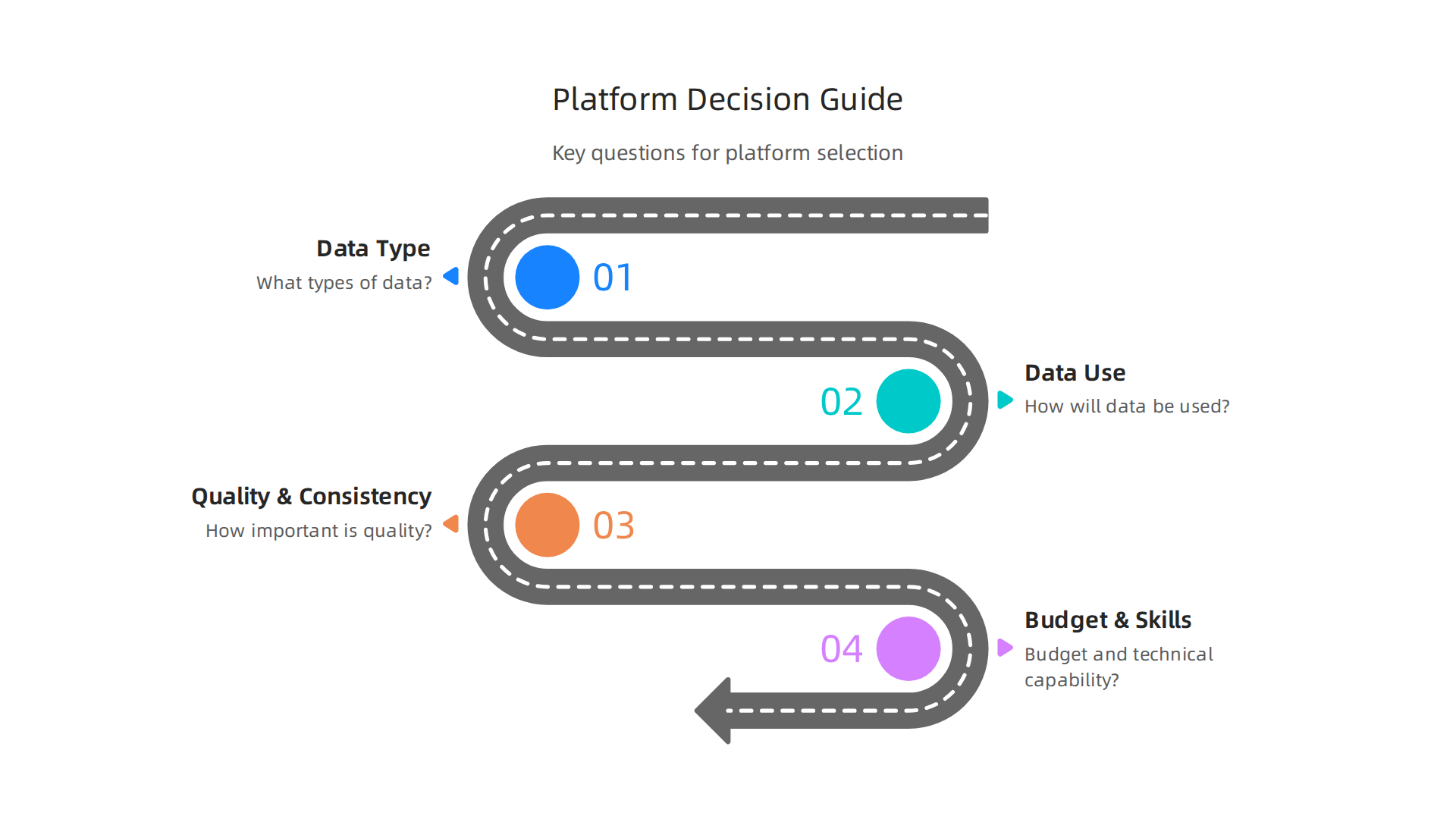
- What kind of data do you have? Is most of your data neatly organized (like numbers in a spreadsheet)? Or do you have a lot of messy, unstructured data, such as emails, videos, or sensor readings?
- What do you want to do with your data? Are you mostly running daily reports and looking at past sales? Or do you want to find new patterns, build AI models, or do real-time analysis?
- How important is data quality and consistency? Do you need very clean, reliable data for strict financial reports? Or are you okay with some raw, untouched data for early experiments?
- What’s your budget and technical skill level? How much can you spend on storage and processing? Does your team have the skills to manage complex data systems, or do you need something simpler?
This checklist helps you tie your business questions to the features of different data platforms, guiding you to the best fit Data Lake vs Data Warehouse: Full Comparison Guide.
When to Choose a Data Warehouse
A data warehouse is usually the best choice if:
- You need quick, reliable reports. If your main goal is to power dashboards, look at sales numbers, and get clear business intelligence, a data warehouse is built for this. It handles structured data very well.
- Most of your data is structured. If 80% or more of your data comes from business systems like customer databases or financial records, a warehouse will serve your primary needs Data Warehouse vs Data Lake: 2025 Decision Guide – abemon.
- Data quality and security are critical. For regulated industries or financial reporting, the high level of data governance in a data warehouse is a must.
- Your team uses SQL. If your data analysts are experts in SQL, they’ll find a data warehouse easy to use for their reporting needs. For businesses looking to improve their data strategy with systems like this, learning how to optimize AWS Redshift for enterprise data strategy in 2026 can be very helpful.
When to Choose a Data Lake
A data lake might be better if:
- You have a lot of raw, varied data. If you need to store all types of data like logs, social media updates, images, or sensor data without cleaning it first, a data lake is perfect.
- You’re doing advanced analytics and machine learning. Data lakes are great for data scientists who want to explore data, build new models, and find hidden insights. They allow for exploratory data analysis on large, diverse datasets.
- You need flexibility for the future. Because data lakes don’t require a strict structure upfront, you can store data now and decide how to use it later. Many companies are learning how to build a Snowflake data lake that works in 2026 for this very reason.
- Cost-effective storage for large volumes. Storing massive amounts of raw data in a data lake can often be cheaper than in a data warehouse.
The Rise of the Data Lakehouse
Actually, many companies in 2026 don’t choose just one. They use a data lakehouse. This is a newer type of system that combines the best parts of both a data lake and a data warehouse. It lets you store all kinds of raw data (like a data lake) but also gives you the strong data quality and fast reporting of a data warehouse Data Lakehouses vs. Data Warehouses vs. Data Lakes.
Forrester’s 2026 report on data lakehouses even calls them the "default architectural choice" for modern analytics and AI work. This is because they simplify how data is handled, help control costs, and support things like AI and machine learning What Forrester’s 2026 Data Lakehouse Landscape Signals …. A skilled data architect often helps design and architect software programs for these complex setups, ensuring the business remains truly data driven.
Deciding on the right platform is key to getting the most out of your data. The right choice supports all your goals, from simple reports to advanced AI.
Get clear daily AI updates from The AI Newsletter Worth Reading.
The talk about data lakehouses isn’t just about a new tool; it’s about a big shift in how companies handle their data.

In 2026, we see a world where the old lines between a data warehouse vs data lake are blurring more and more. This is thanks to new ideas and cloud computing.
Lakehouses are Becoming the Standard
As we talked about, the data lakehouse takes the best parts of both data warehouses and data lakes. It’s a single place that can store all types of data, clean and messy, while still letting you run fast reports and use strong data tools. Experts like Matei Zaharia, the Chief Technology Officer at Databricks, even said that by 2026, every major data platform either is a lakehouse or is built to compete with one. The market for lakehouses is growing fast, expected to reach about $8.9 billion in 2026, showing how many businesses are moving this way Data Lakehouse Market Size, Share & Forecast 2026–2035. This means that for anyone looking to make their company truly data driven, understanding this shift is key. Many data architects are now focusing on how to architect software programs that fit this new model.
This move means that even traditional data warehouses are adding features that make them more like lakehouses. They’re becoming more open and ready for AI tools. Top cloud data warehouse platforms like Snowflake, Databricks, Google BigQuery, and AWS Redshift are all adding lakehouse features and AI tools to their services Modern Cloud Data Warehouses 2026 Deep Dive – Snowflake ….
The Rise of Data Mesh
Another important trend in 2026 is something called Data Mesh. Imagine your company has lots of different departments, and each one creates and uses its own data. In the past, all this data would often get sent to one central team to manage. But with Data Mesh, each department or team is responsible for its own data, treating it like a product. This means they make sure their data is easy to find, use, and trust for others in the company.
This approach helps make data governance simpler and more effective, especially for big companies with many different types of data. For example, some companies are using Data Mesh tools to help their teams with training and managing critical skills, turning data into useful, repeatable steps Case Studies. It’s all about making sure that the right people own and take care of the data, which helps improve insights across the whole business. This often involves careful planning and choosing the right enterprise analytics platform selection for 2026 ROI.
Cloud-Native Warehouses and Total Cost
The shift to cloud-native services has changed everything. Instead of buying and maintaining your own expensive hardware and software, you can use services from big cloud providers like Amazon Web Services (AWS), Microsoft Azure, and Google Cloud. These services let you pay only for what you use, which can greatly change the "total cost of ownership" (TCO).
Cloud-native data warehouses and lakehouses are designed to work perfectly within these cloud environments. They are often easier to set up, manage, and scale up or down as your business needs change. This means less work for your IT team and more focus on getting insights from your data. The goal for leaders now is to future-proof your IT infrastructure management for 2026 by embracing these flexible, cost-effective cloud solutions.
These modern platforms offer more than just storage and processing; they include built-in tools for security, data quality, and even AI. This helps companies move their data more easily and build complex systems for things like machine learning. Many companies are now choosing cloud-to-cloud data migration projects over moving data from their own servers to the cloud, highlighting the importance of these flexible systems. For companies looking to manage these new, complex systems, understanding platform engineering in 2026 is a must.
The move to cloud services and new data systems means we also need to think about how to use them well. It’s not just about picking a data warehouse vs data lake anymore. It’s about making sure your data is safe, fair, and easy for everyone to use.
Security and Governance in the Modern Data World
When you have lots of data, keeping it safe and organized is a big job. This is where data governance comes in. It’s all about setting up clear rules for how data is collected, stored, used, and shared. For example, a proper data governance plan tells you who owns each piece of data, who can look at it, and how long it should be kept. This is extra important for sensitive information.
Data lakes, which hold raw, unprocessed data, often face more challenges with security and governance than traditional data warehouses. With a data lake, you store everything first and figure out what it means later. This means you need strong rules from the start to avoid chaos and keep data private Data Lake Governance. Things like setting up who can see what data based on their job (called role-based access control) are super important. This helps protect your information from people who shouldn’t see it Best Practices for Data Lakehouse Security and Governance.
Data lakehouses try to bring the best of both worlds. They offer the flexibility of a data lake with the strong governance and security features you’d expect from a data warehouse. This means better ways to manage who accesses data, make sure it’s good quality, and follow important rules like data privacy laws Security, compliance, and privacy for the data lakehouse. Also, encrypting data, both when it’s just sitting there and when it’s being moved, is a must-do to keep it secure Securing Your Data Lakehouse: Best Practices for Data Encryption.
Integrating with Analytics and AI Tools
Modern data systems are not standalone. They need to connect smoothly with other tools for powerful analysis and machine learning (ML). Whether you choose a data warehouse, a data lake, or a data lakehouse, it must work well with:
- Business Intelligence (BI) tools: These help people make reports and dashboards to see what’s happening in the business.
- Machine Learning (ML) platforms: These are used by data scientists to build smart models that can predict things or find patterns.
- Data streaming tools: For taking in data as it happens, like from websites or sensors.
The goal is to let everyone, from a data architect planning systems to someone just looking at daily reports, get the most out of the company’s data. This means building a solid data pipeline 2026 blueprint for building real-time reliable infrastructure that can handle all types of data and move it where it needs to go.
Many companies are also adding AI into their data plans. If you are a leader looking for daily updates on AI and technology, consider subscribing to The AI Newsletter Worth Reading.
Migration and Cost Management
Moving your data from an old system to a new one is a big project. It could be moving from an old data warehouse to a cloud-based one, or from a data lake to a lakehouse. This process, known as data migration, needs careful planning. You’ll need to think about choosing the right new platform and making sure all your data moves over correctly without issues Data Migration Checklist: Your Complete Cloud Migration Guide.
For many businesses, a "hybrid" approach can be useful. This means keeping some data in older systems while moving other data to newer cloud platforms. This lets companies try out new tech without having to change everything at once. It also helps manage costs by only moving what’s most important for immediate needs.
The cost of data systems isn’t just about how much you pay for storage. It includes the cost of managing the data, keeping it secure, and how much time your team spends working with it. Cloud services can help reduce costs by letting you pay only for what you use, but it’s important to keep a close eye on your spending to make sure you’re getting good value. Focusing on a strategic data migration service optimize costs mitigate risks drive ROI can greatly help in this area.
Summary
This article explains the practical differences between a data warehouse and a data lake and why that choice matters for enterprise leaders in 2026. It covers core concepts like schema-on-write versus schema-on-read, typical users and use cases, and how each platform affects data quality, query performance, cost, governance, and analytics. The piece also outlines when a warehouse or lake is a better fit, why many organizations now prefer a hybrid lakehouse, and how trends like cloud-native platforms and Data Mesh are changing architecture and ownership. Readers will learn how to map business needs to technology choices, what to consider for migration and total cost, and how to align teams and tools so data supports reporting, ML, and long-term ROI.