Future-Proof Your IT Infrastructure Management for 2026

Why modern IT infrastructure management matters in 2026
In 2026, managing a company’s technology is harder than ever. Business leaders face big problems like systems becoming too complex, technology changing too fast, and new risks popping up all the time.

Simply put, keeping all your digital tools and services running smoothly feels like a never-ending task.
Think about how fast things move. New tools, especially those driven by AI, can quickly overwhelm existing systems. In fact, one report in early 2026 warned that the heavy use of AI is pushing enterprise infrastructure towards failure for some companies Report: AI Scale Pushing Enterprise Infrastructure toward Failure. This means that without good planning, the very tools meant to help can cause major headaches. Companies also worry a lot about cybersecurity and keeping all their data safe. While some reports show fewer major outages, the cost of each outage is still very high Fewer outages reported in 2026. This makes strong IT infrastructure management crucial.
That’s why modern approaches to it infrastructure management are so important. It’s not just about fixing problems when they happen. It’s about building a strong foundation, keeping everything updated, and protecting against future issues. This includes careful data management, making sure all your information is handled well. Good it infrastructure services help companies keep up with the latest tools and changes. If you are looking to improve how you choose and use IT tools, you might find guidance in Mastering IT Management Platform Selection for Enterprise Leaders.
This article will give you clear steps and proven ways to handle your company’s infrastructure, use automation wisely, and manage your data effectively. We will look at how the right strategies can make a big difference for your business. For those who want to stay on top of the latest tech shifts, especially in AI, getting reliable updates is key. Get clear daily AI updates from The AI Newsletter Worth Reading.
Designing a Resilient, Scalable Infrastructure Architecture
Building a strong foundation for your company’s technology starts with smart design. In 2026, creating an IT infrastructure that can handle growth and unexpected problems is key. This means thinking about how all your systems fit together, can grow, and stay safe. It’s not just about what you buy, but how you build it to last. Many companies are paying more attention to how they plan their technology now, with recent reports showing that enterprise architecture is becoming a more solidified role in modern organizations Enterprise Architecture Continues To Solidify Its Role… – Forrester.
Core Architecture Patterns: Building Blocks for Success
When designing your infrastructure, some key ideas can guide you.
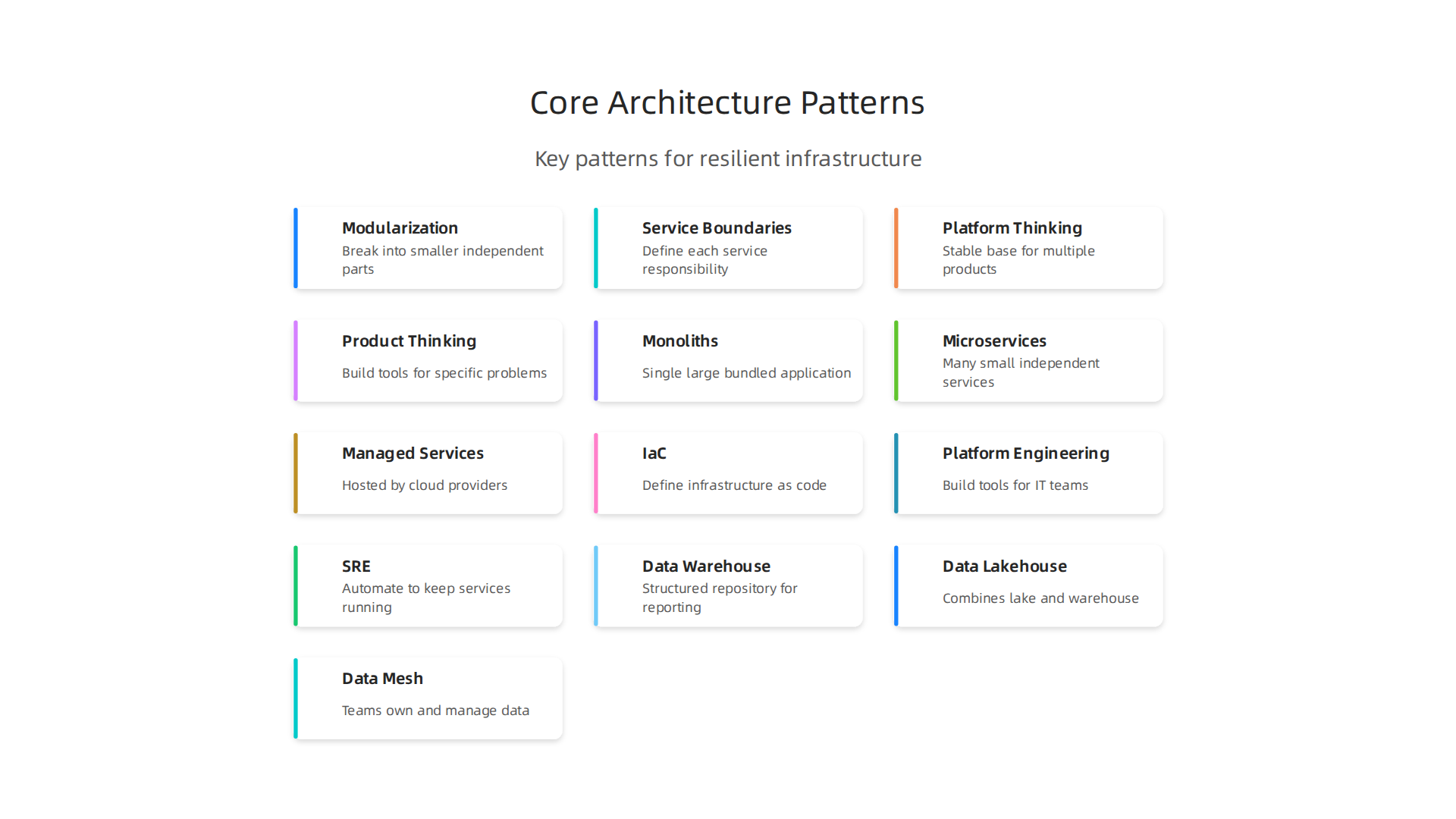
- Modularization: Think of your technology as building blocks. Instead of one giant system, break it into smaller, independent parts called modules. Each module does one job well. If one part has a problem, it doesn’t bring down the whole system. This makes fixing things easier and allows for faster updates.
- Service Boundaries: This idea goes hand-in-hand with modularization. It means clearly defining what each "service" or module is responsible for. It’s like having different teams in a company, each with its own clear tasks. This way, teams can work on their parts without stepping on each other’s toes. This structure is vital for smooth operations and reliable IT infrastructure services.
- Platform vs. Product Thinking: This is about how you view your technology tools.
- Product thinking means building specific tools to solve specific business problems. These tools are usually designed for direct use by employees or customers.
- Platform thinking means creating a stable base or set of shared services that many different products can use. This platform helps multiple teams build their products faster and more consistently. Good platform engineering in 2026 ensures this base is robust.
These patterns help improve overall it infrastructure management by making systems more organized and easier to change.
Choosing the Right Path: Monoliths, Microservices, and Managed Services
Companies often have to pick the right structure for their workloads. Each choice has its own set of pros and cons.
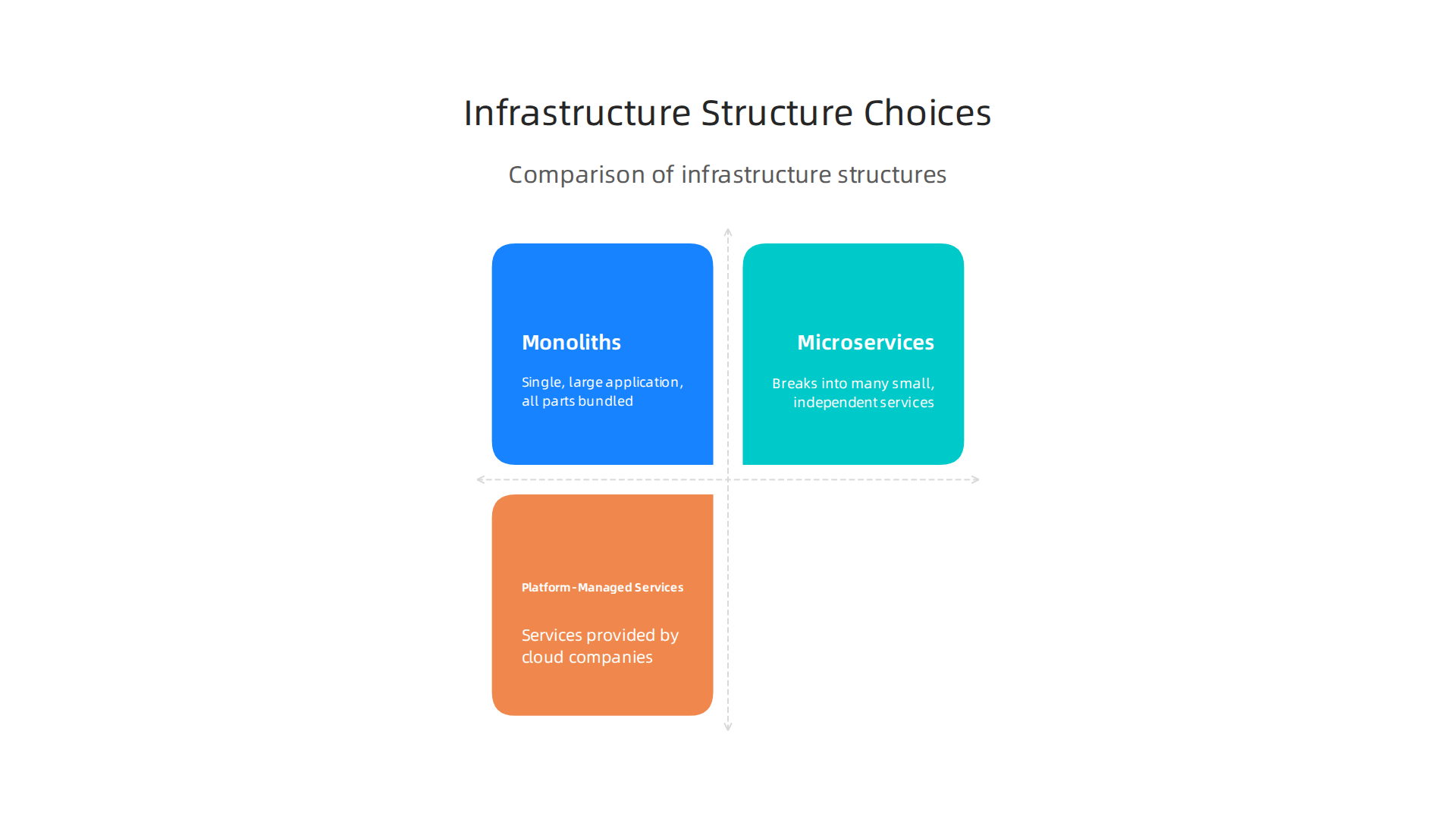
- Monoliths: This is like a single, large application where all parts are bundled together. It’s often simpler to build at first and can be good for smaller companies or projects that don’t need to scale very quickly. However, as your company grows, a monolithic system can become hard to update and maintain. A change in one small part might require testing the whole big system.
- Microservices: This approach breaks down an application into many small, independent services. Each service runs on its own and communicates with others. This is great for scalability, as you can easily scale up just the parts that are getting a lot of use. It also makes updates faster and reduces the risk of one error bringing down everything. However, microservices can be more complex to manage and require good tools for monitoring all the different parts. Building a strong data pipeline in 2026 is often essential for microservice architectures.
- Platform-Managed Services: These are services provided by cloud companies like Amazon Web Services (AWS) or Microsoft Azure. Instead of building and maintaining your own databases, messaging queues, or other tools, you use their ready-made versions. This can save a lot of time and effort in
it infrastructure management, as the cloud provider handles the underlying work. It’s a popular choice, with reports indicating that hybrid IT strategies, which often include managed services, dominate enterprise architecture in 2026 New State of the Data Center Report: Hybrid IT Now Dominates ….
The best choice depends on your company’s specific needs, size, and growth plans. Thinking through these trade-offs carefully will ensure your data management and overall it infrastructure management strategy sets your business up for long-term success.
The best choice depends on your company’s specific needs, size, and growth plans. Thinking through these trade-offs carefully will ensure your data management and overall it infrastructure management strategy sets your business up for long-term success.
Hybrid and Multicloud Strategies: Picking the Right Hosting Mix
As companies grow and their technology needs change, they often look beyond just one cloud provider or their own servers. This is where hybrid cloud and multicloud strategies come in. These approaches give businesses more choices for where they store their data and run their applications. They are becoming very common, with many companies using them in 2026.
What are Hybrid Cloud and Multicloud?
Let’s break down what these terms mean:
- Hybrid Cloud: This is when you combine your own private infrastructure (like servers in your office or a special data center) with public cloud services (like Amazon Web Services or Microsoft Azure). It’s like having some tools in your garage and some tools you rent from a big store. This mix helps companies keep sensitive data close by for security or rules, while using the public cloud for other tasks that need a lot of power or can change quickly. A hybrid cloud lets you connect these different parts to work together Hybrid Cloud vs Multi-Cloud: What should your IT strategy ….
- Multicloud: This means using services from more than one public cloud provider at the same time. For example, you might use AWS for some applications and Google Cloud for others. You don’t mix with your own private servers here; it’s all in the public cloud, but spread across different providers Multi-Cloud Strategy for IT Leaders: 2026 Guide. This helps avoid relying too much on just one company and lets you pick the best service from each one.
Both strategies are parts of what experts call "hybrid IT," which is very popular in 2026.
When Do These Strategies Make Sense?
Choosing a hybrid or multicloud approach can bring real business value:

- Better Safety and Rules: Some companies, especially in fields like healthcare or finance, have strict rules about where data must live. A hybrid cloud lets them keep sensitive data on private servers while still using the public cloud.
- Stopping Vendor Lock-in: With multicloud, you don’t get stuck with just one cloud provider. If one provider changes its prices or services, you have other options. This gives you more power to negotiate and keeps your choices open.
- Stronger Systems: By using different clouds or a mix of private and public, your systems can be more resilient. If one cloud has a problem, your operations can keep running on another. This helps improve
it infrastructure servicesand overall reliability. - Picking the Best Tools: Different cloud providers are good at different things. With a multicloud strategy, you can use the best tool for each specific job, instead of trying to make one provider’s tools fit every need. This can lead to more efficient
it infrastructure management.
Things to Think About: Costs and Operations
While hybrid and multicloud strategies offer many benefits, they also come with challenges for it infrastructure management:
- More Complex Management: Keeping track of applications and data across different environments can be tricky. It often means you need special tools for monitoring and security across all your cloud providers and private servers Multi-Cloud vs. Single-Cloud: The Real Tradeoffs in 2026. This complexity means investing in unified control planes and strong platform engineering Cloud Migration Strategies 2026: Hybrid & Multi-Cloud Modernization.
- Networking and Data Gravity: Moving data between different clouds or between your private data center and the cloud can be costly and slow. This is sometimes called "data gravity" because data tends to stay where it is due to the effort of moving it. Understanding these network costs is key.
- Vendor Lock-in Risk (Still Exists): Even with multicloud, you might still get tied to specific services from each provider. If you use a special database service on AWS, it can be hard to move that part of your application to Azure later on. A smart multicloud plan in 2026 involves careful planning to avoid this, often using a "primary-plus-secondary" pattern where most workloads are on one cloud, and a smaller part on another for specific reasons The Rise of Multi-Cloud: Strategy or Vendor Lock-In Escape?.
- Cost Management: While multicloud can help with vendor negotiation, it can also lead to higher costs if not managed well. You might end up paying for similar tools or services on different platforms. Measuring and routing workloads based on cost is a key discipline for a solid cloud strategy 2026 Cloud Strategy: Hybrid, Multi-Cloud & Edge Best Practices.
Choosing the right mix of hosting options requires careful thought about your specific business goals, security needs, and budget. For those managing enterprise technology, understanding how to optimize these multi-cloud environments is crucial. Check out insights on how to optimize Azure API Management pricing for multi-cloud with AWS insights.
Staying on top of these complex technology choices is a big part of being a leader in 2026. If you want to keep up with the latest in AI and enterprise tech, there’s a valuable resource available.
Get clear daily AI updates from The AI Newsletter Worth Reading.
Staying on top of these complex technology choices is a big part of being a leader in 2026. Now, let’s look at how companies can make their IT systems run smoother and with fewer problems by using smart automation tools.
Automation, IaC, and Observability: Reducing Toil and Risk
Managing IT systems can feel like a never-ending job, especially for large companies. There are so many servers, applications, and pieces of data management that need attention. But in 2026, new ways of working are helping teams reduce repetitive tasks and fix problems faster. These include automation, Infrastructure as Code (IaC), and better ways to "see" what’s happening inside systems, called observability.
Making IT Easier with Code and Smart Teams
Imagine you need to set up many new servers or change settings on hundreds of computers. Doing this by hand is slow and easy to mess up. That’s where these ideas come in:
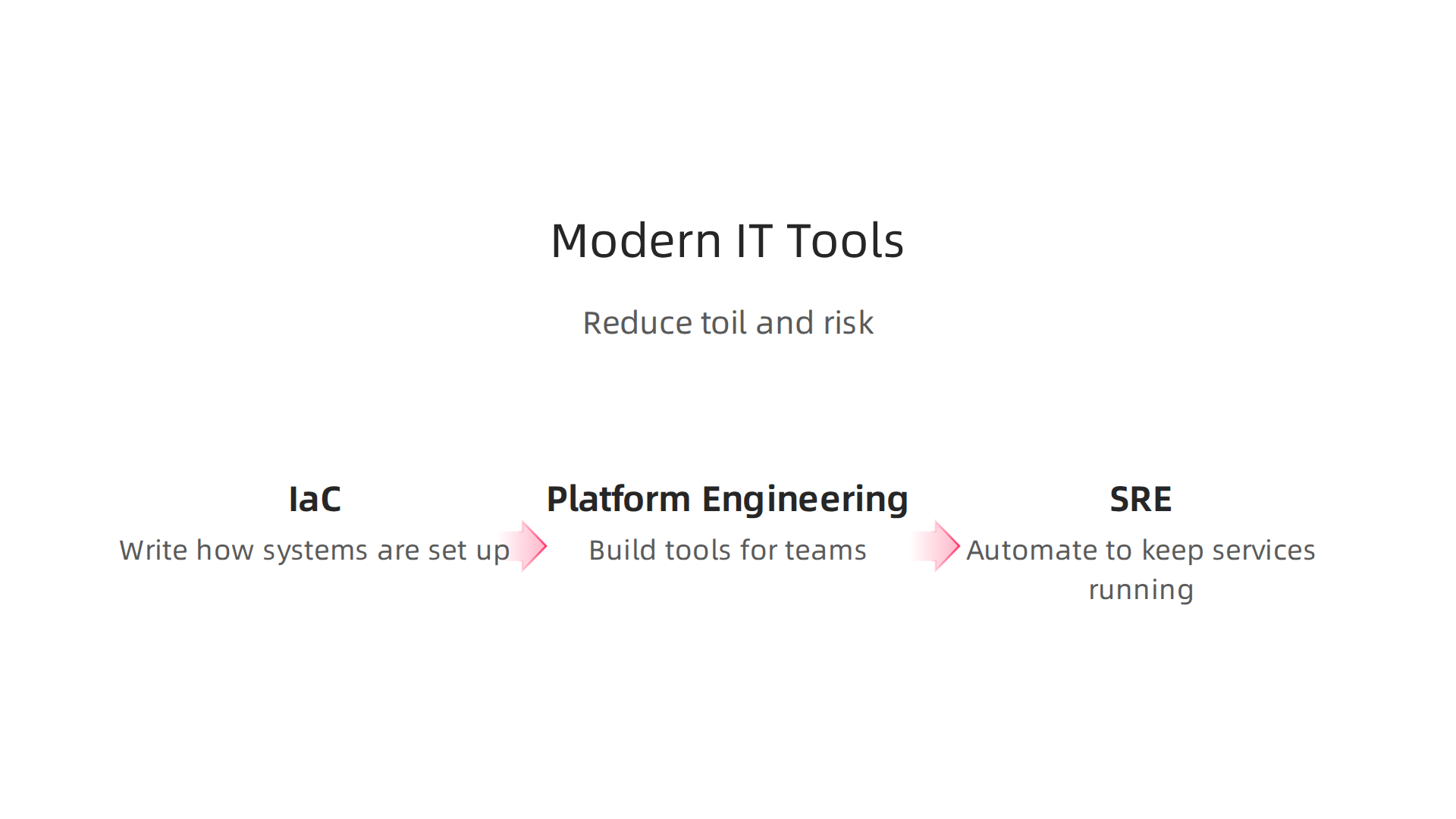
- Infrastructure as Code (IaC): This means you write down how your IT systems should be set up using computer code. Instead of clicking buttons to create a server, you write a script. This script can be run again and again, ensuring every server is set up exactly the same way. This helps avoid human mistakes and makes
it infrastructure managementmuch more reliable. Tools like Terraform are widely used for IaC across many cloud providers today Best SRE Tools in 2026: The Complete Guide. Others, like Ansible, help configure these resources, installing software and setting up user permissions automatically Best DevOps Automation Tools for SRE Reliability 2026 – Rootly. - Platform Engineering: This is about building helpful tools and services that other IT teams can use easily. Think of it as creating a self-service platform where developers can get what they need (like a new server or a database) with just a few clicks, without waiting for someone to build it manually. This frees up specialist teams to focus on bigger, more important tasks. If you’re an IT leader, understanding how this works is key to improving your
it infrastructure servicesand team efficiency. You can learn more in a strategic guide to platform engineering. - Site Reliability Engineering (SRE): SRE teams make sure that online services stay up and running smoothly. They use a lot of automation and data to fix problems quickly and prevent them from happening again. They treat IT operations like a software problem, constantly looking for ways to make systems more stable and efficient. This helps lower the "toil" or boring, repetitive work that IT teams often face.
These methods, including AI-driven operations (AIOps), are now key parts of how companies manage their IT, especially with many businesses using a mix of public and private clouds in 2026 What the 2026 Enterprise IT Infrastructure Stack Really ….
Seeing Clearly with Observability
Even with the best automation, things can still go wrong. That’s why "observability" is so important. It’s like having a clear window into every part of your IT systems.
Observability tools collect three main kinds of information:
- Logs: These are records of everything that happens. Think of them as a detailed diary of your applications and servers.
- Metrics: These are numbers that tell you how your systems are performing, like how busy a server is or how quickly an application responds.
- Traces: These show you the path a request takes through your different systems, helping you pinpoint exactly where a problem started.
These tools are like the "sensory system" for your IT infrastructure, providing all the information needed to automate tasks and solve problems Top DevOps Automation Tools for SRE Reliability in 2026. By looking at these logs, metrics, and traces together, teams can understand what’s happening in their systems, spot problems early, and even have automated systems fix things on their own. For example, if a server starts getting too busy, observability tools can detect it and automatically add more resources or restart a troubled application.
AIOps platforms are becoming very common in 2026, offering clear views and control over complex hybrid and multicloud setups AI-Driven IT Operations and the Rise of Autonomous Infrastructure. Tools like Datadog and Grafana are popular for giving teams dashboards and insights into their system’s health 8 Best SRE Tools for Uptime & Reliability in 2026. This combination of automation and clear visibility greatly improves the reliability and safety of all your it infrastructure services.
After making IT systems run smoother with smart automation tools, we next need to think about the very thing those systems handle: data. Data is like the special fuel for all modern businesses. How companies gather, store, and use this fuel is super important for making good decisions and helping the business grow. This is all about data management.
Data Infrastructure and Governance: From Pipelines to Analytics
Managing all the data a company creates and uses can be a big job. Just like we need good roads and pipes to move water, we need good "data pipelines" to move information. And just like we have rules for safe driving, we need "data governance" to make sure data is used correctly and safely. In 2026, leaders are looking at new ways to build their data systems so they are flexible and safe for everyone to use.
Ways to Build Your Data Systems
There are different main ways companies set up their data storage:
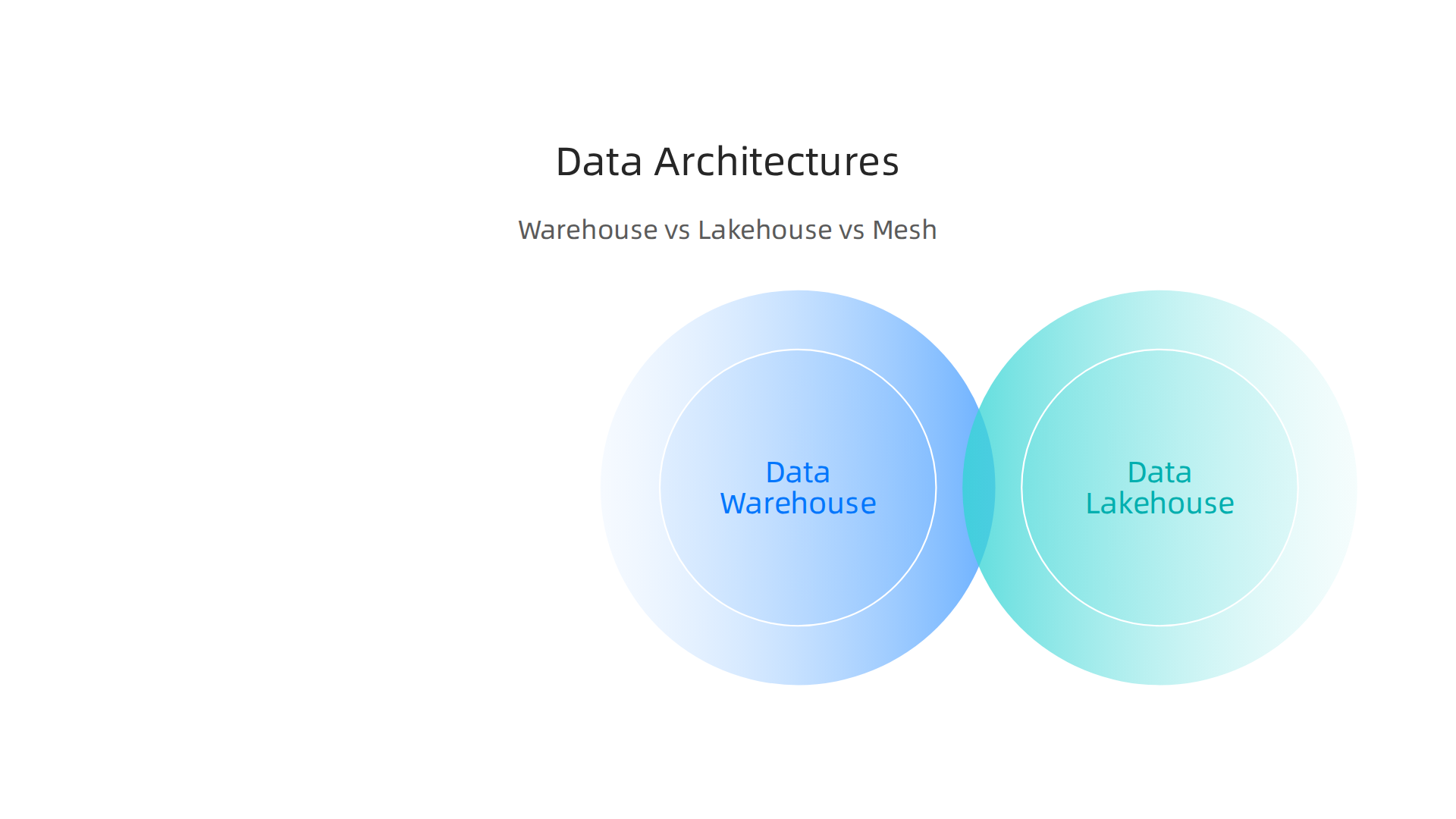
- Data Warehouse: Think of a data warehouse as a super organized library. Data is cleaned and put into neat shelves (tables) so it’s easy to find and report on. It’s great for answering specific business questions, like "How many products did we sell last month?"
- Data Lakehouse: A data lake is like a big, open field where you can dump all kinds of data, even messy stuff. It’s good for new ideas and testing things out. A "data lakehouse" combines the best parts of a data lake and a data warehouse. It lets you keep all your raw data in one place but also makes it easy to organize and get insights, almost like building neat houses on that open field. This mix helps with big data projects and using AI. You can learn how to Build a Snowflake Data Lake That Works in 2026.
- Data Mesh: This is a newer idea that helps very large companies manage huge amounts of data. Instead of one big central data team, data mesh gives smaller teams inside the company their own data to manage, treating data like a product they own. Each team knows their data best and makes it easy for others to use. This makes
data managementfaster and more flexible. It means organizing both the technical side and the people side differently Literature Review on Data Mesh Table of Contents. Many companies are now looking into the 2026 State of Modern Data Architecture: Benchmark Report to see how data mesh works.
Keeping Your Data Safe and Sound with Governance
Having lots of data is only good if you can trust it and know how to use it right. That’s where data governance comes in. It’s about setting up rules and ways of working to ensure your data is:
- Accurate: Is the data correct?
- Secure: Is it protected from people who shouldn’t see it?
- Private: Are we respecting people’s privacy?
- Easy to find: Can people who need it actually get to it?
Good data governance means you can give teams more freedom to use data (like for self-service analytics) while still keeping it safe and following rules Data, BI and Analytics Trend Monitor 2026. It’s a key part of making your overall it infrastructure management strong. In 2026, focusing on data integrity is very important for using AI well.
Two important parts of data governance are:
- Data Cataloging: This is like having a detailed card catalog for all your data. It tells you what data you have, what it means, and where it came from. This makes it much easier for people to find the right data for their work.
- Data Lineage: This shows the entire journey of your data. It’s like a map that tracks where data started, how it was changed, and where it ended up. If there’s a problem, data lineage helps you find out exactly where it happened.
These tools are the backbone for safe and smart data management across your entire company. They help build trust in your it infrastructure services by ensuring data is reliable for all kinds of uses, from daily reports to advanced AI projects.
To stay updated on how AI is changing how we manage and use data, consider subscribing to a trusted resource. Get clear daily AI updates from The AI Newsletter Worth Reading.
Data is super important, but it also comes with big responsibilities. After all the work to make sure our data is correct and easy to find, the next big step is to keep it truly safe and follow all the rules.

This means thinking about security, meeting legal requirements, and being careful with companies we work with. All these parts make up strong it infrastructure management.
Keeping Things Safe: Security from the Start
Imagine building a house. It’s much easier and cheaper to put in strong doors and windows when you are first building it, not after it’s finished. It’s the same for keeping computer systems safe. This idea is called "shift-left" security. It means we should think about security right at the very beginning of making new software or setting up new systems, not just at the end. By doing this, we catch problems early and make everything more secure from the ground up.
Watching Out for Supply Chain and Vendor Risks
In 2026, most companies use tools and services from other companies. This is called a "supply chain" for IT. Just like you’d check where your food comes from, you need to check where your software and hardware come from. If a vendor has a security problem, it can affect your company too. This is called supply chain risk.
It’s really important to check these outside companies, or "third-party vendors," carefully. The NIST organization, which sets standards for security, has guides like the NIST Cybersecurity Supply Chain Risk Management to help businesses know what to look for. This helps make sure that any service you use, or any software you buy, is as safe as possible. For example, the NIST 800-53 Vendor Management Complete Guide for 2026 offers clear steps for managing vendors. Proper checks help reduce risks to your overall it infrastructure services.
Following the Rules: Compliance in Modern Systems
Besides security, companies must follow many rules and laws, which is known as compliance. These rules often say how you must handle customer data or keep certain information private. This is especially true when using cloud services, where your data might be stored in different places around the world.
Balancing these rules with being quick and flexible in how you use technology can be tricky. However, good data management and solid it infrastructure management practices help. They allow companies to use both their own computer systems (on-premise) and cloud systems (hybrid environments) while still following all the necessary rules. To better understand how to pick the right tools to manage your IT, you might want to read about Mastering IT Management Platform Selection for Enterprise Leaders.
After making sure our systems are safe and follow all the rules, the next big question is: how do our teams actually work together to keep everything running smoothly? This is where different ways of organizing work and teams come in. It’s all about how companies handle their it infrastructure management day-to-day.
Operational Models: Platform Teams, SRE, and Runbooks
Many companies in 2026 are finding smarter ways to manage their computer systems. Two popular ways are using "platform teams" and "Site Reliability Engineering" (SRE).
Platform Teams for Easier Building
Think of platform teams like a special group that builds all the basic tools and services that other teams need. For example, they might set up how new software gets released or how data is stored. This is called "platform thinking." When product teams want to create a new feature or app, they don’t have to worry about building these basic parts from scratch. They can just use what the platform team has already made. This makes it easier and faster for product teams to do their work, reducing their "thinking load" so they can focus on making great products. To learn more about how this approach helps leaders, check out Platform Engineering in 2026: A Strategic Guide for CIOs and CTOs.
Site Reliability Engineering (SRE)
Another important way to run things is Site Reliability Engineering, or SRE. SRE teams focus on making sure that all online services stay working and are always available. They use engineering skills to solve problems that usually require a lot of manual effort. This often involves a lot of smart automation. SRE is a key part of providing reliable it infrastructure services because it aims to fix issues quickly and even prevent them before they start. Many new tools are helping SRE teams keep systems running smoothly in 2026.
Using Playbooks and Automation
When a computer system has a problem, like an app crashing or a server going offline, teams need a clear plan to fix it. These plans are called "runbooks" or "playbooks." They are like step-by-step guides that tell people exactly what to do to solve common issues.
These runbooks work best when they are connected to "observability" tools. Observability means having special systems that constantly watch your it infrastructure management. They collect important information like logs (records of what happened), metrics (measurements of how things are performing), and traces (paths of how requests move through systems). These tools give teams a "sensory system" for their infrastructure, helping them see problems right away. For example, tools like Grafana and Datadog are popular for this, as discussed in the Top 15 SRE Tools in 2026.
When observability tools spot a problem, they can even start automated actions from a runbook to fix it without human help. This kind of automation is a big part of modern itil service management because it makes fixing problems much faster and more consistent. It helps reduce how often systems go down and how long they stay down. Actually, reports in 2026 show that companies are reducing major outages by investing in more automation and better monitoring. This focus on quick fixes and preventing problems is crucial for strong data management and overall IT success.
Want to keep up with the latest in tech, including AI and enterprise software that supports these operational models? Get clear daily AI updates from The AI Newsletter Worth Reading.
When we look ahead, the world of it infrastructure management is always changing. Companies are already planning for 2027 and beyond, looking at new ways to handle their computer systems. There are three big trends that everyone is watching: making operations smarter with AI, combining cloud and edge computing, and building systems that put data first.
AI-Enabled Operations (AIOps)
Imagine your computer systems being so smart they can almost run themselves. That’s what AI-enabled operations, or AIOps, is all about. AIOps uses artificial intelligence to look at all the information coming from your it infrastructure services and automatically find problems. More than that, it can often fix them before humans even notice. This makes itil service management much more efficient. Instead of people having to watch everything all the time, AI tools help manage and keep systems running smoothly. Many experts believe that by 2026, AIOps will be a key part of daily operations, not just an extra tool, as discussed in "What the 2026 Enterprise IT Infrastructure Stack Really …" research. This helps businesses move towards more automated and reliable infrastructure. You can learn more about this in articles like AI-Driven IT Operations and the Rise of Autonomous Infrastructure.
Edge and Cloud Convergence
Another big trend is how edge computing and cloud computing are coming together. Cloud computing is when you store and access data and programs over the internet instead of directly on your own computer. Edge computing means processing data closer to where it’s collected, like on a smart device or a local server. The "convergence" means these two ideas are blending. Companies are using a mix of public clouds, private clouds, and local "edge" setups. This helps them manage workloads better, improve speed, and deal with data more flexibly, as noted in "2026 Cloud Strategy: Hybrid, Multi-Cloud & Edge Best Practices" research. This way, important data management can happen super fast, right where it’s needed, while less urgent things can use the vast power of the cloud. Thinking about these choices is crucial for improving your cloud research how to evaluate insights and drive smarter cloud decisions.
Data-First Architectures (Data Mesh)
The way companies handle their data is also changing. Instead of one central place managing all data, many are moving to "data-first architectures" or "data mesh." This idea treats data like a product, where different teams own and manage their own specific data sets. It means that the teams who best understand the data are in charge of it. This helps make sure data is accurate, easy to find, and useful for everyone. This approach boosts innovation and makes data management more scalable, as highlighted in the 2026 State of Modern Data Architecture: Benchmark Report. It gives teams the freedom to use data productively while still following company rules. For those looking to build strong data foundations, exploring a data pipeline 2026 blueprint for building real time reliable infrastructure is a smart step.
Building Your Multi-Year Roadmap
Planning for these future trends is super important. Companies need to create a roadmap that looks several years ahead.

This means deciding which new technologies to try out (innovation) and how to do it without taking too many risks. It’s about finding the right balance. Leaders need to think about how these changes will affect their it infrastructure management and make sure their teams have the skills to keep up. Regularly reviewing your IT strategy will help your company stay ahead in the fast-paced tech world.
Summary
This article explains why modern IT infrastructure management is critical in 2026 and walks through practical choices leaders must make to keep systems reliable, secure, and cost-effective. It covers architecture patterns (modularization, service boundaries, platform vs product thinking), trade-offs between monoliths, microservices and managed services, and how hybrid and multicloud strategies can improve resilience while adding operational complexity. You will learn how automation, Infrastructure as Code, observability, and SRE practices reduce repetitive work and speed incident response. The piece also outlines data infrastructure options—warehouses, lakehouses, and data mesh—and why governance, catalogs, and lineage matter for AI readiness. Security guidance includes shift‑left practices, supply‑chain checks, and compliance considerations. Finally, it describes organizational models and a multi‑year roadmap that prepares teams for AIOps, edge/cloud convergence, and data‑first architectures.