
Cloud Research How to Evaluate Insights and Drive Smarter Cloud Decisions

Introduction: Cutting Through the Cloud Research Noise
Cloud computing is everywhere. It powers apps, stores data, and runs entire businesses. With so many companies moving to the cloud, the amount of cloud research available has exploded. Every day, new reports, whitepapers, and blog posts promise to reveal the next big trend.
But here is the problem. How do you know which research you can trust? How do you separate data-backed insights from marketing hype? Without a clear strategy, decision makers waste time sifting through content that is outdated, biased, or just plain wrong.

The stakes are high. The cloud computing market is projected to reach over $950 billion in 2026, according to the latest cloud computing statistics for 2026. That is a massive amount of money flowing into infrastructure, services, and tools. Companies that base their strategy on poor research risk overspending, choosing the wrong provider, or missing key security risks. A single bad decision can cost millions and set your roadmap back by years.
So how do you stay ahead? You need a structured approach to finding, evaluating, and applying cloud research that matters. This guide gives you exactly that. We will walk through how to source high quality information, check its credibility, and turn insights into real business outcomes.
Whether you are evaluating AWS Lambda functions or comparing Azure container app pricing, the same principles apply. Good research leads to smarter decisions. And smarter decisions save time and money.
If you want to dig deeper into how cloud infrastructure is shaping enterprise strategy, check out our platform engineering in 2026 guide for CIOs and CTOs. And to keep your finger on the pulse of fast moving tech trends, consider subscribing to The AI Newsletter Worth Reading for daily updates you can actually use.
The State of Cloud Research in 2026
Cloud research in 2026 is bigger than ever. New studies, analyst reports, and vendor benchmarks come out every week. The sheer volume can feel overwhelming. According to the latest cloud computing market size in 2026, the industry is now worth over $900 billion. With that kind of money at stake, everyone wants a voice in the conversation.
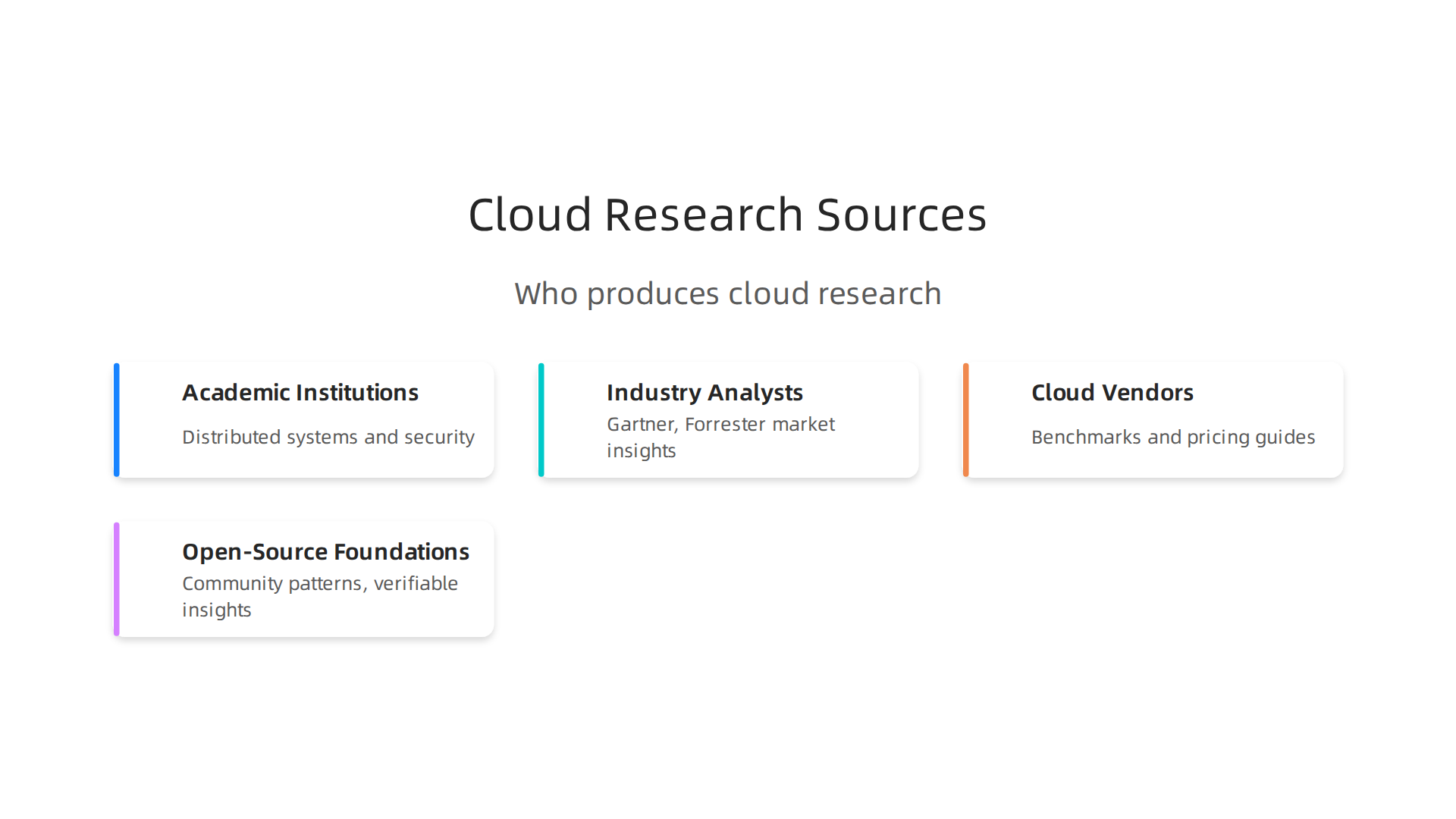
Who produces all this research? Academic institutions run deep technical studies on distributed systems and security. Industry analysts like Gartner and Forrester publish their famous Magic Quadrants and Waves. Cloud vendors themselves release benchmarks, best practice guides, and pricing calculators. And open-source foundations share architecture patterns that anyone can test and verify.
Each source comes with its own bias. Vendor research naturally highlights their own services. Academic papers may lag behind what is actually running in production. The trick is to mix sources and look for consistent patterns across them.
Enterprise leaders also need to separate hype cycles from real long-term shifts. Serverless computing and multi-cloud strategies remain hot topics. But you have to distinguish genuine adoption data from marketing spin. Research on specific services like AWS Lambda or Azure container app pricing shifts quickly. What was true six months ago may already be outdated.
One practical way to stay grounded is to follow independent commentary that cuts through the noise. You can also read our enterprise technology analyst insights guide, which breaks down how to evaluate research sources effectively.
In short, cloud research in 2026 is abundant but noisy. Success comes from knowing where to look and how to separate signal from noise.
Evaluating Research Quality: Credibility Frameworks
Now that you know where to look, the next question is how to judge what you find. Not all cloud research carries the same weight. A vendor-funded white paper, a peer-reviewed academic study, and an independent analyst report each sit at different levels of reliability.
Here is a simple repeatable framework you can use. Ask three questions about every piece of research you read.
First, was the methodology transparent? Can you see exactly how the data was collected, what the sample size was, and where the numbers came from? Top-tier research explains its methods clearly. One recent study on cloud service credibility, for example, uses information entropy and Markov chains to build its model. That level of detail lets you judge the work for yourself. For a closer look, read this credible research on the credibility measurement of cloud services.
Second, how recent is the data? Cloud pricing shifts fast. What was true about AWS Lambda costs last year may not hold today. The same goes for Azure container app pricing. Always check the publication date. Research older than 12 months should raise a yellow flag.
Third, who paid for it? Vendor studies are useful, but they highlight strengths and downplay weaknesses. Peer-reviewed papers tend to be more balanced, though they may lag behind real-world deployments. Cross-referencing multiple independent sources is the gold standard for confident decision-making.
One practical way to sharpen your evaluation skills is to learn how to evaluate cloud-based productivity tools using the same critical lens.
The bottom line? You do not need to be a data scientist to assess research quality. A little skepticism and a quick framework go a long way. If you want to stay sharp without doing all the digging yourself, consider The AI Newsletter Worth Reading for daily curated insights that cut through the noise.
Key Research Themes Shaping Cloud Adoption
So you know how to judge research, but what is the research actually saying? In 2026, three big themes keep showing up in the best cloud research: cost optimization, security, and AI integration. These are the top factors driving cloud strategy right now.
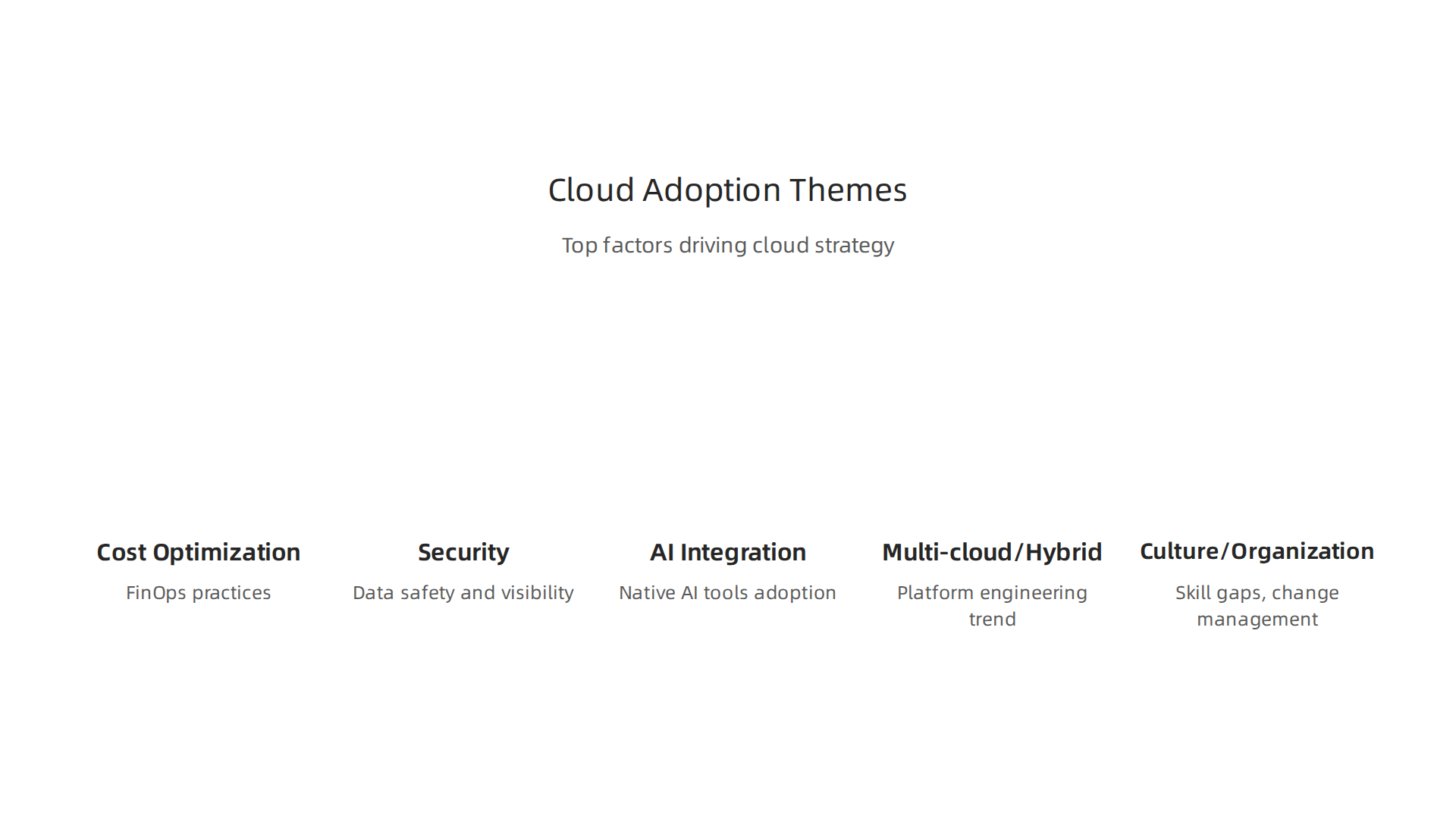
Cost optimization is still the number one concern. Companies are tired of surprise bills. They want to know exactly what they are paying for services like AWS Lambda and Azure container app pricing. That means more teams are using cost tracking tools and FinOps practices to keep budgets under control.
Security comes next. As more data moves to the cloud, trust becomes everything. Research into cloud service credibility shows that users need to feel confident their data is safe. One study on cloud platform credibility assessment highlights how security and visibility are key to building that trust. You can read more about this in the cloud platform credibility assessment study.
AI integration is the fastest growing theme. Teams are looking for AWS cloud services that make it easy to run machine learning models without breaking the bank. The demand for native AI tools inside cloud platforms is reshaping how vendors build their products.
Another big shift? Multi-cloud and hybrid architectures are still the norm, but research shows a move toward platform engineering. Instead of juggling multiple clouds manually, companies are creating internal platforms that simplify how developers work with cloud resources. If you want to understand this trend better, check out this platform engineering guide for CIOs.
Finally, the research points to a surprising barrier. It is not technology that slows cloud adoption anymore. It is culture and organization. Teams struggle with skill gaps, change management, and getting different departments to agree on a single cloud strategy. The biggest cloud research insight? The human side matters just as much as the tech side.
Navigating the Vendor Landscape Through Research
You now know the big research themes. But here is the real question: how do you actually pick the right cloud vendor? That is where navigating the vendor landscape gets tricky.

Most people start with analyst reports. Names like Gartner Magic Quadrant and Forrester Wave pop up everywhere. These reports give you a nice visual map of who is leading and who is chasing. They are based on structured criteria like current offering, strategy, and customer feedback. But they have limits. Analyst reports rely heavily on what vendors tell them, and they can miss how products perform in the real world. For a deeper look at how these reports work, check out the Forrester Wave methodology and how to read it.
That is why independent benchmarks and open-source performance tests matter so much. These tests measure things like speed, cost, and reliability without vendor influence. For example, if you are comparing AWS Lambda against Azure container services, a good performance test will show you true latency and pricing under load. Analyst reports often skip those day-to-day details. Want a more complete picture? This enterprise technology analyst insights 2026 guide explains how to combine different sources.
The smartest approach? Mix your research types. Start with analyst reports to see the big picture. Then dig into independent benchmarks for hard numbers. Finally, run your own small proof-of-concept with real data. Customer reviews and community forums can also reveal things no report captures. By combining qualitative and quantitative research, you validate vendor claims from every angle.
If you want to stay on top of the latest vendor research and cloud trends, getting a steady stream of clear updates helps. That is why many leaders turn to The AI Newsletter Worth Reading. It delivers daily briefings to keep your cloud research sharp and current.
From Research to Action: Strategic Decision Frameworks
Once your cloud research is sharp and current, the next step is turning it into action. That is where strategic decision frameworks come in. Without a structured process, even the best data gets lost in opinions and gut feelings. You need a system.
Start with a cost-benefit analysis for every vendor option. Compare not just the sticker price but also migration costs, training time, and long-term lock-in. Add risk scoring to each option. Ask questions like: How stable is this vendor? How well do they support compliance? The scores make trade-offs visible.
Frameworks like Gartner’s Pace-Layered Model and McKinsey’s Cloud Strategy Canvas help you translate your research into a clear roadmap.
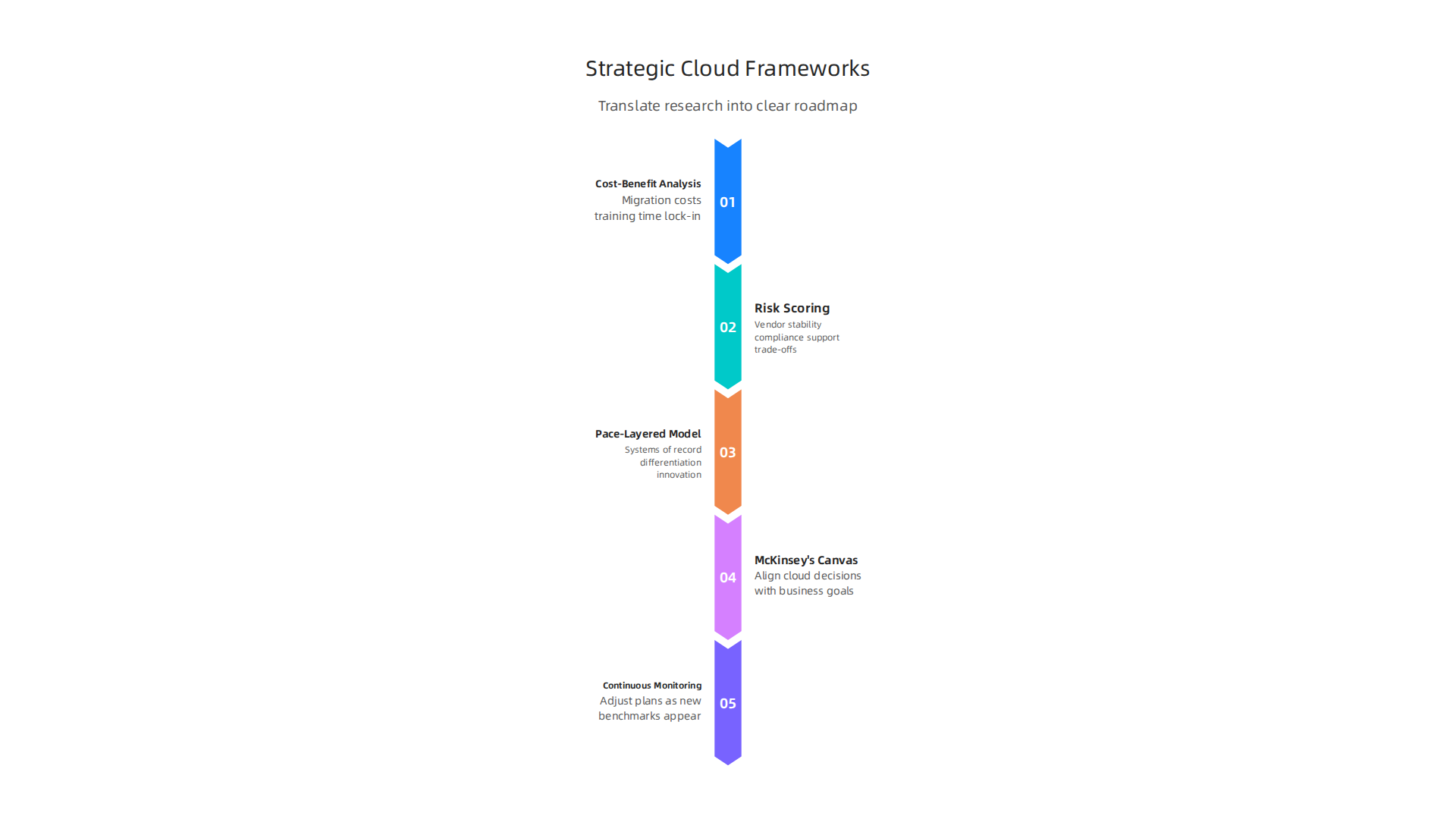
The Pace-Layered Model splits your systems into three layers: systems of record, systems of differentiation, and systems of innovation. This helps you decide which cloud services need bulletproof stability and which can be more experimental. McKinsey’s Cloud Strategy Canvas guides you through aligning cloud decisions with business goals, financial targets, and operating models. These tools turn messy data into a path forward.
Do not stop after one decision. The cloud market changes fast. Continuous monitoring of new research lets you adjust your plans as new benchmarks, pricing shifts, or security updates appear. For example, a new Forrester Wave report on sovereign cloud platforms can reveal when a vendor adds critical compliance features you need. Using a cloud research structured evaluation framework like the Forrester Wave helps you stay aligned with the latest vendor capabilities.
To see how decision frameworks apply to building real-time infrastructure, check out this data pipeline blueprint for reliable infrastructure. It walks through practical steps to turn your research into a working system.
Future Outlook: Emerging Technologies in Cloud Research
The cloud research landscape is shifting fast. New technologies are reshaping what analysts study and what leaders plan for. Keeping an eye on these trends helps you stay ahead.
Edge computing and distributed cloud architectures are hot topics right now. Researchers are focusing on how to reduce latency and meet data sovereignty rules. Instead of sending all data to a central cloud, edge setups process data closer to where it is collected. This is huge for smart cities, self-driving cars, and factory automation. The cloud computing market is expected to grow from $1.18 trillion in 2026 to over $3.3 trillion by 2033, according to the cloud computing industry report. A big part of that growth comes from edge and IoT systems.
Quantum computing is another area moving from theory to real use. Cloud providers now offer early access services where you can experiment with quantum processors. This is still early stage, but researchers are publishing more practical papers on how quantum algorithms can solve problems in drug discovery and logistics. Your cloud research should track which vendors are investing in quantum services.
AI-native cloud platforms and serverless machine learning tools are maturing fast. Think of services like AWS Lambda for compute and managed ML platforms that let you train models without managing servers. For example, AWS cloud services now offer deeper integration with generative AI tools. The rise of AI is fueling demand for elastic infrastructure. If your team wants to build AI products, understanding enterprise AI apps and their selection can help you choose the right platforms.
Staying current with these changes is key. One way is to get clear daily AI updates from the The Deep View Newsletter. It cuts through the noise so you can focus on what matters for your cloud research.
The Role of AI in Cloud Research: 2026 Perspectives
But AI is not just a topic you read about. It is also a powerful tool that changes how you do cloud research in the first place. In 2026, artificial intelligence is reshaping both what researchers study and how they study it.
Think about the process of cloud research itself. Literature reviews, trend analysis, and predictive modeling used to take weeks. Now AI tools can scan thousands of papers, vendor announcements, and market reports in minutes. They surface patterns you might miss.

For example, machine learning models can detect early signals of a cloud provider’s price changes or service disruptions by analyzing forum discussions and support tickets. This helps you make faster, smarter decisions about your infrastructure.
Research also shows that AI-driven cloud optimization can cut costs by 20 to 30 percent while improving performance. That is a huge win for enterprise teams. By using AI to right-size instances, predict demand, and automate scaling, you stop wasting money on resources you do not need. Tools like AWS Lambda and Azure Container Apps make it easier to run code only when triggered, which aligns with this optimization trend. Understanding how container pricing works is part of the new cloud research skill set.
But here is the catch. Not every AI claim from cloud vendors is real. Enterprise leaders need to evaluate these promises carefully. A vendor might say their AI reduces costs, but the fine print shows it only works on certain workloads. Your cloud research should always dig past the marketing. Look for third-party benchmarks, case studies, and independent reviews.
To build a strong strategy, start with a data-backed enterprise AI adoption roadmap. It helps you separate genuine innovation from hype.
Meanwhile, the numbers back up the trend. Global cloud infrastructure spending grew 35 percent in Q1 2026 compared to the same period in 2025, according to the cloud market spending analysis. AI is a big driver of that surge. As you plan your cloud research for the rest of the year, keep AI both as a subject and as a tool in your toolkit.
Building a Sustainable Cloud Research Practice for Your Organization
But having AI in your toolkit is only the first step. To make cloud research a lasting advantage, you need to build a practice that your whole organization can rely on.

Start by making research consumption a formal part of someone’s job. Dedicate a person or a small team to curate relevant findings, monitor changes from major providers like AWS Lambda and Azure Container Apps, and share updates in weekly briefings. When research becomes a habit, not an afterthought, your cloud spending decisions stay aligned with the latest data.
Partnering with academic institutions and industry consortia can also give you early access to emerging insights. These relationships often come with previews of new research before it hits the mainstream. That head start matters when you are choosing between cloud services or planning a migration.
How do you know your cloud research practice is working? Measure it. Track how fast your team adopts new insights and whether those insights actually cut your cloud costs. For example, if a research finding helps you switch to a right-sized instance type and saves 15 percent on your monthly bill, that is a clear win.
According to the 2026 State of the Cloud Report, there has been a significant rise in the value delivered by business units through cloud adoption. A sustainable research practice helps you capture that value consistently.
To build the right team structure, check out this cloud engineer career and hiring guide. It covers the skills and roles you need to turn research into action.
And to stay sharp on the broader AI and cloud trends driving your decisions, get clear daily AI updates from The AI Newsletter Worth Reading. It will help you connect your internal research with what is happening across the industry.
Summary
This guide explains how to cut through the flood of cloud research and use the best studies to make smarter infrastructure decisions. It shows where cloud research comes from, why sources differ, and a simple three-question credibility framework to judge methodology, recency, and funding. The article surveys the research themes driving cloud strategy in 2026—cost optimization, security, and AI integration—and explains how to combine analyst reports, independent benchmarks, and proofs-of-concept to pick vendors. It also presents practical decision frameworks, ways to measure trade-offs like migration cost and lock-in, and how AI tools speed literature reviews and optimization. Finally, it recommends building a repeatable research practice inside your organization so insights lead to measurable savings and better cloud roadmaps.