
Software Infrastructure Engineer Role Key Skills and Future Trends 2026

In 2026, almost every business uses software and the cloud to get things done. Think about how you shop online, use banking apps, or even stream movies. All these things rely on powerful computer systems working perfectly in the background. This is where a software infrastructure engineer comes in. This important job is all about making sure these behind-the-scenes systems are built well and run smoothly.

A software infrastructure engineer helps big companies set up their cloud systems and build special tools that their own developers use. They are like the architects and builders of the digital world, creating the strong foundations for all applications. This role is crucial for a company’s platform engineering in 2026 plans and cloud strategy. They often work closely with a devops engineer to make sure software can be built, tested, and released quickly and safely.
Today, enterprise leaders face big challenges with their technology. They worry about:
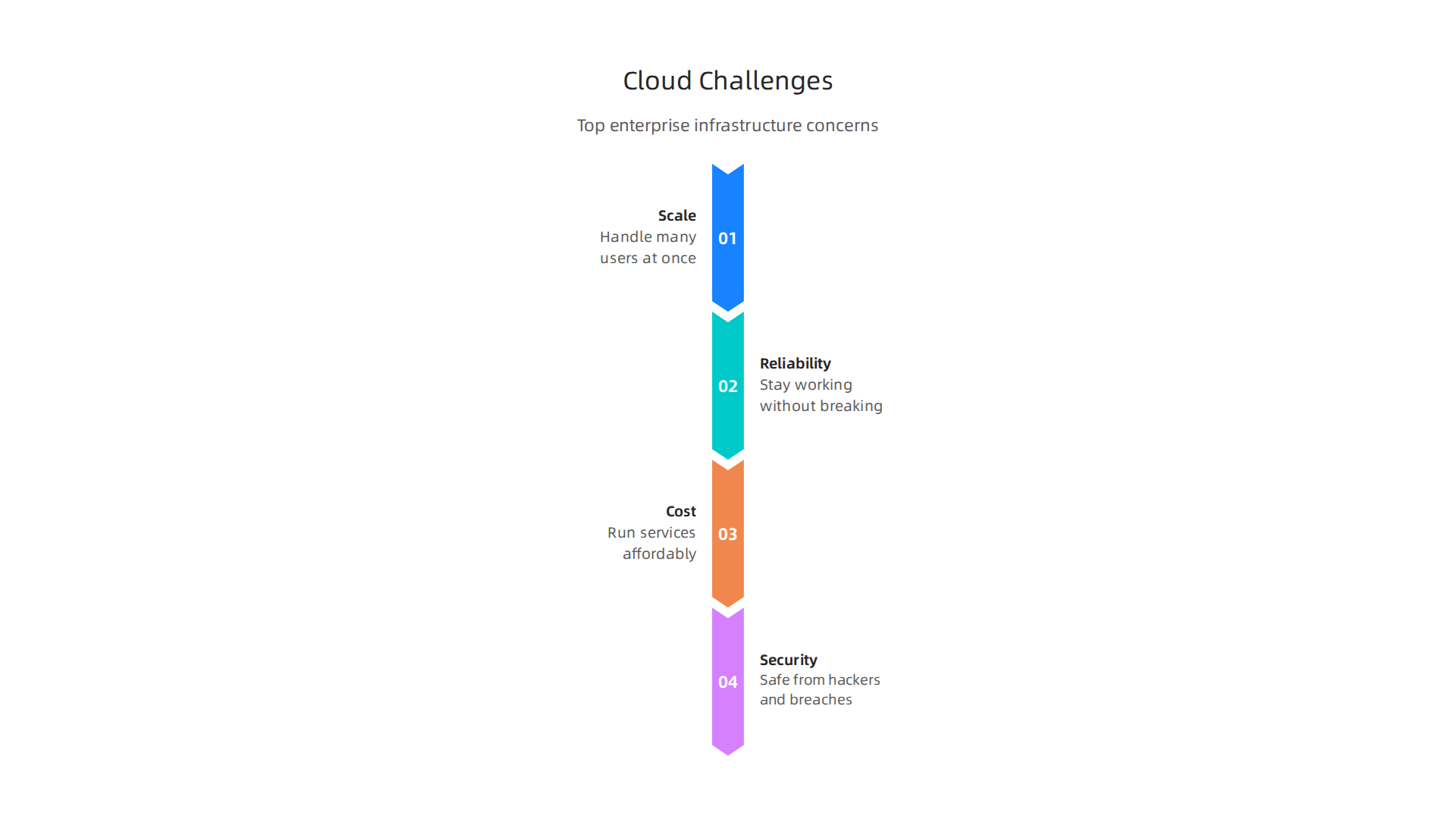
- Scale: Can our systems handle many, many users all at once, or a sudden burst of activity?
- Reliability: Will our systems stay working without breaking down, 24/7? No one wants an app to crash in the middle of an important task. This focus on reliability is a core part of what is known as Site Reliability Engineering (SRE).
- Cost: How can we run our powerful cloud services, like storing files in AWS S3 or building code with AWS CodeBuild, without spending too much money?
- Security: Are our systems safe from hackers and data breaches? Keeping customer information secure is a top priority.
The software infrastructure engineer helps solve these big problems. They design and manage the computer networks, servers, and programs that make sure everything works reliably and safely. They ensure that all the technology a company uses can grow as needed and runs without hiccups.
For business leaders looking to stay informed about the fast-moving world of enterprise AI and technology, there’s a valuable resource.
Get clear daily AI updates from The AI Newsletter Worth Reading.
A software infrastructure engineer needs a special mix of skills to do their job well. It’s not just about knowing how computers work. It’s also about working with people and planning ahead.
Key Skills for a Software Infrastructure Engineer
Here are some important skills a software infrastructure engineer needs in 2026:
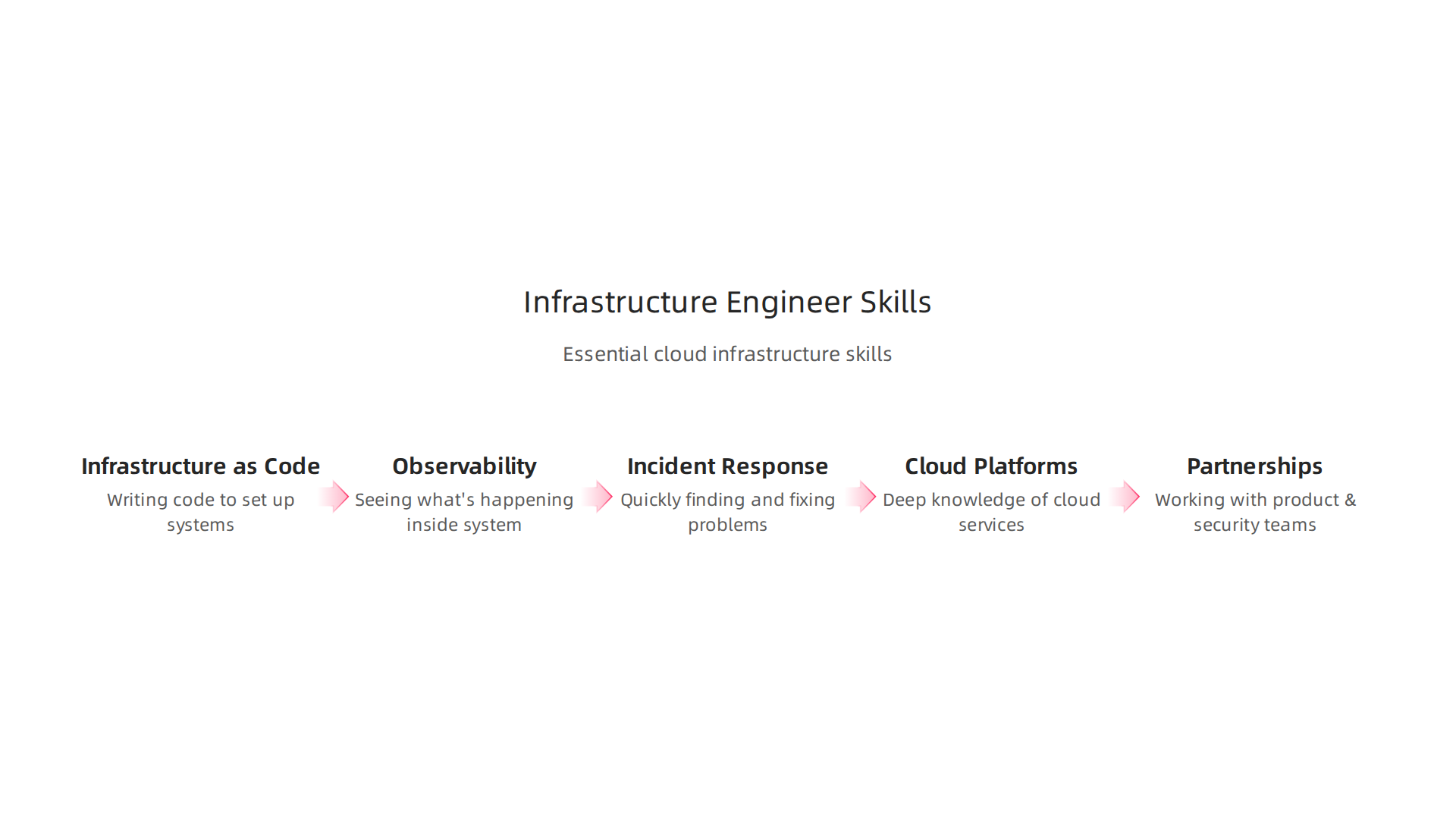
- Infrastructure as Code (IaC): This is about writing code to set up and manage computer systems instead of doing it by hand. Imagine writing a recipe for building a computer server. Tools like Terraform and CloudFormation are used for this. It helps make sure everything is built the same way every time.
- Observability: This means being able to see exactly what’s happening inside a system. It’s like having a dashboard with all the important gauges for a car. If something goes wrong with, say, an aws s3 storage bucket or an aws codebuild process, they can find out why quickly.
- Incident Response: When systems break, they need to be fixed fast. A good software infrastructure engineer knows how to quickly find the problem and get things running again. This is a big part of keeping systems reliable.
- Cloud Platforms: Deep knowledge of cloud services from providers like AWS, Google Cloud, or Azure is a must. Knowing how to manage resources in these clouds is central to the role. For more on what skills are needed, check out this 2026 list of technical skills enterprise IT leaders must know.
- Partnerships: These engineers don’t work alone. They often work closely with product teams to understand what software needs to do.

They also team up with security teams to keep everything safe. This means they need good communication skills and the ability to work with others.
Common Team Structures
A software infrastructure engineer can fit into different teams within a company. These teams help organize how they build and run technology.
- Site Reliability Engineering (SRE) Teams: These teams focus on making sure systems are super reliable. They treat running software as a software problem, using engineering solutions to keep things stable. Starting an SRE team means applying software engineering to operations tasks Do you have an SRE team yet? How to start and assess ….
- Platform Engineering Teams: These teams build the tools and platforms that other developers use. Their goal is to make it easier and faster for product teams to create and release software. This is a growing area in 2026, where engineers define configurations and maintain underlying infrastructure Being a platform engineer in 2026: Career reality check.
- Cloud Operations (Cloud Ops) Teams: These teams are mainly focused on managing a company’s cloud services day-to-day. They make sure everything in the cloud is running smoothly and efficiently.
Often, a software infrastructure engineer will work closely with a devops engineer. Both roles aim to make software development and operations smoother, but infrastructure engineers tend to focus more on the underlying systems. If you are interested in a similar role, you can find more information in a cloud engineer career and hiring guide for 2026.
After learning about different team structures, let’s look at how a software infrastructure engineer builds systems that stay strong even when things go wrong. Making sure computer systems do not break easily is super important. It means thinking ahead and designing things in a smart way. This is called building resilient cloud infrastructure.
Designing Resilient Cloud Infrastructure: Patterns and Trade-offs
A software infrastructure engineer uses special ways to design systems that do not break easily. This is all about making sure that even if one part of a system, like an aws s3 storage unit or an aws codebuild process, has a problem, the whole system can still work. They often work closely with a devops engineer to make this happen.
Here are some smart ways they build systems to be strong:
- Spreading Things Out (Multi-Region): One big idea for keeping systems running is to spread them out. Imagine having a copy of your important work in two different cities far apart. If something happens in one city, like a power outage, your work is still safe and running in the other. This is called a multi-region setup in the cloud. It is like having backup data centers. For more patterns on how systems can tolerate faults, you can read this Fault Tolerance Playbook.
- Automatic Backup Switch (Failover): Another way is called "failover." This is when a system automatically switches to a backup if the main one stops working. Think of a light switch that automatically flips to an emergency generator if the power goes out. This keeps important services running, protecting your data and user experience. You can find more details on such recovery actions in this Resilient Microservices: A Systematic Review of Recovery Patterns.
- Breaking Things on Purpose (Chaos Engineering): Sometimes, engineers need to break things on purpose to see how strong they really are. This is called chaos engineering. A software infrastructure engineer might cause small problems in their systems to find weak spots before real issues happen. It helps them prepare for the unexpected.
- Finding the Right Balance (Trade-offs): Making systems super strong costs money and makes them more complex. Using many regions or fancy failover systems can be expensive. A software infrastructure engineer must find a good balance between how reliable a system needs to be and how much it costs. This also means understanding your cloud provider ecosystem enterprise strategy for 2026 to make the best choices.
How do these engineers know if their cloud infrastructure is truly resilient? They look at special rules and ways to measure things. For example, they might use guidelines like the NIST Cybersecurity Framework, which talks about how to prepare for and adapt to bad events. In 2026, there are also benchmarks like the RISE 2026 Cloud Resilience Benchmark that help teams check how well their cloud systems can handle problems.
A good software infrastructure engineer also decides where to spend time and money to make the biggest difference. This means figuring out what parts of the system are most important and making those extra strong. They want to make sure the essential services always stay online. To learn more about how to keep your IT systems running smoothly, explore ways to future-proof your IT infrastructure management for 2026.
Building resilient cloud infrastructure is a key part of what a software infrastructure engineer does. It helps companies keep their online services running smoothly, no matter what happens.
To stay on top of all the latest tech news, including how AI is shaping enterprise technology, make sure you’re subscribed to The AI Newsletter Worth Reading. It provides clear daily updates that can help any business leader.
After learning about different team structures and how to build strong systems, the next big step is deciding where those systems will live. For big companies, choosing the right online home, called a cloud platform, is a very important job for a software infrastructure engineer. It’s like picking the best land and tools for a very important factory.
Choosing the right cloud platform and services for enterprise needs
When companies pick a cloud platform, they are looking for a place to store their data and run their apps. The three biggest players in 2026 are Amazon Web Services (AWS), Microsoft Azure, and Google Cloud Platform (GCP). Each one has its own strengths, and a software infrastructure engineer needs to know these well. For example, AWS is known for having a very wide range of services. Azure often works smoothly with other Microsoft programs. GCP is known for its strong tools in data and AI.
Making this choice is not just about what is popular. A smart software infrastructure engineer helps decide based on what the business truly needs. Here’s what they think about:
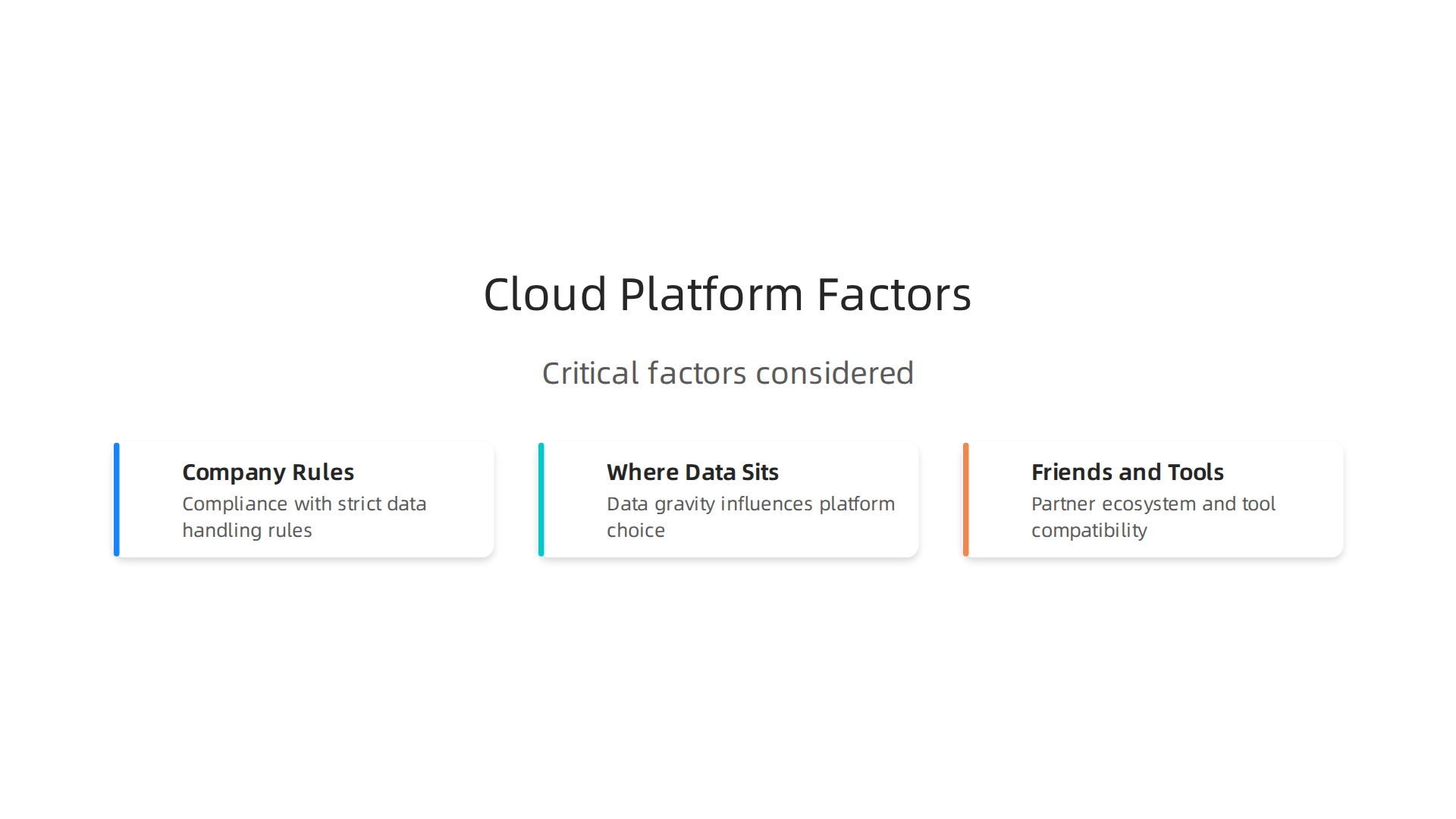
- Company Rules (Compliance): Many businesses, especially in areas like healthcare or banking, have very strict rules about how they must handle and protect their data. They need a cloud platform that follows all these rules and can prove it. This is called compliance.
- Where Your Data Already Sits (Data Gravity): If a company already has a lot of important data stored in one cloud, like in an AWS S3 storage area, it can be very costly and hard to move it all to another cloud. It is often easier to stick with the cloud provider where most of their data already lives.
- Friends and Tools (Partner Ecosystem): Companies use many different tools. A cloud platform’s "partner ecosystem" means all the other software and services that work well with it. If a company uses special tools, they need to make sure their chosen cloud supports them. For example, if a team uses aws codebuild for making their software, they would lean towards AWS. A devops engineer often helps match these tools to the right cloud environment.
It is also important to consider how much everything will cost. Different cloud providers have different ways of charging for their services. Understanding these costs is key to making a good choice that fits the company’s budget. To learn more about how different cloud providers compare, you can read about the Top Cloud Service Providers 2026.
Looking at these things helps a software infrastructure engineer make the best decision for a company. This careful planning helps make sure the chosen cloud platform will support the business now and in the future. To understand more about these big picture strategies, you can explore the cloud provider ecosystem enterprise strategy for 2026.
Staying on top of new technology is a must for anyone involved in enterprise software. Get clear daily AI updates that help business leaders like you navigate the fast-changing world of technology. Subscribe to The AI Newsletter Worth Reading.
Choosing the right cloud platform is a big step, and as we saw, cost is a major part of that decision. But the work doesn’t stop once a platform is picked. Companies need to keep a close eye on how much they spend on cloud services. This is where a practice called FinOps comes in.

Cost Optimization and Cloud Financial Operations (FinOps) for Infrastructure Teams
FinOps is like a teamwork plan that brings together financial people, technology experts, and business leaders. Its main goal is to help companies understand their cloud spending better and make smart choices to save money without hurting how well their technology works. A software infrastructure engineer plays a key role here, making sure the technical side of things lines up with the company’s money goals.
In 2026, more and more companies are using FinOps to manage their cloud costs. Reports like the State of FinOps 2026 Report Now Available show just how important this has become.
Here is how a software infrastructure engineer helps with FinOps:
- Knowing Who Pays for What (Cost Attribution): Imagine a big cloud account like a shared piggy bank. With FinOps, a
software infrastructure engineerhelps add "tags" to all cloud resources. These tags show which team or project is using each resource. For example, if a team is building something usingaws codebuild, the costs for that can be linked directly to their project. This way, everyone knows who is spending what, which helps teams be more careful. - Planning the Money (Budgeting): Once costs are clear, teams can set budgets for their cloud use. A
software infrastructure engineerhelps by giving real numbers and forecasts based on how much cloud space and power they expect to need. This helps prevent big surprise bills. - Finding Ways to Save (Saving Levers): This is where a
software infrastructure engineerreally shines. They look for smart ways to cut down costs. Some common saving methods include:- Right-sizing resources: Making sure that cloud servers or storage like
aws s3are not bigger or more powerful than needed. It’s like not buying a huge truck if you only need to carry a small box. - Using different pricing plans: Cloud providers offer many ways to pay. Sometimes, committing to use a service for a longer time can get you a discount. Other times, using "spot instances" for less important tasks can save a lot of money.
- Cleaning up unused resources: Old or forgotten cloud tools can still cost money. A
devops engineerorsoftware infrastructure engineeroften cleans these up. - Automating cost checks: Setting up systems to warn teams if spending goes too high or if resources are being wasted.
- Right-sizing resources: Making sure that cloud servers or storage like
To really get the most out of cloud spending, a software infrastructure engineer needs to keep learning about these methods. You can find many ways to save by exploring tips like the FinOps Best Practices: 12 Battle-Tested Tips for 2026.
Understanding how to measure and control cloud costs is very important for any business using the cloud today. It makes sure that money is spent wisely, helping the company grow. For more ideas on managing complex cloud pricing, especially for different services, check out how to optimize Azure API management pricing for multi-cloud with AWS insights. This careful management of IT spending is also part of a larger strategy for mastering IT management platform selection for enterprise leaders.
Understanding and controlling cloud costs is vital, but so is how companies build and deliver their software. This is where modern ways of working, like DevOps and platform engineering, come in. They help teams get new features and fixes out faster and more reliably. A good software infrastructure engineer makes sure all the tools and processes work smoothly together.
DevOps tooling, CI/CD, and platform engineering best practices
In 2026, making sure software is built and sent out quickly and safely is a top job for companies. This is done through something called CI/CD, which stands for Continuous Integration and Continuous Delivery or Deployment. It means setting up automatic steps to build, test, and then put code into action. This way, software updates can happen often without a lot of manual work.
Many tools help with CI/CD. Some popular ones are GitHub Actions, GitLab CI/CD, Azure DevOps Pipelines, and Jenkins. For teams using Amazon’s cloud, AWS CodePipeline with AWS CodeBuild is a common choice. These tools help a devops engineer or software infrastructure engineer set up pipelines that do many things, like testing code and looking for security issues early on. For example, enterprise CI/CD solutions often use stages for development, testing, and production, and include important security checks at each step, such as scanning for problems in code or containers, as noted in the Azure DevOps Enterprise CI/CD Guide 2026.
Another key part of this is Infrastructure-as-Code (IaC). This means managing your computer servers, networks, and other cloud parts using code, just like you manage software. Tools like Terraform or Crossplane let teams write down what their infrastructure should look like. This makes sure everything is set up the same way every time, which helps keep things secure and easy to manage. Adding security checks into IaC helps keep cloud setups safe from the start, following best practices for a secure IaC pipeline.
Platform engineering teams take this a step further. They build special tools and services that other software teams can use easily. This makes it simpler for developers to get what they need, like a new server or a database, without having to wait a long time. These teams also set up "guardrails," which are like safety fences, to make sure developers use cloud resources in a secure and cost-effective way. Think of it like giving developers self-service options, but with built-in rules to prevent mistakes. Many platform engineering tools help create these easy-to-use systems and internal developer portals, like those discussed in Top 10 Platform Engineering Tools.
The goal is to make it easy for developers to do their work fast, while still keeping things safe and organized. If you’re a leader looking to understand more about this field, exploring how it can improve your company’s operations is a smart move. Learn more about its strategic importance in our guide to Platform Engineering in 2026: A Strategic Guide for CIOs and CTOs.
Staying updated on all these fast-changing tech areas, including how AI is shaping them, is a constant challenge for leaders.
Get clear daily AI updates from The AI Newsletter Worth Reading.
Fast software delivery is great, but it must be built on a strong foundation of security and stability. This is where security, compliance, and operational resilience become super important for infrastructure teams. A software infrastructure engineer plays a key part in making sure systems are not just fast but also safe and reliable.
Building Security from the Start
Security isn’t an afterthought; it needs to be part of the design from day one. Infrastructure engineers work closely with security teams to build "secure-by-design" systems. This means baking security checks into every step of the software building process, known as CI/CD pipelines. For example, many companies in 2026 embed security automation into their enterprise CI/CD pipelines, including checking code for problems and scanning containers for known issues, as noted in a report on Best CI/CD Platforms For Enterprise.
Using Infrastructure-as-Code (IaC) also helps a lot. It means defining your entire setup with code. This code can then include strict security controls. These controls might cover things like setting up network rules, making sure data is encrypted, and giving users only the access they need. Important security features are commonly built into IaC templates, like network segmentation and encryption settings for data, according to an article on Infrastructure as Code (IaC) in Cloud Migration. Tools and practices help a devops engineer make sure every server, network, or storage bucket, like aws s3, follows these rules automatically.
Meeting Rules and Staying Resilient
Many businesses must follow strict rules and laws, especially in regulated industries. This is called compliance. Infrastructure teams are responsible for making sure all systems meet these standards. This involves careful logging of all actions and changes, which helps collect evidence if it’s ever needed. The NIST Cybersecurity Framework (CSF) is a widely used guide that helps organizations manage these challenges. It outlines key functions like "Govern," "Identify," "Protect," "Detect," "Respond," and "Recover" to handle cybersecurity outcomes,
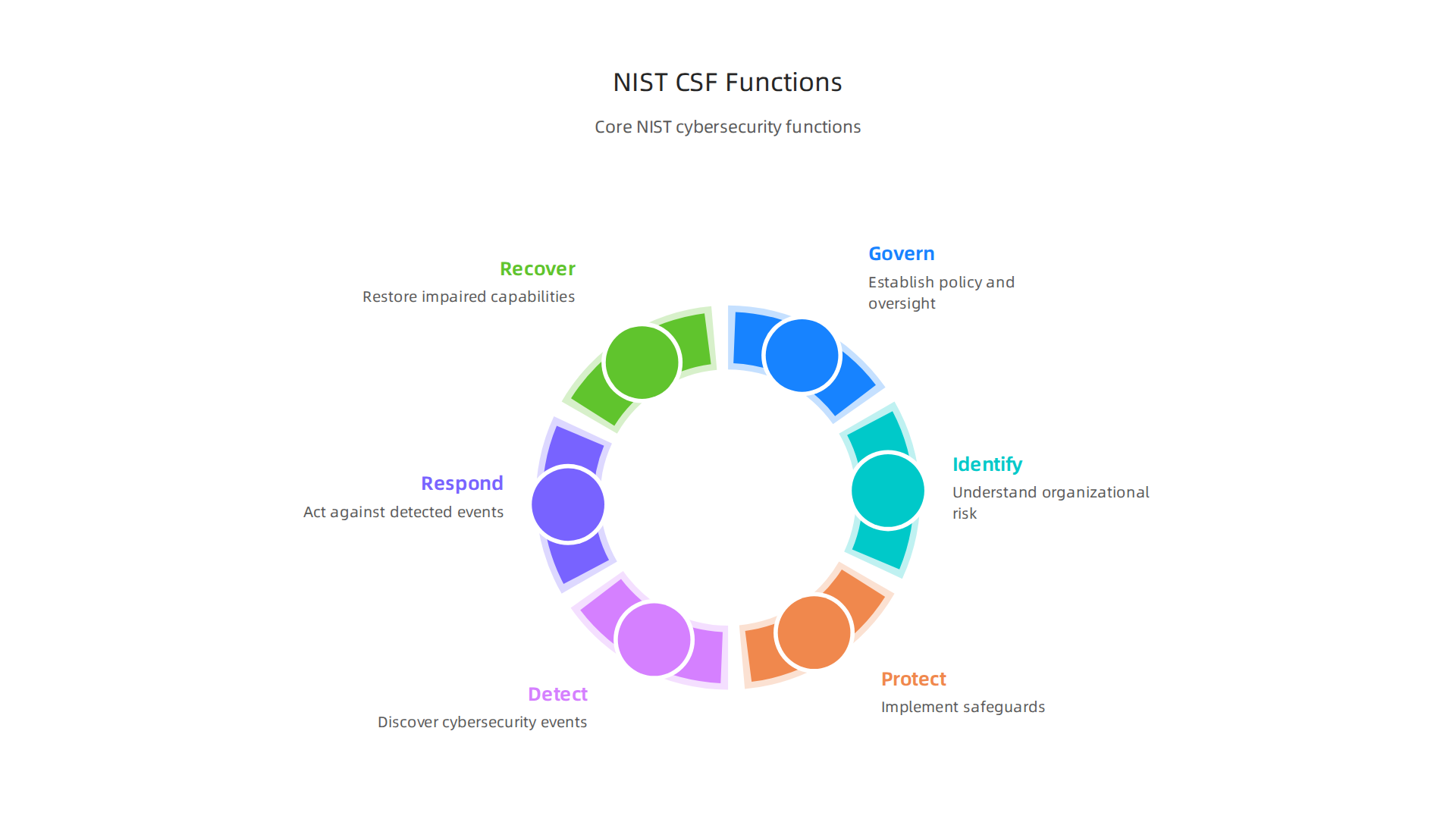
as explained in The NIST Cybersecurity Framework (CSF) 2.0.
Operational resilience is about keeping systems running even when things go wrong, like a cyber attack or a natural disaster. It’s the ability to bounce back. Good infrastructure means not just preventing problems but also preparing for them and adapting quickly. This includes setting up ways to respond to incidents and recover from them, which is a critical part of maintaining trust and service availability. You can find more details in the Zero Trust Guidance for Achieving Operational Resilience.
When an incident happens, having a clear plan is key. This plan, often guided by standards like NIST, helps teams quickly find the problem, stop it from spreading, and fix it. Collecting detailed logs and other forensic evidence during an incident is also very important for understanding what happened and for any future investigations or compliance needs. This helps avoid the loss of crucial information during cloud incidents, as highlighted in the Cloud Threat Horizons Report H1-2026. For more on effective incident handling, you can refer to the Incident Response Recommendations and Considerations for Cybersecurity Risk Management: A CSF 2.0 Community Profile.
A skilled software infrastructure engineer makes sure these practices are in place. They set up the tools and processes that allow for quick recovery, careful logging, and strong security. If you’re looking to enhance your company’s ability to handle future challenges, understanding how to manage your systems is vital. Learn more about how to Future-Proof Your IT Infrastructure Management for 2026.
While keeping systems secure and stable is always key, the world of software is always changing. Right now, a big change is coming from AI and Machine Learning (ML). These new technologies are reshaping what kind of infrastructure we need and what skills are most important for teams in 2026.
Emerging trends: AI infrastructure, platform ML, and the future skillset
AI and ML workloads are very different from traditional software. They need special computer power. Unlike normal programs, AI often relies on powerful Graphics Processing Units (GPUs). These GPUs are like super brains that can crunch numbers very fast, which is crucial for training complex AI models. A software infrastructure engineer needs to set up systems that can handle these high-demand GPUs efficiently.
The way data is handled for AI also changes. AI models need massive amounts of data to learn. This means building advanced data pipelines that can gather, clean, and prepare huge datasets very quickly. This ensures the AI models get good, ready-to-use information. In 2026, AI infrastructure is a top focus for many companies, especially for its specialized CPUs and advanced data pipelines, as noted in the State of AI Infrastructure at Scale 2025-2026 and AI infrastructure compute strategy. If you want to dive deeper into how this works, you can read our data pipeline 2026 blueprint.
Many companies use a mix of their own data centers and cloud services to run AI tasks. This is called a hybrid execution environment. It helps them get the best of both worlds: control over sensitive data and the flexible power of the cloud. Knowledge of major cloud platforms like aws s3 for storing vast datasets and services like aws codebuild for automating development is becoming essential.
Because of AI, the skills needed for infrastructure teams are changing fast. Companies are looking for engineers who understand things like Kubernetes for managing containers and tools for Infrastructure-as-Code. A DevOps engineer and a software infrastructure engineer now need to know about MLOps, which is about making sure AI models can be built, deployed, and managed easily. Skills in deep learning, Large Language Models (LLMs), Kubernetes, and GPU orchestration are frequently sought after in AI engineering job postings in 2026, according to AI Infrastructure Budgets Are Tripling in… – Metaintro.
There’s a big shortage of people with these new skills. Many businesses are finding it hard to hire qualified candidates for AI infrastructure roles. Actually, 46% of operators report difficulty finding the right talent, as mentioned in The State of AI Infrastructure Hiring 2026. This talent gap affects networking, security, and data/AI roles significantly Building Future-Ready Infrastructure Teams in 2026: Skills, Automation, and AI. To find the right people, companies are focusing more on practical experience and real-world project results rather than just academic degrees. If you are interested in the wider hiring landscape, explore the 2026 AI jobs landscape.
Stay informed on the latest advancements and insights in the AI space.
The AI Newsletter Worth Reading
Summary
This article explains the role of a software infrastructure engineer in modern enterprises, outlining how they design, build, and run the cloud foundations that keep apps reliable, secure, and cost-effective. It covers the core skills—like Infrastructure as Code, observability, incident response, and cloud platform expertise—plus common team structures such as SRE, platform engineering, and cloud ops. The piece walks through resilient architecture patterns (multi-region, failover, chaos engineering), how to choose cloud providers based on compliance and data gravity, and the engineer’s role in FinOps for cost control. It also details CI/CD and IaC best practices, secure-by-design approaches for compliance and incident handling, and emerging requirements for AI/ML infrastructure, including GPUs and data pipelines. After reading, leaders and practitioners will understand what to prioritize when hiring, organizing teams, selecting cloud services, and building resilient, efficient infrastructure for 2026 and beyond.