
Unlocking AWS Job Trends for Strategic Enterprise and Career Growth

Why enterprise leaders and software buyers should track AWS job trends now
In 2026, the world of business technology moves faster than ever. Cloud computing, especially services from Amazon Web Services (AWS), is a big part of this change. Companies are spending more money on the cloud and doing more of their work there. In fact, public cloud spending is expected to go over $1 trillion globally this year, with more than half of all data and workloads already in the public cloud [^1]. This means that how AWS grows and hires new people tells us a lot about where technology is headed for all businesses.
When you look at trends in an AWS job, you’re not just seeing how one company is doing. You’re getting a hint about bigger changes in the market. Things like how many "systems software engineer" roles are open or if there’s a rise in "enterprise remote jobs" give us clues. They show us which cloud services are becoming more popular, where companies are investing, and what kind of skills are most needed. For example, many organizations are now using a mix of cloud services, called hybrid cloud models, and this trend is still growing [^2]. Also, almost half of all companies are now looking at how cloud costs link to their business goals [^3]. These shifts directly impact the types of AWS job openings you’ll see.
This article will help you understand these important signals. We will give you clear, factual information about AWS hiring trends. This will help you make better choices for your company’s talent strategy, plan your own career path, and even decide which software to buy.

Knowing these trends is key for anyone in enterprise technology looking to stay ahead in 2026. If you’re looking for guidance on building your tech team, you might find our insights on a cloud engineer career and hiring guide for 2026 useful.
Get ready to learn about the forces shaping the cloud job market and how you can use this knowledge to your advantage. For those wanting to keep up with the newest tech changes, especially in AI, there’s a great way to stay informed.
Get clear daily AI updates from The AI Newsletter Worth Reading.
[^1]: https://softjourn.com/insights/finops-stats – The State of FinOps 2026: Cloud and FinOps Stats
[^2]: https://info.flexera.com/CM-REPORT-State-of-the-Cloud?lead_source – 2026 State of the Cloud Report
[^3]: https://www.flexera.com/blog/finops/the-new-era-of-cloud-what-2026-data-tells-us-about-spend-scale-and-strategy/ – What 2026 cloud data tells us about spend, scale and strategy
Current market overview: AWS hiring demand and where jobs are concentrated
After understanding why watching AWS job trends is important, let’s dive into what’s happening right now in 2026. The job market for AWS skills is booming, showing strong growth. In the first part of 2026, the need for engineers with AWS knowledge went up a lot, building on the big jump from last year. This means many companies are hiring fast, making it a very busy time for both those looking for a new AWS job and companies needing to fill open roles [^1].
The demand for AWS professionals is not just high in one place; it’s spread across many areas. For example, in the US, there are around 317,000 cloud job openings each year, and this number is growing much faster than other jobs [^2]. AWS holds a big part of this market. In fact, it leads one out of every three cloud job postings in the US [^3]. The United Kingdom also shows a strong and growing need for AWS skills, with salaries for these jobs seeing an increase [^4].
Many industries are looking for AWS talent, especially those that rely heavily on enterprise systems and advanced technology. Key areas driving this demand include:
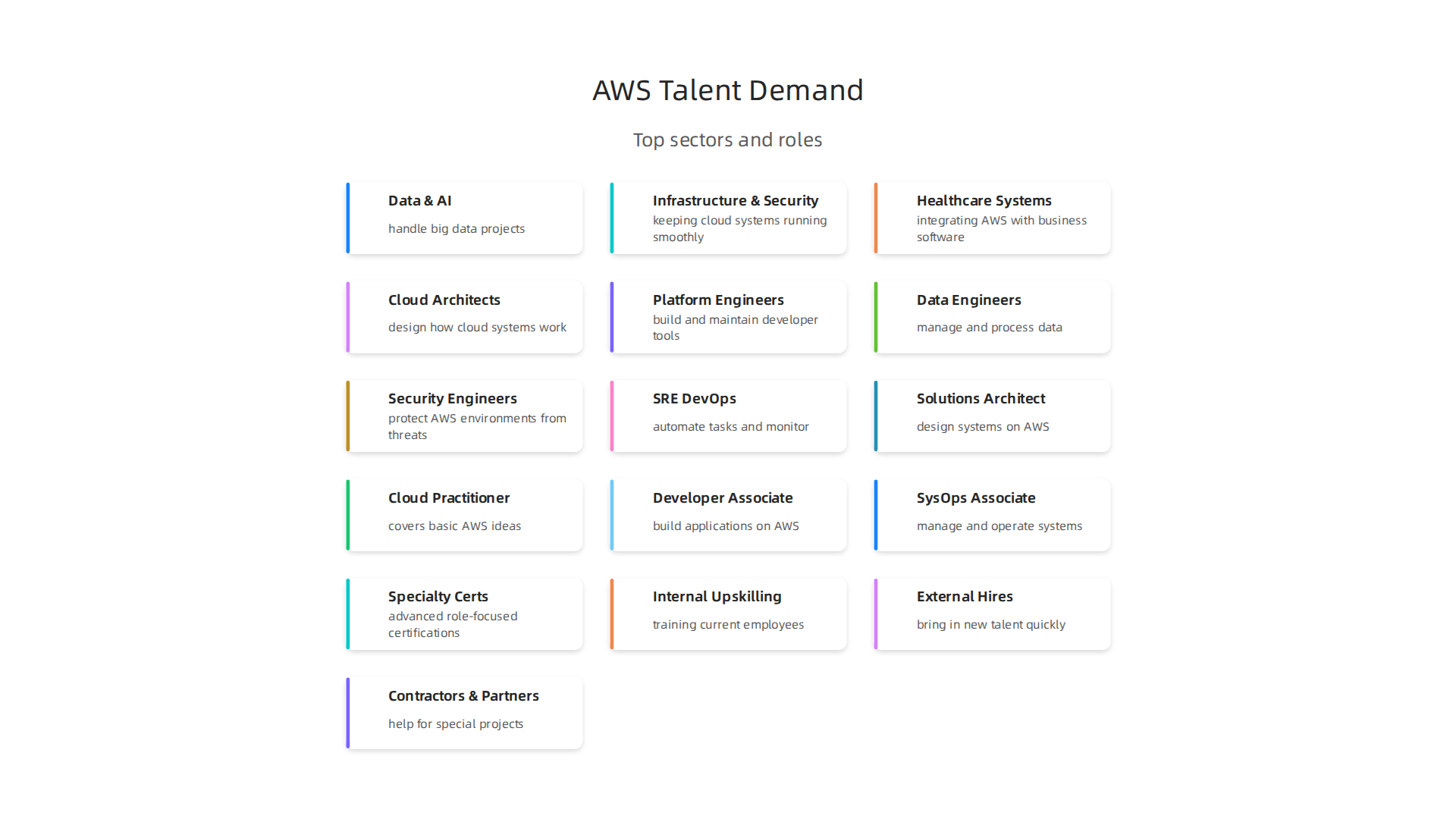
- Data and AI/ML: Companies need experts to handle big data projects, machine learning, and artificial intelligence. Roles related to making sense of data and building smart systems are highly sought after. If you’re looking to enhance your company’s data strategy, consider how to optimize AWS Redshift for enterprise data strategy in 2026.
- Infrastructure and Security: Keeping cloud systems running smoothly and safely is very important. Businesses are investing in strong cloud infrastructure and cybersecurity to protect their data. This also includes a strong focus on cloud cost optimization to make sure companies are spending their money wisely on cloud services.
- Healthcare and Enterprise Systems: Certain industries, like healthcare, are seeing a big rise in cloud-related job openings. Roles in these sectors often involve integrating AWS with complex business software. Many of these jobs are also enterprise remote jobs, giving people more flexibility.
These trends mean that skills in specific AWS services are very valuable. We’re seeing more needs for people who can work with AI infrastructure, manage cloud costs, and ensure security. The market for an AWS job is clearly showing that those with strong technical skills, especially in these advanced areas, are in high demand [^5]. Also, many of these roles, such as a systems software engineer, often require a solid background, making computer science degree jobs increasingly important.
[^1]: AWS hiring trends across the market in 2026
[^2]: AWS’s 37% Surge Signals a Cloud Jobs Hiring Wave
[^3]: Cloud platforms command US tech hiring as AWS leads one in three …
[^4]: AWS Job Trends, Salaries & Related Skills
[^5]: AWS Careers 2026 August: Job Market, Pay, Skills …
The demand for skilled AWS professionals covers many different kinds of jobs. It’s not just about one type of expert; companies need a whole team to build and manage their cloud systems. Let’s look at the main kinds of AWS roles enterprises are actively hiring for in 2026, and how businesses decide which ones are most important.
Core AWS Role Categories
Enterprises are looking for people who can handle different parts of their AWS journey.
iscussing and designing cloud architecture solutions.](https://enterprisesoftwarenews.com/wp-content/uploads/2026/08/weblish-inline-117401.jpg)

Here are some of the most common and important roles:
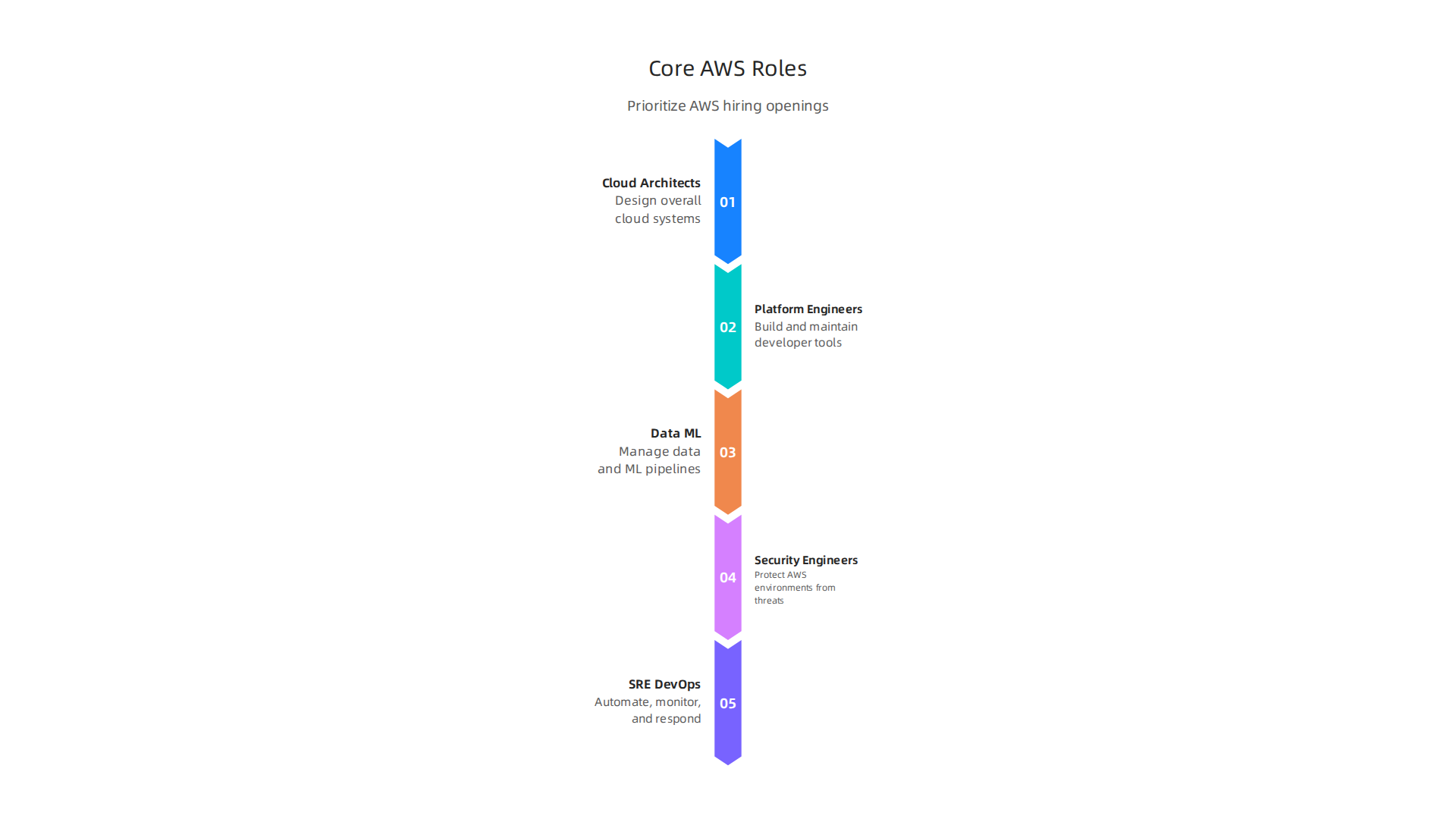
- Cloud Architects: These professionals are like the master planners of a building project. They design how a company’s entire cloud system will work on AWS. This includes choosing the right services and making sure everything fits together. A Cloud Architect often earns a good salary, with median pay around $147,237 to $237,000 in 2026 in the US, depending on experience and location [^1]. Entry-level roles can start from $110,000, going up to $220,000 for those with more experience [^2].
- Platform Engineers: These engineers build and maintain the tools and systems that other developers use to create applications on AWS. They focus on making it easy for teams to work efficiently in the cloud. If you’re interested in how companies set up these essential systems, you can learn more about Platform Engineering in 2026.
- Data and Machine Learning (ML) Engineers: As more companies use big data and AI, the need for these specialists grows. Data engineers help manage and process large amounts of information on AWS, while ML engineers build and deploy intelligent systems. This AWS job often involves using services like AWS Sagemaker to develop smart solutions.
- Security Engineers: Keeping cloud data safe is a top priority. Security engineers focus on protecting AWS environments from threats, making sure compliance rules are met, and setting up secure access controls. They are critical for enterprise security.
- Site Reliability Engineers (SRE) / DevOps Engineers: These roles are all about making sure AWS systems run smoothly and reliably. They automate tasks, monitor performance, and respond to issues quickly. A DevOps engineer, for example, might earn between $95,000 and $120,000 as a starter, rising to over $230,000 for senior positions [^3]. These roles often look for a strong background, sometimes needing skills developed from computer science degree jobs.
How to Prioritize AWS Openings
Companies don’t just hire for every AWS job at once. They have a strategy based on where they are in their cloud journey and what their main business goals are.
- Product Lifecycle:
- New Products/Innovation: If a company is building something new on AWS, they might prioritize roles like Cloud Architects, Data Engineers, and ML Engineers. They need people to design, build, and bring new ideas to life.
- Mature Products/Maintenance: For existing AWS systems, the focus might shift to SREs and DevOps Engineers to ensure stability and efficiency, and Security Engineers to maintain protection.
- Migration Stage:
- Early Migration: Companies just starting to move to AWS will often need Cloud Architects and Cloud Engineers to help plan and execute the big move. This is a critical stage where foundational roles are key.
- Post-Migration/Optimization: Once applications are in the cloud, the need moves to roles that can optimize costs, improve performance, and enhance security. This could mean more specialized Security Engineers or experts in cloud cost management.
- Strategic Goals:
- Cost Savings: If a company’s main goal is to cut costs, they’ll seek engineers focused on cost optimization and efficient resource management.
- Faster Innovation: Companies aiming to release new features quickly will hire more DevOps and Platform Engineers to speed up development.
- Better Security: If security is the biggest concern, Security Architects and Engineers will be top hires.
Many of these roles can be enterprise remote jobs, giving companies a wider pool of talent to choose from and offering flexibility to job seekers. Knowing these priorities can help you understand where to focus your job search or talent acquisition efforts for the best fit.
For those keeping up with the latest in tech, especially in AI and cloud solutions, staying informed is key. Get clear daily AI updates from The AI Newsletter Worth Reading.
[^1]: AWS Certification Salary Breakdown Revealed 2026
[^2]: AWS Cloud Architect Salary in 2026: Complete Pay Guide (US & India)
[^3]: Cloud Salary Guide 2026: Architect, DevOps, Engineer & Security …
After understanding which AWS job roles are in high demand, the next step for anyone looking to join the cloud workforce or for companies aiming to build strong teams is to know what skills and official papers (certifications) truly count. In 2026, it’s not just about having a degree; practical knowledge and recognized certifications are key to showing you’re ready for enterprise roles.
Skills, certifications, and credentials that matter in 2026
When thinking about an AWS job, both job seekers and hiring managers focus on two main things: getting certified and having real-world skills. Think of certifications as proof you know the basics, and hands-on skills as proof you can actually do the work.
The Power of AWS Certifications
AWS certifications are like official badges that show you understand Amazon’s cloud services. They are still very important in 2026 because they prove you have the right cloud skills that companies are looking for, such as architecture, security, and operations AWS Certification in 2026: Why Cloud Skills Still Matter More Than Ever. Many businesses with AWS-certified staff even say it helps them use AWS services in new, smart ways AWS Certification – Validate AWS Cloud Skills.
Here are some of the most sought-after AWS certifications:
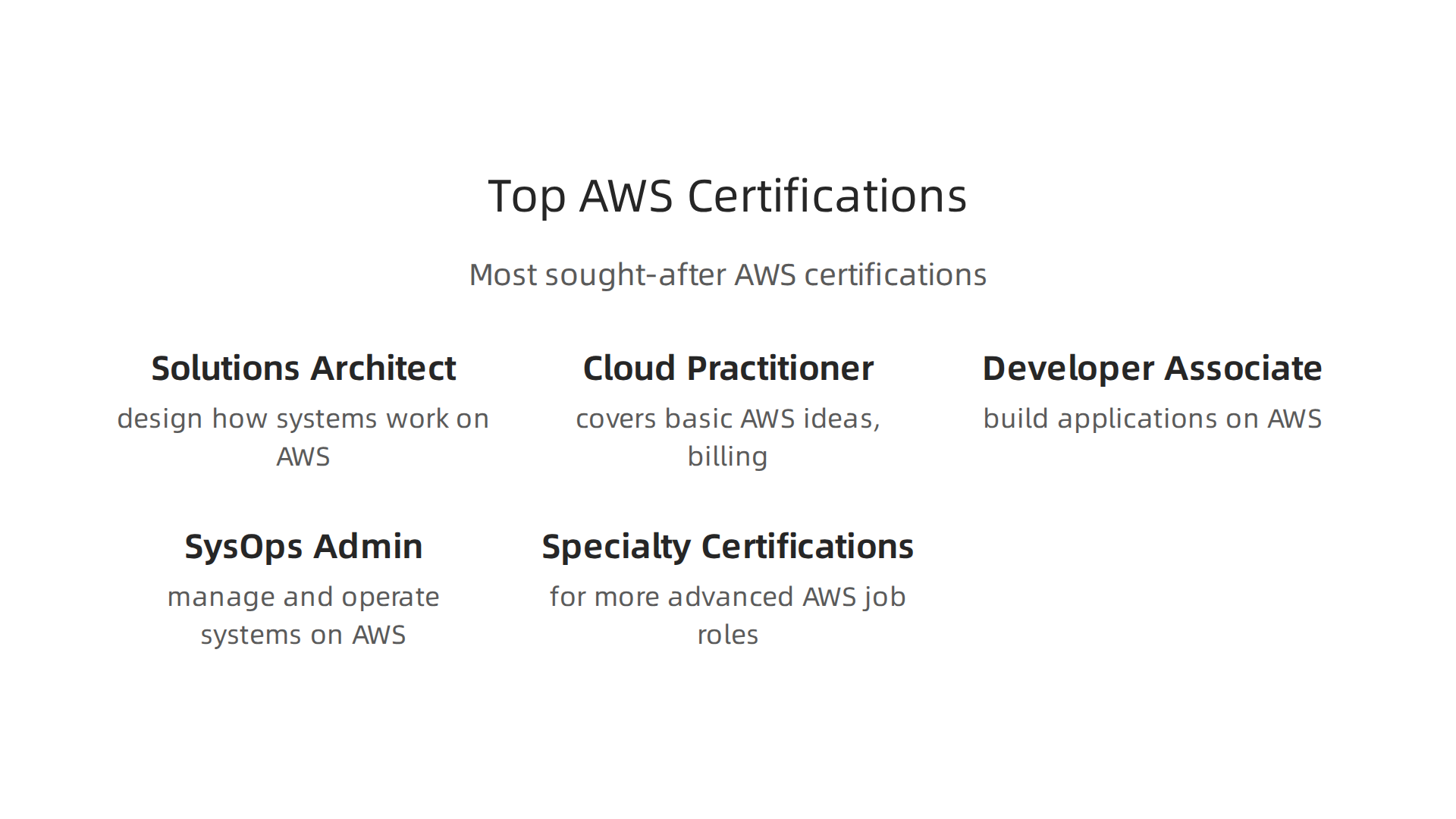
- AWS Certified Solutions Architect – Associate: This is often seen as the top certification. It appears in a huge number of cloud job postings, showing its high demand 10 Best AWS Certifications for Jobs in 2026. It shows you can design how systems work on AWS.
- AWS Certified Cloud Practitioner: This is a great starting point for anyone new to the cloud. It covers basic AWS ideas, billing, and security.
- AWS Certified Developer – Associate: This certification is for people who build applications on AWS. It shows you know how to write code and use AWS services to make apps.
- AWS Certified SysOps Administrator – Associate: This one is for those who manage and operate systems on AWS, making sure they run smoothly.
- Specialty Certifications: For more advanced AWS job roles, certifications like AWS Certified Security – Specialty or AWS Certified Machine Learning – Specialty are very valuable. If you want to work with AI and data, the AWS Certified Machine Learning Engineer Associate and AWS Certified Data Engineer Associate are highly desired Which Cloud Certifications Will Get You Hired in 2026?.
Essential Hands-On AWS Skills
While certifications open doors, hands-on skills are what truly make you a valuable member of an AWS team. Employers in 2026 are looking for people who can do more than just recall information; they want candidates who can design secure systems, automate tasks, manage data, and support AI work AWS Skills in Demand Beyond 2026. Having practical readiness is very important to businesses AWS sees rising demand in India.
Here are key skill areas that hiring managers are focusing on:
- Infrastructure as Code (IaC): This means using code to manage and set up your AWS resources, instead of doing it manually. It’s like writing a recipe for your cloud setup. Tools like AWS CloudFormation help automate these processes, which is a key skill for a modern systems software engineer.
- AWS ML Services: With AI growing fast, knowing how to use AWS services for machine learning is a huge plus. This includes tools like AWS SageMaker, which helps build, train, and deploy machine learning models. If you’re looking into AI roles, understanding the The Enterprise AI Engineer Roadmap for 2026 can guide you.
- Security Automation: Automatically finding and fixing security problems is vital. This means setting up systems that keep your AWS environment safe without constant manual checks.
- Core AWS Services Mastery: You need to know how the most common AWS services work together. These include things like:
- EC2: Virtual computers in the cloud.
- S3: Storage for your files.
- VPC: Setting up your own private network in AWS.
- IAM: Managing who can access what in your AWS account.
- Lambda: Running code without having to manage servers.
- RDS: Managed databases for your applications.
Knowing these services well is fundamental for any Cloud Engineer Career and Hiring Guide for 2026.
- Cost Optimization: Companies always want to save money. Knowing how to use AWS services efficiently to keep costs low is a highly valued skill. For example, understanding how to Optimize AWS Redshift for Enterprise Data Strategy can directly impact a company’s budget.
- Troubleshooting and Monitoring: Being able to find and fix issues quickly, and keeping an eye on how systems are performing, is crucial for keeping cloud applications running smoothly.
In summary, for a rewarding AWS job, aim for relevant certifications to show your knowledge base, but always back that up with practical experience in the latest cloud technologies and best practices.
Landing an AWS job, especially with a big company, means more than just having the right skills and papers.

It also depends on how these large organizations find new talent and how they decide who is the best fit. In 2026, companies use smart ways to recruit and check potential employees.
How large organizations recruit and evaluate AWS/cloud talent
Big companies look for AWS and cloud talent in a few main ways. They might "build" talent by training their own people, or "buy" it by hiring from outside. They also bring in outside experts. Studies show that companies often choose to "build" or "buy" talent based on what they need and how many resources they have Study finds firms ‘build’ or ‘buy’ talent based on resources, demand.
Where companies find AWS talent
Finding the right person for an AWS job is a big task. Here are the main ways large organizations bring in cloud experts:
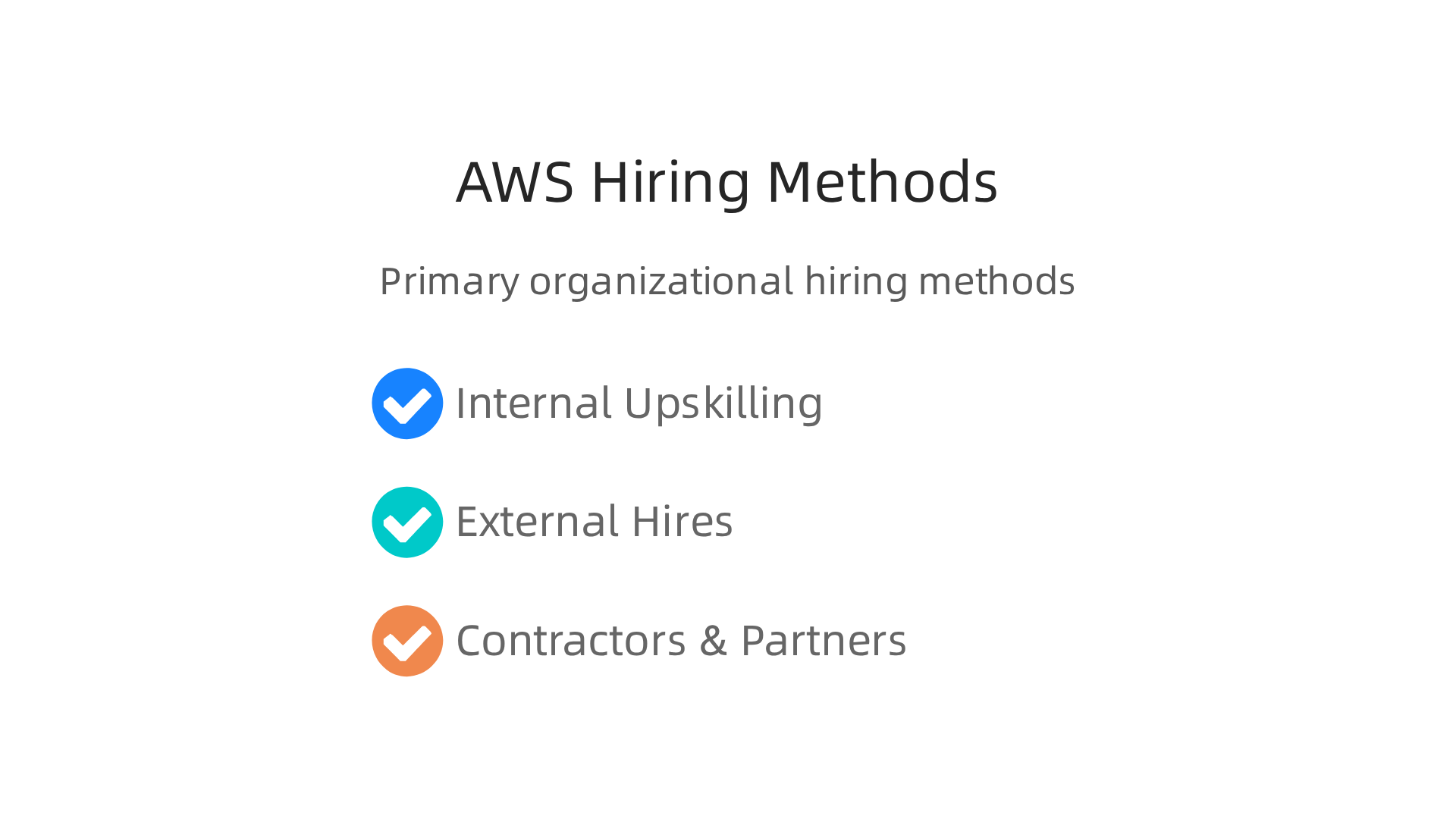
- Internal Upskilling and Training: Many companies realize they already have smart people who just need new skills. They invest in training programs to teach their current employees about AWS. This helps them grow their own team and keeps employees happy, leading to higher productivity and profit Corporate Training & Enterprise Learning 2026: Trends, ROI …. This approach is sometimes called "building talent" and is seen as a good way to fill skill gaps Rethinking Talent: Why HR Must Build, Not Just Buy – SHRM. If you’re looking to grow your own cloud team, building your engineering workforce from within is a key strategy for 2026. Learn more about IT Talent 2026: Building Your Engineering Workforce from Within.
- External Hires: When companies need new ideas or special skills quickly, they hire people from outside. The market for AWS talent is very competitive in 2026, with a lot of hiring happening AWS hiring trends across the market in 2026. Companies look at job boards, professional networks, and even use AI tools to find candidates for enterprise remote jobs and in-office roles.
- Contractors and Vendor Partners: Sometimes, a company only needs help for a special project or for a short time. In these cases, they bring in outside contractors or work with companies that specialize in AWS services. This lets them get expert help without having to hire someone full-time. If you’re a company looking to bring in external expertise, it’s worth understanding The Enterprise Guide to Hiring a Software Engineer Consultant.
How companies check cloud talent
Once companies find potential candidates for an AWS job, they need to make sure those individuals have the right skills and can fit into the team. Here’s how they do it:
- Technical Interviews: These are deep talks where candidates are asked about their knowledge of AWS services, cloud architecture, and problem-solving skills. These interviews often involve whiteboarding or coding challenges to see how a candidate thinks on their feet.
- Take-Home Projects: Some companies give candidates a real-world task to complete on their own time. This could be building a small application, setting up a specific AWS environment, or fixing a simulated problem. It’s a great way to see practical skills in action.
- Simulated Scenarios: For roles like a systems software engineer, companies might use special tools to create a fake AWS environment. Candidates then have to perform tasks or solve problems in this safe, simulated space. This helps employers see how candidates would handle real work situations without any risk.
- Enterprise-Specific Vetting: For big companies, fitting into the company’s culture and way of working is very important. This might involve talks about teamwork, leadership, and how to handle problems. They also check for skills-based hiring, focusing on what a candidate can do rather than just their degrees or past job titles State of Talent Acquisition 2026: Enterprise Guide. For computer science degree jobs, this means showing how your knowledge applies to real business needs. For those looking for an AWS job, demonstrating adaptability and a willingness to learn new tools and practices, especially for remote hiring, is very valuable. You can find out more about Mastering Remote Hiring for Technical Product Manager Jobs in 2026.
By using a mix of these methods, large organizations try to find the best AWS and cloud talent to help them succeed in 2026 and beyond. Staying up to date on these hiring trends is key.
Get clear daily AI updates from The AI Newsletter Worth Reading.
Career pathways: moving into AWS roles (for engineers and product leaders)
Moving into an AWS job can feel like a big jump, but it’s often a clear path for many tech workers. Whether you’re an engineer building apps or a product leader guiding new tech, there are good ways to switch into cloud roles. In 2026, companies want people who can not only use AWS but also understand how it helps the business.
Common pathways to AWS roles
Many people move into AWS roles by building on their existing skills. Here are some common ways:
- From Application Developer to Cloud Engineer: If you already write software, you know how apps work. The next step is learning how to run those apps on AWS. This means understanding services like EC2, S3, and Lambda. A cloud engineer helps build and manage the basic cloud setup. Entry-level cloud engineer salaries in the US can range from $85,000 to $110,000 in 2026, with mid-level roles reaching $110,000 to $150,000 AWS Careers 2026 August: Job Market, Pay, Skills ….
- From Systems Administrator to DevOps Engineer: If you used to manage servers and networks, you have a strong background for a DevOps role. DevOps engineers use AWS to automate how software is built, tested, and put into use. They focus on making things fast and smooth. This often involves working with tools like AWS CodePipeline and CloudFormation. Many employers look for specific certifications for these jobs Top AWS Certifications Employers Are Hiring For In 2026.
- From Solutions Architect to Cloud Architect: If you already design systems and plan how different tech parts fit together, a Cloud Architect role might be your next step. Cloud architects design big, complex AWS setups. They pick the right AWS services to solve business problems. This is one of the highest-paying AWS jobs, with senior roles earning over $175,000 base salary AWS Salary 2026: By Role, Cert & Experience Level.
- From Data Scientist to Machine Learning Engineer on AWS: If you work with data and AI, you can move into building machine learning models on AWS. This involves services like AWS SageMaker. This is a very in-demand area in 2026.
These pathways show how diverse an AWS job can be, from hands-on building to high-level planning. You can learn more about different engineering roles and the skills they need in our guide to Key Software Development Engineering Roles and Skills in 2026.
Training, portfolio, and project experiences
To speed up your move into an AWS job, focus on these key areas:
- Get Certified: AWS certifications are very important. They show that you have the skills employers are looking for. The AWS Certified Solutions Architect – Associate is one of the most in-demand certifications, appearing in a large number of cloud job postings 10 Best AWS Certifications for Jobs in 2026: Salaries, Demand …. Other valuable ones include AWS Certified Developer – Associate and AWS Certified SysOps Administrator – Associate. Getting certified validates your practical cloud skills, which employers value in 2026 AWS Certification in 2026: Why Cloud Skills Still Matter More Than ….
- Build a Strong Portfolio: Don’t just study. Build things! Create small projects on AWS. Show off your skills in creating, deploying, and managing applications or infrastructure. This could be setting up a simple website, automating a task, or creating a data pipeline. Hands-on experience is what really stands out for enterprise remote jobs and in-office roles alike.
- Gain Project Experience: Look for chances to work on AWS projects, even if they are small tasks at first. Volunteer for projects, contribute to open-source tools, or take on freelance work. Real-world problems help you learn much faster than just reading books. For example, a systems software engineer benefits greatly from tackling actual system challenges. This kind of experience is often preferred by employers, as they seek hands-on readiness AWS sees rising demand in India as employers seek hands on AI ….
By combining smart learning, practical building, and real-world work, you can create a clear path toward a rewarding AWS job, no matter your starting point. This is true for computer science degree jobs and those looking for more hands-on roles. You might also want to explore our Cloud Engineer Career and Hiring Guide for 2026 for more insights.
For companies and their leaders, like CIOs and CTOs, having a strong team that understands cloud technology is key. It’s not just about hiring people for an AWS job, but also making sure they stay and grow with the company. In 2026, building and keeping cloud talent is a big deal for success.
Keeping your cloud team strong
To make sure your company has the best cloud skills, you need good plans for keeping your team happy and skilled.

- Clear Career Paths: People like to know how they can grow. Offering clear steps for promotion and new roles helps employees see their future at your company. This includes showing paths for systems software engineer roles or leadership spots.
- Learning and Development: The cloud world changes fast. Giving your team chances to learn new AWS services and skills is very important. Companies with strong learning programs see much higher income and employee retention, along with better productivity and profit Corporate Training & Enterprise Learning 2026: Trends, ROI ….
- Internal Moves: Let your employees move to different cloud teams or roles inside the company. This keeps things fresh for them and builds a stronger, more flexible workforce for you. Internal talent development helps reduce costs and risks of external hiring, according to a 2026 report 2026 State of Tech Talent Report.
- Good Work Environment: A good work culture, where people feel safe and included, makes a big difference. Companies with good hybrid work options and programs for well-being have lower employee turnover Employee Retention Strategies in the Hybrid Work Era. These things help keep skilled people, especially those in high-demand enterprise remote jobs.
- Measuring Success: Keep an eye on how well your cloud team is doing. Are projects on time? Is the cloud setup working smoothly? This helps you know what’s working and what needs more focus.
Buying vs. building cloud talent
When you need more AWS skills, leaders often ask: Should we hire new people (buy talent) or train our current employees (build talent)? Both ways have their good points.
- When to "Build": This means training your existing team members to gain new AWS skills. It’s often better for long-term planning and core parts of your business. Companies with more money and senior staff often choose to build talent by training their junior employees Study finds firms ‘build’ or ‘buy’ talent based on resources, demand. Building can lead to a team that really understands your company’s unique needs. This can involve:
- Training Programs: Setting up classes or workshops for employees to learn AWS services.
- Center of Excellence: Creating a special group within your company that focuses on cloud best practices and helps other teams.
- Vendor Partnerships: Working with companies that offer specialized cloud training or support.
- When to "Buy": This means hiring experienced AWS professionals from outside your company. It’s often quicker if you need specific skills right away or if you have sudden project needs. Hiring for an AWS job can bring in fresh ideas and experiences from other companies. However, it can be more expensive. In 2026, the market for skilled cloud workers is very competitive.
Many companies find a mix of both buying and building works best. They might hire for urgent, highly specialized roles, while also training their current team for ongoing needs. This helps ensure a steady flow of talent, whether for a specific computer science degree job or a more hands-on cloud operations role. Staying up-to-date with the latest in enterprise technology, including AI, is key to making these strategic talent decisions.
Stay informed on the fast-paced world of technology and AI by getting daily, clear updates.
The AI Newsletter Worth Reading
Summary
This article explains why tracking AWS job trends is essential for enterprise leaders, software buyers, and career-minded technologists in 2026. It reviews current market demand—including a steep rise in cloud roles and the fact that AWS accounts for roughly one in three U.S. cloud job postings—and shows which industries and specialties (data/AI, infrastructure, security) are driving hiring. The piece breaks down the core AWS roles companies hire (cloud architects, platform engineers, ML/data engineers, SRE/DevOps, security), what skills and certifications employers value, and how large organizations recruit, evaluate, and retain cloud talent. It also maps common career pathways into AWS jobs and offers guidance on when to build internal skills versus hire externally. After reading, you’ll know which AWS signals to watch, which skills to prioritize, and how to align hiring or upskilling decisions with your business goals.