Select Top Mobile & IoT Software Vendors for Enterprise Growth in 2026

Why enterprise leaders need a focused guide to mobile & IoT software vendors in 2026
In 2026, the world of business moves faster than ever. For leaders, keeping up with new technologies is key to staying ahead. Mobile apps and IoT (Internet of Things) devices are no longer just nice to have; they are a must for many companies. For example, the market for enterprise mobile app development is expected to be worth around $189.22 billion this year, showing its huge importance Enterprise Mobile Application Development Market Size ….
Many businesses, big and small, use mobile apps to talk to their customers and run their operations Enterprise Mobile Apps Statistics (2026) – Worldmetrics.
At the same time, IoT is also booming. The enterprise IoT market grew a lot in 2025 and is set to grow even more this year, reaching almost $369.4 billion IoT – 2026 Stats and Summary Report (Mid-Year). This growth is happening thanks to new AI technologies that make these systems smarter State of enterprise IoT: From IoT to autonomous connected operations. With so much happening, choosing the right mobile software development companies can feel like a really big challenge.
One of the biggest problems for leaders is finding the right partner.

There are so many mobile software development companies out there, and they all seem to offer similar services. It can be hard to tell what makes one better than another. How do you find the ideal software systems that truly fit your company’s unique needs? It’s tough to cut through all the noise and figure out which vendors are trustworthy and skilled enough to deliver top-notch solutions. For a deeper dive into the essential tech areas leaders should understand, consider exploring Enterprise Technology Domains Every Leader Must Understand in 2026.
Beyond just finding a company that can build your app or iot software development project, there are big worries about security. You need to know your data and systems will be safe. Then there’s the question of long-term viability: Will the company you choose still be around and able to support your solution years from now? These decisions are huge investments, and picking the wrong partner can lead to major problems down the road.
This guide is here to help you navigate this complex landscape. We will give you a clear path forward by looking at different groups of vendors. We will share important tips for picking the best partners, along with smart ways to buy these services. Our goal is to make sure you have the best information to choose mobile software development companies that will truly help your business grow and succeed in 2026 and beyond. To stay informed on the latest advancements that can impact your enterprise technology choices, we recommend checking out The AI Newsletter Worth Reading.
To pick the right partners, it helps to understand what the market looks like and what drives companies to buy these services. When looking at mobile software development companies and those specializing in iot software development, we generally see two main types of providers.
Some companies are truly "mobile-first." They focus all their energy on making great mobile apps for phones and tablets. They might build apps for your customers or special apps for your employees to use. Their main goal is to make these apps work perfectly on different mobile devices.
Other vendors offer a more complete package. They build mobile apps, but they also specialize in connecting these apps to smart devices and sensors, which is what IoT is all about. These integrated platforms can help businesses manage everything from smart factories to connected delivery trucks, all controlled through an app. This type of iot software development creates powerful systems that bring devices and data together.
For businesses, the choice between these vendor types depends on their specific needs. No matter what they choose, enterprise leaders are looking for a few key things when they decide which ideal software systems to buy:
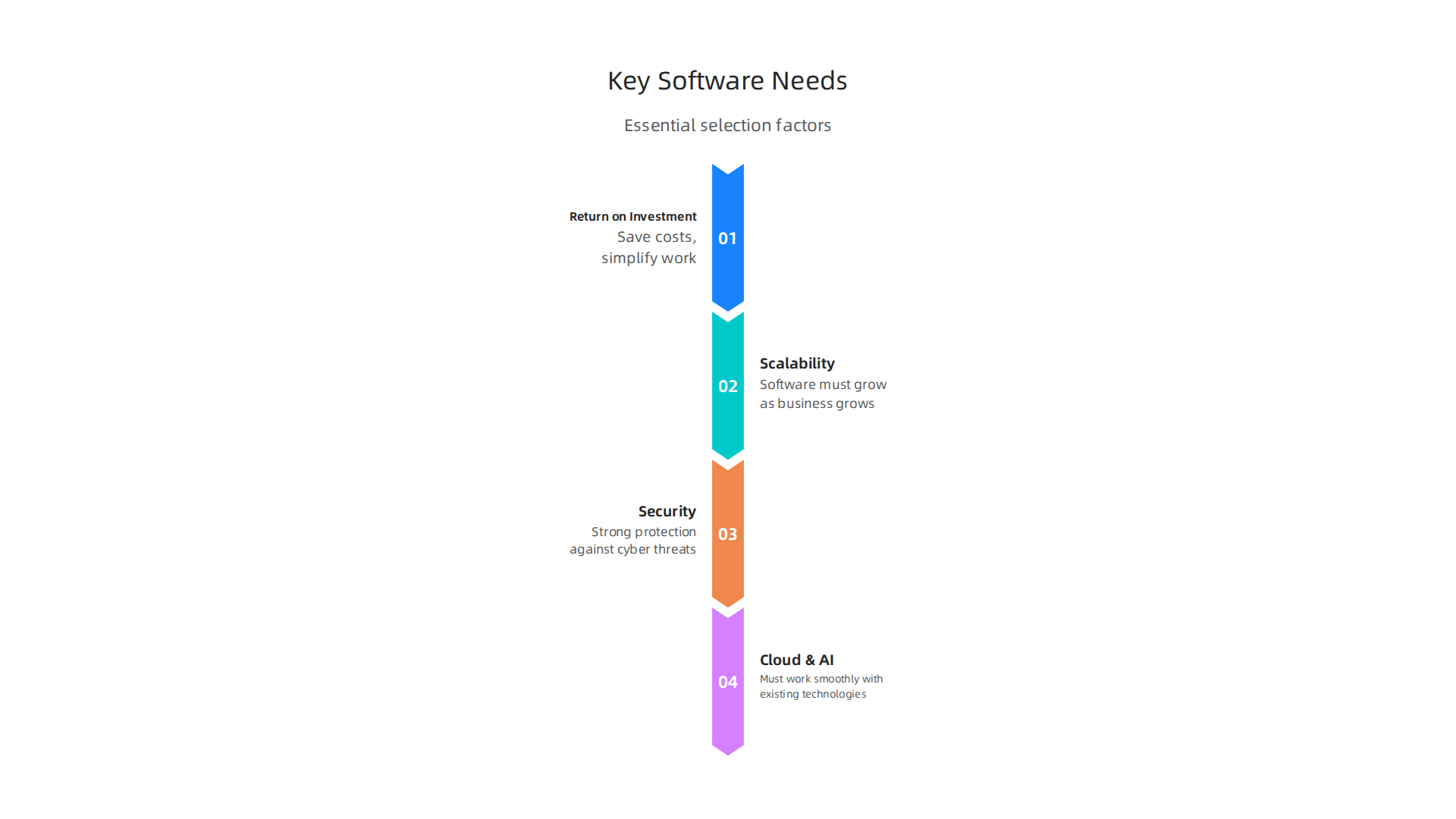
- Return on Investment (ROI): Businesses want to know that their money will be well spent. They look for solutions that save costs, make work easier, or help them earn more. This means finding software that quickly adds real value.
- Scalability: A company needs its software to grow as the business grows. A system that works for 100 users today might need to work for 10,000 users tomorrow. It must be able to handle more people, more data, and more devices without breaking down.
- Security: Keeping data safe is a top concern. Companies need strong protection against cyber threats, especially when dealing with sensitive customer information or business operations. Any new mobile or IoT system must have security built in from the start.
- Integration with Cloud and AI: Most businesses today use cloud services and smart AI tools. The new mobile and IoT solutions must work smoothly with these existing technologies. For example, AI adoption is very high, with 88% of organizations using AI in some way in 2025, and this number is still going up in 2026 AI Adoption Statistics Q1 2026: All Figures.
The best systems can connect with cloud platforms and use AI to make them smarter and more efficient. For insights into how businesses are adopting AI, explore how to build an Enterprise AI Adoption in 2026 A Data Backed Roadmap for Business Leaders.
Understanding these market demands helps leaders make smart choices about their mobile and IoT investments.
How to identify top mobile software development companies for enterprise projects
Finding the right mobile software development companies for your business is a big step. After thinking about what your market needs, it’s time to figure out how to pick the best partner. This means looking at a few important things that show if a company is truly good at what they do.
First, you’ll want to check their core evaluation dimensions:
- Technical Skills: Do they know the right tools and languages for your project? For example, if you need an iPhone app, they should be experts in iOS development. If you want a system that talks to smart devices, they need strong skills in
iot software development. Top firms really stand out by using smart AI tools and making apps that work across many types of devices, not just by being fast coders Top Mobile App Development Companies in 2026. - Experience in Your Business: Has the company worked with businesses like yours before? If they understand your industry, they can make better suggestions and avoid common problems. They know the special rules or needs that your type of business has.
- Ability to Grow and Deliver: Can they handle a project as big as yours, or one that might get much bigger later? How do they plan and finish projects? You want a team that can scale up when needed and has a clear way to get the job done right. This also means looking at how they manage the entire
software development jobfrom start to finish. It is also good to ask for examples where they helped improve work by 40% or kept systems running almost all the time Buyer’s Guide: Best USA’s Elite Enterprise Mobile App ….
Next, it helps to know about different types of vendors you might meet:
- Global System Integrators: These are very large companies that offer many different technology services. They can handle huge projects and work with big businesses all over the world. They might be a good choice for very complex needs.
- Specialized Mobile Boutiques: These companies focus only on making mobile apps. They are often experts in one area, giving you deep knowledge for your mobile project.
- Platform Providers: Some companies offer special ready-made platforms or tools that you can use to build your app. This can make the process faster and sometimes cheaper, but it might mean less freedom to customize everything.
- Productized Mobile Platforms: These are like ready-made solutions for common business needs. They offer a basic app that can be changed a little to fit your company. This is often good for businesses that need a quick and proven solution.
Choosing the right partner from these mobile software development companies means looking at their ability to grow, how they work, and what technologies they are good at.

Many lists of top companies are available to help you start your search in 2026 Top 10 Mobile App Development Companies for Enterprises in 2026. Taking the time to evaluate these points will help you find the ideal software systems that truly help your business. You can learn more about finding the right people for these roles by looking into Key Software Development Engineering Roles and Skills in 2026.
While picking general mobile software partners is key, some projects have very special needs, like those in the world of the Internet of Things, or IoT. When you’re looking for iot software development experts, you need to know what makes them truly stand out. It’s not just about making an app; it’s about connecting devices, managing them, and making sure they work well together and safely.
What Makes an IoT Software Company Different?
Finding the best mobile software development companies for IoT means looking for specific skills. Here are the main things that set top IoT vendors apart:
- Edge-Device Support: IoT projects often have devices that need to do some thinking or processing right where they are, not just send all data to the cloud. This is called "edge computing." Great IoT companies can build solutions that work well on these smaller devices, letting them store, process, and even act on data right away. This can save money and make things faster, and is crucial for your IoT success Choosing the Right IoT Platform: Why the Edge Is Critical to Your IoT Success.
- Firmware Lifecycle Management: Imagine having thousands of smart devices. You’ll need to update their software (called firmware) from time to time to fix bugs or add new features. Top IoT companies offer "Over-the-Air" (OTA) updates. This means they can send updates to devices wirelessly and securely, making sure all your devices stay current and safe without someone having to visit each one OTA IoT Breakdown: What OTA Is and How It Works in IoT.
- Connectivity Stacks: IoT devices talk in many ways. Some use Wi-Fi, others use Bluetooth, or special networks like LoRaWAN. A strong
iot software developmentcompany knows how to make devices connect using different methods and can choose the best one for your project’s needs. - Cloud Integration: Most IoT systems send data to a big cloud server for storage and deeper analysis. Expert companies can connect your devices seamlessly to popular cloud platforms like AWS IoT Core, Google Cloud Platform, or Microsoft Azure IoT Hub. They understand how these platforms work and how to make the data flow easily for your
ideal software systemsA Comprehensive Evaluation of IoT Cloud Platforms – PMC – NIH.
Choosing Between IoT Platform Vendors and Systems Integrators
When picking an iot software development partner, you usually have two main choices:
- Platform Vendors: These companies offer ready-made IoT platforms with many tools built-in. This can be faster and sometimes cheaper because much of the basic work is already done. However, you might have less freedom to customize everything exactly how you want it. They are great if your needs fit closely with what their platform offers.
- IoT Systems Integrators: These are companies that build custom IoT solutions from scratch. They take all your unique ideas and create a system just for you. This gives you full control and flexibility but can take more time and cost more. They are a good choice for very complex or specialized projects.
Understanding these differences helps you pick the right kind of partner for your iot software development project. For a deeper dive into how to manage and evaluate such sophisticated systems, consider learning about Platform Engineering in 2026 A Strategic Guide For CIOs And CTOs.
After you understand the types of partners available for your IoT project, the next big step is to figure out how to compare them. You need a clear way to score different mobile software development companies to make sure you pick one that truly fits your business. This means looking beyond just the cool tech features and focusing on important things like risks and long-term value.
Evaluation Criteria: How to Score Vendors for Enterprise Risk and Value
To choose the best iot software development partner, you need a good scoring system. This system should cover key areas that can make or break your project.
Security and Rules (Compliance)
In 2026, security is not just a nice-to-have; it is a must-have for iot software development. New rules are popping up everywhere. You need to know how a vendor keeps your devices and data safe.
- Cybersecurity: Ask how they protect against hackers and data leaks. They should have plans to keep your IoT system secure from the very start. Many new rules, like the EU’s Cyber Resilience Act expected in 2026, demand strong security by design Cyber Resilience Act 2026: IoT and Embedded Compliance Guide.
- Following the Rules: Does the vendor understand and follow important industry rules? If you are in a special field like healthcare, they need to know about specific laws like those from the FDA FDA IoT Cybersecurity: 2026 Updates Explained. For government or highly regulated areas, they might need to follow frameworks like NIST Strategic Security Framework Selection for 2026 and Beyond.
How Well They Fit (Integration Risk) and Guarantees (SLAs)
- Connecting with Your Other Systems: How easy will their new IoT system work with your current business software? An
ideal software systemspartner will make sure everything talks to each other smoothly without causing big problems. - Service Level Agreements (SLAs): These are like promises about how well the service will run. What happens if something breaks? How quickly will they fix it? Good SLAs mean you know what to expect and what support you will get.
Full Cost Over Time (Total Cost of Ownership)
Don’t just look at the first price tag. Think about all the costs over many years. This includes how much it costs to:
- Keep the system running every day.
- Fix problems or bugs.
- Add new features later.
- Train your team to use it.
A cheaper option now might cost you a lot more in the long run if it is hard to manage or update.
Your Checklist for Picking a Partner
Before you sign any papers, use this checklist for your procurement process:

- Ask Other Customers: Talk to other companies that have worked with this vendor. What was their experience like? Were they happy?
- Who Owns the Code? Make sure you understand who owns the software code they create for you. This is super important if you ever want to change vendors or make big updates yourself.
- Intellectual Property (IP): This relates to who owns the ideas and inventions within the software. Clear terms here prevent future arguments.
- Long-Term Support: Will the
iot software developmentcompany be there to help you for years to come? You want a partner who will support your system and help it grow with your business, much like thinking about the full journey of asoftware development jobfrom start to finish.
By using these criteria, you can make a smart choice for your next iot software development project. Staying informed about the latest in technology can also help.
Get clear daily AI updates from The AI Newsletter Worth Reading.
After choosing your iot software development partner, the next important step is to understand how you will pay them and how they will work with you. This means looking at pricing, how they deliver the project, and the types of contracts you can use. Different ways of paying and working can change how much risk you take on and how much value you get.
Pricing, Delivery, and Engagement Models: What to Expect and Negotiate
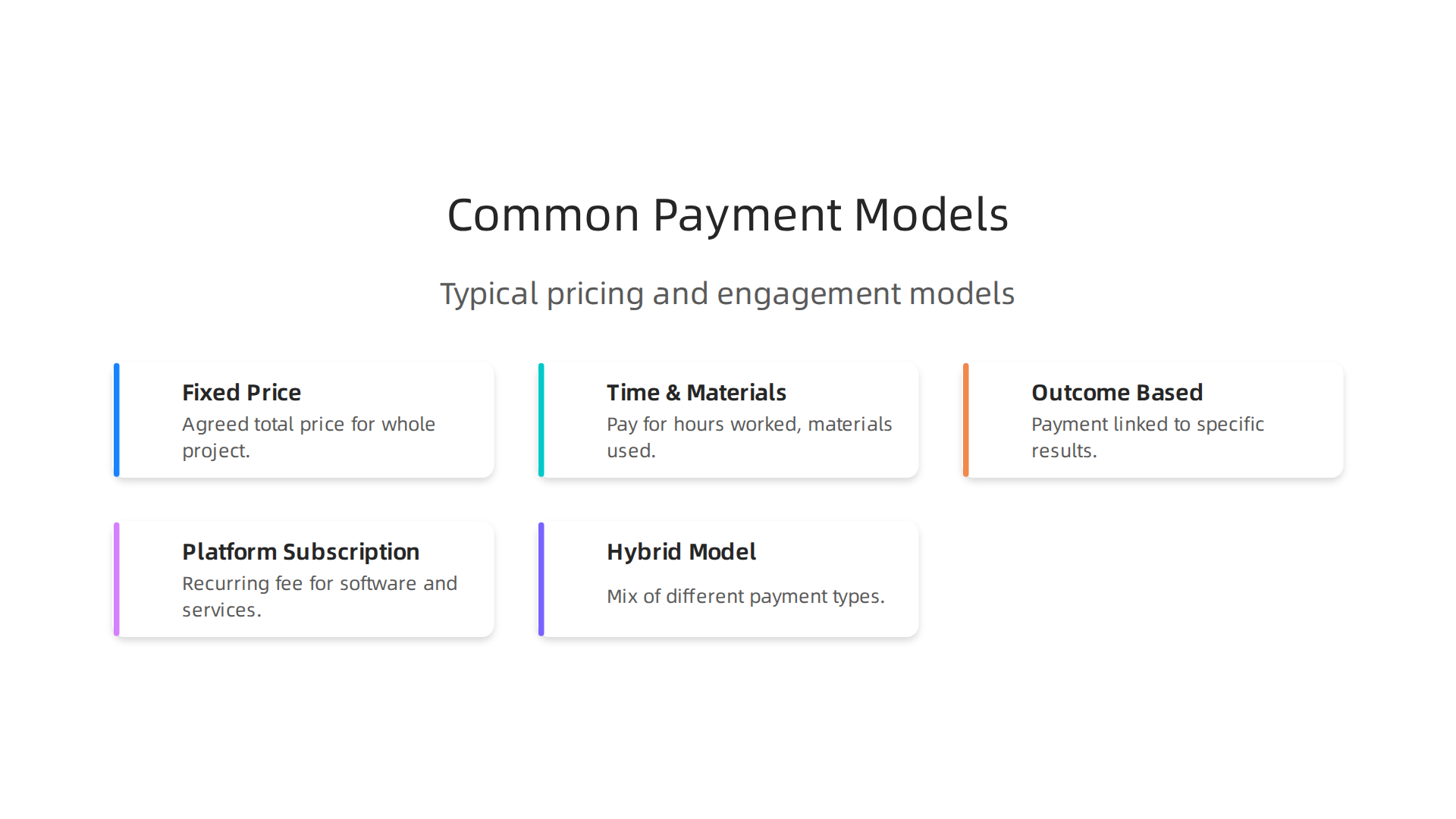
When you work with mobile software development companies, there are several common ways they charge for their services.
Knowing these helps you pick the best fit for your project and budget.
Common Models for Payment
- Fixed-Price Contracts: You agree on a total price for the whole project before it starts. This works best when you know exactly what you want. It gives you a clear budget, but changes during the project can cost extra.
- Time & Materials (T&M): You pay for the hours worked and the materials used. This model is good for projects where the needs might change a lot. It offers more flexibility, but the total cost can be harder to predict.
- Outcome-Based Contracts: Payment is linked to certain results or benefits. For example, if your new IoT system saves your company a specific amount of money, the vendor gets paid more. This makes the vendor share the risk and reward with you.
- Platform Subscriptions: Some
iot software developmentprojects use ready-made platforms. You might pay a recurring fee (like monthly or yearly) to use their software and services. This is common for IoT connectivity platforms, where pricing often involves a monthly fee plus data usage charges IoT Connectivity Pricing Explained (SIM & Data Plan Costs) – LinkWorx. - Hybrid Models: Many companies use a mix of these. For example, a fixed price for the first part of a project, then time and materials for ongoing changes. In 2026, many enterprise IoT solutions combine various pricing models, from pay-as-you-go to subscriptions and outcome-based charges What are the pricing models for IoT platforms? – Quick Market ….
Ways to Negotiate and Get More Value
When talking about contracts, you have power to shape the deal. Here are key things to negotiate:
- Milestones: Break your project into smaller parts. You only pay a portion of the fee when a specific part (a milestone) is finished and approved. This helps keep the project on track.
- Performance Key Performance Indicators (KPIs): These are clear ways to measure success. For example, how fast an app loads or how often an IoT device connects. You can link payments to meeting these performance goals for your
ideal software systems. - Escrow and Code Ownership: Make sure you know who owns the software code and any special ideas (intellectual property) created during the project. You might want the code put into an escrow account, which holds it safely until certain conditions are met, giving you access if the vendor can’t finish the work. This is a critical part of the overall optimize enterprise software with strategic software development lifecycle models.
- Scope Controls: This is about managing what work is included in the project. Clear rules for adding or changing tasks help prevent the project from growing too big or costing too much. For
iot software development, this is especially important for firmware andmobile software development companiesbuilding apps to manage devices. The enterprise mobile application development market alone is expected to reach $189.22 billion in 2026, showing the huge amount of work involved Enterprise Mobile Application Development Market Size ….
By understanding these models and negotiation points, you can make sure your iot software development project is set up for financial success and long-term value.
The previous section talked about how you pay and work with mobile software development companies and iot software development partners. Now, let’s look at something just as important: keeping everything safe and private. In 2026, security, privacy, and following the rules are not just nice-to-haves; they are a must. If a vendor doesn’t take these seriously, that’s a big red flag.
Must-Have Security Controls for Your Software
When you pick a partner for iot software development or mobile apps, you need to be sure their ideal software systems are built with strong security in mind from the very start.

Here are some key things to look for:
- Secure Boot: This means the device starts up in a safe way. It checks that only trusted software runs when the device turns on. This helps stop bad software from taking over.
- Credential Management: This is about how devices and apps handle secret information like passwords and keys. They should be stored and used very carefully so no one can steal them.
- Encryption: This scrambles your data so that only people who are allowed to see it can understand it. Imagine sending a secret message in a code only your friend can read. This is crucial for both data on the device and data moving across the internet. Strong encryption helps keep your information safe, especially during updates, by protecting the transmission Firmware in Flight: A Deep Dive into OTA Update Mechanisms for IoT.
- Over-the-Air (OTA) Updates: Devices and apps often need new software to fix problems or add features. OTA updates allow this to happen remotely. But these updates must be very secure. This means checking that the update comes from a trusted source and hasn’t been changed by anyone bad. Without good OTA security, devices can be left open to attacks Over-the-air (OTA) update best practices for industrial IoT …. Many good platforms offer strong Over-the-Air (OTA) Update Management.
Following the Rules: Compliance by Industry
Beyond basic security, different industries have special rules they must follow. This is called compliance. If your project is for finance, healthcare, or industrial uses, these rules are very strict. In 2026, regulations are getting tighter, and companies are being held more responsible for security flaws IoT Security in 2026: Regulation, Standards & Trust.
- Certifications: These are like badges that show a vendor or their product meets certain security standards. For example, some may follow standards like ETSI EN 303 645, which sets rules for consumer IoT security, or NIST frameworks if working with government or regulated sectors Strategic Security Framework Selection for 2026 and Beyond. Rules like the EU’s Cyber Resilience Act also set clear technical requirements, including for secure boot and signed OTA updates Cyber Resilience Act 2026: IoT and Embedded Compliance Guide.
- Penetration Testing: This is where security experts try to hack into a system to find weak spots before bad actors do. Good vendors will do this often.
- Data Residency: Some rules say that certain data must be stored only in specific countries. For example, health data in Europe might need to stay in European data centers. Your vendor needs to understand and follow these rules.
Choosing a vendor that builds security into their process from the beginning, often called "security-by-design," is not optional anymore. It’s a key part of any successful iot software development project. Understanding how to integrate security into your entire development process is critical for choosing the right approach for your projects. You can learn more about this by exploring various SDLC methodologies for enterprises choosing the right software development life cycle. This focus on security is a core requirement for those in software-development jobs creating tomorrow’s ideal software systems.
After making sure a potential partner builds secure systems and follows all the rules, the next big step is to talk to their past clients. This is called checking references. It’s how you find out if a company truly delivers on its promises. For mobile software development companies and iot software development firms, simply having a nice website isn’t enough. You need real proof that they can build ideal software systems.
Vendor Case Studies, Success Factors and Red Flags: What to Ask During References
When you talk to past clients, ask detailed questions. Don’t just ask, "Were they good?" Dig deeper. Their answers will help you see the real picture of working with different mobile software development companies.
Here are key questions to ask:
- Delivery Outcomes: Did the project finish on time and within the agreed budget? What were the actual results? Did the software do what it was supposed to do? Many top
mobile software development companiesprovide case studies that show clear improvements like workflow gains or high uptime percentages Buyer’s Guide: Best USA’s Elite Enterprise Mobile App Development Companies. - Downtime Incidents: Did the software ever stop working? If so, how often and for how long? How quickly did the vendor fix problems? Good support after the launch is a very important part of selecting a partner Top Mobile App Development Companies in 2026.
- Integration Surprises: Was it easy or hard to connect their new software with your company’s existing systems? Did they run into unexpected problems? How did they solve them?
- Total Cost of Ownership (TCO) Over 3-5 Years: What was the full cost of the software, not just the first price? This includes ongoing support, updates, and fixing problems. For IoT projects, understanding the full cost over time, from setup to operations, is crucial and includes thinking about both initial spending (CapEx) and running costs (OpEx) IoT Total Cost of Ownership (TCO) Models: From CapEx to OpEx in 2026.
Common Success Patterns and Warning Signs
When you talk to references, you’ll start to see patterns.
Success Patterns (Good Signs):
- Clear Communication: The vendor kept the client informed every step of the way.
- Deep Understanding: They really understood the client’s business needs, not just the technical stuff.
- Problem-Solving Skills: When issues came up, they found solutions quickly and fairly.
- Post-Launch Support: They stuck around to help after the software was launched, making sure it worked well.
Warning Signs (Red Flags):
- Missed Deadlines & Budgets: Projects often went late or cost more than expected.
- Poor Communication: The vendor was hard to reach or didn’t share updates often.
- Lack of Flexibility: They couldn’t adjust to changes or new needs during the project.
- Generic Solutions: They tried to use a one-size-fits-all approach instead of custom solutions for your needs.
By asking the right questions and listening carefully to the answers, you can pick a partner that will help you build truly ideal software systems and avoid costly mistakes. It’s about finding a team that doesn’t just do a software development job but acts as a real extension of your own.
To stay current on what’s happening in the fast-paced world of technology and make smart decisions for your enterprise, it’s wise to keep learning.
Get clear daily AI updates from The AI Newsletter Worth Reading.
Summary
This guide helps enterprise leaders choose the right mobile and IoT software vendors in 2026 by explaining market forces, vendor types, evaluation criteria, and procurement strategies. It covers why mobile apps and IoT matter now, the differences between mobile-first firms and integrated IoT platforms, and the technical and business skills you should test—like edge support, OTA updates, cloud integration, and industry experience. You will learn a scoring approach that balances security, compliance, integration risk, SLAs and total cost of ownership, plus practical contract and pricing models (fixed price, T&M, outcome-based, subscriptions and hybrids). The article highlights essential security controls, regulatory requirements and red flags to watch for during reference checks. It also gives a vendor-selection checklist and negotiation levers—milestones, KPIs, escrow and scope controls—so you can reduce risk and protect long-term value. After reading, leaders will be able to short-list capable partners, ask the right questions, and structure contracts that align incentives and secure their investment.