
Unlocking Enterprise Productivity with Lightchain AI in 2026

Why Lightchain AI matters for enterprise productivity right now
In 2026, many businesses are trying to use smart computer programs, called AI, to work better and faster. But it’s not always easy. Companies often struggle to make AI truly fit into their daily tasks, get their teams to actually use it, and see a clear return on their money. This is where a new kind of technology, called lightchain ai, comes into play.

Lightchain AI promises to change how businesses use AI for their knowledge work and everyday operations. Think of it as a super-fast and very smart helper that can handle many tasks at once without slowing down. For example, Lightchain AI has shown it can process over 10,000 tasks per second in test settings, finishing most requests in less than 300 milliseconds. This kind of speed means less waiting and more doing for your teams, making it one of the top AI startups to watch.
The main idea behind lightchain ai is to make AI tools more helpful and easier to use in big companies. Right now, a big problem for businesses is getting AI to work smoothly with their existing computer systems. They also need to make sure that the investment in new technology development actually pays off. Many leaders are looking for ways to boost enterprise AI adoption in 2026 and move beyond simple tests.
This article will look at how Lightchain AI helps solve these tricky problems. We’ll explore its promise of improved speed and efficiency, making it easier for businesses to use AI for things like managing information, making decisions, and automating workflows. You’ll see how this technology can lead to better outcomes and a smoother working experience for everyone.
Want to stay on top of all the latest AI trends and how they impact businesses?
The AI Newsletter Worth Reading provides daily, in-depth insights into AI and technology.
What Lightchain AI is (and how it differs from other AI stacks)
Lightchain AI is a new kind of computer system that brings together smart AI programs with blockchain technology. Think of it as a special computer network that is built to run AI tasks in a very secure and spread-out way. Instead of just using AI, it is a platform where AI work is deeply connected to how the whole system works. This makes it a foundational Layer-1 blockchain for artificial intelligence workloads, meaning it forms the base layer for AI operations, not just an application on top Lightchain AI: Building the Future of Decentralized ….
What makes Lightchain AI special, and different from many other AI systems we see today, comes down to its core design.
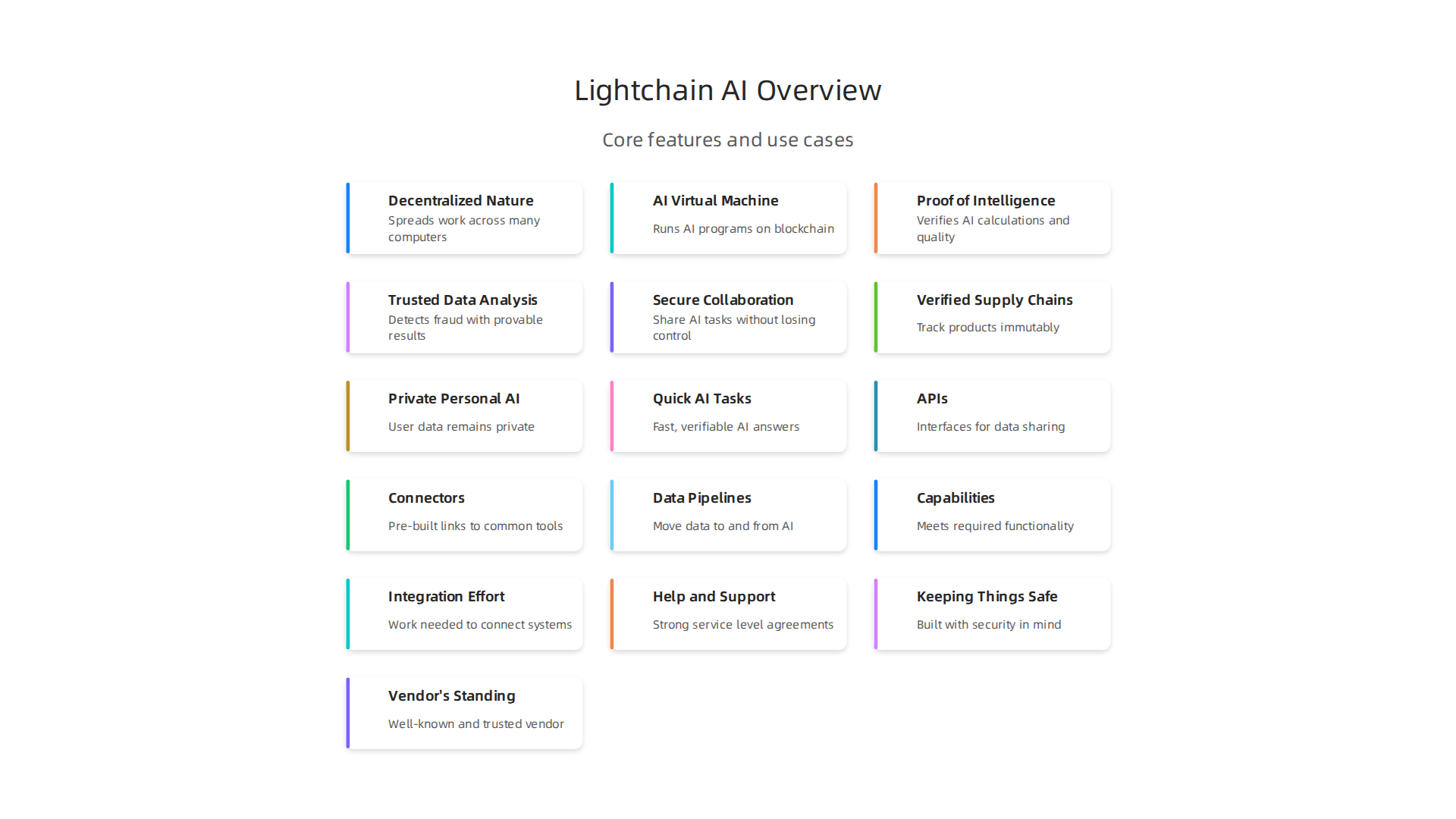
Key Features and Differences
Most traditional AI systems, or "AI stacks," often rely on one big AI program or a few connected ones that run on central servers. This means one company or group controls them. Lightchain AI is built differently:
- Decentralized Nature: Unlike single-model approaches, Lightchain AI is a decentralized platform. This means it doesn’t rely on one central power. Instead, it spreads the work across many computers. This helps keep it safe and fair, as no single point can be easily attacked or controlled. The system ensures that AI tasks can run with minimal interference lightchain-whitepaper.pdf.
- AI Virtual Machine (AIVM): Lightchain AI uses something called an Artificial Intelligence Virtual Machine (AIVM).
This is like a special engine that allows AI programs to run right on the blockchain itself. This is a big step because it integrates AI directly into the network’s core, making AI tasks a native part of the system Aivm el architecture.md – Getting started | Lightchain AI Documentation.
- Proof of Intelligence (PoI): Another unique part is its "Proof of Intelligence" method. Most blockchains use ways to confirm transactions, like "Proof of Work" (which uses a lot of computer power). Lightchain AI uses PoI to make sure that the AI calculations are correct and of good quality. It checks the value of the AI’s answer, not just how much computing effort went into it Lightchain AI: PoI, AIVM, Roadmap & Comparisons. This is crucial for trusting the AI’s output, especially in important business settings.
These unique features mean that Lightchain AI isn’t just another tool; it’s a new way to build and use AI that focuses on security, transparency, and a built-in ability to verify AI work.

For companies looking to understand and integrate new methods for Mastering Massive AI Enterprise Strategy and Implementation in 2026, these architectural choices offer clear benefits.
Common Misconceptions and Real-World Use
With any new technology development, there can be misunderstandings. One common idea is that Lightchain AI is only about its digital currency, called LCAI. While Lightchain AI does have a token, its main purpose is to power the AI computing network, not just act as a tradeable coin. Its real strength lies in its technology for running and verifying AI.
It’s also important to remember that Lightchain AI is still growing. In 2026, it’s considered an emerging technology. While it has big plans, it’s in a "wait-and-see" phase for many, even after raising millions of dollars Lightchain AI Price Prediction 2026-2030.
For businesses, this means Lightchain AI might be best suited for specific AI tasks that need:
- High security and transparency: Where every step of an AI’s decision needs to be clear and unchangeable.
- Decentralized processing: For scenarios where relying on a single central server is not ideal, perhaps for privacy or resilience.
- Verification of AI output: If you need to prove that AI computations were done correctly and fairly.
It’s not meant to replace all existing enterprise AI tools. Instead, it offers a new type of foundation for certain workloads. As businesses think about how to use new systems, learning how CIOs and CTOs should evaluate AI companies in 2026 like Lightchain AI will be key to making smart choices. It’s one of many new players in the broader 2026 AI vendor landscape Quocirca’s 2026 AI Vendor Landscape Report, each with unique strengths.
Now, let’s look at how Lightchain AI can actually help businesses. We know it’s a new kind of system, and its special features mean it’s great for certain jobs. These jobs often lead to faster answers and less manual work. Many companies in 2026 are already seeing how AI can boost productivity. Reports show that businesses expect to see bigger output and efficiency thanks to AI adoption Businesses foresee productivity gains as AI adoption ….
Lightchain AI’s unique way of working, with its decentralized nature and Proof of Intelligence, opens doors for very important uses.
Real-World Productivity Gains with Lightchain AI
Here are some ways Lightchain AI can make a big difference for companies:
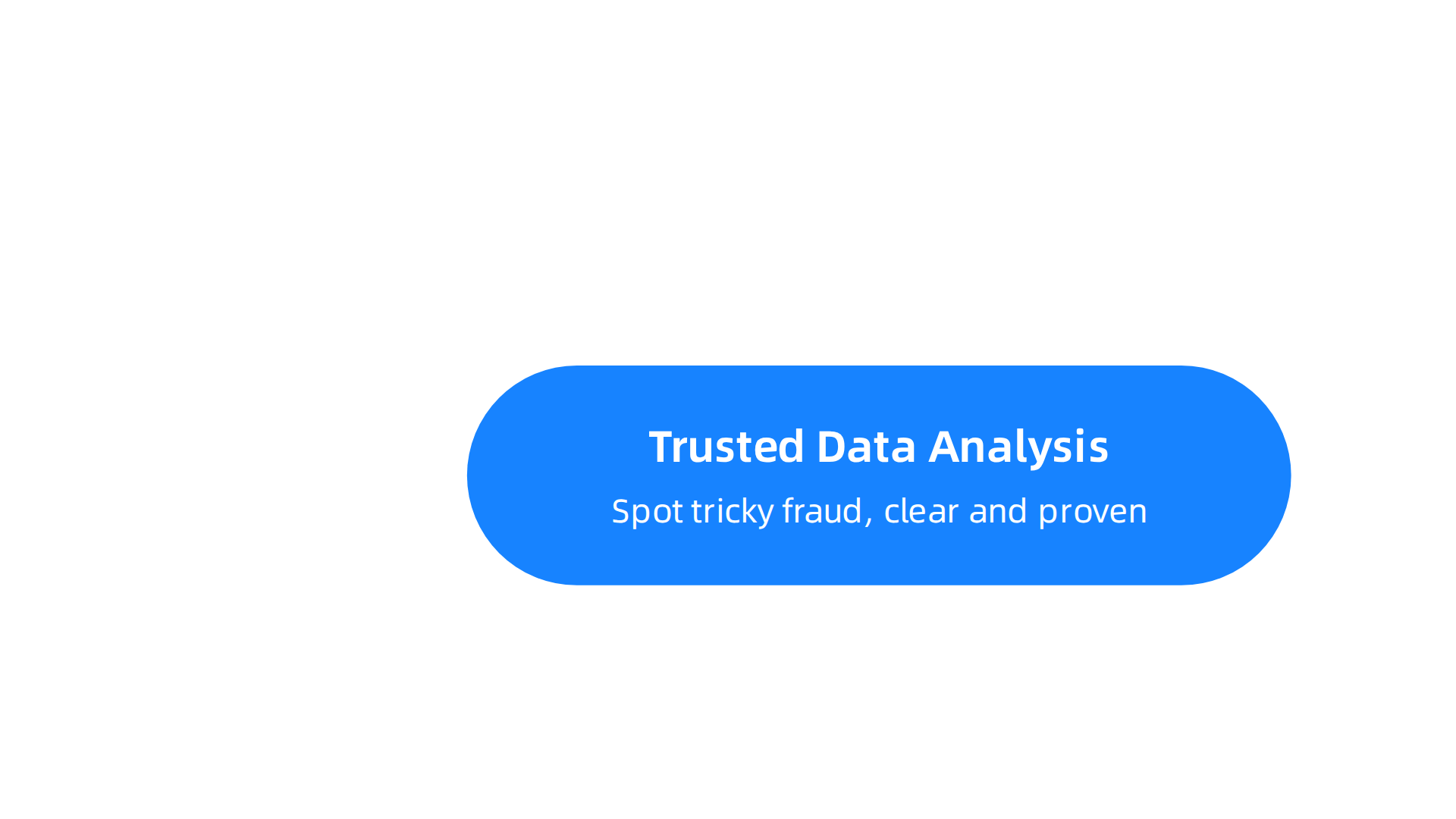
- Trusted Data Analysis: Imagine a bank that needs to use AI to spot tricky fraud. Every decision the AI makes must be clear and proven correct. Lightchain AI can help here. Its "Proof of Intelligence" means that every AI calculation can be checked and verified. This builds trust in the AI’s results, which is super important for legal or money matters. This speeds up decision-making because people don’t have to double-check everything manually.
- Secure Collaboration for Research: Let’s say different hospitals want to work together on a medical research project using AI. They need to keep patient data private and secure. Lightchain AI’s decentralized setup means they can share AI tasks without giving up control of their sensitive information. This helps new technology development in areas where privacy is key.
- Verified Supply Chains: For a company that makes goods, knowing exactly where each part comes from and when it moved is vital. Lightchain AI could run AI programs that track products in a way that can’t be changed or faked. This makes the whole supply chain more transparent and reliable, reducing delays and mistakes.
- Private Personal AI: As more people use
personal aitools, there’s a need for systems that keep user data truly private. Lightchain AI could power these next-gen personal AI helpers. Your own AI could run on a network where only you control your data, offering smart support without privacy worries. - Quick AI Tasks (Spark AI): Sometimes, you need quick, verifiable AI answers for smaller projects, often called
spark aitasks. Lightchain AI can handle these by spreading the work across its network. This makes processing faster and more trustworthy than traditional setups.
These types of uses reduce the time it takes to get good information and cut down on human effort. This can help even top ai startups get ahead.
How to Choose the Best Lightchain AI Projects
For businesses looking at Lightchain AI, it’s smart to think about two main things:
- How much business value will it bring? Will it save a lot of money, make customers happier, or create new products?
- How hard will it be to set up? Does it fit well with your current systems, or will it be a big change?
Focus on projects where Lightchain AI’s unique strengths, like its security and transparency, solve a big problem for your business. For example, if you need to prove AI calculations are right for audits, that’s a high-value use case for Lightchain AI. This way, you make sure new technology development truly helps your company grow and succeed. For a deeper dive into how to plan for advanced AI, explore an enterprise AI adoption in 2026.
Thinking about how new AI tools fit into your company’s plans is a big job. To get insights that help you stay on top of all the changes in enterprise AI, consider subscribing to The AI Newsletter Worth Reading. It can provide clear daily updates that help inform your decisions.
After picking the best projects, the next big step is to make sure Lightchain AI works well with what your business already uses. This is all about fitting new tools into your existing setup without causing big problems. This part, called "integration and deployment," is super important for any new technology development.
Integration and Deployment: Connecting Lightchain AI to Enterprise Systems
Bringing a new system like Lightchain AI into a business means connecting it to other software and data sources. Think of it like adding a new room to your house; you need to make sure the doors, windows, and pipes all link up properly.
How Lightchain AI Connects
To make Lightchain AI a helpful part of your business, it needs ways to talk to your existing systems.
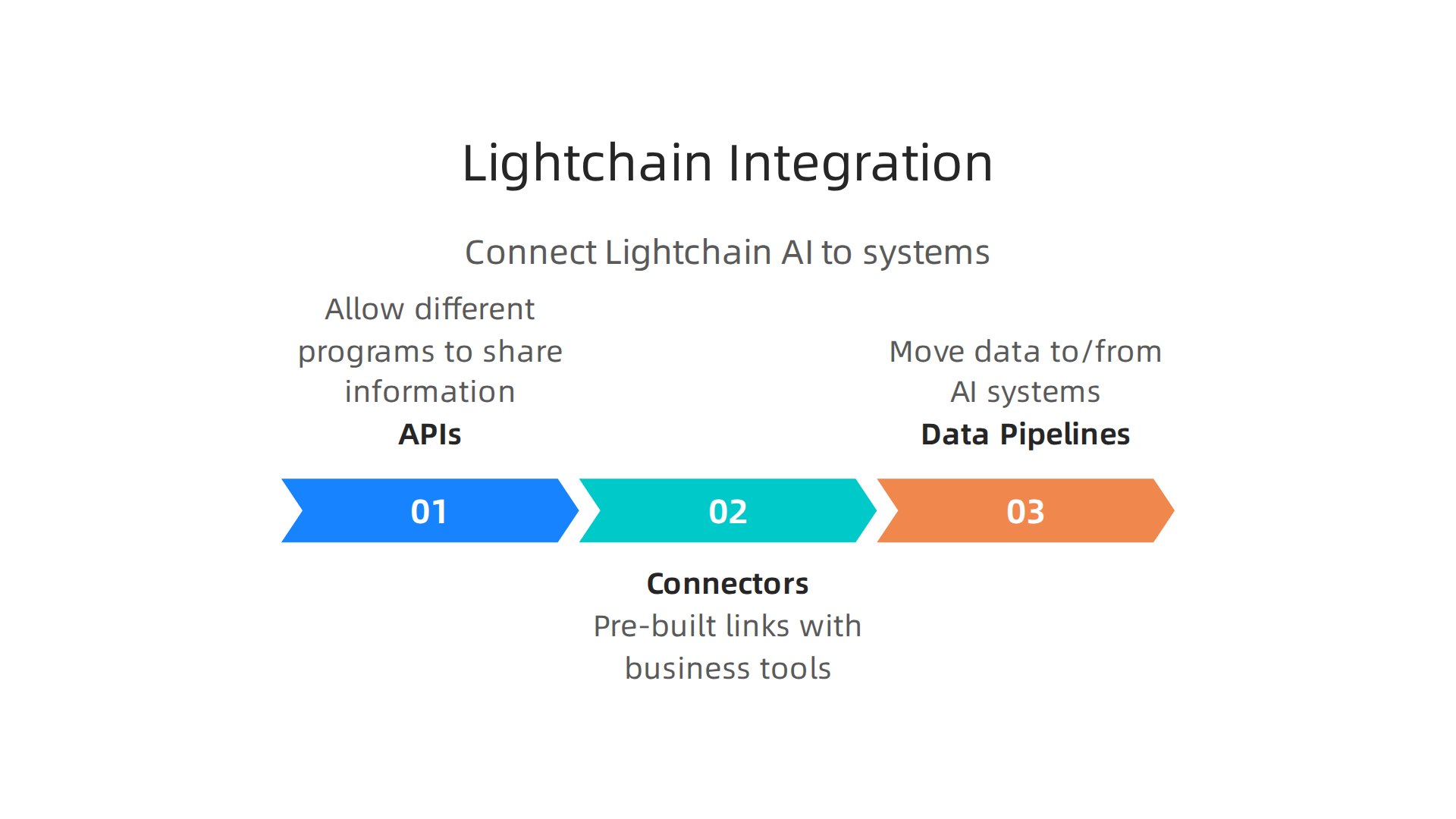
Here are the main ways this happens:
- APIs (Application Programming Interfaces): These are like secret handshakes that allow different computer programs to share information. Lightchain AI offers APIs that let your current software send requests to the AI and get results back. For example, your customer service system could use an API to ask Lightchain AI for the best answer to a customer’s question, helping you unlock enterprise value from your AI personal assistant.
- Connectors: Sometimes, there are special pieces of software called connectors that act as bridges. They are pre-built to link Lightchain AI with common business tools, like your customer relationship management (CRM) system or your accounting software. This makes setting things up much simpler.
- Data Pipelines: Businesses have lots of data flowing through them, like a river. Data pipelines are like channels that move data from one place to another. You can set up pipelines to feed important business data to Lightchain AI, and then take the AI’s smart insights back into your business systems. This is especially useful for
spark aitasks that need fresh data often.
It is really important to make sure everything is compatible. This means checking if Lightchain AI can work with your current data formats and security rules. Because Lightchain AI is a special kind of blockchain with AI abilities, its unique architecture helps with security and speed for AI jobs. It uses something called Proof of Intelligence, which means it can prove its AI calculations are right, helping businesses trust the output Lightchain AI: PoI, AIVM, Roadmap & Comparisons.
Keeping Things Running Smoothly
Once Lightchain AI is connected, you need to keep an eye on it to make sure it’s always doing its best work.

This involves a few key things:
- Monitoring: This is like having a watchman for your AI system. You need to check its health, how fast it’s working, and if there are any errors. Good monitoring helps you fix small problems before they become big ones.
- Observability: This means really understanding why the
lightchain aisystem is making certain decisions. Because Lightchain AI is designed for transparency, you can often see how it came to its conclusions. This is super helpful for checking if the AI is fair and accurate. - Model Governance: These are the rules and guidelines for how your AI models are built, used, and updated. It ensures that your Lightchain AI applications follow all company policies and government laws, especially when dealing with sensitive data or
personal aitools. To make sure you’re doing this right, it’s wise to learn about AI risk management. - Scaling: As your business grows, your AI needs will grow too. Scaling means making sure Lightchain AI can handle more work and more data without slowing down or breaking. Its decentralized design is built to help with this, allowing it to spread tasks across its network. This makes it a strong choice for
top ai startupsaiming for fast growth.
By planning these parts carefully, businesses can add Lightchain AI to their tools and get the most value from this exciting new technology. It helps ensure that your investment in AI leads to real improvements and keeps your operations running smoothly.
Making sure Lightchain AI works well and provides useful insights is just one part of the story. It’s also super important to keep everything safe, follow the rules, and manage any potential problems. This is called "security, compliance, and risk management." It helps your business use this new technology development responsibly.
Security, compliance, and risk management for Lightchain AI
When you bring a powerful tool like Lightchain AI into your business, you need to think about how to protect your information and make sure the AI acts fairly and correctly.
Understanding the Main Security Risks
Even with the best AI, there are risks to watch out for:
- Data Leakage: This happens when sensitive company information or customer data accidentally gets out. Imagine Lightchain AI learning from all your customer files. You wouldn’t want that information to be shared wrongly. It’s key to encrypt data and control who can see it at all times to prevent this problem. Businesses should put strong rules in place for how data is handled. This is true for
personal aitools too, which might hold very private information. - Model Hallucination: Sometimes, AI systems can make up information that sounds real but isn’t true. This is called "hallucination." If Lightchain AI is used to give important advice, getting wrong information could be very harmful. To fight this, you need to test the AI a lot and make sure it only pulls from trusted sources.
- Access Control Problems: Not everyone in your company needs to have full access to everything Lightchain AI does or the data it uses. Poor access control means people who shouldn’t see or change things might be able to. Setting up clear rules for who can do what with Lightchain AI helps keep your system secure. Think of it like giving different keys to different rooms in your house.
To help with these risks, companies need to use strong security steps. This includes things like encrypting data when it’s stored and when it’s being moved. You should also regularly check who has access to sensitive information. Another good idea is to use isolated spaces where you can test new AI models without putting real company data at risk. This helps keep your systems safe from new threats, especially with complex tools like Lightchain AI, according to experts on securing multimodal AI.
Following the Rules (Compliance)
Many businesses, especially those in healthcare, finance, or government, have strict rules they must follow. These are called "regulations." When you use Lightchain AI, you need to make sure it also follows these rules.
- Industry Rules: If your business has rules about how customer data is kept private (like GDPR in Europe or HIPAA in the US), Lightchain AI must also meet these standards. This means setting up your
spark aiprocesses to protect private data. - Proof for Audits: Sometimes, you might need to show that your AI is following all the rules. This is called "auditability." Because Lightchain AI uses Proof of Intelligence, it helps show how its AI decisions are made. This transparency can be a big help when you need to prove your systems are compliant. Knowing how your AI makes decisions helps build trust, a vital part of building enterprise AI trust.
Managing All the Risks
Handling risks with Lightchain AI is an ongoing job. You need a plan to spot problems early and fix them fast. This includes:
- Regular Checks: Keep an eye on your Lightchain AI system all the time. Look for anything unusual or unexpected. Regularly assessing all your AI tools and data is a key step in AI risk mitigation.
- Testing: Test your AI with difficult situations to see how it reacts. This helps find weak spots before they become big issues.
- Updating Rules: As your business and AI change, so should your security and compliance rules. It’s important to keep these plans fresh and up-to-date. This kind of careful planning is especially important for
top ai startupswho want to grow fast and safely.
By taking these steps, businesses can use Lightchain AI confidently, knowing they are protecting their data, following the rules, and managing risks effectively. Staying informed about the latest in AI and technology is crucial for this.
Want to keep up with the fast-changing world of AI and enterprise technology?
The AI Newsletter Worth Reading provides clear daily AI updates from The Deep View Newsletter.
After putting strong security measures in place and making sure Lightchain AI follows all the rules, the next big step is choosing the right vendor and understanding all the costs. This involves looking at different companies that offer Lightchain AI solutions and figuring out what makes one better than another.
Choosing the Right Lightchain AI Vendor
Picking a partner for your Lightchain AI project is a very important choice.

It’s like choosing the right tools for a big building project. You want tools that work well, are easy to use, and come with good support. In 2026, many companies are offering AI solutions, so knowing how to compare them is key.
Here are some important things to look at when you are trying to find the best Lightchain AI vendor:
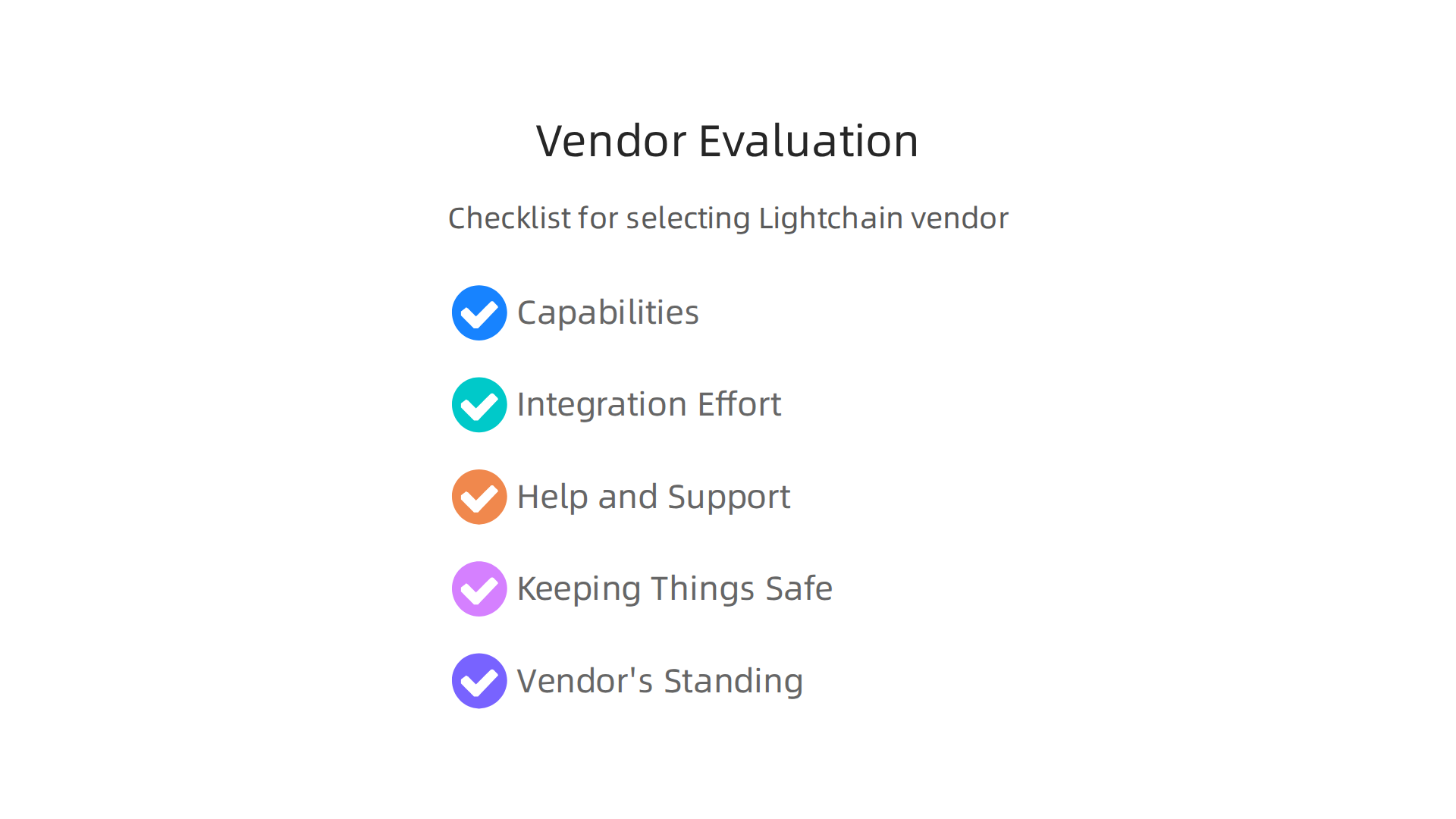
- What it Can Do (Capabilities): Does the Lightchain AI solution actually do what your business needs? For example, Lightchain AI is known for its special "Proof of Intelligence" and an "AI Virtual Machine" (AIVM) that helps run AI tasks right on its blockchain. You need to check if these features fit your goals, whether it’s for complex
technology developmentor simpler tasks. You can read more about its core features in the Lightchain AI whitepaper. - How Easy it is to Connect (Integration Effort): Think about how much work it will take to get Lightchain AI to talk to your existing computer systems. An easy setup means less headache and faster results. Some solutions might fit right in, while others could need a lot of changes.
- Help and Support (SLAs and Support): What kind of help will you get if something goes wrong or if you have questions? Good vendors offer strong Service Level Agreements (SLAs), which are promises about how quickly they will fix problems. They also offer good customer support. This is very important for new
spark aiprojects. - Keeping Things Safe and Following Rules: Even though we talked about this before, the vendor plays a big role here too. Make sure their Lightchain AI system is built with security in mind and helps you meet industry rules. A good vendor should be able to show you how their solution helps keep your data safe.
- Vendor’s Standing: It is good to know if the vendor is well-known and trusted in the AI world. Reports like Quocirca’s 2026 AI Vendor Landscape can give you an idea of who the important players are in this fast-moving field, as mentioned in the Quocirca’s 2026 AI Vendor Landscape Report.
To learn more about how to make smart choices, you can read about how CIOs and CTOs should evaluate AI companies in 2026. Also, checking out an AI engine evaluation framework for enterprise leaders in 2026 can help you compare options fairly.
Understanding Lightchain AI Costs (Total Cost of Ownership)
When you’re looking at lightchain ai solutions, it’s not just about the first price you see. You need to think about the "Total Cost of Ownership" (TCO). This means looking at all the costs over time, not just the starting price.
Here are some common cost factors for Lightchain AI projects:
- Starting Costs: This includes setting up the system, bringing in new hardware (if needed), and training your team to use Lightchain AI.
- Ongoing Costs: These are the regular fees you pay to use the Lightchain AI software or services. It can also include the cost of computing power needed to run the AI, especially for
personal aimodels that might have unique needs. - Maintenance and Updates: AI systems need to be kept up-to-date and sometimes need fixing. Good vendors will offer plans for this, but these costs add up over time.
- Making Changes: As your business grows, you might need to change or add features to your Lightchain AI. This can also cost money.
- Staffing: You might need to hire new people or train your current staff to manage and work with the Lightchain AI system. This is a big part of the overall cost.
Lightchain AI itself has a unique setup involving a token called LCAI. In 2026, its market price has been quite up and down, making it something to watch if you’re thinking about the financial side of this technology development. Some analyses suggest that Lightchain AI could be a strong performer in the crypto space by 2026, though its exact price varies. Understanding this aspect is important for anyone considering its long-term cost and investment potential, as noted in various Lightchain AI price prediction discussions.
To help you decide, you can create a simple scoring system for different vendors. Give points for each factor like capabilities, support, and cost. This helps you compare them fairly and choose the top ai startups or established companies that best fit your business’s needs and budget.
After picking the right Lightchain AI vendor and figuring out all the costs, the next big step is to actually put Lightchain AI to work in your business. This means having a clear plan for how to start small and then grow, along with helping everyone in the company get used to the new technology.
Adoption Roadmap: Pilot to Scale and Organizational Change Management
Bringing a new technology like Lightchain AI into a company is a journey. It starts with a small test and, if successful, expands across the whole organization. This also means helping people learn new ways of working.
Starting with a Small Test (Pilot Design)
It’s smart to begin with a small test, also called a pilot program, for your Lightchain AI project.

This way, you can try out the system without a lot of risk. When you plan your pilot, think about:
- Small Goals: Choose a simple task or part of your business where Lightchain AI can show a clear benefit.
- Clear Steps: Lay out exactly how the pilot will run, who will be involved, and what they will do.
- What to Watch For (Success Metrics): How will you know if the pilot is working well? Maybe it’s about saving time, making fewer mistakes, or helping customers faster. Having clear goals helps you see if Lightchain AI is truly helping.
Getting Everyone on Board (Stakeholder Alignment)
For any new technology development to succeed, everyone needs to be on the same page. This means talking to different groups in your company, from the leaders to the teams who will use Lightchain AI every day. Explain how Lightchain AI will make their work better and how it fits into the company’s bigger goals. Getting buy-in early helps avoid problems later. As companies move beyond small tests, they need to focus on how AI connects to real business results and how to handle big changes, as noted in a report on enterprise AI facing the test of scale in 2026.
Growing the Project (Scaling)
If your pilot project with Lightchain AI goes well, the next step is to expand it. This means bringing the technology to more teams or using it for more important tasks. Scaling an AI project means making sure it can handle more work and more users without breaking down. It requires careful planning to make sure the system stays strong and reliable as it grows. Many businesses are moving from just trying out AI to using it widely, needing to operationalize it securely and reliably, according to an article on AI in 2026 from experimentation to enterprise expectation. For a deeper dive into planning this growth, you can read about enterprise AI adoption in 2026.
Building the Right Team (Skills, Staffing, and Training)
Using Lightchain AI successfully means your team needs the right skills. This often means:
- New Skills: People might need to learn how to work with AI, how to understand its outputs, or how to manage an AI system. This could be anything from basic understanding for everyone to deep
spark aiknowledge for specialists. - Hiring New People: Sometimes, you might need to hire new experts who already know a lot about AI or blockchain technologies.
- Training Current Staff: Training programs can help your existing team gain the skills they need. This closes the "talent gap" and makes sure everyone feels ready for the new AI-driven ways of working. Understanding the roles needed for
technology developmentis key. To learn more about what jobs are opening up, check out the 2026 AI jobs landscape.
Successfully adopting Lightchain AI is not just about the technology itself. It’s also about preparing your people and your organization for change. Keeping up with the latest AI trends can help guide your team.
Get clear daily AI updates from The AI Newsletter Worth Reading.
Summary
Lightchain AI is a new blockchain-native platform designed to run and verify AI workloads with high speed, transparency, and decentralized scale. The article explains Lightchain AI’s distinctive architecture — including its AI Virtual Machine and Proof of Intelligence — and why those features matter for enterprises that need verifiable results, fast responses, and secure collaboration. It outlines concrete business use cases (trusted analytics, secure research sharing, verified supply chains, private personal AI, and rapid spark-AI tasks), then walks through practical steps for integration, monitoring, and governance. The piece also covers main security and compliance risks, how to evaluate vendors and total cost of ownership, and a pragmatic adoption roadmap from pilot to scale. Readers will learn when Lightchain AI is a good fit, how to connect it to existing systems, and what organisational changes and controls are required to deploy it responsibly.