
Advantages and Disadvantages of AI in Enterprise Data Management What Leaders Must Know for 2026

Introduction: The AI Revolution in Data Management
Picture this: You are a senior technology leader in 2026. Your company is spending millions on AI. Almost every new software tool you buy claims to be "AI-powered." According to AI agent adoption data for 2026, 80% of enterprise applications shipped or updated in Q1 2026 now include at least one AI agent.
That is a huge jump from just 33% in 2024. The promise is clear: faster decisions, smarter automation, and lower costs.
But here is the tough truth. Only about three out of ten companies have actually moved an AI agent into real production. And only 29% of organizations report seeing significant return on their AI investments. Many leaders feel stuck between the hype and the reality. They wonder: Is this really going to transform how we manage data?

Or is it just another expensive experiment?
That is exactly why this guide exists. We are going to cut through the noise and look at what AI can really do for your enterprise data management. We will cover both the upsides and the downsides. You will see real examples of AI in action, from automating data quality checks to powering smarter analytics. And you will learn where the risks still hide, like governance gaps and data readiness problems.
If you want to stay ahead of the curve without getting burned, you need a balanced view. This guide gives you exactly that. It is built on the latest 2026 research and real world case studies. Read on to understand the true advantages and disadvantages of AI in your data strategy.
By the way, staying informed can feel like a full time job. The AI Newsletter Worth Reading delivers clear daily updates so you never miss what matters.
For a deeper look at building a solid plan, check out our enterprise AI strategy roadmap for 2026.
The State of AI in Enterprise Data Management (2026)
AI is no longer stuck in small test projects. In 2026, it is moving into real production pipelines that manage and move data every day. Three big forces are driving this shift. First, the amount of data companies create keeps growing fast. More data means more need for smart tools to handle it. Second, cloud systems are mature enough now to support AI at scale. Third, software vendors are building AI directly into their products. For example, the global AI data management market is expected to grow from about $38 billion in 2025 to over $46 billion in 2026, according to AI data management market size research.
But not every industry is moving at the same speed. Financial services and healthcare are leading the way. These sectors have strict regulations and lots of sensitive data, so they feel more pressure to get AI right. Many are building what experts call "sovereign AI" systems that keep data under their own control, as explained in the Enterprise AI trends report for 2026. Manufacturing, on the other hand, is moving slower. Legacy systems and less mature data practices hold them back.
This uneven pace matters for your data strategy. If you are in a leading industry, you likely already see the advantages and disadvantages of AI up close. If you are catching up, you have time to learn from early movers. Either way, getting your data ready is the first step. For a practical look at how to prepare, check out our guide on data collection methods for enterprise AI in 2026.
Key Advantages of AI for Data Management
So once your data collection is solid, what can AI really do for your data? The advantages of AI in data management are already clear.
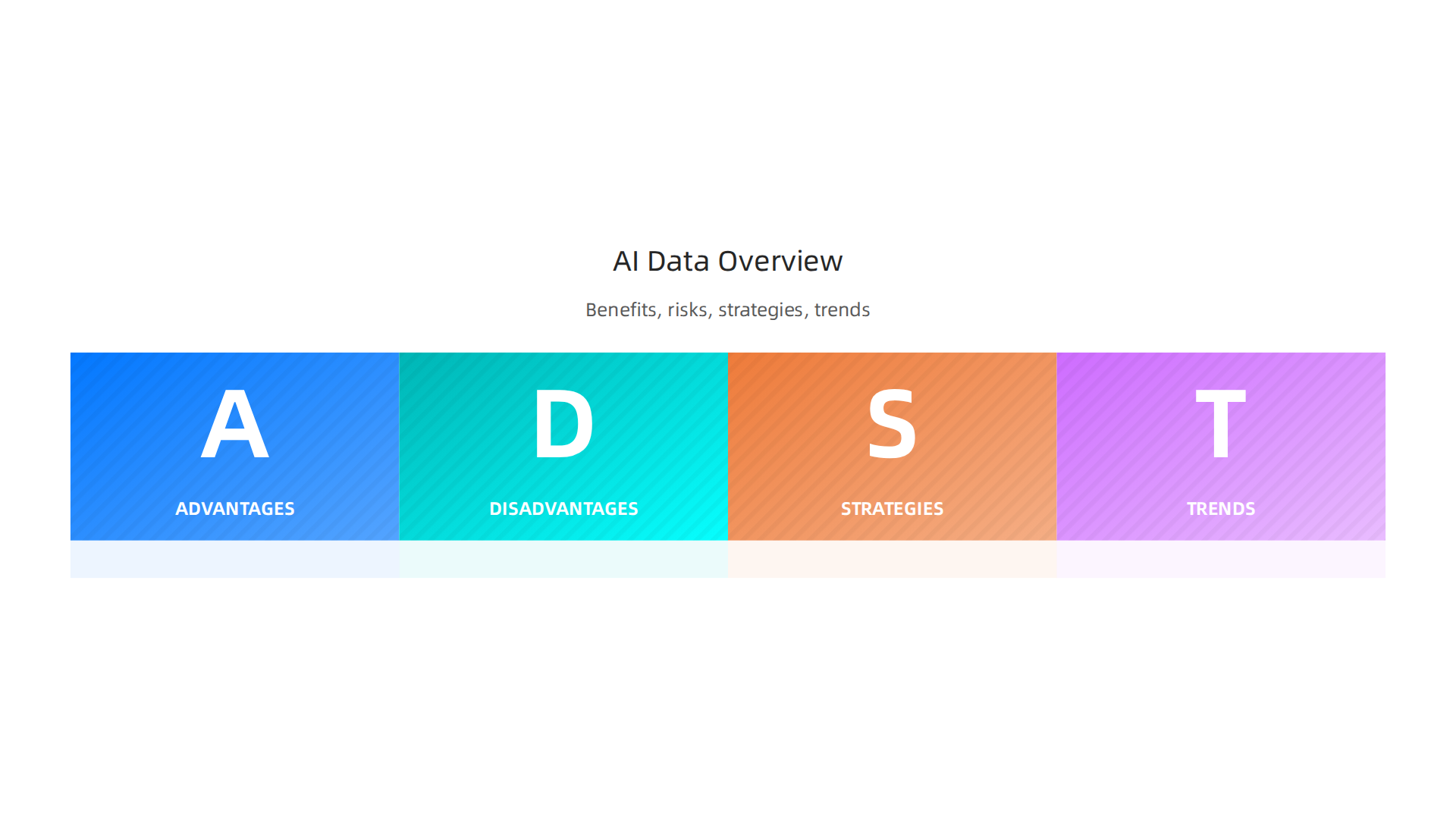
While both advantages and disadvantages of AI exist, the benefits for data work are hard to ignore.
First, AI automates repetitive data tasks. Instead of having people manually clean, sort, and process data, AI tools handle these steps in minutes. This frees up your team to focus on analysis and strategy.

According to the 2026 Deloitte enterprise AI report, 66% of organizations report productivity and efficiency gains from AI adoption. That is a massive leap in how fast insights reach decision-makers.
Second, AI dramatically improves data quality. It spots anomalies, finds duplicates, and flags errors that humans often miss. This is a key part of building systems that produce what experts call "decision-ready data." As the Enterprise AI data strategy guide for 2026 explains, the priority in 2026 is no longer just storing more data. It is making sure the data is reliable and ready for AI use. Better quality data leads to better business decisions.
Third, AI enables scalable analytics for real-time decision-making. When you have massive datasets across your organization, traditional tools struggle to keep up. AI processes data at scale and delivers insights as events happen, not days later. For a deeper look at how analytics fit into your strategy, check out this guide on analytics definition for enterprise leaders.
These are just a few examples of AI in action. To keep learning about the latest AI trends and tools, consider subscribing to The AI Newsletter Worth Reading for clear daily updates.
Automation and Operational Efficiency
One of the biggest advantages and disadvantages of ai worth knowing is how it changes daily operations. On the plus side, AI takes over repetitive data work that slows teams down. Think of tasks like extracting, transforming, and loading data (ETL), cleaning messy datasets, and matching schemas across different systems. AI handles these steps automatically, often in minutes instead of hours.
This automation means fewer people need to do manual data prep. That lowers operational costs because your team can focus on higher-value work instead of clicking through spreadsheets. For example, AI-driven data pipelines can reduce processing time by 60 to 80 percent. That is a massive speed gain.
According to the AI Agent Adoption 2026 enterprise data points report, 80% of enterprise applications shipped in Q1 2026 now embed at least one AI agent. These agents automate routine tasks across departments, from IT operations to supply chain management.
If you want to see how to build a full AI strategy from scratch, check out this data-backed enterprise AI strategy roadmap for 2026. It covers how to plan automation projects that actually deliver results.
Reducing manual work is a clear win. But it also raises questions about job roles and retraining. We will look at those tradeoffs next.
Enhanced Data Accuracy and Insights
Beyond speed and cost savings, AI also brings a major upgrade to how accurate and useful your data actually is. Machine learning models catch outliers, missing values, and inconsistencies far better than old rule-based systems. For example, a model can spot a sales figure that is way off or a customer record with a wrong ZIP code. This cleanup happens automatically, so your reports and dashboards reflect reality, not mistakes.
Predictive analytics takes this further. It uncovers trends hidden in your data. Which products will sell best next quarter? Which customers are about to leave? AI spots these patterns early and gives you a competitive edge. According to the enhancing insights and decision-making section of the Deloitte State of AI in the Enterprise report, 53% of organizations already report achieving better insights and decisions from AI.
Another big win is natural language query. You no longer need a data science degree to ask questions. A team member can type "Show me last month’s sales by region" and get the answer instantly. This makes data accessible to everyone, not just technical folks. To get deeper into how to collect high quality data for these tools, check out this guide on data collection methods.
Better data accuracy means fewer bad decisions and more confidence in your strategy. That is one of the strongest advantages of AI in the enterprise. If you want daily insights on how to get the most out of AI, consider subscribing to The AI Newsletter Worth Reading. It delivers clear updates straight to your inbox.
Critical Disadvantages and Risk Factors
While the benefits of AI are impressive, the picture is not all positive. The advantages and disadvantages of AI come as a package, and enterprise leaders need to understand the serious risks before diving in.
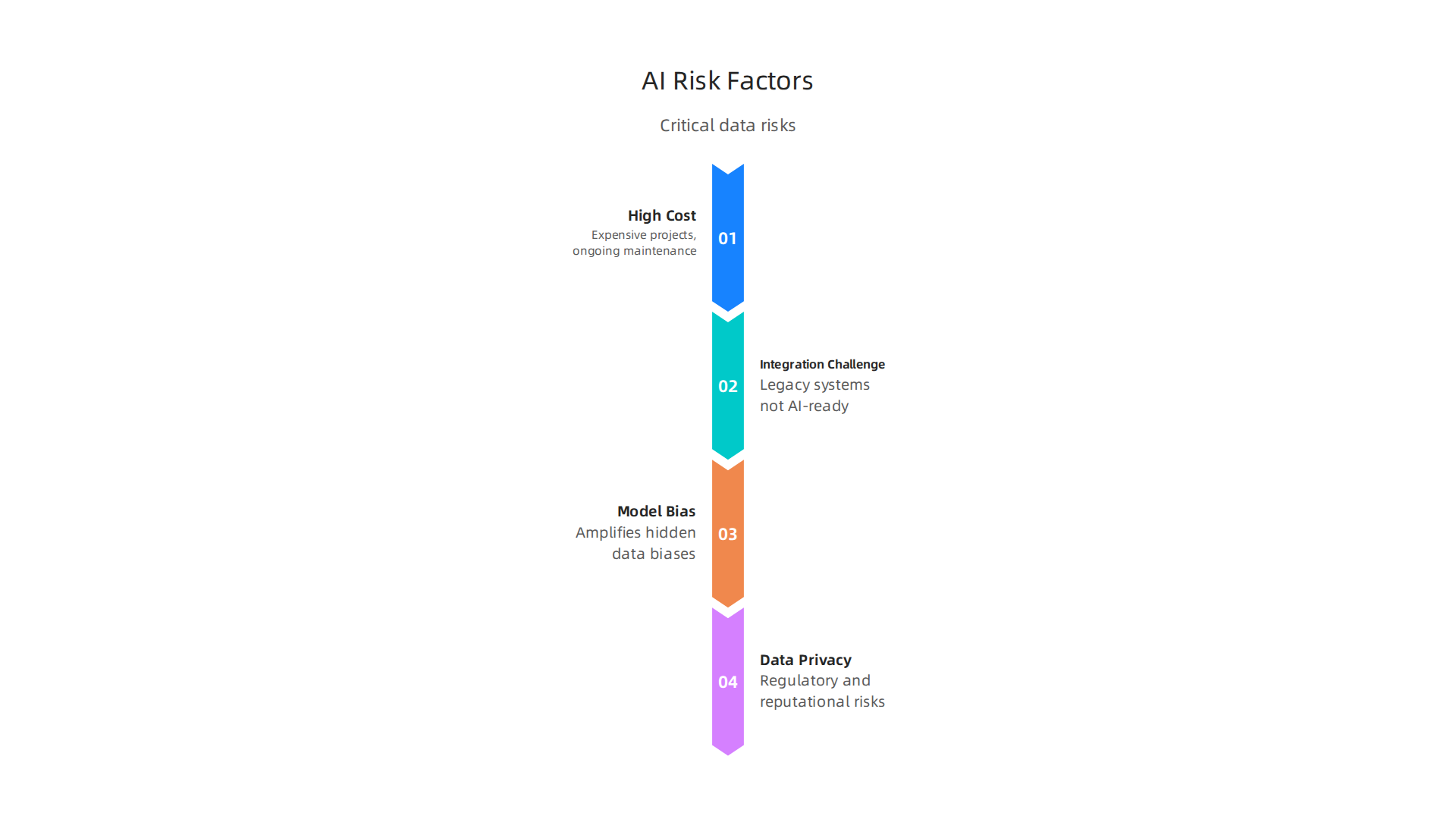
The biggest barrier is cost. AI projects are expensive, and many organizations underestimate what they will actually spend. According to the AI Pricing guide from Zylo, organizations spent an average of $1.2 million on AI-native apps in 2026.
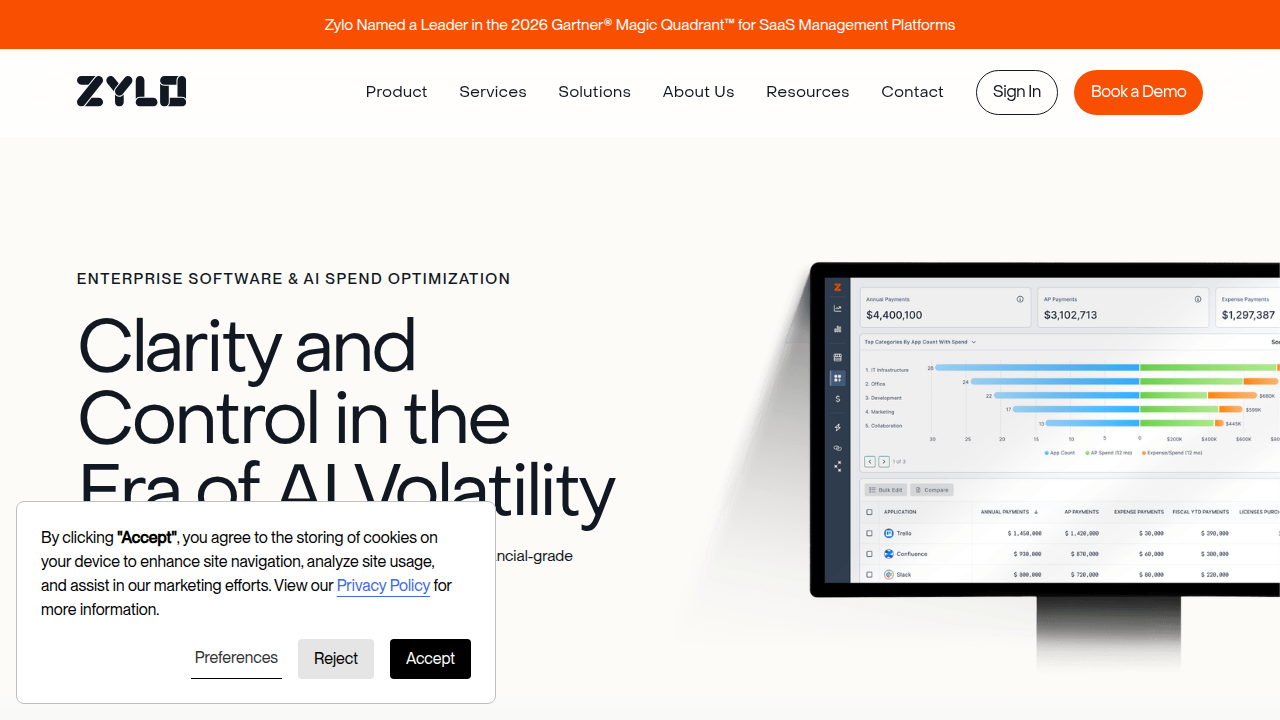
That is a 108% increase from the year before. And it is not just the initial build. Ongoing costs for maintenance, cloud compute, and compliance can add 15-25% to your annual budget. Many companies miss their forecasts by 25% or more, which can wreck a quarterly plan.
Then there is the challenge of integration. Most enterprises run on legacy systems that were not designed for AI. Getting modern AI tools to talk to old databases, CRMs, and ERPs is hard. It takes time, specialized engineering, and often leads to technical debt. If you are planning an AI rollout, it helps to read this enterprise AI adoption roadmap first. It gives a realistic view of what integration really involves.
Finally, model bias and data privacy create serious regulatory and reputational risks. AI models learn from your data. If that data has hidden biases, your AI will amplify them. This can lead to unfair hiring decisions, biased loan approvals, or discriminatory customer treatment. Privacy laws like GDPR and HIPAA add another layer of risk. A single compliance failure can cost millions in fines and destroy customer trust.

Balancing the advantages and disadvantages of AI means being honest about these downsides from day one.
High Implementation Costs and Complexity
Let’s dig deeper into what makes AI projects so expensive. It is not just the sticker price of the software. The real cost lives in two big buckets: infrastructure and talent.
First, infrastructure. Training and running AI models requires massive computing power. You need high-end GPUs and cloud services. The AI development cost in 2026 guide shows that custom AI solutions with advanced machine learning or generative AI often land between $100,000 and $300,000. Enterprise platforms can cross $500,000. And those numbers do not include the ongoing cloud compute bills, which can add 15-20% more each year.
Second, talent. You cannot just buy an AI tool and turn it on. You need data scientists, machine learning engineers, and data annotation tech workers to prepare the data, train models, and maintain them. These roles are expensive and hard to hire. The complexity of finding the right people is one reason many organizations underestimate total cost of ownership by 2x to 3x.
Then there is integration. Most companies have data spread across old databases, data warehouses, and data lakes. Getting modern AI systems to talk to those legacy systems is not simple. It takes careful planning and often a separate integration phase. If you are starting your AI journey, reading about data collection methods for enterprise AI can help you understand the groundwork needed before you spend a dollar on models.
The advantages and disadvantages of AI become clear here: the technology is powerful, but you need a realistic budget and skilled team to make it work.
Data Privacy, Security, and Ethical Concerns
Here is another major challenge in the advantages and disadvantages of AI debate. AI systems need lots of data to learn and make decisions. That wide access to sensitive information creates a bigger attack surface for hackers. A single breach can expose customer records, trade secrets, or personal health data.
Regulations are getting stricter too. The EU AI Act came into full force in 2026 and sets tough rules for high-risk AI systems. According to a high-level summary of the EU AI Act, companies must run risk management, keep detailed technical docs, and make sure training data is accurate and fair. Violations can lead to fines up to EUR 35 million or 7% of global turnover. That is a huge risk if your AI is not compliant.
Then there is bias. If your training data contains old patterns or unfair labels, your AI will repeat those mistakes. This can lead to discriminatory outcomes in hiring, lending, or customer analytics. Fixing bias requires careful data governance and constant monitoring. Leaders looking to avoid these pitfalls should learn how to evaluate AI companies in 2026 for strong security and ethics practices.
In short, the power of AI comes with serious responsibility around privacy, compliance, and fairness.
Real-World Case Studies: Lessons from Early Adopters
Theory is useful, but real stories show what actually works and what fails. Let us look at how two companies used AI and what they learned.
Global Bank: Catching Fraud in Real Time
A large international bank wanted to stop payment fraud before it reached customers. The old rules-based system missed too many bad transactions. The bank built an AI model that scans millions of transactions each second. It looks for odd patterns like unusual locations, large amounts, or strange timing. When it flags something suspicious, it blocks the payment instantly. The result was a 45% drop in fraud losses and fewer false alarms that frustrated customers.
Healthcare Provider: Cleaner Patient Records
A hospital system with dozens of clinics struggled with messy patient data. Records lived in different systems with different formats. Staff wasted hours manually matching records. They deployed AI to unify patient identities and clean up errors. The AI matched records with over 98% accuracy. Clinicians now see a single, reliable view of each patient. This cut administrative work and improved care decisions.
These stories match broader patterns. According to a collection of enterprise AI case studies from 2026, organizations that tie AI to a clear business problem and invest in data readiness see the biggest wins.
But there are also common mistakes.
Pitfall 1: Black-Box Over-Reliance
Many teams trust AI predictions without understanding how the model reached a decision. When the model makes a wrong call, nobody knows why. This is dangerous in regulated industries like banking or healthcare. Always pair AI with explainability tools and human review.
Pitfall 2: Underestimating Data Readiness
Another frequent error is assuming existing data is clean and ready. In reality, data is often messy, incomplete, or stored in silos. Clean data is the foundation of any successful AI project. Teams that skip data preparation end up with models that perform poorly or produce biased outputs.
Learning from others helps you avoid these traps. If you want to stay ahead of AI trends and avoid common mistakes, consider getting daily insights from a trusted source. Subscribe to The AI Newsletter Worth Reading for clear, practical updates on AI in the enterprise.
For a deeper look at selecting and scaling the right AI tools, read this research-backed roadmap for AI app selection.
Strategies for Maximizing AI Benefits While Mitigating Risks
The case studies show that AI can deliver real results. But the advantages and disadvantages of AI depend heavily on how you approach it. Jumping in without a plan often leads to wasted time and money. Here are three proven strategies to get the benefits while keeping the risks in check.
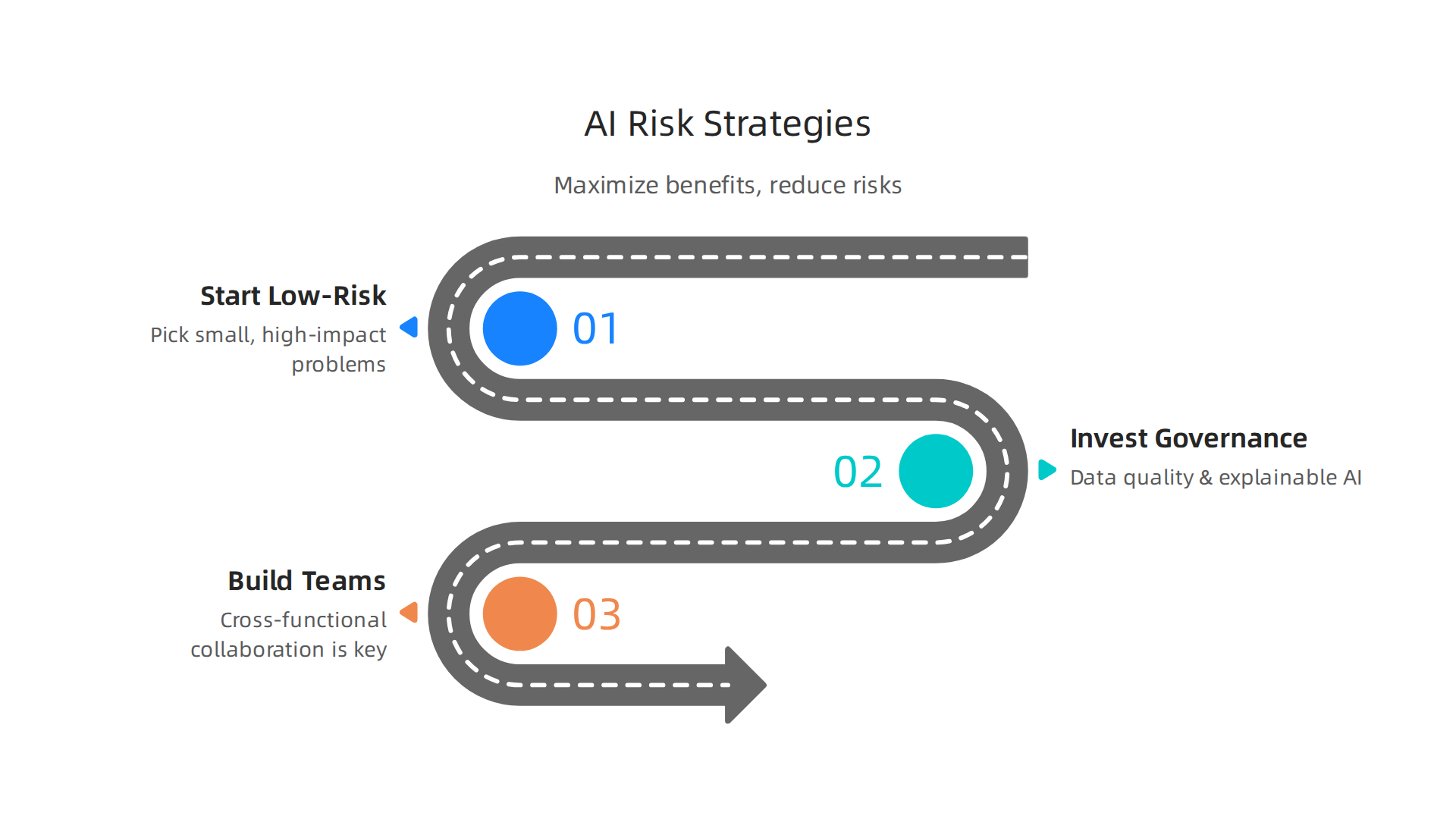
Start with low-risk, high-impact use cases. Do not try to overhaul your entire business at once. Pick one small, safe problem where AI can make a clear difference. For example, automating a repetitive reporting task or improving customer service responses. This lets your team learn and build confidence. A staged approach is a key recommendation in the AI transformation guide for 2026 from Claritus Consulting. Once you see success, you can expand to more complex areas.
Invest in data governance and explainable AI. Dirty data leads to bad AI. Set up clear rules for data quality, access, and privacy before you train models. Also choose AI tools that explain their decisions. This is critical in regulated industries like finance and healthcare. When a model flags a transaction or recommends a treatment, you need to know why. Explainable AI builds trust and makes it easier to catch errors early.
Build cross-functional teams. AI is not just an IT project.

You need input from data engineers who prepare the data, ethicists who watch for bias, and business leaders who understand the goals. These teams should meet regularly to review model performance and make adjustments. Strong governance makes sure everyone stays aligned.
For a deeper look at creating a complete AI strategy, read this enterprise AI strategy roadmap for 2026. It walks through the exact steps to move from pilot to production safely.
Understanding the advantages and disadvantages of AI is about more than features. It is about having the right plan, the right data, and the right people. When those three pieces are in place, AI becomes a powerful tool instead of a risky gamble.
The Future of AI in Data Management: Trends to Watch
Now that you know how to use AI safely, what comes next? The world of data is changing fast. The advantages and disadvantages of AI in data management will become clearer as big trends reshape how companies work with their information.
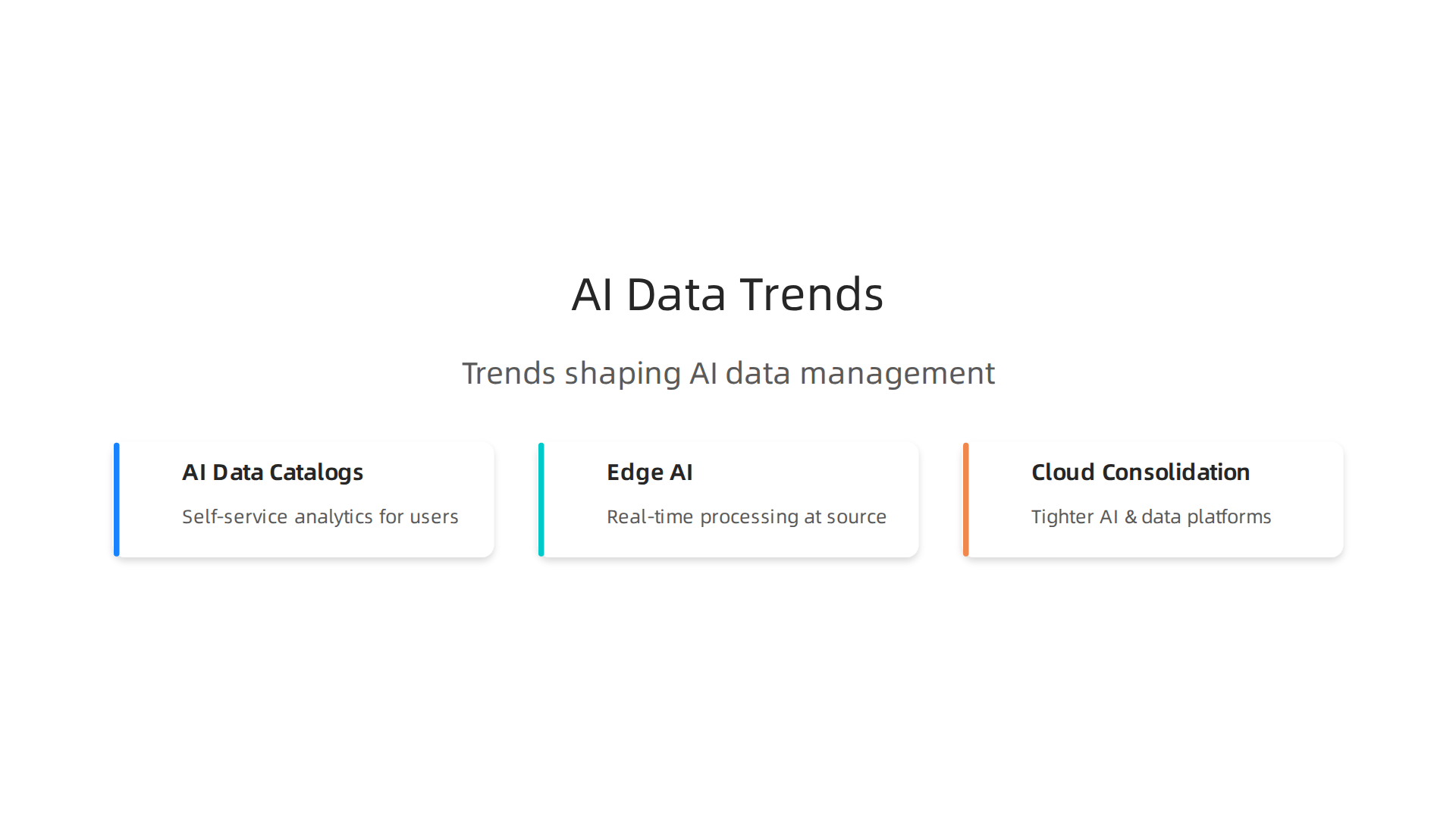
AI-driven data catalogs and self-service analytics are becoming mainstream. Non-technical users will soon create most new data integration flows. In fact, Gartner predicts that by 2026, users without technical backgrounds will build 75% of new data connections. This means tools that automatically classify, describe, and organize your data will be essential. Instead of waiting for engineers, business teams can find and use the data they need on their own. You can see deeper detail in the 8 data management trends for 2026 published on LinkedIn.
Edge AI will enable real-time data processing at the source. Instead of sending everything to the cloud, AI models will analyze data right where it is collected. This is huge for manufacturing, retail, and healthcare. A factory sensor can detect a problem instantly and fix it without delay. Real-time insights are becoming non-negotiable across many industries.
Major cloud providers will keep consolidating AI and data platforms. Expect tighter integration between AI tools and data storage. This makes it easier to build and deploy models but also raises questions about vendor lock-in. To stay flexible, many companies will adopt multi-cloud strategies.
As these trends unfold, staying informed is key. For a daily dose of clear AI updates, check out The AI Newsletter Worth Reading. It helps leaders like you keep up with the latest shifts.
For a deeper look at how to adopt AI in your organization, read this enterprise AI adoption in 2026 roadmap. It offers practical steps to stay ahead.
Understanding the advantages and disadvantages of AI in data management is not just about technology. It is about preparing your team and your systems for what is coming next.
Summary
This article examines the real advantages and disadvantages of AI for enterprise data management in 2026, cutting through the hype to show what works in production and where risks hide. It covers how AI automates repetitive data tasks, improves data quality, and enables real-time analytics, while also outlining major downsides such as high implementation costs, integration complexity, model bias, and regulatory exposure. The guide uses market data and case studies—from fraud detection in banking to patient record cleanup in healthcare—to illustrate practical outcomes and frequent mistakes like over-reliance on black-box models and underestimating data readiness. It then offers concrete strategies: start with low-risk high-impact pilots, invest in data governance and explainability, and build cross-functional teams to monitor models. The article closes with trends to watch—self-service analytics, edge AI, and platform consolidation—and points to roadmaps and internal resources to help leaders plan realistic, compliant, and scalable AI deployments.