
The 2026 Prompt Engineering Guide for Enterprise Teams

Introduction
Here is a fact you have probably felt yourself. AI tools are everywhere in 2026. Companies big and small have jumped on the bandwagon. But here is the catch. Most teams are leaving value on the table. They have the tools. They pay for the licenses. Yet the results feel random. One query gives gold. The next one gives garbage. The difference comes down to one skill. How well can your team talk to the model?
That skill has a name. It is prompt engineering. And treating it like a real practice instead of guesswork changes everything.
Think of it this way. You would not hand a new hire a complex task with no instructions and hope for the best. The same logic applies to AI models. A structured prompt engineering approach removes the randomness. It turns a black box into a reliable partner.

You get consistent outputs. You save hours of rework. And you protect your company from embarrassing mistakes.
This is not about learning a few tricks. It is about building a repeatable system. One that works across different AI platforms and use cases. One that your whole team can use.
In this prompt engineering guide, we bring together proven principles that work in real enterprise settings. You will find strategies that top teams use every day. You will also see where the field is heading next.
We cover the core building blocks. Then we show you how to scale them across your organization. And we point out the pitfalls that trip up most teams so you can avoid them.
AI adoption keeps surging. But adoption alone does not drive business value. The way your people communicate with models does. That is the real competitive edge in 2026.
If you want to step back and look at the bigger picture first, you can check out our detailed look at the data-backed enterprise AI strategy roadmap for 2026. It helps frame why prompt skills matter inside a larger plan.
And if you want to stay ahead of every shift in AI, we recommend you subscribe to something that cuts through the noise. Get clear daily AI updates from The Deep View Newsletter. It is one of the fastest ways to keep your thinking sharp.
Why Prompt Engineering Is a Critical Business Skill in 2026
Every dollar your company spends on AI tools comes with a hidden variable. That variable is the quality of the instructions your team gives the model. Two companies can pay for the same AI platform. One sees a flood of useful outputs. The other fights with hallucinations, rework, and frustrated users. The difference is not the tool. It is the skill of the people using it.
That is why prompt engineering directly impacts the return on your generative AI investment. Research shows that teams who apply structured prompting techniques see measurable gains. One guide from pmsquare explains how reducing ambiguity, providing rich business context, and using step-by-step reasoning can drastically boost accuracy and cut hallucinations.
When prompts are designed intentionally, the model wastes less time guessing and more time delivering what you actually need.
Organizations that treat prompt engineering as a formal practice report higher user adoption and fewer expensive mistakes. They create shared prompt libraries. They train entire departments on responsible AI interaction. They standardize how outputs look across teams. These steps turn AI from a toy into a reliable workhorse.
The skill gap between average and high-performing teams is real, but it is closing fast. In 2026, more companies are investing in ai training programs that teach prompt design alongside broader context engineering. Dedicated frameworks and template libraries are emerging to replace the old days of trial-and-error typing. The best ai platforms now include built-in guardrails and context management tools that make good prompting easier to teach and scale.
Prompt engineering is not a one-person job buried in some corner of IT. It is a business skill that every knowledge worker should understand. Leaders who ignore it leave money on the table. Leaders who invest in it build a repeatable advantage.

For a deeper look at how to build a complete strategy around AI selection and adoption in your organization, read our research-backed guide to enterprise AI apps. It shows how prompting fits into the bigger picture of platform choices and ROI measurement.
The Core Principles of Effective Prompt Design
Now that we have seen why prompt engineering matters for business, let’s look at the three core principles that make prompts actually work.
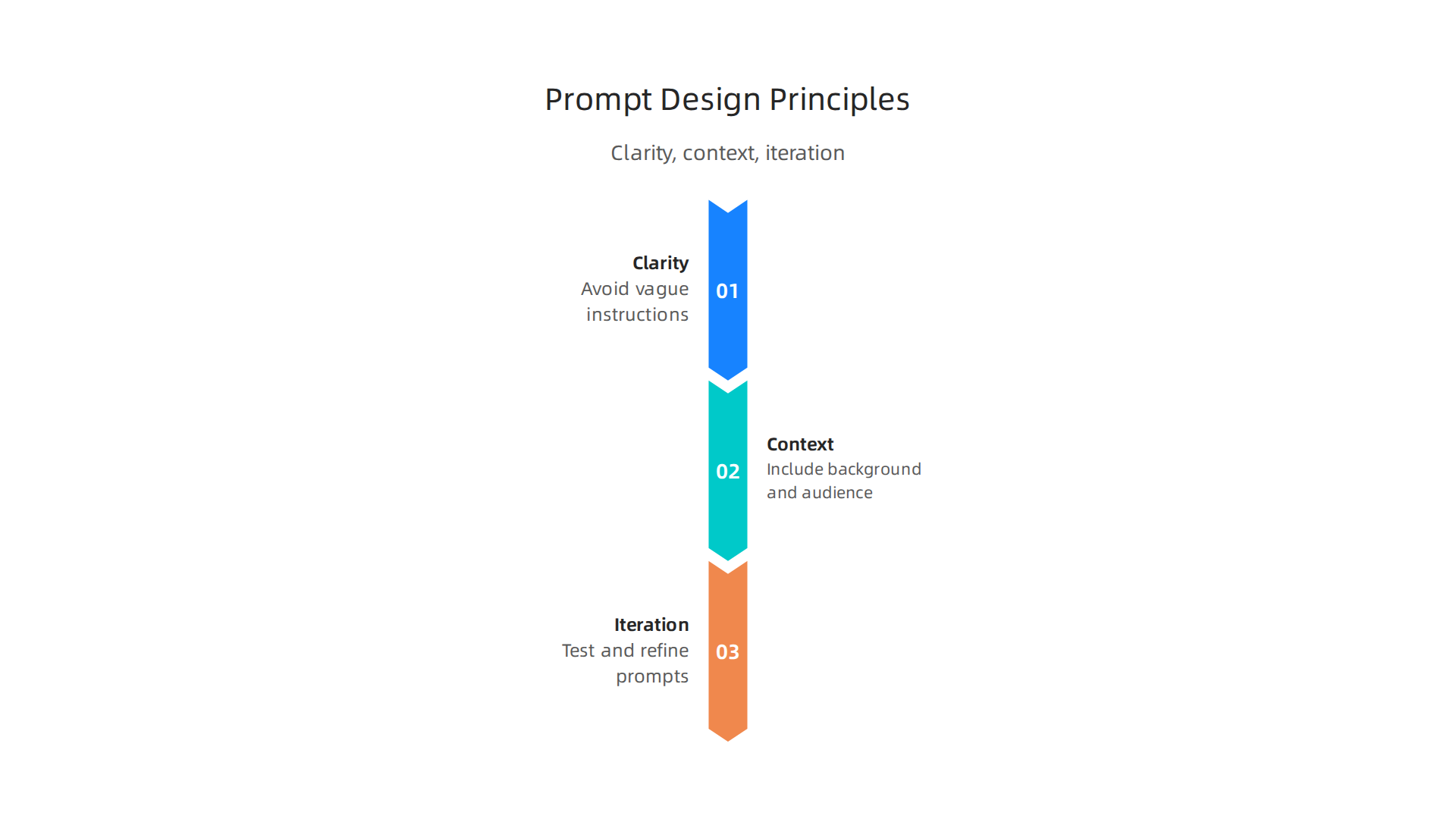
Clarity is the first rule. Vague instructions produce vague results. Instead of saying “Write a blog post,” say “Write a 300-word blog post for IT managers explaining the benefits of cloud migration.” Specificity reduces irrelevant outputs by 42% according to recent research. Prompt engineering trends and techniques for 2026 confirm that precision and clarity are non-negotiable.
Context is the second pillar. Provide background information, define the audience, and set the tone. Tell the model who it is speaking as and who it is speaking to. Role prompting (e.g., “You are a senior cybersecurity analyst”) improves task success by 31%.
Iteration is what separates beginners from pros. The first output is rarely perfect. Test your prompt, spot what is missing, and add only what fixes that gap. Repeat. This process is the engine behind every high-performing prompt library.
For a broader view of how these principles fit into your overall AI strategy, explore our enterprise AI adoption in 2026 roadmap. And to stay current on the latest techniques, get clear daily AI updates from The AI Newsletter Worth Reading.
Clarity and Specificity
Vague prompts are the number one reason AI outputs miss the mark. If you tell an AI "Write a blog post," you might get anything from a joke to a research paper. But if you say, "Write a 300-word blog post for IT managers about cloud migration security risks, using a professional but approachable tone," the model knows exactly what you want. That is specificity in action.
Specificity drives precision. The more details you give about audience, tone, format, and length, the closer the output gets to what you need. Research from Prompt Engineering in 2026: Tips + Best Practices confirms that clear, concise language is critical for AI understanding.
But clarity goes beyond being direct. Using examples in your prompt can boost consistency. If you show the model one or two examples of the output you want, it learns the pattern. This technique is called few-shot prompting, and it is one of the highest-ROI moves in any prompt engineering guide.
Another powerful tactic is benchmarking. Test two or three different phrasings of the same instruction and compare the results. Over time, you will learn which words and structures your chosen AI platforms respond to best. This experimental mindset separates good prompts from great ones.
For a deeper look at how to align your prompts with enterprise goals, check out our guide to unlock enterprise value from your ai personal assistant.
Role and Context Setting
Imagine telling a writer to write something for you. If you do not say who the reader is or what tone to use, the result might not fit. AI works the same way. Giving the model a clear role frames its perspective. For example, starting with "You are a financial analyst" changes how it handles data.
Providing context about the audience and desired tone tailors outputs even further. If you are writing for IT managers, tell the AI that. If you want a casual tone, say so. This extra information helps the model zero in on what matters.
You can also save and reuse context tokens across prompts. That way, every new task starts from the same base understanding. This saves time and keeps results consistent. The Advanced Prompt Engineering Techniques guide from Lakera AI recommends deliberately training the model’s memory by telling it who you are and what you are working on.
For a broader view of aligning AI with your business, check out the data-driven enterprise AI strategy roadmap for 2026.
And if you want to stay updated on the latest AI trends and prompt tips, consider The AI Newsletter Worth Reading. It delivers clear daily insights straight to your inbox.
Iterative Refinement
Here is a truth you will learn fast in this prompt engineering guide: your first attempt is almost never your best one. Prompt engineering is a cycle of testing, looking at the results, and then making small changes to improve the output.
You might think a tiny wording change does not matter much. But it can completely change what the AI gives you. Swapping just one key word or reordering a sentence often leads to a drastically different answer. That is why treating your first prompt as a rough draft is so helpful.
The real power comes from building a feedback loop. Each time you test a prompt, you learn something about how the model thinks. You can then refine your language to get closer to what you actually want. Over time, these small tweaks add up. Your prompts become sharper and your results more reliable.
As you keep refining, you will get better at spotting what is missing in the output and knowing exactly what to adjust. This cycle of continuous testing and improvement is one of the most important skills you can build. For more on this approach, check out the Top Trends and Techniques for Prompt Engineering guide.
Building an iterative habit also helps you make smarter decisions about which AI tools to adopt across your business. If you are leading technology choices for your team, the enterprise AI adoption in 2026 roadmap covers how to apply this same test-and-refine mindset on a larger scale.
And if you want fresh prompt tips and AI trends delivered to your inbox daily so you can keep refining your skills, The AI Newsletter Worth Reading is a solid choice.
Advanced Techniques for Business Applications
Maybe you are already using basic prompts to generate emails or summaries. That works for simple tasks. But in a real business setting, you need the AI to do much more. You need it to reason through complex problems, learn from a few examples, and hand you clean output that your systems can digest right away. That is where the serious power of this prompt engineering guide comes in.
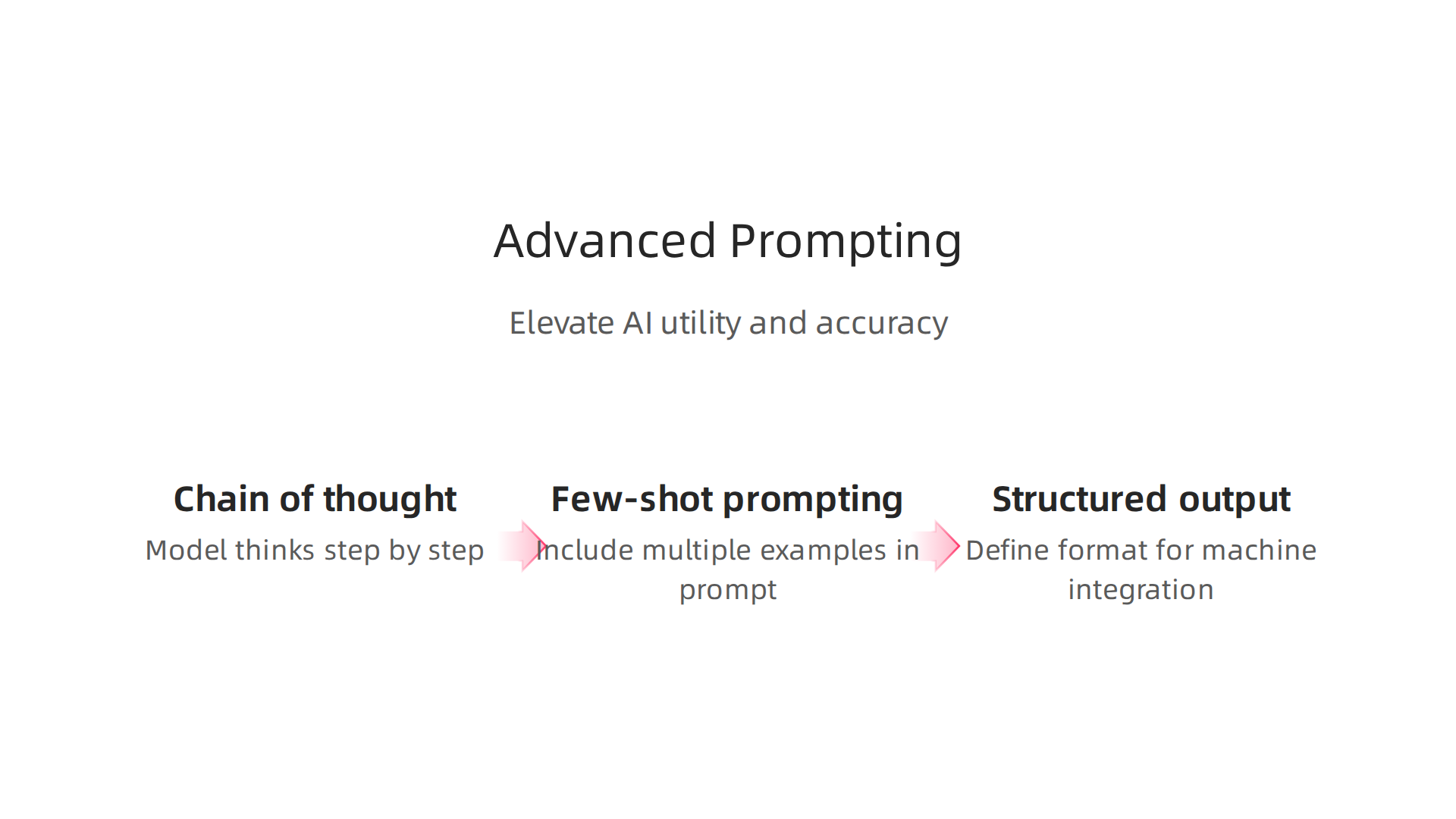
Chain-of-thought prompting is one of the most effective tools for tough tasks like financial analysis or multi-step data logic. Instead of asking for a direct answer, you ask the model to think step by step. This forces the AI to slow down and reason, which often leads to much better results. The 2026 Ultimate Guide to Prompt Engineering explains how chain-of-thought can boost accuracy on hard reasoning tests, making it a go-to technique when mistakes cost real money.
Few-shot prompting is another high-impact method. Instead of fine-tuning the model on your own data, you give it three to five good examples inside the prompt itself. The model picks up the pattern and applies it to new requests. Recent prompt engineering best practices show that wrapping examples in simple tags and keeping them diverse can save you weeks of ai training while still getting reliable outputs. This works especially well for classification tasks or generating consistent customer responses.
Then there is structured output techniques. When you are feeding AI responses into a CRM, a dashboard, or a reporting tool, you cannot accept paragraphs of free text. You need JSON, markdown tables, or strict bullet points. By explicitly defining the format in your prompt and using delimiters, you get output that integrates directly into your workflow. This is what makes ai platforms actually useful at scale rather than just interesting toys.
Combining these three methods transforms how your team can use AI. You get the reasoning power of chain-of-thought, the pattern learning of few-shot examples, and the machine-friendly structure of formatted output. For leaders who want to put these techniques to work across their organization, the data-backed enterprise AI strategy roadmap for 2026 offers a practical playbook for scaling that approach.
And to keep your skills sharp as the field moves fast, staying informed is essential. The AI Newsletter Worth Reading delivers daily updates on the newest prompt tricks and AI developments straight to your inbox. It is a simple way to make sure your prompts stay ahead of the curve.
Building an Enterprise Prompt Library
By now you have learned the advanced techniques. You know chain-of-thought, few-shot prompting, and structured output. But here is the hard truth. If every person on your team builds their own prompts from scratch, you will get chaos. Different versions, different styles, different quality. That is where a prompt library comes in.
A prompt library is a centralized collection of tested, approved prompts that anyone in your organization can use.

Think of it as a shared toolbox. Instead of reinventing the wheel each time, your people grab a proven prompt, fill in the details, and get consistent results. Organizations that scale AI successfully maintain these centralized prompt libraries as part of their core operations.
So what does a good library look like? First, it needs structure. Each prompt should have a clear name, a description of when to use it, the required inputs, the approved data sources, and a sample of good output. The Glean guide on steps to build an effective prompt library for collaboration walks through exactly how to set up these templates.
It recommends starting with your five to ten highest-frequency workflows and building from there.
Governance is the second pillar. You cannot just throw prompts into a folder and call it done. You need version control so you can see who changed what and when. You need permission levels so only certain people can edit or approve prompts. You need a lifecycle that moves prompts from draft to review to approved to archived. The 10 key elements of a prompt library for enterprise tasks include version tracking, usage insights, and role-based access control. This prevents bad prompts from reaching your team and helps you retire old ones that no longer work.
The third piece is integration with the tools your business already depends on. Your CRM, your ERP, your project management software these are where the real work happens. A prompt library that connects directly into those platforms saves your team from copy-pasting. Instead, they trigger the right AI workflow from inside the tool they already use. For leaders looking to embed this across the organization, the research-backed roadmap for enterprise AI apps covers how to select and integrate these capabilities.
A well-built prompt library does not just save time. It turns your prompt engineering guide into a repeatable asset. Every department gets the same quality of output. Every new hire gets up to speed faster. And your organization finally moves from one-off experiments to scalable AI that actually delivers.
Measuring Prompt Performance and ROI
You have built your prompt library. You have trained your teams. But how do you know any of it is actually working? This is the part many people skip. They build the library and assume it helps. But without real data, you are just guessing.
Measuring prompt performance starts with the right metrics.
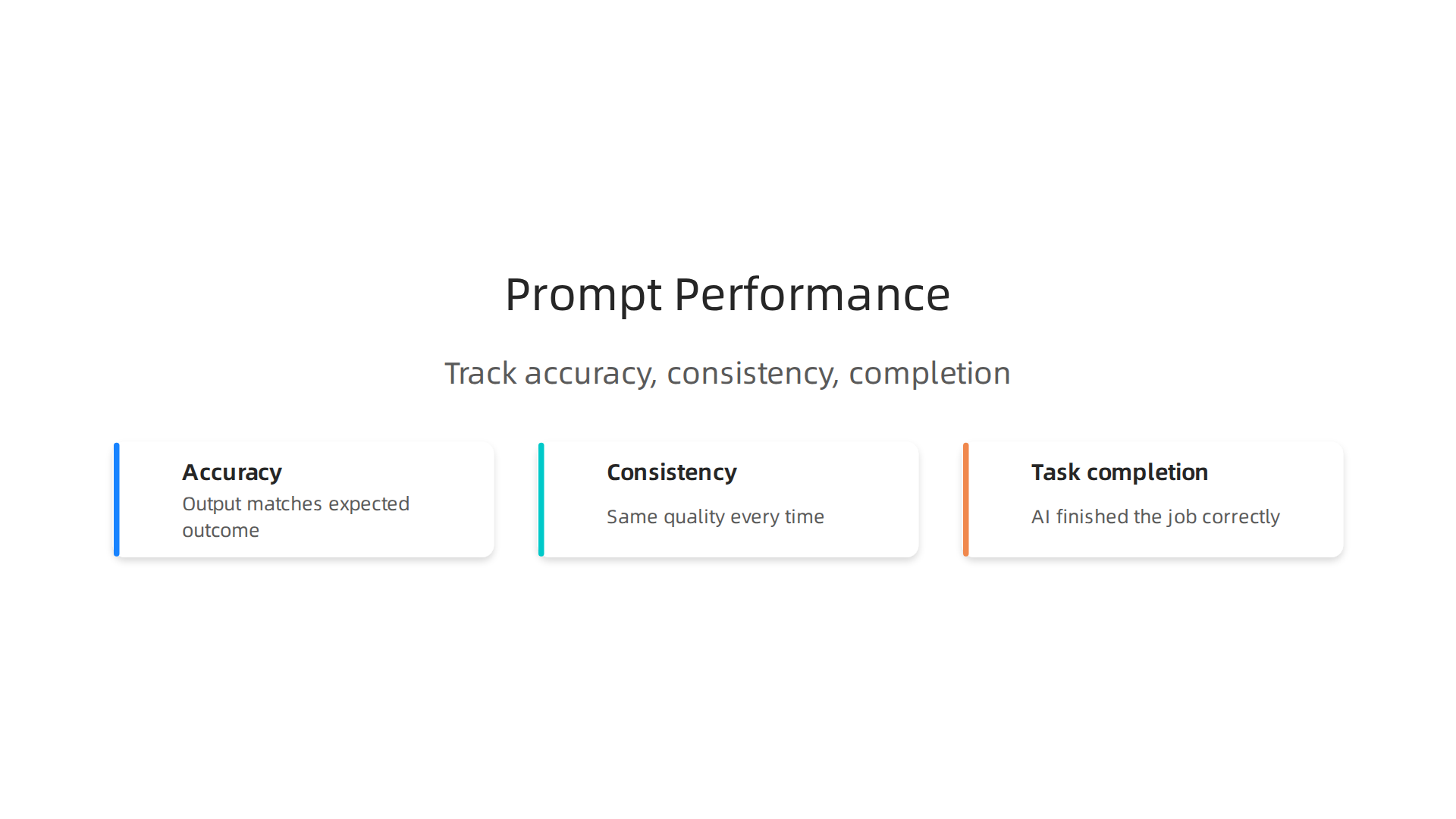
Do not track how many prompts people use. Track what those prompts actually accomplish. You need three core numbers.
Accuracy tells you whether the AI output matches the expected outcome. For a customer email prompt, accuracy means the tone is correct, the facts are right, and no errors slip through.
Consistency shows whether the prompt delivers the same quality every time, not just once in a while. If your prompt works great on Monday but produces nonsense on Wednesday, consistency is the problem.
Task completion rate measures whether the AI finished the job correctly. Did the summary capture all key points? Did the data extraction pull every needed field? This number tells you if the prompt is truly useful or just close enough.
Now you can calculate ROI. Add up the time your team saves by using a tested prompt instead of writing from scratch. Factor in the reduction in errors. Think about the improved quality of decisions your people make because they have better AI outputs to work with. When you put real numbers on those three things, you often find the library pays for itself in the first month.
A/B testing is your best friend for improvement. Run two versions of the same prompt side by side. Give them the same inputs and compare the outputs. Which one scores higher on accuracy and consistency? That one becomes your new approved version. The losers get retired or reworked. This is how you know you are getting better, not just busier.
For a deeper look at how advanced teams track these numbers, read the guide on tracking prompt effectiveness with performance metrics. It covers specific tools and dashboards that make this easier.
If you are leading a large AI initiative, you need a broader view. Our research-backed roadmap for enterprise AI apps and ROI walks through how to measure impact across your entire organization, not just one prompt library.
One more thing. The landscape changes fast. What works today might not work next quarter. To stay ahead, you need a steady stream of reliable information. That is exactly why we recommend The AI Newsletter Worth Reading. It delivers clear daily updates on AI best practices, new techniques, and real world results. Subscribe and make measuring your AI performance a continuous practice instead of a one time project.
Common Pitfalls and How to Avoid Them
Even with solid measurement in place, common mistakes can still derail your efforts.
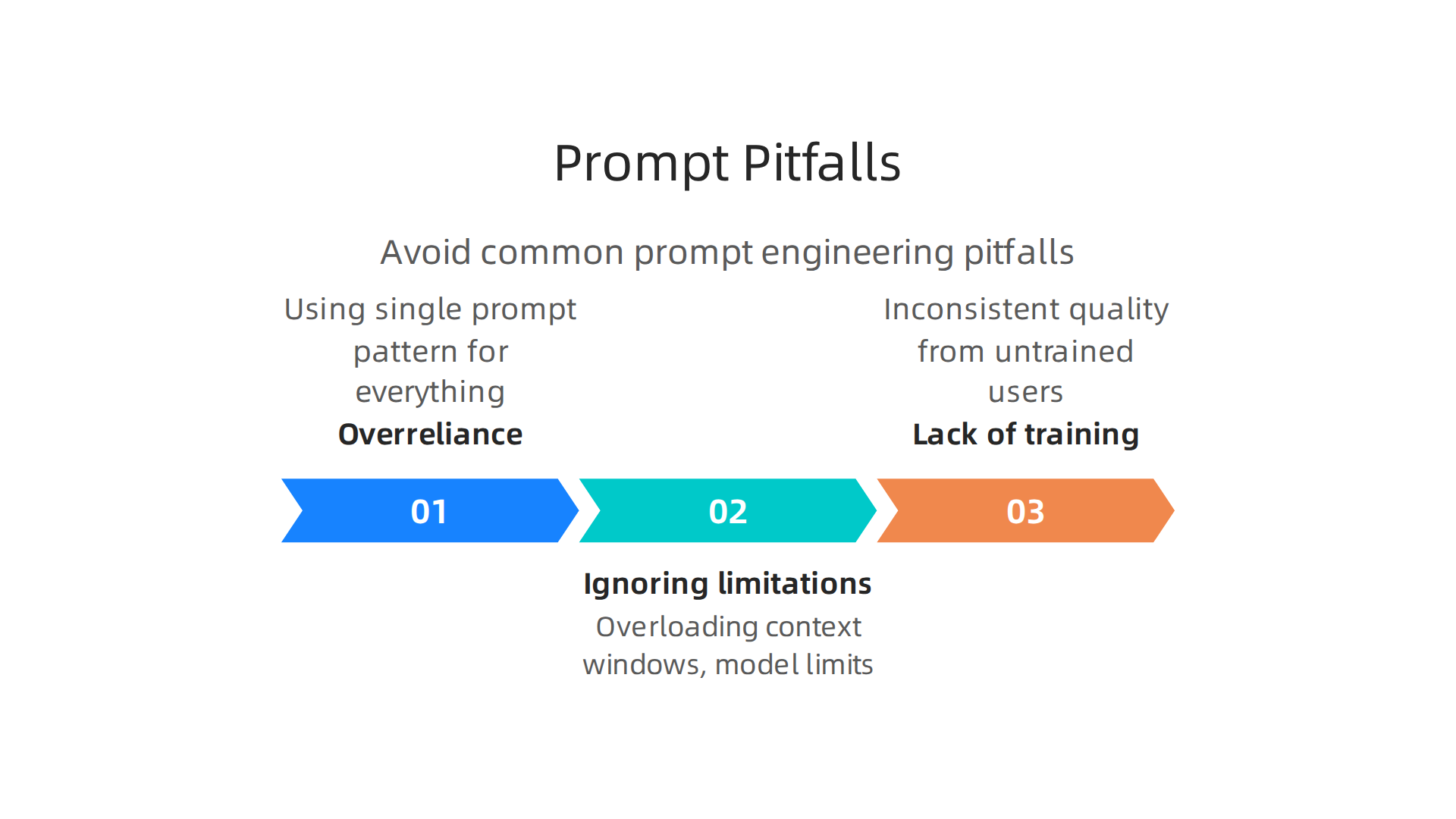
Many teams build a prompt engineering guide only to watch it fail because they fall into the same traps. Let us look at the biggest ones and how you can steer clear.
Overreliance on a single prompt pattern. It is tempting to find one format that works and use it for everything. But that is like using the same tool for every repair job. Different tasks need different approaches. The Lakera prompt engineering guide explains that most failures come from ambiguity, not model limits. If your prompts all look the same, you likely leave out key context or skip role guidance. Vary your patterns. Use step by step instructions for complex tasks. Use role assignment for tone sensitive work. Match the pattern to the job.
Ignoring model limitations and context windows. Every AI model has a limit on how much text it can handle at once. Stuff too much history or too many instructions into the prompt and the model loses track. Thomas Wiegold’s best practices for 2026 points out that most agent failures are actually context failures, not model failures. You retrieved the wrong documents or forgot to include tool definitions. The fix is simple. Put critical instructions at the beginning and end of the prompt, not in the middle. Keep prompts under 300 words whenever possible. And always test with your real data before putting the prompt into production.
Lack of user training leads to inconsistent quality. You can create the best prompt templates in the world, but if your team does not know how to use them, the outputs will be all over the place. According to the list of 14 prompt engineering mistakes on LinkedIn, one common error is treating prompt engineering as a one shot process rather than an iterative conversation. That happens when people do not understand how to refine prompts. Train your users. Show them how to add specific context, how to format outputs, and how to test versions. When everyone follows the same disciplined approach, your AI platforms produce reliable results across the whole organization.
Avoiding these pitfalls does not require advanced skills. It just requires awareness and a little practice. For a deeper look at how to build consistent practices across your teams, read the enterprise AI adoption roadmap for 2026. It covers the training and governance structures that keep your prompts working well at scale.
Future-Proofing Your Prompting Strategy
AI models are evolving fast. The techniques that worked in 2024 are already being replaced by smarter, more automated approaches. If you want your prompt engineering guide to stay useful, you need to plan for what is coming next.

Adapt your prompts to new model capabilities. In 2026, multimodal prompting is now standard. Models accept images, PDFs, spreadsheets, and audio right inside the prompt. Your prompts must account for these formats. According to the 2026 prompt engineering trends from SolGuruz, static prompts produce static outputs. The most successful teams now use prompts that adapt to user preferences, history, and behavior in real time. That means your guide should teach people how to design prompts that pull in dynamic context, not just write a single instruction.
Invest in skills early for a lasting edge. Some experts say prompt engineering is no longer the most valuable AI skill. But that does not mean it is useless. It means the role is growing into something bigger: context engineering. A Forbes analysis explains that the real skill in 2026 is guiding agentic systems with judgment and accountability, not just crafting clever wording. If you start building those skills now, you will have a clear advantage over teams that wait. Your teams will know how to manage the full context lifecycle, from data retrieval to output evaluation.
Use automated tools to reduce manual effort. Manual prompt tweaking is becoming outdated. New tools can automatically refine your instructions based on the results they get. The Refonte Learning guide on the future of prompt engineering highlights adaptive prompting, where AI systems help improve their own prompts. Instead of spending hours testing minor wording changes, you can let the system iterate for you. That frees your team to focus on higher-level strategy and system architecture.
Keep your knowledge current. The landscape shifts every quarter. What works for one model may break on the next update. Make it a habit to review your prompt patterns against the latest best practices. For a broader look at how to keep your whole AI strategy future-ready, check out this data-backed enterprise AI adoption roadmap for 2026.
And if you want daily, digestible updates on the fast-moving world of AI, consider the AI Newsletter Worth Reading. It delivers clear, actionable insights straight to your inbox, helping you stay ahead without getting buried in hype.
Future-proofing is not about predicting everything. It is about building a flexible mindset and the right habits today. Your prompt engineering guide will evolve with the technology, but the core skill of thinking clearly about what you want the AI to do will never go out of style.
Summary
This article is a practical guide to prompt engineering for enterprise teams, arguing that the quality of instructions determines the real value of AI investments. It explains core principles—clarity, context, and iteration—and shows how techniques like chain-of-thought, few-shot prompting, and structured outputs unlock reliable, machine-ready results. You will learn how to build a governed prompt library, integrate prompts into existing tools, and use A/B testing and metrics (accuracy, consistency, task completion) to measure ROI. The guide also highlights common pitfalls—overreliance on one pattern, ignoring context windows, and lack of user training—and gives concrete fixes. Finally, it outlines how to future-proof your approach as models become multimodal and adaptive, so your team can scale AI safely and consistently across the organization.