
Computer Engineering Requirements: Skills Students Master and Employers Expect in 2026

Why understanding ‘computer engineering requirements’ matters for careers and enterprise hiring
Choosing a career path or hiring the right person can be tough, especially in fast-moving fields like computer engineering.

When we talk about "computer engineering requirements," it can mean different things to different people. For students, it often means the classes they need to take to earn a degree. For universities, it means making sure students learn what they need to know to be successful engineers. And for companies, it means finding people with the right skills to do important jobs in 2026 and beyond.
Imagine you’re a student trying to decide between different programs like computer science or software engineering. Understanding the specific courses and skills each path requires is key. For example, a computer engineering degree might need you to pass certain math and science classes with good grades 2026 Computer Engineering Major Map – University of South Carolina. These are often core parts of university programs, covering everything from basic programming to complex circuit design.
On the other hand, a business looking to hire might care more about practical skills. They want someone who can solve real problems, maybe with a specific "software engineering certificate" or even a "data analytics certification." They might also look for knowledge in "management information systems" to help them run their tech better. The exact "computer engineering requirements" can change depending on if you are building things like hardware, working on software, or combining both. If you are interested in exploring the different types of engineering careers, you can read more in our guide on Demystifying Types of Engineering for Computer Engineering and IT Careers.
This article will give you a clear plan. It will help students pick the best path for their goals and help companies find the right talent more easily. We want to make sure everyone understands what it takes to succeed in this exciting field.
Do you want to stay updated on the latest in technology and AI?
The AI Newsletter Worth Reading
Decoding prerequisites: math, programming, and lab requirements
To truly understand the "computer engineering requirements," it helps to look at the basic building blocks that nearly every program expects you to master.
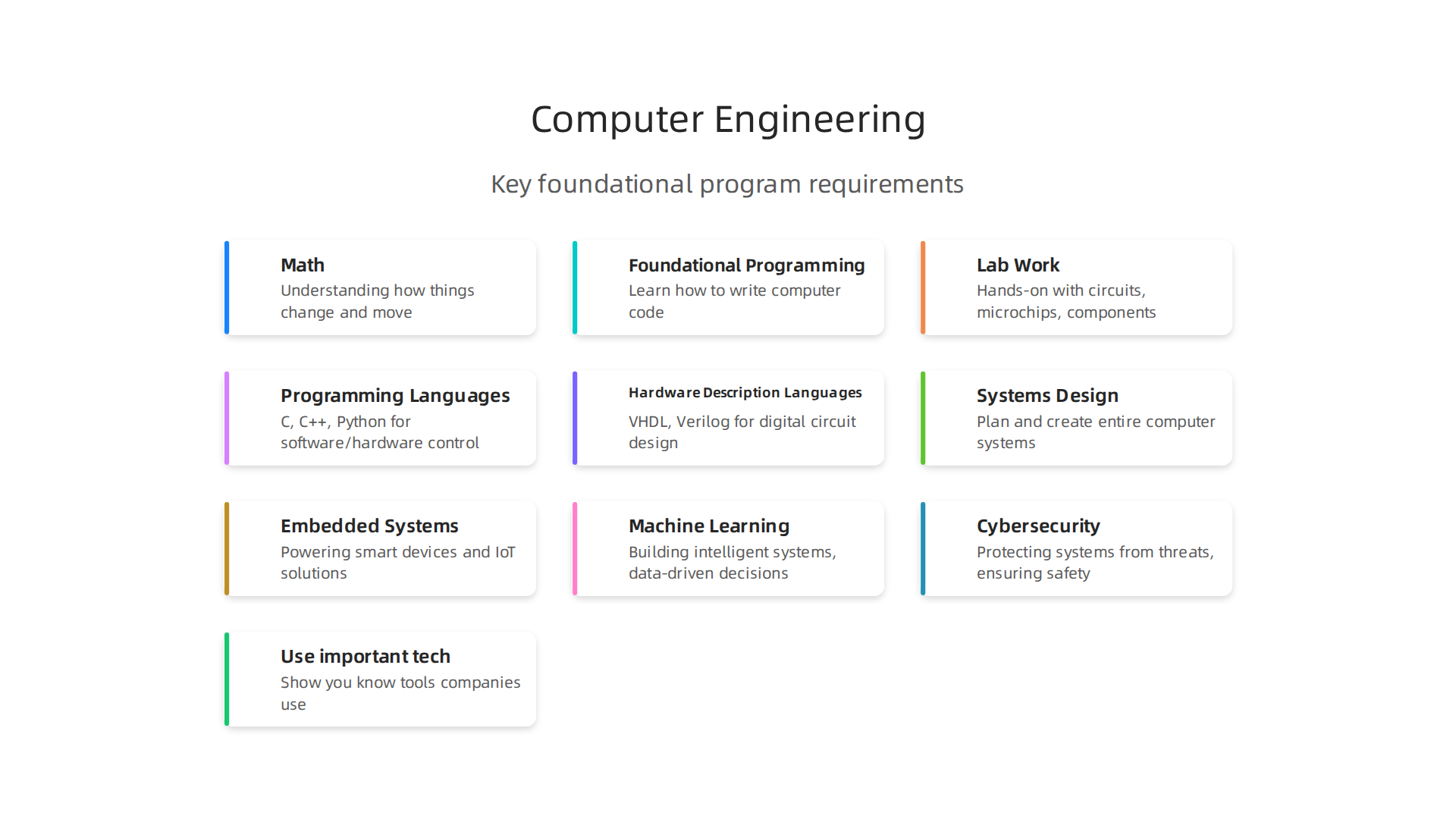
These are the core classes that prepare you for more complex subjects later on. Think of them as the strong foundation for a tall building.

First, math is super important. You’ll need to be good at subjects like calculus, which helps you understand how things change and move. Many university programs require several math courses, often including multiple levels of calculus. For example, some schools list specific math classes like MATH 160, MATH 161, and MATH 261 as part of their COMPUTER ENGINEERING MAJOR CURRICULUM GUIDE. Other programs also require strong math, like MATH 2413 or its equivalent, to succeed in computer engineering 2025-2026 Bachelor of Science in Computer Engineering – UTRGV. These math skills are not just for passing tests; they help you solve real-world engineering problems.
Next up is foundational programming. You will learn how to write computer code, which is like giving instructions to a machine. This is a common requirement whether you lean towards computer science or software engineering. Computer engineering students typically take programming courses such as CS150B or CSCI 1381 early on. These skills are critical for designing and creating the software that makes hardware work.
What really sets computer engineering apart from a pure computer science path is its focus on lab work and hardware exposure. While computer science might focus more on the ideas behind software, computer engineering dives into the physical parts of computers. You’ll spend a lot of time in labs, getting hands-on with circuits, microchips, and other components. You’ll work with real equipment, from basic computer systems with good memory to more complex setups designed for specific tasks Lab Equipment of CSE. This practical experience is often tied to courses like an Electrical and Computer Engineering Circuits Laboratory Computer Engineering, B.S. – The University of Oklahoma. It’s where you learn how to build, test, and fix the actual devices that run our digital world.
These "computer engineering requirements" ensure students gain a full picture of how hardware and software work together. For companies looking to hire in 2026, these are the valuable skills that make a computer engineer ready to tackle complex challenges. Understanding the difference between these paths can help students make a smart choice for their future and assist companies in finding the right talent. For a deeper dive into how an engineering degree can add value, consider learning about Maximizing Enterprise Value with an Engineering Technology Degree.
Core curriculum: must-have courses and technical skills employers expect
Building on the basic math and programming skills, computer engineering programs really dive deep into how computers work from the inside out. These core "computer engineering requirements" give students a strong understanding of both hardware and software. They are exactly the kinds of technical skills employers look for in 2026.
Let’s look at the key course groups:
Digital Logic and Computer Architecture
First, you’ll learn about digital logic. This is like learning the alphabet of computers. You find out how simple switches (ones and zeros) come together to make decisions and store information. These classes teach you how to design basic computer circuits.
After that comes computer architecture. This takes digital logic and shows you how to build bigger, more complex parts of a computer, like the processor and memory. You learn how these parts talk to each other to run programs. Many programs cover these topics in courses like ECE 2214, which focuses on digital design Computer Engineering, B.S. – The University of Oklahoma. The goal is to understand not just what computers do, but how they do it at a fundamental level.
Embedded Systems and Operating Systems
Next, you’ll study embedded systems. These are small computers found everywhere, like in your car, washing machine, or smart thermostat. They are designed to do very specific tasks. Computer engineers learn how to program these tiny computers and connect them to physical devices. This is a very hands-on area, often involving special lab equipment to get real-world experience 2025-2026 Bachelor of Science in Computer Engineering.
You will also explore operating systems. This is the main software that manages all the computer’s resources, like memory and the processor. It’s what allows different programs to run at the same time without crashing. Understanding operating systems is key to developing efficient and reliable software that works well with hardware.
Key Technical Skills Employers Value
Beyond these core courses, computer engineering students pick up specific technical skills that make them valuable in the job market.
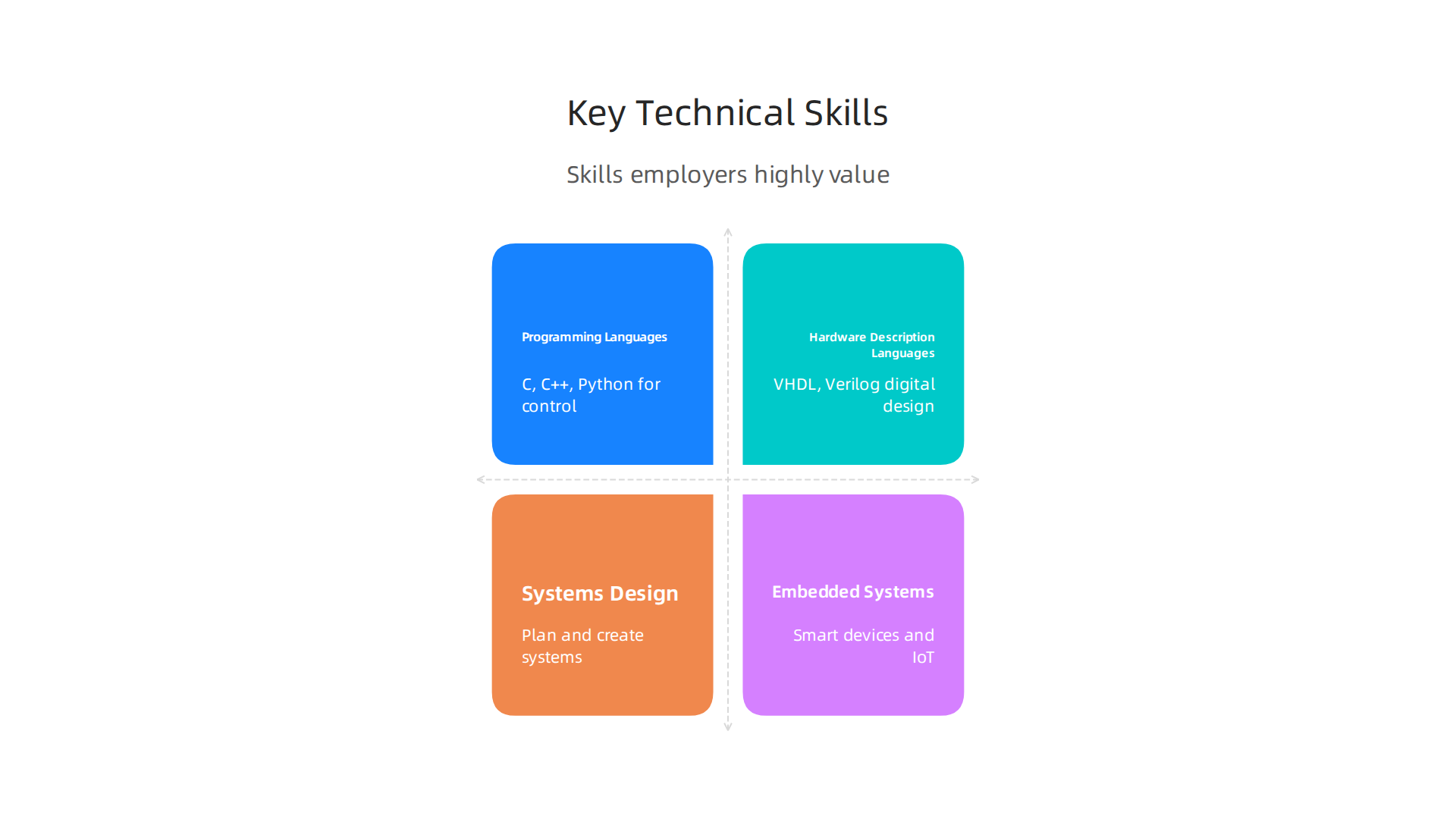
These include:
- Programming Languages: You’ll use languages like C, C++, and Python to write code for both software applications and low-level hardware control. This is different from pure
computer science or software engineeringbecause it often involves writing code that interacts directly with physical components. - Hardware Description Languages (HDLs): These are special languages, like VHDL or Verilog, used to describe and design digital circuits. If you want to design microchips or circuit boards, these languages are essential.
- Systems Design: This is the ability to plan and create entire computer systems, from the chips inside to the software they run. It means thinking about how all the parts work together to meet a goal. Companies need engineers who can not only build parts but also put the whole puzzle together.
These computer engineering requirements prepare students for many roles. For example, knowing management information systems can help you see how these technical skills fit into a larger business picture. For leaders evaluating their tech teams, understanding these core competencies is vital. If you’re an enterprise leader looking to stay updated on the latest in technology and AI, there’s a great resource that can help.
Get clear daily AI updates from The AI Newsletter Worth Reading.
The skills learned in these programs are a mix of theoretical knowledge and hands-on practice, creating well-rounded engineers ready for the challenges of 2026 and beyond. This blend is what sets computer engineers apart, making them crucial for companies developing new technologies. To learn more about the different fields within engineering and IT, explore demystifying types of engineering for computer engineering and IT careers.
While traditional university degrees lay a strong foundation for meeting specific computer engineering requirements, they aren’t the only way to gain valuable skills for tech jobs in 2026. Many people now look into other routes like bootcamps, certifications, and learning on their own. These alternative pathways can also help students get ready for enterprise roles.
Bootcamps: Fast-Paced Learning
Coding bootcamps are intense, short-term training programs. They focus on teaching specific skills very quickly. Think of them as a fast track to learning what you need for a job, often in areas like web development or data science. For example, in 2026, about 79% of people who finish coding bootcamps find jobs that use their new skills. They often get hired within six months, and many see a good jump in their pay too Bootcamp vs Degree: Which Gets You Hired?. Some employers even prefer bootcamp graduates for certain jobs, especially in smaller companies Coding Bootcamps vs. Computer Science Degrees: What Employers ….
However, bootcamps are not always seen the same way as a four-year degree. While many companies have hired bootcamp graduates, some still think these grads might be less ready for roles compared to people with degrees Why Your Coding Bootcamp Certificate Isn’t Landing You Developer Jobs.
Certifications and Self-Directed Learning
Beyond bootcamps, you can get specific certifications. These show you know certain tools or areas very well. For example, you might earn a software engineering certificate or a data analytics certification. These are great for adding specialized skills to your resume. Many online courses, often called MOOCs, let you learn at your own speed and can be cheaper than traditional school. Self-directed learning means you teach yourself using online resources, books, and projects.

How Employers Look at Alternative Credentials
Here’s the thing: most employers in 2026 care most about what you can do. They want to see practical skills and projects you’ve worked on. While a traditional degree in computer science or software engineering is often valued, it’s not the only path. A survey found that 80% of companies have hired people from coding bootcamps Most companies have hired a bootcamp grad, but more oversight is …. However, only a smaller number would hire someone based on an alternative certificate alone. They want to see results, like past projects or work experience What Hiring Managers Really Think About Alternative Credentials.
For leaders in companies, understanding how these different types of training fit into larger business goals, perhaps even through a lens of management information systems, is important. They look for problem-solvers who can bring real value to the company. Your ability to show you can solve problems is more important than where you got your training Bootcamp or Degree: Which Credential Actually Impresses Hiring Managers in Tech?. So, if you choose an alternative path, make sure you build a strong portfolio of practical work.
When thinking about a career in tech, especially fulfilling demanding computer engineering requirements for big companies, it is not just about general skills. It is also about choosing a special area of focus. Certain specializations really stand out to employers in 2026. These show you are ready for important enterprise work
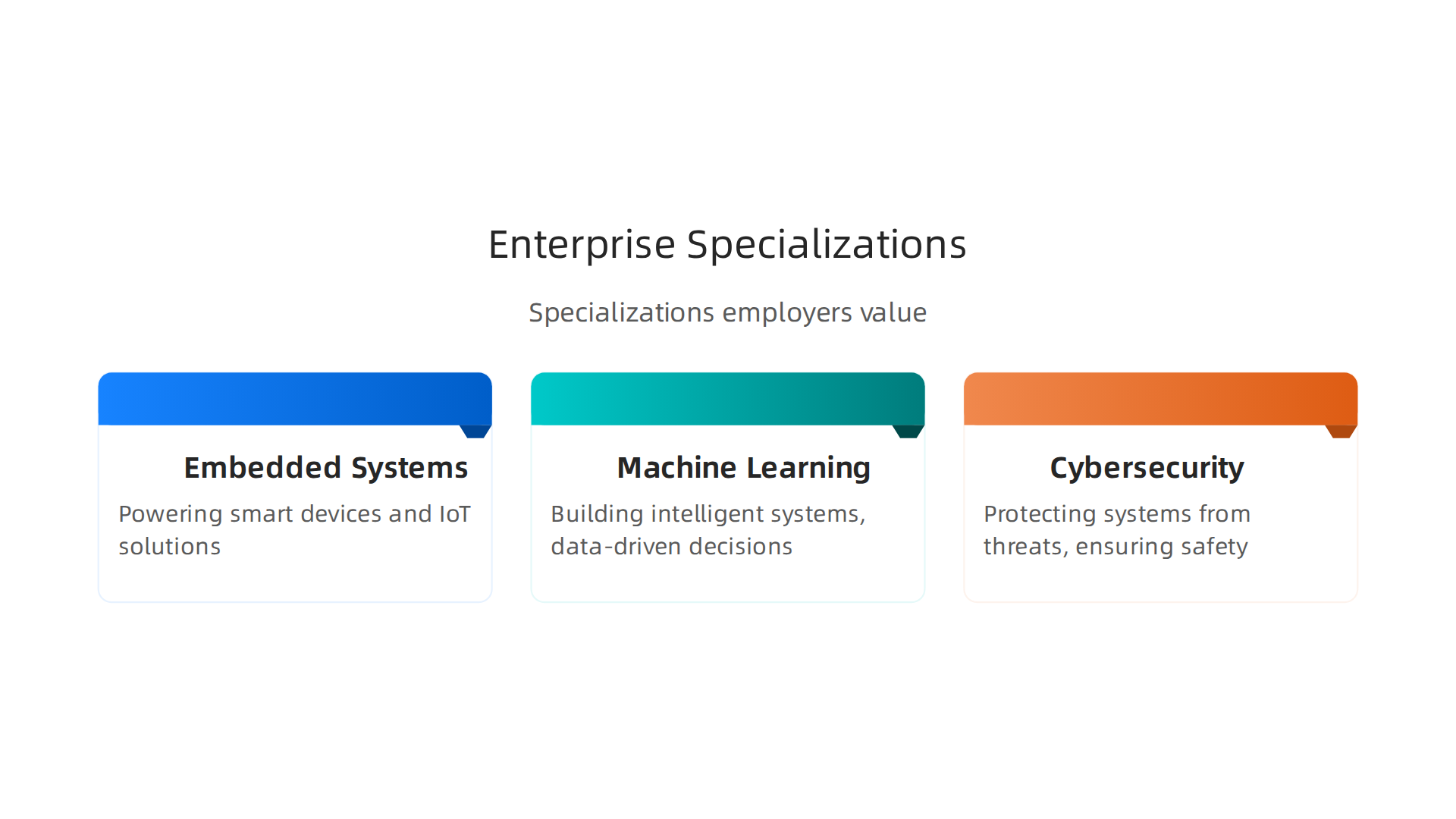
across different industries like smart devices, money, and healthcare.
Embedded Systems: Powering Smart Devices
Embedded systems are like the brains inside many of the everyday devices we use. Think of smart home gadgets, cars, medical tools, and even industrial machines. These systems need special software that talks directly to the hardware. Learning about embedded systems means you can help design and build the next generation of smart products. Companies like Amazon look for engineers who can develop software for these kinds of systems Software Development Engineer – Embedded Systems …. Being good at this can help you work in areas like the Internet of Things (IoT), making everyday objects smarter.
Machine Learning and AI: The Future of Tech
Machine learning (ML) and Artificial Intelligence (AI) are huge in 2026. These skills let computers learn from data and make smart decisions. Companies want people who can build AI tools to make things better, from how they serve customers to how they handle their data. For example, a senior machine learning engineer might work on making clever systems for businesses [Senior Machine Learning Engineer (m/f/d) @ Quantum-Systems]. The need for AI and ML skills is very high. In fact, finding people with the right AI skills is now one of the hardest tasks for hiring managers [10 skills hiring managers say they can’t find enough of – Quartz].
If you focus on this area, you might get a data analytics certification or learn about advanced computer science or software engineering for AI. This kind of focus is often key for enterprises looking to use AI to grow and solve problems. Many companies are actively hiring engineers who can combine AI and ML with embedded systems, like for new smart devices and edge computing [Engineer, Senior-AI and Machine Learning with embedded/C++].
Cybersecurity: Keeping Information Safe
In a world where almost everything is connected online, keeping information safe is super important for every business. Cybersecurity experts protect computer systems and networks from threats. While not always a core computer engineering requirement, strong knowledge here is often a big plus for any tech role, especially when dealing with critical management information systems.
How to Show Your Expertise
To stand out in these special areas, it is important to pick your projects and learning paths carefully.
- Elective Choices: During your studies, choose classes that focus on these specializations. If you are interested in IoT, take courses on embedded programming. If you love data, focus on machine learning electives.
- Project Work: Build real-world projects in your chosen field. For example, if you want to work with AI, create a small program that uses machine learning to solve a problem. This shows employers what you can actually do, which is what they care about most.
- Certifications: Getting a specific software engineering certificate in an area like cloud security or machine learning can also prove your skills.
By focusing on these valuable specializations and building a strong portfolio of relevant projects, you can better meet the specific needs of big companies and open up many job chances.
When you are ready to get a job in computer engineering, it is super important to show what you can actually do. This means having a great portfolio. A good portfolio is like a collection of your best work. It tells future bosses that you have the skills they need.
What Kinds of Projects Show You are Good
To really stand out, your projects should show that you can build things from start to finish. Think about projects where you create a whole system, not just a small part. For example, if you are learning about smart devices, you could build a small project that connects hardware and software. This shows you understand how everything works together. Companies want to see that you can solve problems in the real world.
Good projects for your portfolio should:
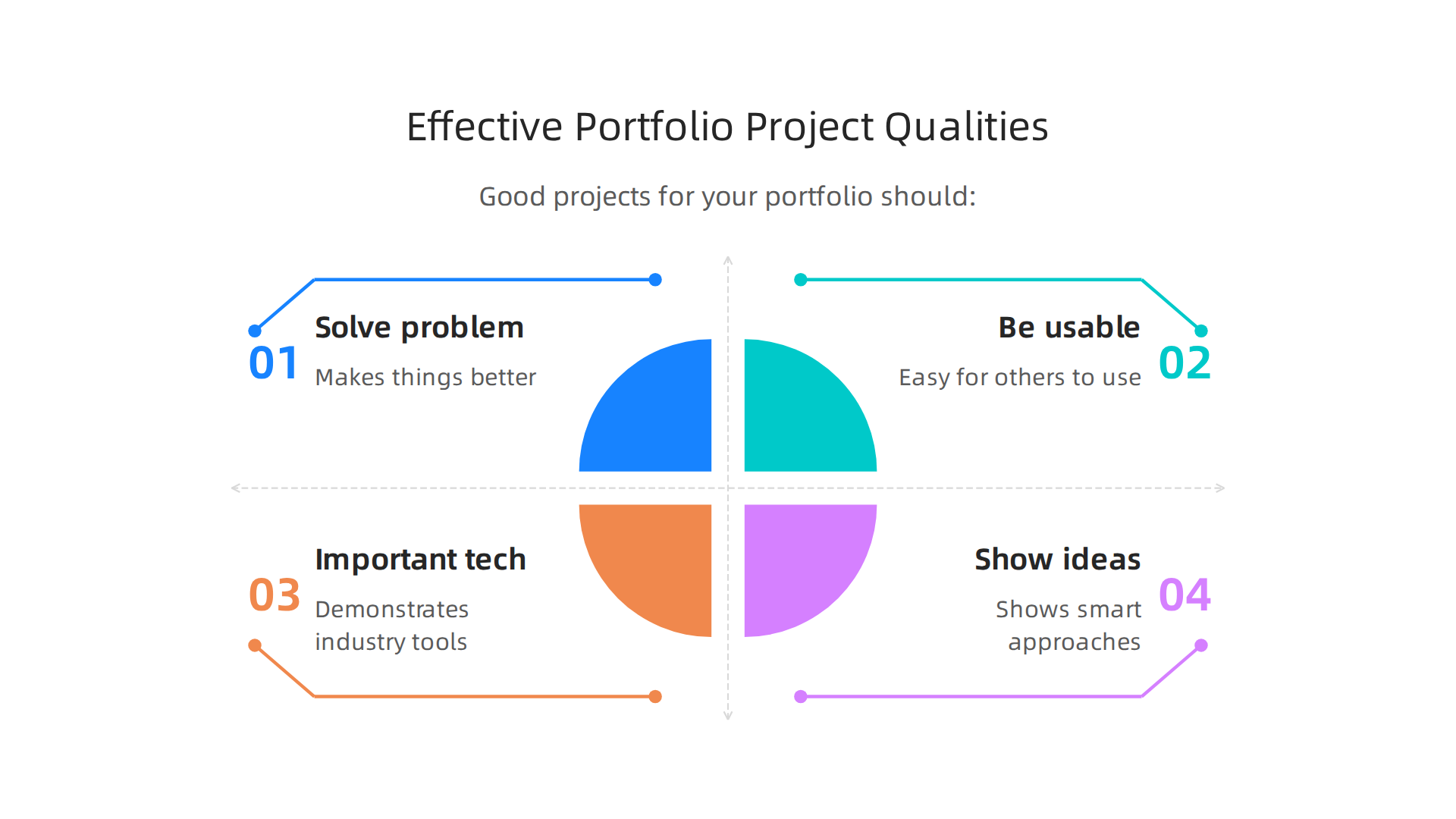
- Solve a real problem: Did you make something easier or better for someone?
- Be usable: Can someone else actually use what you built?
- Use important tech: Show you know how to use tools that companies use every day.
- Show your ideas: Did you come up with smart ways to do things?
Experts say that projects that show you can ship real software from beginning to end are very important. This might include building a web app or working with databases. These kinds of projects truly show your computer engineering requirements knowledge and your ability to deliver value. To learn more about what makes a strong portfolio, check out this guide on How to Build an Engineering Portfolio That Actually Gets You Hired.
Internships: Real-World Experience
Doing an internship is another great way to get job experience before you even finish school. Internships let you work at a real company and see how things are done.

They help you learn new skills and meet people who might help you get a job later.
Many companies like to hire their interns full-time. In fact, for the 2024-2025 interns, the number who turned their internship into a full-time job was very high, setting a new record in five years Intern Conversion Rate Hits Highest Mark in Five Years. This means that doing a good job as an intern can often lead directly to a job offer. It’s a fantastic way to meet the practical computer engineering requirements that employers look for.
Show What You Achieved
When you talk about your projects and internships, do not just list what you did. Also, talk about what happened because of your work. These are called measurable outcomes. For example, did you make a process faster? Did you help save money? Did you create something that made customers happier?
Instead of saying "I built a new database," you could say "I built a new database that made the system 20% faster, helping our management information systems team respond quicker to customer needs." This shows you understand how your computer science or software engineering skills help the business. You can show that you are not just good at tech, but also at making a real difference. For more insights on developing your skills, consider exploring a career path for a Software Infrastructure Engineer Role Key Skills and Future Trends 2026.
We just talked about what job seekers need to do to show their skills. Now, let’s look at how companies can find these talented people and help them grow. In 2026, many businesses are finding it hard to hire enough skilled tech workers. This problem is often called a talent gap. Sometimes, companies make their computer engineering requirements too strict, which can make it even harder to find good people.
For a long time, many tech jobs always asked for a four-year college degree. But this is changing fast. In November 2025, many job postings did not even ask for a bachelor’s degree The College Degree Is Losing Its Monopoly On Tech Talent. Today, almost 70% of companies look more at a person’s skills and what they can do, rather than just their degree 67 Hiring Statistics for 2026 | National University. This means that getting a software engineering certificate or data analytics certification can be very helpful for getting a job. Companies that focus on real skills and past work can find more talented people, helping to close the talent gap.
To attract the best people, companies should offer more than just a job. Fair pay is very important, but training and special programs for new workers are also key. For instance, apprenticeships are a great way for companies to train new workers directly on the job. This helps people learn practical skills and can lead to more fair hiring outcomes for everyone Disrupting the Tech Industry Through Apprenticeships – Urban Institute.
This kind of support is especially needed for advanced skills like AI and Machine Learning. Many companies are still finding it hard to hire enough people with these skills. In 2026, jobs for AI and Machine Learning engineers had a big shortage of workers 2026 State of Tech Talent Report – Linux Foundation. By offering training and clear career paths, companies can build strong teams for the future. This applies whether they are looking for experts in computer science or software engineering or those with skills in management information systems. Companies that invest in programs to recruit and retain top talent with a software engineer fellowship will be more successful in the long run.
Learning about new AI trends is important for everyone in tech. Get clear daily AI updates from The AI Newsletter Worth Reading.
To keep up with how quickly technology changes, what we learn in school must also change. For example, the old computer engineering requirements are getting new updates to include things like AI and cloud technology. In 2026, it’s not enough to just know how to code. You also need to understand how different parts of a system work together.
The biggest changes are happening because of artificial intelligence (AI), cloud systems, and how software and hardware work together. Companies now look for people who can handle these complex areas. For instance, many jobs for machine learning engineers now ask for strong skills in cloud platforms like AWS, GCP, or Azure, and how to use tools like Docker and Kubernetes Senior Machine Learning Engineer (m/f/d) @ Quantum-Systems. Others need engineers who can work with AI in tiny, embedded devices, meaning they build software that works directly on the hardware Embedded AI/ML Developer – Careers at HP. These jobs are looking for people skilled in both computer science or software engineering and also in managing complex systems.
Because of these new needs, colleges and training programs are also changing what they teach. Many universities are now offering special degrees or courses focused on AI and future technologies, blending traditional computer science with skills in cloud computing and cyber security B.E. in CSE – AI & Future Technologies | Chitkara University 2026. Some universities have even started bachelor’s degrees purely in AI this year Qatar University BSc in AI Begins in Fall 2026. This means that a software engineering certificate or a data analytics certification should cover these new areas too.
It’s also really important to learn skills that help you think clearly and solve problems, no matter the specific technology. These are called transferable skills. They include:
- Systems Thinking: This means understanding how all parts of a computer system or project fit together, not just one small piece.
- Debugging: Learning how to find and fix errors in code or systems. This is a key part of any
computer engineering requirements. - Cross-Disciplinary Collaboration: Being able to work well with people from different teams or with different kinds of knowledge. This is especially true for roles in
management information systemswhere you work with both tech and business teams.
By teaching these skills, programs can prepare people for many different tech jobs, not just the ones popular today. This helps students to stay useful in the job market for a long time. Knowing the differences between different types of engineering can also help students choose the right path for them, whether it’s software or hardware focused Demystifying Types of Engineering for Computer Engineering and IT Careers. Investing in understanding the big picture, like how cloud systems affect everything, is also a smart move Cloud Engineer Career and Hiring Guide for 2026.
Summary
This article explains what "computer engineering requirements" mean for students, universities, and employers and why understanding them matters for careers and hiring in 2026. It outlines the common academic prerequisites—strong math, foundational programming, and hands-on lab work—that set computer engineering apart from pure software degrees, and it details core coursework such as digital logic, computer architecture, embedded systems, and operating systems. The piece covers the technical skills employers value, including C/C++, Python, HDLs, systems design, and emerging needs in AI, cloud, and cybersecurity. It compares traditional degrees with bootcamps, certifications, and self-directed learning, and explains how firms assess alternative credentials by focusing on demonstrable skills and portfolios. The article also recommends ways students can stand out—via specialization choices, end-to-end projects, internships, and measurable outcomes—and advises employers on flexible hiring, training programs, and apprenticeships to close talent gaps. Finally, it highlights how curricula must adapt to include AI, cloud, and transferable systems-thinking skills to keep graduates relevant.