Master Modern Agile Software Development Project Management for Enterprise Success 2026

Why modern agile software development project management matters now
The world of software changes very quickly. In 2026, businesses everywhere feel this fast pace. New ideas and technologies pop up all the time, making it hard for companies to keep up. It’s like trying to hit a moving target, which can make things tough for big businesses.

One big challenge is choosing the right tools and companies to work with. There are so many software options and partners out there. It can feel overwhelming trying to pick the best ones that truly help a business grow. This mix of many choices adds a layer of difficulty to making smart decisions.
Another tough spot is finding enough skilled people to build and manage all this software. There’s a real need for talented individuals who understand how to create new programs and keep them running well. This "talent gap" means companies sometimes struggle to find the right team members. To handle these issues, a fresh look at how we manage software projects is needed. This is where modern agile software development project management becomes so important. It helps companies be flexible and quick to change. Agile ways of working also improve how leaders oversee projects without slowing teams down, promoting a balance between freedom and control How Leadership, Oversight, and Decision-Making Work in Agile ….
This article will give you a clear plan. We will show you how to look at the practices, tools, and ways your team works to make things better. You will learn how to choose the best product management software, understand important numbers, and make smart changes in your company. All this helps your business deliver great software faster and more smoothly.
Staying informed about these fast changes is crucial for leaders.
The AI Newsletter Worth Reading delivers clear, daily AI updates to help you keep pace with technology trends.
Defining modern agile for enterprise-scale projects
When we talk about agile software development project management in big companies, it’s a bit different than for small teams. For larger businesses, "agile" isn’t just about quick coding. It’s about how the whole company makes decisions, oversees work, and delivers value faster. It means focusing on results and business goals, not just finishing tasks.
Think of it this way: for a small team, agile might mean daily stand-up meetings and short work cycles. For a large enterprise in 2026, it means setting up a smart system called agile governance. This system guides many teams at once, making sure everyone is working towards the same big goals.

Good agile governance helps teams stay free enough to innovate, but also keeps things aligned with the company’s main strategy Agile Governance in the Real World: Balancing Autonomy, Regulation, and Learning in Complex Systems. It sets clear boundaries or "guardrails" that let teams make their own choices within safe limits, rather than needing approval for every small step Approvals to Guardrails: Enterprise Agility.
Here are some key things big companies do to make modern agile work:
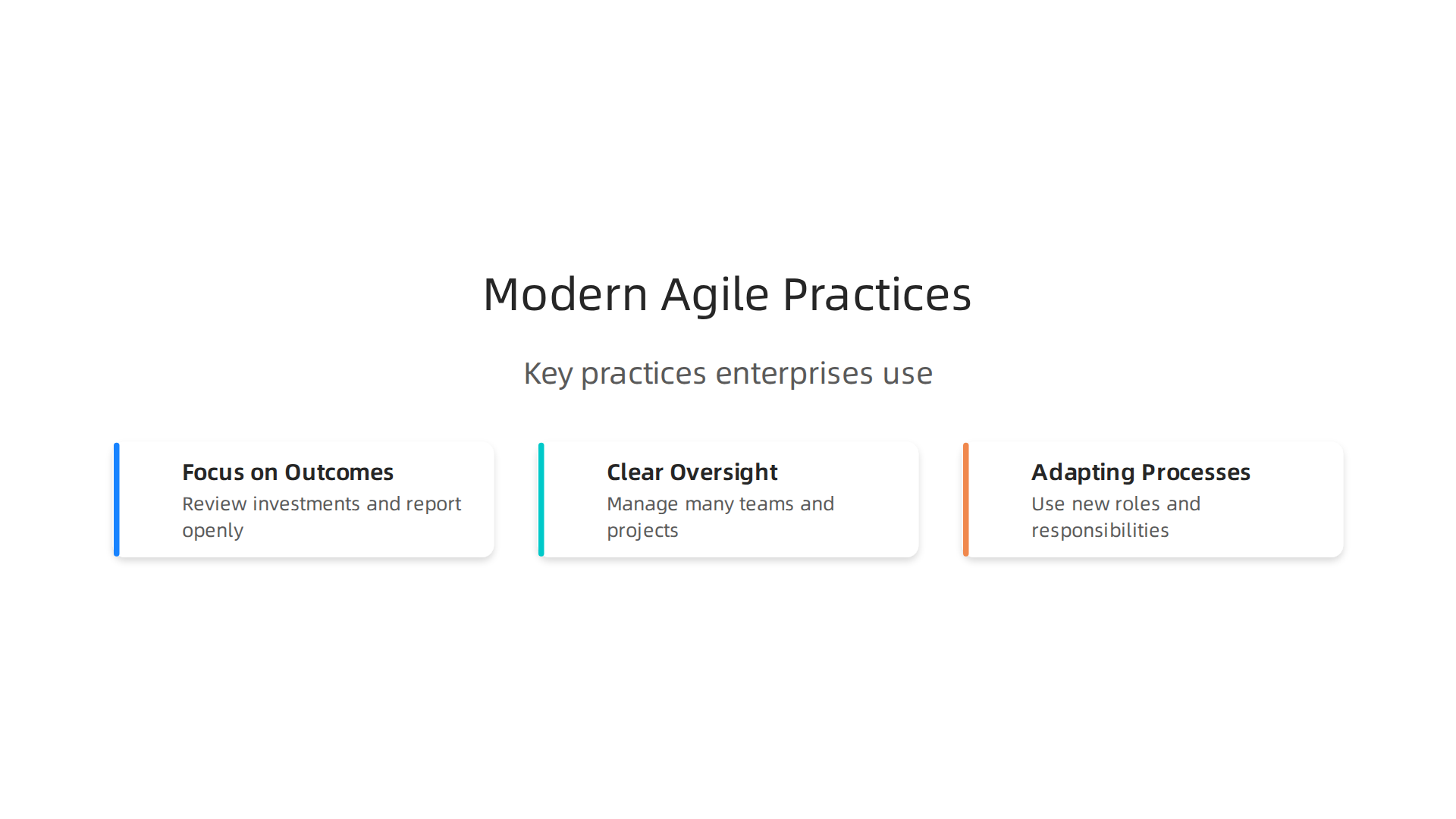
- Focus on Outcomes: Instead of just checking if a project is on time, big companies use agile to make sure the project actually helps the business. This means continuously reviewing investments and reporting openly on progress Agile Governance: Framework, Principles and Metrics.
- Clear Oversight: Leaders need to see how all the different projects fit together. This is called portfolio oversight. Systems like SAFe (Scaled Agile Framework) are often used to help manage many teams and projects at once, with special roles for leaders to provide guidance How does SAFe Handle Governance?. This approach helps with things like budget control and making sure everyone knows what is happening Balancing Governance and Autonomy in SAFe.
- Adapting Processes: Companies change how their teams work. They use different ways to plan, build, and check software. This
agile methodology for software developmentoften involves new roles and responsibilities to keep everything moving smoothly. For example, a Product Owner ensures the team builds the right things for customers, while a Scrum Master helps the team work together well Key SAFe® Roles Explained – And How Agile Hive Helps You ….
These practices are crucial for managing the entire development life cycle software within a large organization, ensuring adaptability and consistent delivery across many different projects. If you’re looking to speed up your software delivery processes, learning how to accelerate enterprise software delivery with agile SDLC can be a great next step.
For big companies to truly make agile software development project management work, it means more than just having agile teams. It requires changing how roles are set up, how the whole system is guided (governance), and how meetings are run (ceremonies). These things must scale up to handle many teams and projects all at once.
New Roles for Bigger Agile
When agile methodology for software development grows from a few teams to a whole company, new roles appear. While core roles like Product Owners and Scrum Masters still help individual teams, other roles are needed to keep the bigger picture clear.
For example:
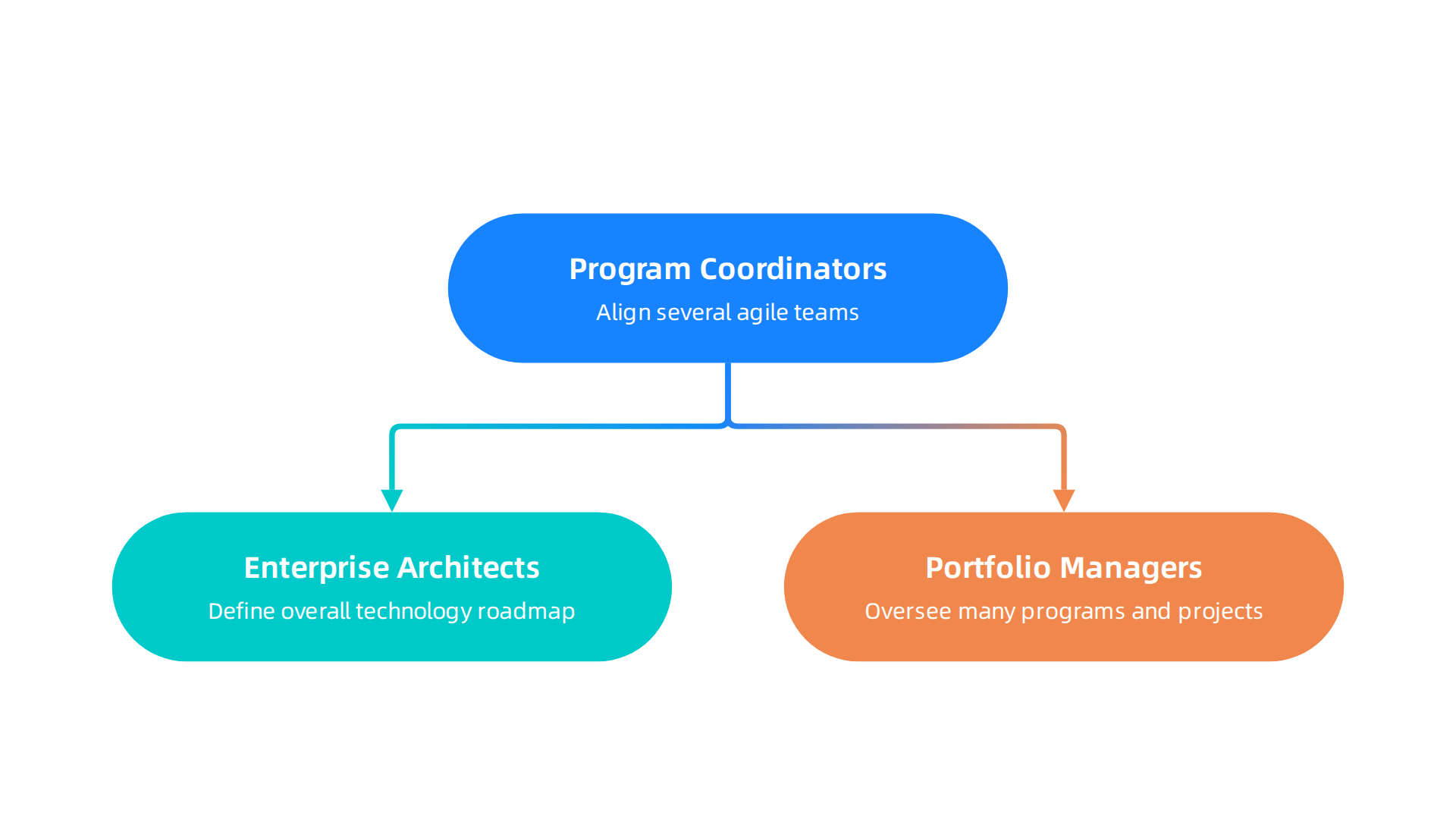
- Program-Level Coordinators: These people help align several agile teams that work on related parts of a bigger product. They make sure everyone understands the main goals and removes blocks that might slow down multiple teams. Roles like a Release Train Engineer (RTE) in SAFe help with this, ensuring big groups of teams called "Agile Release Trains" (ARTs) stay on track.
- Enterprise Architects: These experts look at the overall technology plan for the company. They make sure that what teams build fits into the company’s long-term technology vision and strategy Extended Guidance – Enterprise Architect.
- Portfolio Managers: At the highest level, portfolio managers oversee many programs and projects. They make choices about where to put money and resources to meet the company’s biggest business goals SAFe Portfolio Management for Enterprise Teams. This kind of oversight is key for budget control and for making sure all work adds real value.
These new roles, along with skilled people who can fill them, are vital. In 2026, many companies are focusing on upskilling their current staff to meet these needs, recognizing the importance of skills like adaptive leadership and data-informed decision-making Skills, Tools and Services Research Survey Report 2026. To learn more about the different roles and skills needed in a growing tech environment, check out our guide on key software development engineering roles and skills in 2026.
Governance That Guides, Not Controls
For large companies, agile governance doesn’t mean more rules. Instead, it means creating clear boundaries or "guardrails" that help teams make decisions quickly while still moving toward the company’s main goals. It’s about having enough oversight to be effective without stopping teams from being flexible How Leadership, Oversight, and Decision-Making Work in Agile Projects. This approach helps balance giving teams freedom with keeping them aligned with the business strategy.
This scaled governance ensures that teams have the freedom to innovate within a safe space. It focuses on how work affects the overall business, making sure that investment and budget decisions are open and reviewed often. This allows companies to respond quickly to changes in the market, making the development life cycle software more adaptive.
Ceremonies That Sync Everyone
In a small agile team, daily stand-up meetings and short review sessions are common. But when you have many teams, these meetings need to evolve to keep everyone connected and synchronized.
- Program Increment (PI) Planning: This is a big, important event where many teams come together for a few days to plan their work for the next few months. It helps hundreds of people get on the same page, set shared goals, and figure out how their work fits together.
- Scrum of Scrums or Solution Train Syncs: These are regular meetings where representatives from different teams (like Scrum Masters or Product Owners) meet to talk about progress, share challenges, and make sure their work stays aligned. They help identify risks and fix problems that affect multiple teams.
These scaled ceremonies create a steady rhythm for development, called a "cadence," and make sure all parts of the product management software and solutions are moving in the same direction. By using these practices, large enterprises can get the speed and flexibility of agile while keeping everything organized and focused on big business results. For a deeper understanding of how these scaled practices improve the way software is built and managed, consider exploring mastering software development agile for enterprise leaders in 2026.
After getting all the right roles, rules, and meetings in place for large-scale agile, the next big question is: How do we know if it’s actually working? It’s not enough to just do agile; you need to know if it’s truly helping the company.

This is where smart ways of measuring success come in.
Measuring Success: KPIs, Outcomes, and Benchmarks
To really see the benefits of agile software development project management, companies need to look at more than just how busy their teams are. Instead, they should focus on Key Performance Indicators (KPIs) that show real results.
Focusing on Outcomes, Not Just Activities
Think of it this way: instead of counting how many times a team met, it’s better to see what good came out of those meetings. Outcome-focused KPIs look at the impact on customers and the business.
They tell us about the agile methodology for software development‘s actual effect. For example:
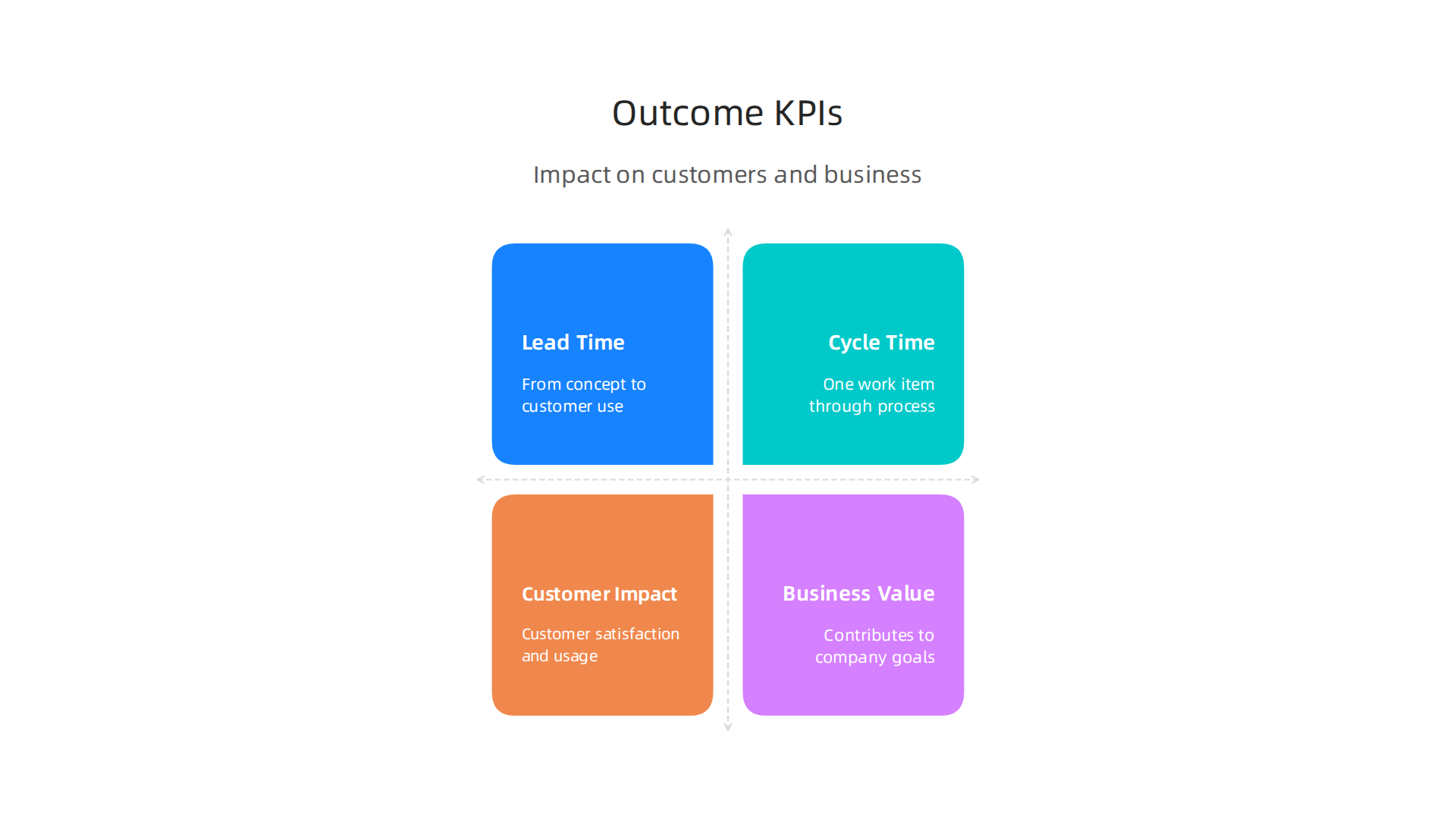
- Lead Time: How quickly a new idea or feature goes from concept to being used by customers. Shorter lead times mean faster delivery of value.
- Cycle Time: How fast one piece of work moves through the development process. Improving this can show how efficient the
development life cycle softwareis. - Customer Impact: This looks at how happy customers are with the new features or how much they use them. A high level of user satisfaction is a key measure of success Agile Metrics v1.2 20201101 SUBMISSION FOR FINAL.docx.
- Business Value: How much new software adds to the company’s goals, like making more money or saving costs. Agile can have a big, positive impact on a company’s performance The organisational impact of agility: a systematic literature ….
These types of metrics are different from "activity metrics," which just count things like the number of tasks completed or lines of code written. While those can tell you about effort, they don’t always show if that effort is leading to good results. True enterprise agility measures things like "speed to market" and "lead time to value" Enterprise Agility Metrics.
Benchmarking and Setting Goals
Once you know what to measure, it’s helpful to compare your results. This is called benchmarking. You can compare your team’s performance to:
- Other teams inside your company.
- Industry standards or how other companies are doing.
- Your own past performance to see if you are improving.
Benchmarking helps set targets that are real and can be reached. For big company changes, like improving product management software or making a full agile methodology for software development shift, it helps leaders understand what’s possible and how much progress has been made. It’s about setting clear goals and Key Performance Indicators (KPIs) in large-scale agile development Goals and KPIs in Large-scale Agile Development.
By focusing on these clear, outcome-driven measurements, companies can truly understand the value of their agile software development project management efforts. This helps them keep getting better, delivering more value to customers, and staying ahead in 2026. To learn more about how agile speeds up software creation, check out our guide on how to accelerate enterprise software delivery with agile SDLC.
After understanding how to measure agile success, the next step is to make sure teams have the right tools to actually build and deliver software quickly and reliably. This means having a modern set of tools that work well together, helping with everything from planning new features to putting them into customers’ hands. These tools are key to successful agile software development project management.
Tooling, CI/CD, and workflow integration for reliable delivery
For big companies using agile methodology for software development, tools are like the gears in a well-oiled machine. They help teams create, test, and release software faster and more often. Without the right tools and ways for them to connect, even the best agile plans can slow down.
The Modern Tool Chain
Today, the software building process relies on several types of tools:
- Planning Tools: These tools help teams organize tasks, track progress, and plan their work. They are often used to manage backlogs and sprints, which are core parts of agile work. Think of them as the central hub for team coordination.
- Continuous Integration/Continuous Delivery (CI/CD) Tools: This is a big one. CI/CD means using automated systems to build, test, and prepare software for release.
- Continuous Integration (CI) ensures that new code changes from different developers are regularly merged and tested. This helps catch problems early. In 2026, fast CI builds, often under 10 minutes, are a key practice for quick feedback and fixing issues quickly CI/CD Pipeline Best Practices 2026: GitHub Actions, Jenkins ….
- Continuous Delivery (CD) then automatically gets the tested software ready to be deployed. Some companies even use Continuous Deployment, where software goes straight to users after passing all tests. Setting up a strong CI/CD pipeline helps deliver new features faster and more reliably What Is CI/CD? Complete 2026 Guide. Best practices for 2026 emphasize speed, security, and stability in these pipelines CI/CD Pipeline Best Practices for 2026: Architecting for Speed and ….
- Observability Tools: After software is released, these tools help teams watch how it’s performing. They collect logs, monitor system health, and track how users interact with the
product management software. This helps teams find and fix issues quickly, ensuring the software stays reliable.
All these tools must integrate seamlessly. This means they should be able to "talk" to each other and share information easily. Good integration reduces manual steps and mistakes, making the entire development life cycle software process smoother. To learn more about how different tools connect, you can check out our guide on mastering IT management platform selection for enterprise leaders.
Choosing the Right Tools at Scale
When picking tools for a large company, it’s not just about what a tool can do. You also need to think about how it fits into the bigger picture. Here are some key things to consider:
- Interoperability: Can the tool easily connect and share data with your other existing tools? Tools that work well together reduce friction and improve workflow efficiency.
- Security and Compliance: Does the tool meet your company’s security rules and any industry standards you must follow? This is super important for protecting sensitive information and avoiding problems. You should look for tools that automatically create audit records to show compliance How to Evaluate Software Delivery Tools in 2026.
- Vendor Viability: Is the company that makes the tool stable and reliable? You want to pick tools from companies that will be around for a long time and keep improving their products.
- Scalability and Cost: Can the tool handle a lot of users and data as your company grows? Also, does the cost fit your budget, not just now but in the future?
- Ease of Use: Is the tool easy for your teams to learn and use every day? Tools that are too complicated can slow things down.
By carefully selecting and integrating the right tools, companies can build a strong foundation for their agile software development project management efforts. This allows them to deliver great software more often and stay competitive in 2026. For more in-depth insights into the latest tech trends shaping enterprise decisions, we recommend staying informed with reliable sources.
Get clear daily AI updates from The AI Newsletter Worth Reading.
Even with the best tools and latest insights, a company’s ability to move fast truly depends on its people. Building and keeping teams with the right skills for modern agile software development project management is a big challenge in 2026. Many businesses feel a growing gap in skills, making it tough to finish important projects. In fact, a 2026 survey found that only a small number of organizations, about 6%, have all the talent they need to complete priority projects successfully Survey: Only 6% of organizations have the talent they need to complete priority projects.
Addressing the talent gap: hiring, upskilling, and team models
Finding people with skills like data-informed decision making, adaptive leadership, and managing change is crucial for companies using agile methodology for software development. These are often the biggest skill gaps reported by businesses Skills, Tools and Services Research Survey Report 2026. So, how do businesses make sure they have the right people to use their advanced tools and deliver software quickly?
Smart Ways to Build Teams
Companies are using several smart approaches to deal with the talent shortage:
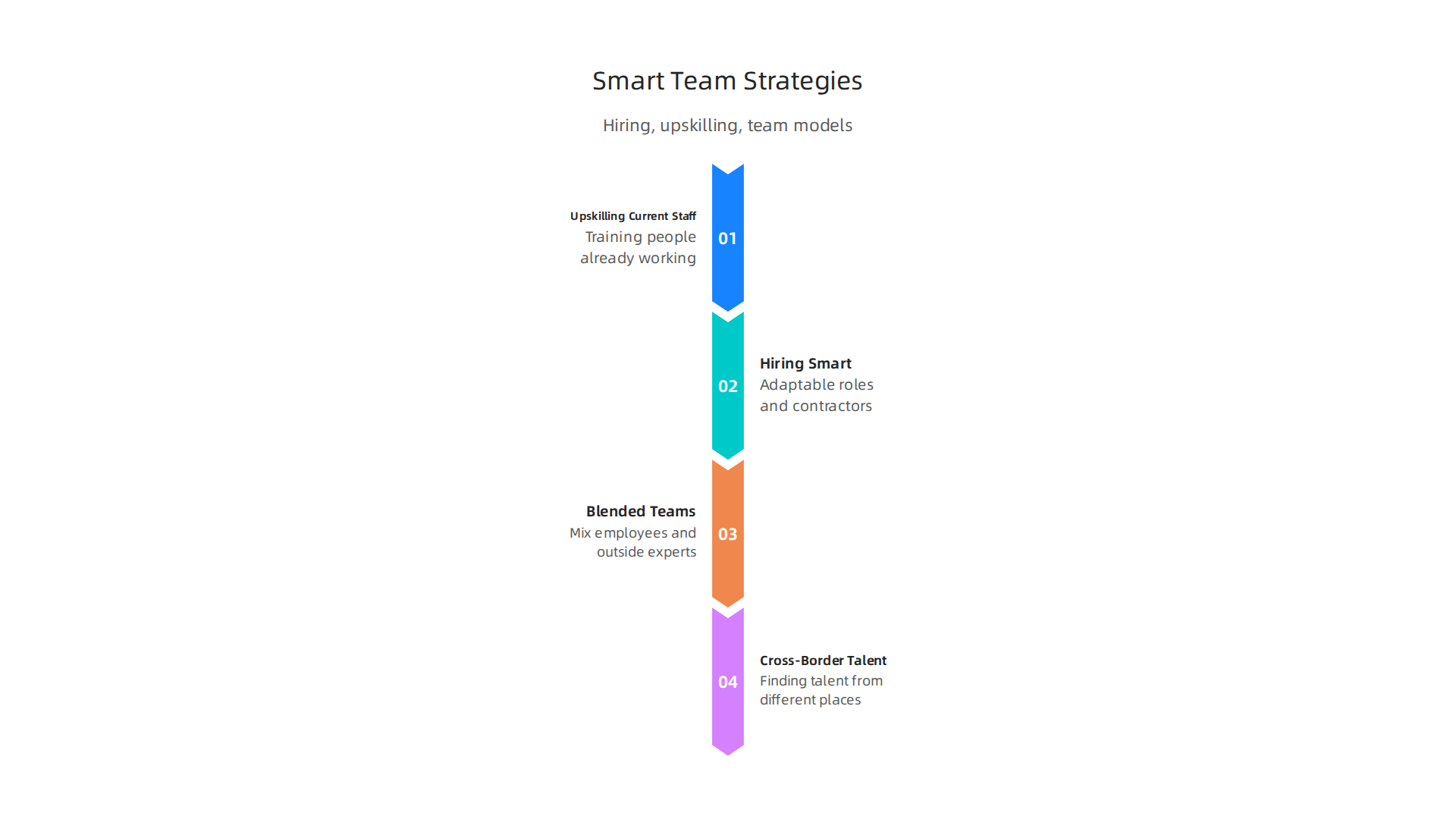
- Upskilling Current Staff: This is often the best plan. Training people already working for the company helps them learn new skills,

like those needed for product management software and the modern development life cycle software. This way, companies keep valuable knowledge they already have and build stronger teams. About 94% of organizations see upskilling as an important way to close talent gaps, especially when compared to just hiring new people 2026 State of Tech Talent Report. You can learn more about growing your internal talent through our guide on IT talent 2026 building your engineering workforce from within.
- Hiring Smart: When hiring, companies look for people who can adapt and learn. They also focus on finding specific roles to help with new areas like AI, bringing in skilled contract workers when needed Strengthening the tech and IT skills bench to deliver on 2026.
- Blended Teams and Partnerships: Some companies use a mix of their own employees and outside experts, like freelancers or consultants. This lets them bring in special skills quickly without having to hire someone full-time. Also, forming partnerships with other companies or consulting firms can help get the expert support needed for complex projects.
- Cross-Border Talent: Many leaders agree that finding talent from different places and across borders is very important for being flexible in today’s world A new age of talent agility.
By focusing on training existing staff, carefully hiring new talent, and using a mix of team models, companies can build the strong and flexible workforce they need to succeed with agile software development project management in 2026. This helps them not only keep up but also lead the way in software innovation.
While having the right people is a big part of using agile methodology for software development well, making agile work across a whole company needs more than just skilled teams. It needs big changes in how a company is run, how money is given to projects (funding), and how leaders are involved.
For agile software development project management to truly grow, leaders must actively support it. Their belief and guidance help everyone adopt new ways of working. This leads to better project outcomes and happier customers. Research confirms that strong agile leadership improves how well an organization performs The effectiveness of agile leadership in practice.
Funding and Portfolio Management
Old ways of funding projects often do not fit with agile methodology for software development. Instead of funding long, fixed projects, companies need to shift to funding smaller, value-driven efforts. This means changing how project money is handled, often through "portfolio management" that focuses on results, not just tasks. New models look at things like how quickly new features reach customers and the overall value they bring. This helps measure things like speed to market and lead time to value Enterprise Agility Metrics.
Managing Change and Adoption
Changing how a whole company works is tough. People naturally resist new things, especially when it means learning new skills or changing daily habits for using product management software or new development life cycle software. To make the switch to agile software development project management smoother, companies need clear plans. These plans involve open talks about why changes are needed, showing how new ways help everyone, and offering lots of training. It is about helping people understand the "why" behind agile and giving them the tools and support to succeed. To learn more about leading this shift, explore our guide on Mastering Agile Software Development for Enterprise Technology Leaders.
When done right, using agile methodology for software development across a company can greatly improve how fast it delivers value and how happy customers are. Studies show that agile practices have a big positive effect on how well organizations do The organisational impact of agility: a systematic literature. This helps businesses keep up with the fast pace of change and stay ahead in 2026.
If you want to stay on top of all the latest changes in AI and technology, make sure you get the latest insights delivered straight to you daily. The AI Newsletter Worth Reading is a great way to do that.
For agile software development project management to truly succeed across a whole company, we must also think about keeping things safe and following rules. In the past, security checks and rules often happened at the very end of a project. This made things slow down a lot. But with agile methodology for software development, we need to change that.
Security and Compliance in Agile
Instead of being a final step, security and following rules should be part of every small step in agile software development project management. Think of it like building a house. You would not wait until the house is finished to check if the walls are strong or if the electrical work is safe. You check these things as you go. The same is true for software.
This means putting security checks and compliance reviews into the daily work of agile teams. It means doing things like:
- Thinking about dangers and how to stop them from the very start of a project.
- Doing small, quick security tests often, not just one big test at the end.
- Making sure the tools we use for
development life cycle softwarehelp us follow rules easily. - Always looking at new threats and changing our plans to match them.
Actually, many experts agree that we need to bake security right into how we develop software. It means making cybersecurity risk checks a key part of agile work. This helps avoid big problems later on and makes sure products are safe for everyone. You can read more about this in a paper on Integrating Cybersecurity Risk Assessment into Agile Project Management and Technical Sales Pipelines. Companies in 2026 are finding that shifting how they handle security, governance, and risk leads to better results, moving beyond just meeting basic rules to building strong capabilities, as explored by The expanding role of security, governance and risk.
Choosing the Right Tools and Partners
When using product management software or other tools, or when working with outside companies, it is super important to pick wisely. You need to make sure these partners and tools will not add new risks. Here’s how to think about it:
- Look at their security: Do they have strong security measures themselves? How do they protect your information?
- Check their history: Have they had security problems before? How did they fix them?
- Understand their rules: Do they follow the same rules and standards your company does?
- Plan for the long run: Will this tool or partner still be good for your needs in a few years? It is a bit like choosing a good house builder; you want one who will do a good job now and whose work will last.
Choosing the right partners is a big decision for any enterprise, especially when it comes to technology. If you are looking for advice on finding reliable outside help, our guide on how to choose the right engineering or IT consulting firm partner can provide helpful tips.
To keep up with the fast-changing world of technology and make smart decisions for your business, staying informed is key. The landscape of enterprise technology, including AI, is always shifting. If you want to stay on top of all the latest changes in AI and technology, make sure you get the latest insights delivered straight to you daily. The AI Newsletter Worth Reading is a great way to do that.
Summary
Modern agile software development project management for enterprises reframes agile from team-level practices to company-wide systems that deliver measurable business outcomes. This article explains how scaled agile requires governance that guides rather than controls, new roles (like program coordinators and enterprise architects), and evolved ceremonies such as PI planning to align many teams. It covers how to measure success with outcome-focused KPIs (lead time, cycle time, customer impact), choose and integrate tooling (planning, CI/CD, observability), and select secure, scalable vendors. The piece also addresses the talent gap—hiring, upskilling, and blended team models—plus funding, change management, and baking security into each sprint. Readers will learn practical changes to governance, roles, metrics, tools, and people strategies to accelerate enterprise software delivery and keep pace with 2026 technology demands.