Drive Enterprise Growth with Cloud-Based Business Applications in 2026

Why cloud-based business applications and marketplaces matter in 2026
In 2026, the world of business is changing faster than ever. A big reason for this change is the move to cloud-based business applications. These are like software programs that live on the internet, not on your computer or in your own office building. More and more companies are using these tools because they help businesses work smarter and grow quicker. It’s clear that cloud technology is not just a trend; it’s how modern businesses run.
The numbers show just how important these tools are. Experts say the market for cloud business software is expected to reach a huge $1.3 trillion by 2027, growing quickly each year from 2022 to 2027. Also, many small and medium-sized businesses with more than ten employees plan to spend more on cloud-delivered business applications in the next year [^1, ^2]. This move helps businesses of all sizes be more flexible and handle their work better.
For leaders in big companies, the main job is to pick the right solutions.

They need tools that are fast and easy to change, keep information safe, and don’t cost too much. This is a big challenge because there are so many options out there. This is where online stores, like the AWS Marketplace and Google Cloud Marketplace, come in handy. These marketplaces make it easier to find and buy the many cloud based business applications a company might need. Choosing the right ones can truly help a business succeed in today’s fast world.
Staying updated with the latest in cloud technology and AI can be tough.
The AI Newsletter Worth Reading
Get clear daily AI updates from The Deep View Newsletter
If you’re wondering how to pick the best tools for your company, learning about how to choose cloud-based productivity tools can be a great next step [^3]. It’s all about making smart choices to help your business thrive.
[^1]: Cloud Business Software Industry Statistics | 2026 Edition
[^2]: SME cloud-based business applications usage: 1Q 2025 survey
[^3]: Cloud-based productivity tools how to evaluate and select the best tools for your enterprise in 2026# Why cloud-based business applications and marketplaces matter in 2026
In 2026, the world of business is changing faster than ever. A big reason for this change is the move to cloud-based business applications. These are like software programs that live on the internet, not on your computer or in your own office building. More and more companies are using these tools because they help businesses work smarter and grow quicker. It’s clear that cloud technology is not just a trend; it’s how modern businesses run.
The numbers show just how important these tools are. Experts say the market for cloud business software is expected to reach a huge $1.3 trillion by 2027, growing quickly each year from 2022 to 2027 [^1]. Also, many small and medium-sized businesses with more than ten employees plan to spend more on cloud-delivered business applications in the next year [^2]. This move helps businesses of all sizes be more flexible and handle their work better.
For leaders in big companies, the main job is to pick the right solutions. They need tools that are fast and easy to change, keep information safe, and don’t cost too much. This is a big challenge because there are so many options out there. This is where online stores, like the AWS Marketplace and Google Cloud Marketplace, come in handy. These marketplaces make it easier to find and buy the many cloud based business applications a company might need. Choosing the right ones can truly help a business succeed in today’s fast world.
Staying updated with the latest in cloud technology and AI can be tough.
The AI Newsletter Worth Reading
Get clear daily AI updates from The Deep View Newsletter
If you’re wondering how to pick the best tools for your company, learning about how to select cloud-based productivity tools can be a great next step. It’s all about making smart choices to help your business thrive.
[^1]: Cloud Business Software Industry Statistics | 2026 Edition
[^2]: SME cloud-based business applications usage: 1Q 2025 survey
Market landscape and adoption trends for cloud-based business applications
Now, let’s look at what’s happening in the market for cloud-based business applications and why so many companies are using them. In 2026, many things are pushing businesses to move their work to the cloud. Companies need to be quick and change easily, save money, and make sure their information is safe. This need for speed and smart spending is a big reason for the shift.
One of the main reasons for this growing trend is how quickly buyer behavior has changed. People expect things to be available anywhere, anytime, and businesses need tools that can keep up. Also, big economic changes and the rise of remote work mean companies need flexible tools that everyone can use, no matter where they are. Cloud-based tools help businesses stay strong even when things change a lot.

The numbers show just how much companies are adopting these tools. Most businesses are already using cloud services in some way, with studies showing that over 94% to 96% of companies use cloud services in 2026 [^1]. This is true for all sizes of companies. For example, almost all large businesses now use a "cloud-first" approach, meaning they think about cloud solutions first for new projects. Even medium-sized businesses are heavily using cloud-based systems for important tasks like managing customer relationships and planning resources [^2].
Different kinds of businesses are jumping on the cloud bandwagon too. The information and communication industries, for instance, are big users of paid cloud computing services. But almost all other types of businesses are also steadily increasing their use [^3]. This shows that cloud computing is useful for many different needs, from making software to running hospitals.
The market for business applications, which includes many cloud-based business applications, is also growing fast. It was about $750 billion in 2023 and is expected to keep growing well into the future [^4]. The overall cloud computing market itself is also seeing huge growth, reaching an estimated $905.33 billion in 2026 and expected to grow much larger by 2034 [^5]. This big growth means that cloud technology is becoming the standard way for businesses to operate and innovate. To make smart choices in this fast-moving area, it’s good to learn more about how to evaluate different cloud options and insights [^6].
[^1]: 100+ Cloud Computing Statistics for 2026 | Complete Report
[^2]: 50+ Cloud Computing Statistics – DTP Group
[^3]: Cloud computing – statistics on the use by enterprises …
[^4]: Business Applications Industry Statistics | 2026 Edition
[^5]: Cloud Computing Market Size, Share & Growth Report, 2034
[^6]: Cloud Research: How to Evaluate Insights and Drive Smarter Cloud Decisions
Now that we see how many businesses are moving to the cloud, it’s helpful to know what makes a good cloud-based business application. When companies buy these tools in 2026, they look for certain important features. These features help them work better and grow stronger.
Basic Tools for Cloud-Based Applications
Good cloud-based business applications should have a few core things.
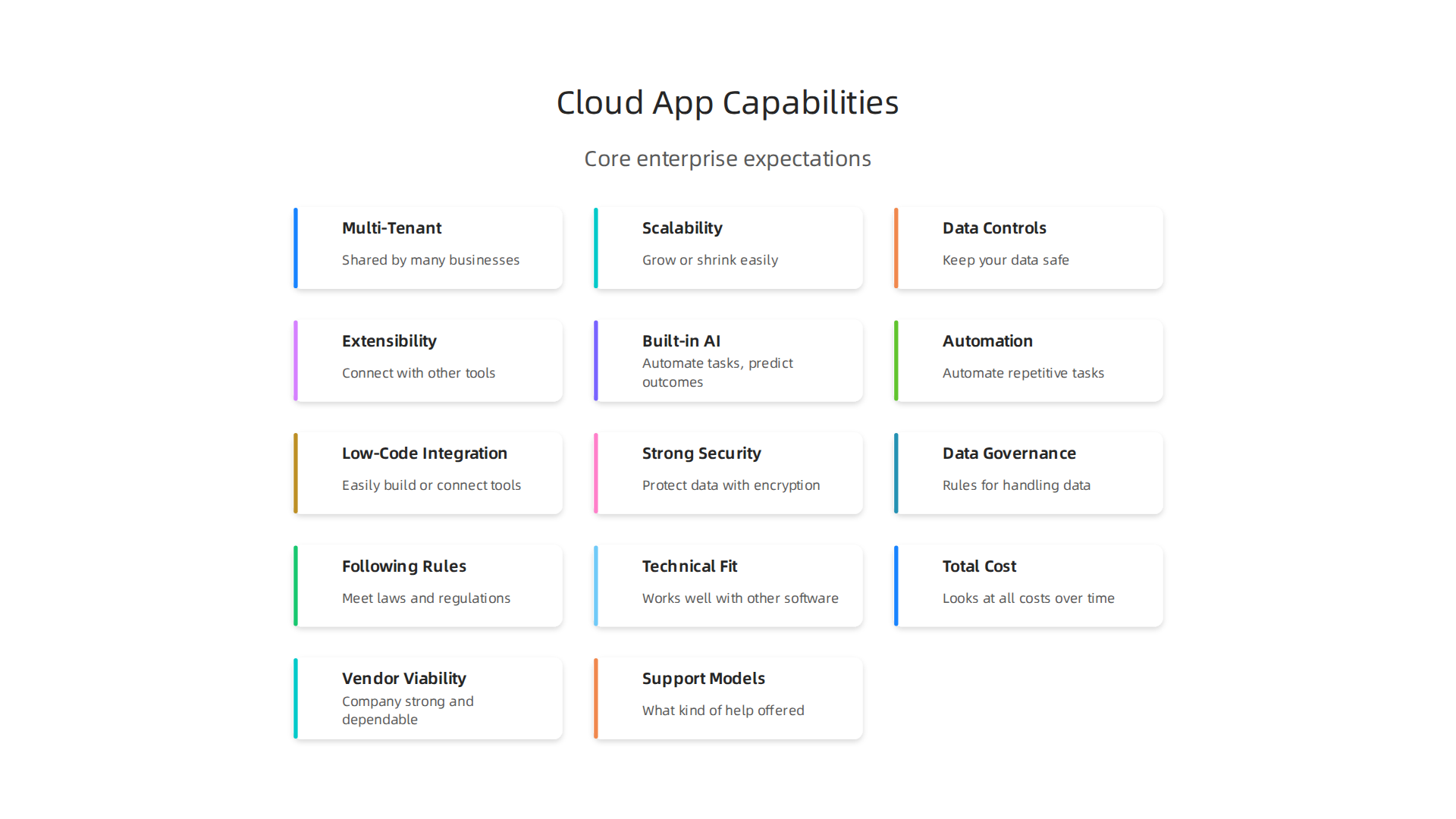
Think of these as the main building blocks that make cloud software useful for many companies at once.
- Multi-Tenant Architecture: This is a fancy way of saying that many businesses can use the same software program at the same time, but their data stays private and separate. It’s like living in an apartment building where everyone has their own space, but they share the same building structure. This helps save money for everyone.
- Scalability: A top cloud tool can grow or shrink easily. If your business gets busier, the software can handle more users and more work without breaking down. If things slow down, you don’t pay for what you don’t use. This flexibility is key for growth.
- Data Controls: Protecting important information is very serious. Cloud applications must have strong ways to keep your data safe and private. This includes who can see your data and how it’s backed up. Making sure your information is handled well is a big deal for any business.
- Extensibility: This means the software can connect with other tools you use. It can also be changed or added to, so it fits your exact business needs. For example, if you find a specific tool on the aws marketplace or through the google cloud marketplace, your main cloud app should be able to work with it.
New Features Businesses Want Today
Beyond the basics, what businesses expect from cloud-based business applications is also changing fast.
In 2026, many new ideas are becoming standard.
-
Built-in AI and Machine Learning: Smart features that use artificial intelligence (AI) and machine learning (ML) are now expected. These tools can help automate tasks, make smart predictions, and learn from your data to suggest better ways of working. Many new business applications are being built with AI features directly inside them, helping with everyday tasks without you even noticing Low-Code AI Integration: Embedding ML in Business Apps | Informat. This helps businesses make smarter decisions faster. If you’re looking to understand more about how businesses are using AI, it’s good to keep up with the latest trends.
-
Automation: Cloud apps are getting much better at doing repetitive jobs all by themselves. This can be anything from sorting emails to updating customer records. Automation saves time and reduces mistakes, letting your team focus on bigger, more important tasks. Solutions are emerging that use AI to help everyday business managers create and change these smart tasks Five AI agent predictions for 2026: The year enterprises ….
-
Low-Code Integration Points: "Low-code" means you don’t need a lot of complex computer programming to build or connect software. In 2026, more than 70% of new business applications will be made using low-code methods Low-code development in 2026: Where agility meets AI – 99X. These platforms let regular business users (not just expert programmers) create or link tools together easily. They often come with AI built in, which helps create workflows and manage data with less effort 10 Best Low-Code AI Platforms for Enterprise Teams in 2026. This makes it much quicker to add new features or connect different systems, helping businesses adapt very quickly.
Understanding these core and emerging features is important for any company looking to choose the best cloud-based business applications for their needs in 2026.
Get clear daily AI updates from The AI Newsletter Worth Reading.
After finding the right features for your cloud tools, the next big steps for businesses are making sure these tools work well together and keep your information safe. This means looking closely at how different software pieces connect and how secure they truly are.
How Cloud Apps Talk to Each Other
Even the best cloud-based business applications need to connect with other systems your company uses. Think about your accounting software, customer lists, or sales tools. They all need to share information smoothly.
For businesses in 2026, there are a few common ways these connections happen:
- APIs (Application Programming Interfaces): These are like digital messengers that let different software programs send and receive data from each other. Most modern cloud apps offer APIs so they can easily link up with other services, including those found on platforms like the
google cloud marketplace. - Integration Platforms: For bigger companies, managing all these connections can be tricky. That’s where special tools called Integration Platform as a Service (iPaaS) come in. These platforms help you build and manage many connections between your different cloud tools and older systems. This makes sure all your data flows where it needs to go without a lot of manual work. Finding the right tools for managing your IT systems is key to making this work. You can learn more about mastering IT management platform selection for enterprise leaders.
Making sure your cloud tools can integrate well saves time and helps avoid mistakes. It also means you can get a full picture of your business, because all your data is working together.
Keeping Your Data Safe and Sound
When you move your business tasks to the cloud, protecting your data becomes super important.
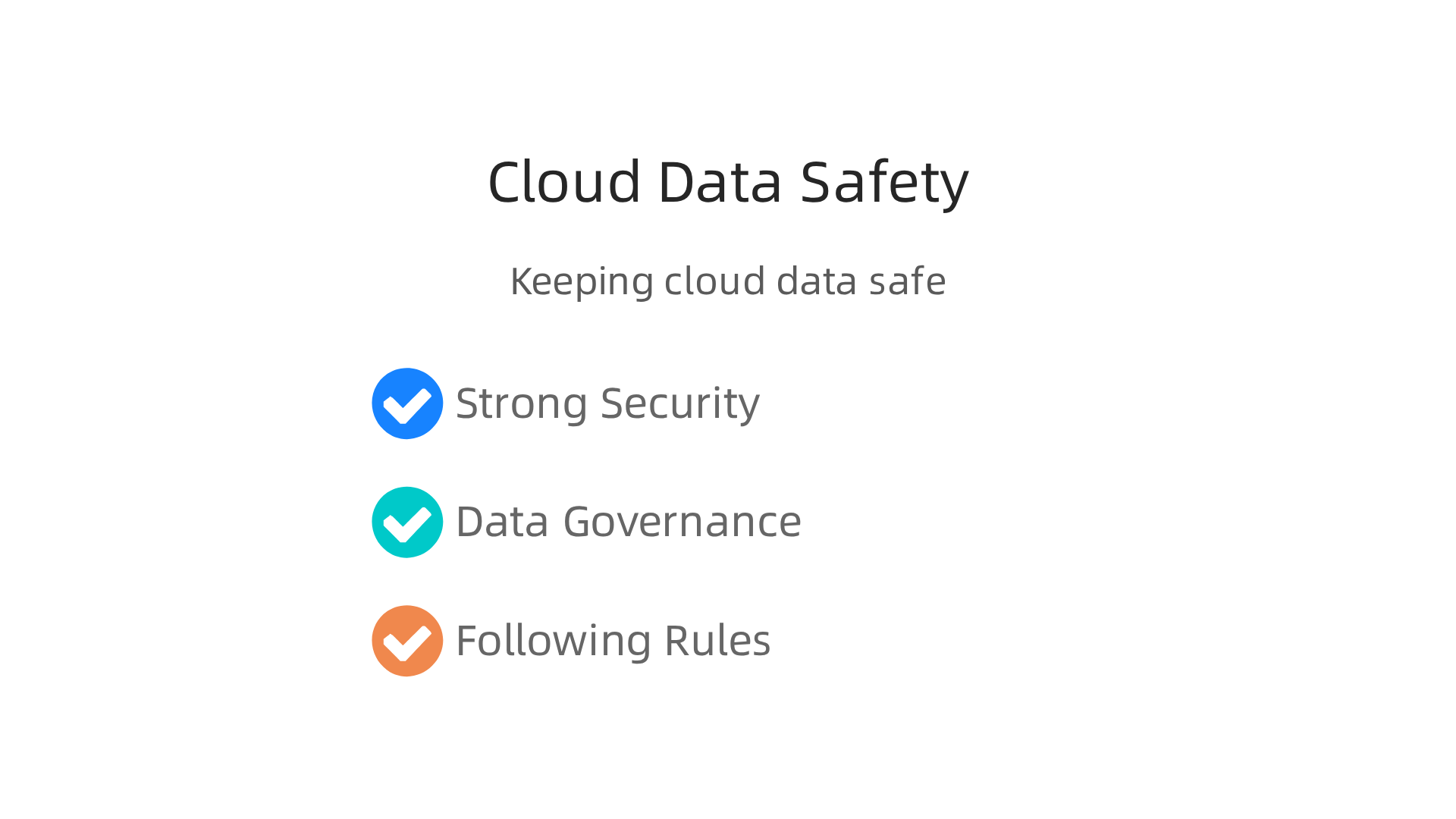

You need to know that your important information is safe from hackers and accidental loss. This is called security and compliance.
Here are key things to check for:
- Strong Security Measures: Cloud apps should have very strong ways to protect your data. This includes encryption, which scrambles your data so no one else can read it, and access controls, which make sure only the right people can see certain information. Bad security can lead to data leaks and other problems, so it’s a big deal to choose wisely A Systematic Literature Review on Cloud Computing Security: Threats and Mitigation Strategies – SciSpace.
- Data Governance: This means having clear rules about how your data is handled. Who owns it? How long is it kept? How is it backed up? Good data governance helps you stay organized and responsible. It also helps avoid common issues like misconfigurations in cloud settings, which can leave your data open to risks "Cloud Computing Security and Challenges: An In-Depth ….
- Following the Rules (Compliance): Many businesses have to follow specific laws and rules about data, especially in industries like healthcare or finance. Cloud providers must show that they meet these rules. For example, in the US, government agencies use a program called FedRAMP to make sure cloud services are safe enough. By 2027, many cloud service providers will need to follow new FedRAMP rules to keep their certifications up to date FedRAMP 20x: Goals, Timeline, and the 2026 Consolidated Rules. This helps ensure a high standard of security for cloud-based business applications.
When picking cloud-based business applications, always ask about their security features and how they help you meet important rules. It’s like asking about the locks and alarms on an apartment before you move in. You want to be sure your digital home is protected. For enterprise leaders navigating complex technology decisions, understanding how to handle these details is essential. Dive deeper into strategies for enterprise tech with insights on enterprise technology domains every leader must understand in 2026.
When you pick cloud-based business applications, it’s like choosing how you want to live. Do you want someone else to handle everything, or do you want more control over your digital home? The way your cloud tools are set up is called a deployment model, and each has its own good and bad points, especially for security.
Software as a Service (SaaS): The Easy Button
SaaS is the simplest way to use cloud-based business applications. With SaaS, you just sign up and start using the software over the internet. You don’t have to install anything or worry about updates. The company that makes the software takes care of all the tech stuff, like keeping the servers running and protecting your data. Think of it like renting an apartment where the landlord fixes everything.
- Good parts: Very easy to use, quick to start, and often cheaper upfront because you pay a monthly fee. You don’t need a big IT team to manage it.
- Things to think about: You have less control over the software and where your data lives. It might be harder to change the software to fit your special business needs exactly. This model is often chosen when businesses want to avoid complex IT management tasks.
Managed Services and Cloud-Hosted Options
Sometimes, businesses need more control than pure SaaS offers, but they still want help with the heavy lifting. That’s where managed services or cloud-hosted options come in. Here, a company might use cloud-based business applications that run on a major cloud platform like the google cloud marketplace or aws marketplace.
In this setup, your business might own the software license, or customize the application more deeply, but a different company (a managed service provider) takes care of the cloud servers, security updates, and other background tasks. This is like owning your house but hiring a property manager to handle maintenance. You get more say in how things look and feel, but still have support. These options are good when you have specific needs that standard SaaS can’t meet, but you don’t want to build and manage everything yourself.
To make smart choices about these models, it helps to understand the bigger picture of cloud providers. Learn more about your options with a Cloud Provider Ecosystem: Enterprise Strategy for 2026.
Hybrid and Private Cloud Options
For some companies, especially very large ones or those with super strict security rules, a pure public cloud or SaaS model might not be enough. They might choose:
- Private Cloud: This is a cloud setup built just for one company. It can be hosted in the company’s own data center or by a cloud provider on dedicated hardware. This gives the company maximum control over security, data, and how the software runs. It’s like having your own private island.
- Hybrid Cloud: This mixes different types of clouds. A company might keep some very sensitive data and applications on a private cloud or on their own servers, while using public cloud services for other tasks. This lets them use the best parts of both worlds. For example, some data might be kept local to meet specific data governance rules, while other data is in the cloud for easy access. Security concerns, like ensuring proper oversight of cloud service providers, are key no matter the model Best Practices for Federal Agencies to Strengthen Cloud Security.
These options give the most control, but they also mean your company needs more IT staff and knowledge to set up and manage everything. They are usually chosen by enterprises that have very unique needs for their cloud-based business applications, strong rules to follow, or existing systems they can’t easily move to a public cloud. For businesses considering complex cloud decisions, good research is important to drive smarter choices. Explore Cloud Research: How to Evaluate Insights and Drive Smarter Cloud Decisions.
As companies look at different ways to use cloud tools, a big change is happening: the rise of vendor marketplaces and app ecosystems. Think of these as online stores, but for software. Instead of buying cloud based business applications directly from many different companies, businesses can now find and get these tools all in one place. This makes everything much simpler, like shopping for groceries at a big supermarket instead of visiting many small specialty stores.
How Marketplaces Change Things for Businesses
Vendor marketplaces have really changed how businesses find, buy, and use software.
- Easier Discovery: Before, finding the right
cloud based business applicationsmeant a lot of searching and talking to many different vendors. Now, marketplaces likeaws marketplaceandgoogle cloud marketplacebring many options together.
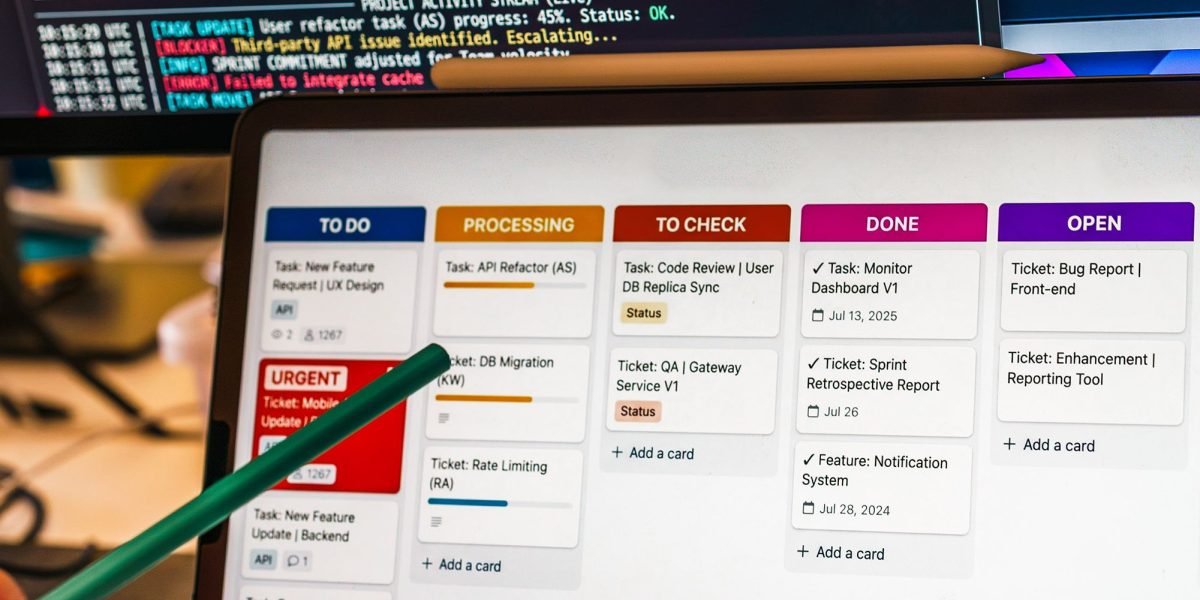
This helps businesses quickly see what tools are out there and compare them easily, all in one spot. It’s much faster to discover new software that can help them grow.
- Simpler Buying (Procurement): Buying software used to be a long process with lots of paperwork and separate contracts for each tool. But with cloud marketplaces, this has changed a lot. Businesses can now buy software right from their main cloud provider. This means fewer contracts and simpler billing, often letting companies use their existing cloud spending plans to buy new software. This process of buying through a cloud marketplace is often called cloud marketplace procurement, and it cuts down on many traditional buying steps, making things smoother and faster for everyone involved Enterprise Procurement Guide: Cloud Marketplace Buying.
- Better Integration: When software is bought through a marketplace, it often works better together with other tools from the same cloud provider. This is because these marketplaces are built to help different
cloud-based business applicationsconnect and share information more easily. Good integration is key for any business to run smoothly.
Marketplace Business Models and What They Mean
These marketplaces are a big deal for both the companies selling software (vendors) and the companies buying it (buyers).
- For Vendors: Marketplaces give software companies a new way to reach many more customers. They don’t have to build huge sales teams from scratch. The big cloud providers, like Amazon or Google, help them get their products in front of thousands of businesses. The software industry is always changing, and many experts are looking at new ways to sell software, including through marketplaces 2026 Software Market Trends, Outlook and Industry Analysis.
- For Buyers: Businesses get clear benefits like streamlined purchasing, meaning they can get the software they need faster. They can also manage all their cloud spending in one place. These "hyperscaler marketplaces" are growing very fast and are expected to be worth billions of dollars soon, showing how much companies rely on them Marketplace Ecosystem Map: Companies Reshaping Software Buying.
Overall, vendor marketplaces are making it easier for businesses to adopt the right cloud based business applications for their needs. This shift is important for businesses looking to choose the best cloud-based productivity tools to help their enterprise in 2026.
If you’re making big decisions about enterprise technology, staying updated on the latest trends, especially in AI, is a must.
Get clear daily AI updates from The AI Newsletter Worth Reading.
Marketplace discovery mechanics and evaluation signals
Finding software through marketplaces is easier, but choosing the right cloud based business applications still needs careful thought. It’s important to know how to spot good quality apps among all the choices.
Here are some ways to tell if a marketplace app is a good fit for your business:
- Ratings and Reviews: Just like when you shop online, user ratings and reviews on an
aws marketplaceorgoogle cloud marketplacecan tell you a lot. Look for apps with many good reviews and check what users say about how easy they are to use and how well they work. - Certifications and Partner Status: Many cloud providers give special badges to apps that meet certain quality standards or come from trusted partners. Seeing a "certified" or "preferred partner" label can be a strong sign of quality. These apps are usually well-tested and supported.
- Clear Integration: One of the biggest benefits of
cloud-based business applicationsis how they work together. Look for details on how well an app connects with your other systems. Does it offer easy ways to link up with the tools you already use? Good integration helps all your software run smoothly. Actually, many new business applications in 2026 are built with low-code tools and include smart AI features, which makes good integration even more important for connecting everything Low-Code AI Integration: Embedding ML in Business Apps | Informat.
When you’re buying software, it’s smart to validate what a marketplace app promises. You can do this by:
- Looking for Demos or Free Trials: Many apps offer a way to try them out before you buy. This is a great way to see if the app truly works for your business needs.
- Checking Official Documentation: Read about the app’s features and how it’s meant to be used. Make sure it lines up with what you need.
- Understanding Support: Good support is key if you run into problems. Check what kind of help the vendor offers through the marketplace.
By looking at these signals and doing your homework, you can choose the best cloud based business applications for your enterprise. To dive deeper into choosing the right tools, learn how to evaluate and select the best for your company by reading our guide on cloud-based productivity tools how to evaluate and select the best tools for your enterprise in 2026.
After checking apps on an aws marketplace or google cloud marketplace and trying them out, the next step is to look deeper. It’s about picking the right cloud based business applications that truly fit your company for the long run. This means thinking about more than just what you see at first glance.
Selection criteria, procurement process, and ROI evaluation
When choosing enterprise software, you need a clear way to size up each option.
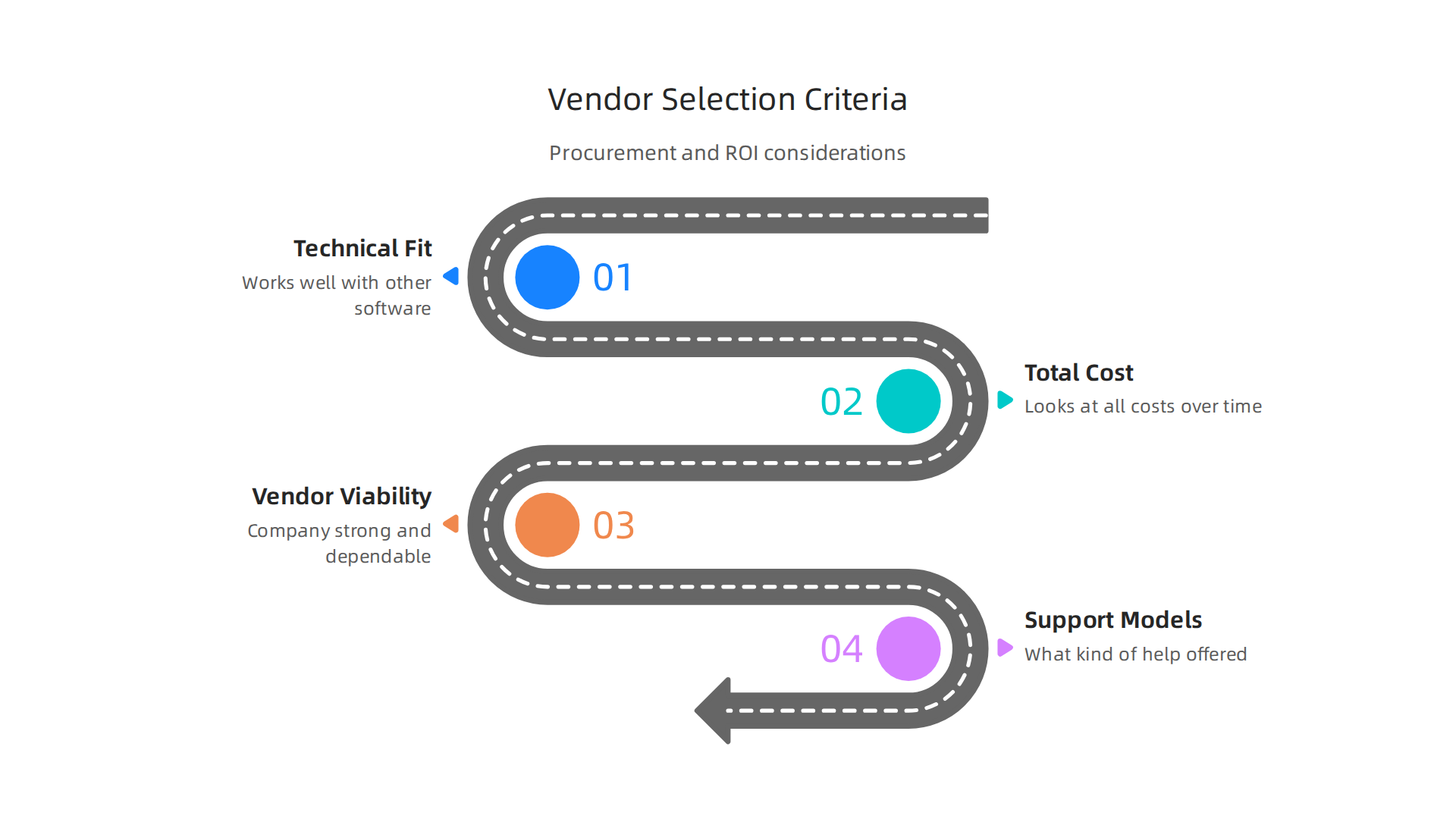
Think about these four main points to find the best vendor:
- Technical Fit: Does the application work well with your other software and systems? Can it handle all the tasks and users your business has now, and will it be able to handle more as you grow? A good technical fit means less trouble later on.
- Total Cost of Ownership (TCO): The price tag is just the start. TCO looks at all costs over time. This includes setting up the software, training your team, ongoing fees, maintenance, and even the cost of fixing problems. Many cloud-based solutions actually show a much lower TCO compared to older, on-premise software. For example, cloud computing can significantly lower overall costs for small and mid-sized businesses compared to traditional solutions The Compelling TCO Case for Cloud Computing in SMB and Mid ….
- Vendor Viability: Is the company that makes the software strong and dependable? You want a partner who will be around to support their product for years to come. Looking into their history and how well they stand in the market can help. You might also consider if they offer good consulting help, which is key for success. You can learn more about how to choose reliable partners by reading our guide on How To Choose The Right Engineering Or It Consulting Firm Partner.
- Support Models: What kind of help will you get if something goes wrong? Good support includes clear guides, quick answers to your questions, and helpful training. Knowing this means your team can use the
cloud-based business applicationswithout major hiccups.
To make sure you pick the best cloud based business applications and lower your risks, it’s smart to have a procurement checklist.
- List Your Needs: Write down exactly what you need the software to do. Separate your "must-haves" from your "nice-to-haves."
- Review Contracts Carefully: Understand what you are agreeing to. Pay close attention to service level agreements (SLAs), which spell out how reliable the service will be and what kind of support you can expect.
- Plan for the Future: Think about how the software will grow with your business. Can it adapt to new changes or more users?
- Talk to Other Users: Ask other companies using the software about their experiences. This can give you real insights into how well it works. For a deeper dive into making these choices, especially for bigger systems, explore our guide on ERP System Selection The 2026 Strategy For Enterprise Growth.
Finally, you need to look at the Return on Investment (ROI). This means figuring out if the benefits you get from the software are worth the total cost. It’s about seeing if you save money, make more money, or improve your business in other ways. For example, one company reduced its monthly cloud bill by a large amount, saving over $1 million a year Cloud Cost Optimisation Results. Other benefits can include better teamwork, faster completion of tasks, or fewer errors. Understanding the difference between TCO and ROI helps you make a strong case for new technology TCO vs ROI: The Business Case for Hyperconverged Infrastructure. To better understand how to measure this, check out our insights on Mastering Enterprise Analytics Platform Selection For 2026 ROI.
When you’ve looked at the big picture of costs and benefits, it’s time to get down to the nitty-gritty technical details. This means making a quick checklist of important technical things to look at for any cloud based business applications. Having a clear plan helps your team make smart choices.
Here’s a simple checklist for technical due diligence:
- Data Residency: Where will your business’s information actually live? For some companies, data must stay in a certain country. Your legal and compliance teams will need to check this carefully.
- APIs and How It Connects: How well does the new software talk to your other tools? Good connections, or APIs, mean less work for your IT team. Developers will want to know about how to build an integration marketplace that makes it easy for them to use the software. You can learn more about how developers build marketplaces for integrations by reading about How to Build an Integration Marketplace Developers Use. This is important whether you’re buying from an
aws marketplace,google cloud marketplace, or directly from a vendor. - Service Level Agreements (SLAs): What promises does the software company make about how much the service will be working? This means uptime and how fast it performs. Your operations team and legal department should review these agreements to make sure they meet your company’s needs.
- Exit Plan: What if you need to stop using the software later? How easy is it to get your data out and move to a different tool? This is a key point for your IT and data teams to consider for the future.
Thinking about these technical points helps you choose cloud-based business applications that are strong and reliable for your business for years to come. For deeper understanding on how to make these big decisions, consider our insights on Cloud Research: How to Evaluate Insights and Drive Smarter Cloud Decisions.
Summary
This article explains why cloud-based business applications and vendor marketplaces are central to enterprise strategy in 2026, driven by rapid market growth, wide adoption across industries, and changing buyer expectations. It covers the core technical features to look for—multi-tenant architecture, scalability, strong data controls, extensibility—and the newer demands like built-in AI, automation, and low-code integration. The piece also explains how apps connect through APIs and iPaaS, how to evaluate security, compliance and data residency requirements, and how different deployment models (SaaS, managed services, private and hybrid clouds) trade off control and cost. Reader guidance includes how marketplaces (AWS, Google Cloud) simplify discovery and procurement, what signals to look for in marketplace listings, and a procurement checklist that covers technical fit, TCO, vendor viability, SLAs and an ROI approach. Practical next steps include running trials, checking certifications and planning an exit strategy to avoid vendor lock-in, helping leaders select cloud tools that scale, secure data, and deliver measurable business value.