
Cloud Engineer Career and Hiring Guide for 2026

Introduction: The Cloud Engineer Imperative in 2026
Let’s be honest. If you’re a leader trying to speed up your cloud adoption or launch an AI project in 2026, you’ve probably run into the same roadblock: finding skilled cloud engineers. The role of a cloud engineer has changed fast. It used to be a narrow operations job focused on keeping servers running. Now? It’s a strategic role that combines architecture, automation, and even AI enablement.
The demand is huge. The U.S. Bureau of Labor Statistics projects roles in cloud computing to grow about 15% from 2021 to 2031, far above the average occupation. And according to a 2026 market analysis, the global cloud computing market is estimated at $623 billion and growing at more than 17% each year. Tech leaders are scrambling to fill positions for tech ops engineer, aws cloud specialists, and google cloud project leads. In fact, cloud engineers rank among the top 15% of in-demand tech roles in 2026.
Here’s the problem. Most companies don’t have a clear plan to attract, build, or keep this talent.

They treat cloud hiring like they did five years ago. That won’t work anymore. The gap between what cloud engineers can do and what teams need is widening. That gap slows down innovation and hurts the bottom line.
This article gives you a data-backed roadmap. You’ll learn how to build cloud engineering teams from scratch, hire the right people, and keep them engaged. We’ll cover real numbers, smart strategies, and the tools that help you move faster.
If you want to stay ahead of the rapid changes in AI and cloud technology, get clear daily AI updates from The Deep View Newsletter. It’s a great way to keep your finger on the pulse.
And for a deeper look at how cloud roles connect to broader infrastructure strategies, check out our guide on platform engineering in 2026. It pairs perfectly with the talent insights you’ll find here.
Let’s start by looking at why the cloud engineer role has changed so much and what that means for your hiring strategy.
The Evolving Cloud Engineer Role: From Operations to Architect
Here’s a quick test. When you picture a cloud engineer in your head, what do you see? Someone racking servers in a cold data center? Someone typing commands into a terminal all day?
If that’s your image, you’re about five years behind.
The role has changed completely. In 2026, a cloud engineer is more of a strategist than a technician. They don’t just keep things running. They design entire systems. They manage costs. They build the pipelines that make AI possible.
Let me show you what I mean.
What changed and why
A few years ago, cloud work was mostly about migration. Move stuff from on-prem to AWS Cloud or Google Cloud Project. Keep it running. Patch it. That was the whole job.
Today, that’s just table stakes.
Modern cloud engineers need to handle multi-cloud environments where workloads shift between providers based on cost and performance. They need FinOps skills to track spending and optimize resources. And they need to understand AI and machine learning pipelines, because every enterprise is racing to deploy models in production.
According to a job posting analysis, architecture-related keywords have jumped by 40% since 2022. That’s massive. Companies aren’t looking for technicians anymore. They’re looking for architects.
New titles tell the story
The old title was simple: cloud engineer. Maybe tech ops engineer if you were on the infrastructure side.
Now look at what’s out there:
- Cloud Architect — focuses on system design and strategy
- Platform Engineer — builds internal developer platforms that make cloud easier for everyone else
- Cloud AI Engineer — blends cloud infrastructure with machine learning pipelines
These aren’t just fancy rebrands. They represent real shifts in responsibility. A Cloud Architect doesn’t SSH into servers. They decide which services to use, how to structure accounts, and how to enforce security policies. A Platform Engineer doesn’t wait for tickets. They build self-service tools that let developers deploy faster.
The SANS Institute notes that the salary for a cloud engineer has climbed to about $130,000 on average, with senior roles reaching much higher. That’s because the value these roles deliver has grown.
Why this matters for your hiring
If you’re still writing job descriptions that say "manage AWS Cloud infrastructure" and calling it done, you’re missing the point. Candidates with real skills want to see that you understand the modern scope of the role. They want to work on interesting problems, not just keep the lights on.
The best cloud engineers today are hybrid thinkers. They understand networking, security, automation, cost optimization, and AI enablement. They can talk to developers, finance teams, and executives. That’s a rare combination.
That’s also why the shift toward platform engineering has been so important. It gives cloud engineers a clear structure to build on. If you want a deeper look at this trend, check out our guide on platform engineering in 2026.
The bottom line
The old cloud engineer role is gone. If you’re hiring, update your job descriptions. Update your expectations. And update your compensation.
In 2026, a senior cloud engineer can earn up to $182,000 according to the Motion Recruitment salary guide. That’s not cheap. But the right person will save you far more than that in optimized cloud spending, faster deployments, and fewer outages.
Want to keep up with the rapid changes in AI and cloud technology? Get clear daily AI updates from The Deep View Newsletter. It’s a simple way to stay informed without the noise.
Next, let’s look at what skills your team actually needs and how to build a hiring plan that attracts the right people.
Essential Technical Skills for Modern Cloud Engineers
So what does a modern cloud engineer actually need to know? The short answer is a lot more than a few years ago. But don’t worry, the list of core skills is clear and you don’t need everything overnight. Let’s break it down into three buckets: must-have core skills, fast-growing emerging skills, and the truth about certifications.
Core skills you cannot skip
If you are hiring or building your own skills, start here. These are the fundamentals every cloud engineer should master in 2026:
- Kubernetes – Container orchestration is standard now. Nearly every deployment runs on Kubernetes.
- Terraform – Infrastructure as code is the only way to manage AWS Cloud, Azure, or a Google Cloud project at scale.
- CI/CD pipelines – Tools like Jenkins, GitLab CI, or GitHub Actions. Automating deployments is table stakes.
- Cloud platforms – Deep knowledge of at least one major provider (AWS, Azure, GCP) and working familiarity with another.
- Programming – Python is the top language for automation and AI. Go is gaining fast for performance-sensitive cloud tools.
Dion Training lists these as the top technical tools for cloud engineers in 2026, and I agree. Without them, you cannot build modern systems.
Emerging skills that separate the best
The cloud engineer role keeps expanding. Two skills are rising fast right now.
First is AI and machine learning pipeline deployment. Companies are rushing to put models into production. Cloud engineers who can set up the infrastructure for training, serving, and monitoring AI workloads are in high demand. This includes handling GPUs, model registries, and data pipelines.
Second is FinOps – cloud financial operations. Tracking and optimizing cloud spend is now a core responsibility. A tech ops engineer who can cut costs by 30% is worth their weight in gold. Refonte Learning highlights that cost management skills are becoming essential for cloud roles in 2026.
Edge computing is also growing, but it’s more niche for now.
Certifications still matter, but experience wins
Certifications are a strong signal, especially for entry-level roles. According to Coursera, the top certifications in 2026 include AWS Solutions Architect Associate, Azure Fundamentals, and Google Associate Cloud Engineer.

These prove you understand the platform.
And yes, they pay off. A report from Campus Technology found that cloud certifications bring the biggest salary payoff of any IT certification category.
But here’s the thing: hiring managers care more about what you have built. A cloud engineer with a GitHub repo full of Terraform modules and a working Kubernetes cluster will beat a certified candidate with no real projects. The best approach is to get certified and build hands-on experience like the projects outlined by Artech.
If you are hiring, look for a mix of both. If you are upskilling, prioritize building something real over chasing badges.
A quick skill checklist for your hiring plan
| Skill Category | Specific Skills | Priority |
|---|---|---|
| Core | Kubernetes, Terraform, CI/CD, AWS/Azure/GCP, Python/Go | Must have |
| Emerging | AI/ML pipelines, FinOps, edge computing | Growing fast |
| Validation | Certifications + real project portfolio | Balanced |
As cloud systems get more complex, the ability to build and manage AI infrastructure is becoming a differentiator. If you want to understand how data flows into these systems, our guide on data collection methods for enterprise AI is a great next read.
The bottom line: the best cloud engineers in 2026 combine strong fundamentals with emerging skills in AI and cost optimization. They don’t just keep the lights on. They design and optimize entire platforms.
Want to stay ahead of these rapid shifts? Get clear daily AI updates from The Deep View Newsletter. It helps you track what matters without the noise.
Cloud Engineer Career Paths and Specializations
So you have the skills. Now where does this career take you? The path from junior to senior is clear,

and the detours into specializations can lead to even faster growth and higher pay.
The standard career ladder
Most cloud engineers start at a junior level, handling routine deployments, monitoring, and small infrastructure changes. With a couple years of experience, you move to mid level, now leading smaller projects and automating more of your work. From there, the next step is senior cloud engineer, followed by roles like cloud architect, SRE, or DevOps lead.
According to the 2026 guide by Kore1, this path covers five distinct levels with salaries starting around $95,000 for junior roles and exceeding $200,000 at the principal level. Not bad for a field that is still growing fast.
A typical timeline to reach cloud architect is 5–7 years. The fastest folks get there in four. What separates them? Certifications and cross cloud experience. If you have worked on AWS Cloud, Azure, and a Google Cloud project, you understand how platforms differ, and that makes you more valuable to employers who run multi cloud environments.
Specializations that pay off faster
If you want to skip the slow lane, pick a specialization. The biggest ones in 2026 are security, data, and AI. Cloud security engineers are in high demand because every breach gets expensive fast. Data engineers who build pipelines for analytics and machine learning are just as critical. And AI infrastructure engineers who set up GPU clusters and model serving systems are commanding premium salaries right now.
Refonte Learning notes that these specializations offer faster advancement and significantly higher compensation. A tech ops engineer who adds AI pipeline expertise can leapfrog peers who stay generalist. Similarly, a security focused engineer who earns certifications like AWS Security Specialty can move into a dedicated cloud security architect role within three to four years.
Coursera’s career path breakdown confirms that cloud security analyst and cloud architect pathways are among the most rewarding. The secret is to build deep expertise in one area while keeping your generalist skills sharp.
How to accelerate your timeline
Want to hit architect level in five years instead of seven? Here is what works:
- Get certified early. Certifications like AWS Solutions Architect Associate prove you understand the platform. They open doors faster.
- Work on multiple clouds. Even if your day job is on one provider, spin up side projects on another. Cross cloud experience is a huge advantage.
- Take on stretch projects. Volunteer for the tough migrations, the incident response drills, the cost optimization audits. Each one teaches you something you cannot learn from a course.
- Build a portfolio. Show your work on GitHub or a personal site. Hiring managers love to see real infrastructure code.
If you are hiring, look for candidates who have blended these strategies. If you are growing your own career, start with one specialization that excites you and commit to it for six months.
These career paths are not just theoretical. To see how platform engineering roles fit into the bigger picture, read our guide on platform engineering in 2026. It maps out how cloud engineering connects to the broader infrastructure strategy.
The bottom line: cloud engineering offers a clear ladder with multiple rungs. Pick your specialization, earn the right certifications, and build real systems. The pay and growth follow.
Want to track which specializations are hottest right now? Get clear daily AI updates from The Deep View Newsletter. It helps you spot trends before they become crowded.
Salary Benchmarks and Market Demand in 2026
You have mapped out your career path and picked a specialization. Now comes the question everyone wants answered. How much does a cloud engineer actually earn in 2026?
The short answer is: a lot. And it keeps going up.
Let us look at the numbers. According to the 2026 Cloud Computing Tech Salary Guide by Motion Recruitment, a senior level cloud engineer can earn up to $182,000. Entry level roles start around $95,000 to $120,000. Once you reach the architect level, total compensation regularly exceeds $200,000. The SANS Institute also notes that the average salary for a cloud engineer in the US sits around $130,000. So the range is wide, but the ceiling is high.
But averages only tell part of the story. Several factors push your salary higher.
Certifications still matter. If you hold an AWS Cloud certification or a Google Cloud project badge, you instantly signal higher competence. Companies pay a premium for proven skills.
Industry matters more. Finance and tech companies consistently pay 10 percent to 20 percent more than sectors like education or government. A cloud engineer supporting a trading platform earns more than one managing a school district’s infrastructure.
Location matters too. Remote roles now pay between $131,000 and $145,000 total compensation, as highlighted by NetCom Learning’s 2026 salary guide. That is competitive with high cost of living cities like San Francisco or New York, without the commute.
If you are hiring a team, understanding these benchmarks is critical. It helps you attract and retain talent. For a deeper look at structuring modern teams, check out our analysis of platform engineering strategies in 2026.
Here is the biggest shift in 2026. The highest salaries are not going to pure cloud generalists anymore. They are going to hybrid engineers who combine cloud infrastructure skills with AI and machine learning expertise.
A tech ops engineer who can deploy a Kubernetes cluster for an AI model pipeline is worth a premium. Someone who understands both AWS Cloud networking and LLM fine-tuning is gold.
The KORE1 Cloud Engineer Salary Guide 2026 confirms that demand is strongest for these hybrid roles. Companies are desperate for engineers who can bridge the gap between infrastructure and AI. This trend is reshaping hiring priorities across every industry.
So the path is clear. Build your cloud foundation, pick a specialization, and layer in AI skills if you want to reach the top of the pay scale.
Staying on top of these fast moving trends is hard. The technologies change every quarter. That is why thousands of tech leaders rely on the The Deep View Newsletter to get clear daily AI updates. It cuts through the noise and helps you spot the next big skill before everyone else jumps on it.
Certifications That Actually Matter in 2026
We just looked at the salary numbers. And you probably noticed one thing. Certifications give your paycheck a real boost. A report shows that cloud certs bring one of the biggest salary payoffs in tech. You can expect a 10 to 15 percent bump within a year of earning one.
But here is the catch. Not all certifications carry the same weight in 2026. You need to pick the right ones.
The top tier certs this year are still the advanced ones from the big three cloud providers.
- AWS Solutions Architect Professional
- Azure Solutions Architect Expert
- Google Professional Cloud Architect
These three show employers you can design complex systems. They are hard to earn. And that is exactly why they hold their value. If you are just starting out, there is a great breakdown of entry level certs like the AWS Solutions Architect Associate and the Google Associate Cloud Engineer. These give you a solid foundation in AWS Cloud and a real Google Cloud project build.
What is new in 2026?
The biggest change is the rise of AI and machine learning certs. The AWS Certified AI Practitioner is a hot ticket right now. Security certs are also climbing the ladder fast. Companies need cloud engineers who understand both the infrastructure and the new AI layer on top of it.
A tech ops engineer who holds both a cloud architect cert and an AI certification is in a high demand league of their own. This matches the trend we saw earlier. The hybrid engineer gets paid the most.
Certifications should go hand in hand with real world projects. Do not just collect badges. Build something. Deploy an app. Automate a pipeline. The cert proves you know the theory. The project proves you can deliver.
If you are going down the AI route, understanding how data works is key. Our guide on enterprise AI data collection methods is a good starting point.
A quick warning.
Avoid certs that focus on old school manual setups. Automation and Infrastructure as Code are now mandatory knowledge. A cert that does not test you on Terraform or Kubernetes is probably not worth your money.
So here is the simple roadmap. Pick a major cloud platform. Earn its professional level cert. Then add one AI or security cert. That combination will put you in the top bracket of earners.
Hiring Cloud Engineers: What Enterprise Leaders Need to Know
If you are leading a tech team right now, you already feel the pressure. Finding a good cloud engineer is harder than ever. The career outlook for cloud engineers in 2026 is incredibly bright, which means competition for top talent is fierce. A report from Refonte Learning confirms that demand is surging across every industry.
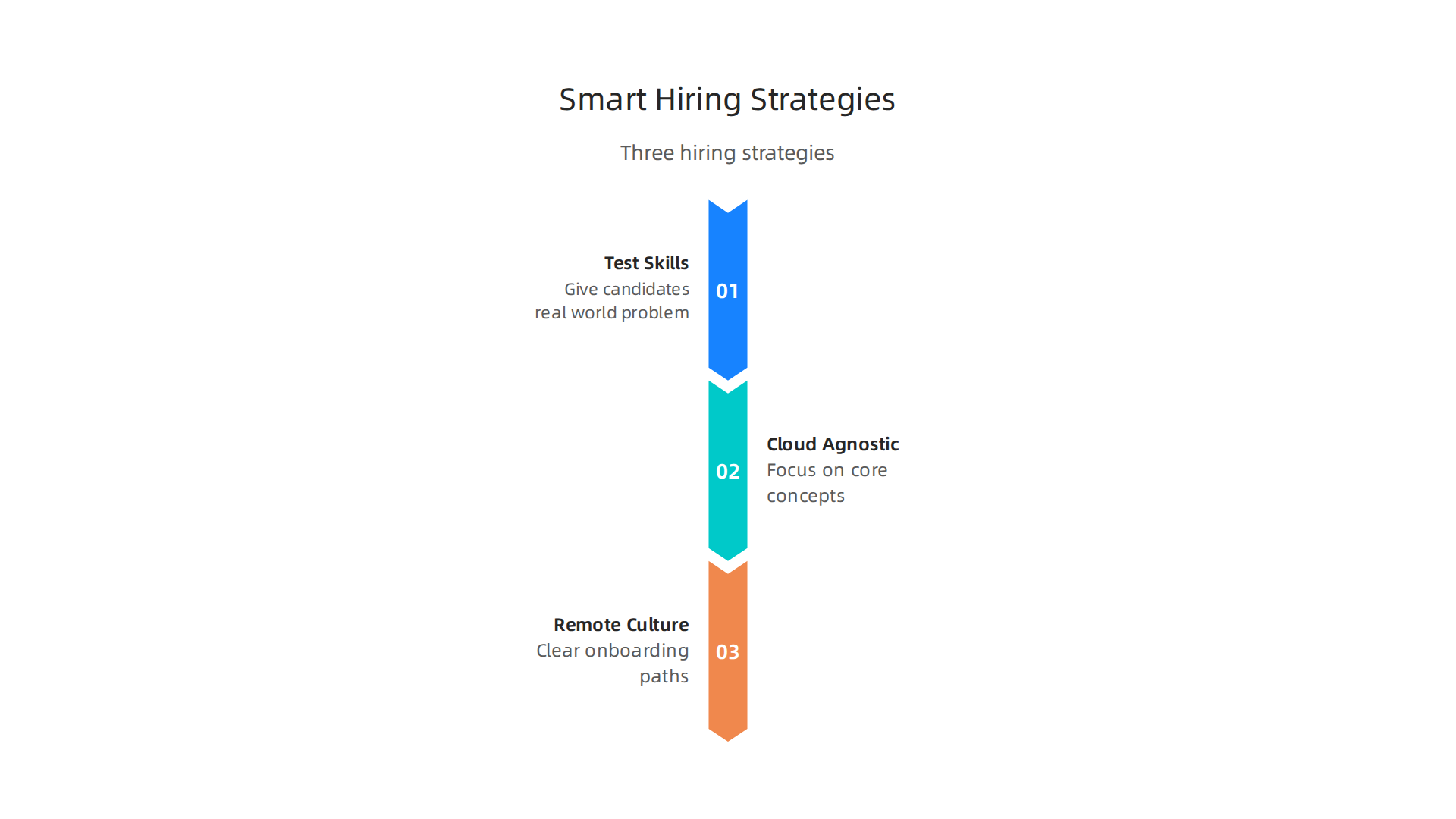
So how do you hire smartly? Let us look at three strategies that work.
Stop chasing pedigree. Start testing skills.
The old way was simple. Look at the university name. Count the years of experience. Today that approach misses great candidates. Many talented cloud engineers come from nontraditional paths. Some learned through bootcamps. Others switched careers later in life. A skills-based assessment tells you more than a resume ever will.
Give candidates a real world problem. Ask them to design a system on AWS Cloud. Have them spin up a Google Cloud project. Watch how they think. That is what matters.
Design roles that are cloud agnostic when possible.
Here is the thing. A great tech ops engineer can learn a new platform quickly. If you write your job description around one specific provider, you shrink your talent pool. Instead, focus on core concepts like automation, security, and scalability. According to a Coursera guide on cloud computing career paths, the most versatile engineers understand multiple platforms. That versatility makes your team more resilient too.
Go remote. But build culture on purpose.
Remote and hybrid work opens up the entire country or even the world for hiring. That is a huge advantage. The problem is that onboarding and culture become harder. You cannot just throw someone a laptop and hope for the best.
Set clear onboarding paths. Use pair programming sessions. Schedule regular video check ins. A structured program like the 2026 Technology Early Career Development Program shows how big enterprises handle this intentionally. Without that structure, you risk high turnover.
Build versus buy: The smartest investment might be inside.
Hiring externally is expensive. Recruiting fees, signing bonuses, and salary negotiations add up fast. Many enterprise leaders overlook a cheaper option: internal upskilling.
Take a system administrator who already knows your company. Invest in their cloud education. Send them through a certification roadmap.

A complete cloud engineer roadmap from NetCom Learning shows exactly how to move from junior to senior in a structured way. The cost is lower than hiring from outside. And the loyalty you build is priceless.
For leaders who want to stay ahead of how AI and automation are reshaping cloud roles, our detailed guide on platform engineering in 2026 a strategic guide for CIOs and CTOs offers a deeper look at building future ready teams.
The bottom line is simple. Stop relying on old hiring habits. Test for real skills. Keep your options open on platforms. Embrace remote work with strong culture. And most importantly, grow the talent you already have.
Stay ahead of the curve. Technology changes fast, and so does the cloud engineer landscape. Get clear daily AI and tech updates that help you make smarter hiring and strategy decisions. Subscribe to The Deep View Newsletter.
The Impact of AI on Cloud Engineering
The way we hired cloud engineers in the past was one thing. The way they actually work in 2026 is something else entirely. Artificial intelligence is not just a tool cloud engineers use. It is changing the very shape of the job.
AI is now automating the boring stuff. Think about routine monitoring, alerting, and even first level incident response. A lot of what used to keep a cloud engineer busy all night can now be handled by AI powered systems. According to a detailed look at cloud trends by Pulumi, AI infrastructure is becoming a core part of how modern cloud platforms run. That means the hands on ops work is shrinking.
So what is left for the human? The higher value stuff. Designing systems that can actually support AI workloads. Understanding how machine learning pipelines work. Knowing how to deploy and maintain a model in production on AWS Cloud or a Google Cloud project. The traditional tech ops engineer now needs a new layer of skills.
The Capgemini report on 2026 tech trends points out that AI is becoming the backbone of enterprise architecture. That is a big shift. Cloud engineers who only know how to spin up virtual machines will struggle. The ones who thrive will understand how to tie together cloud resources, data pipelines, and AI models.
This change is creating brand new roles. You have probably heard of MLOps Engineer. You might have seen Cloud AI Engineer pop up in job boards. These are not just fancy titles. They represent a real intersection of skills. A cloud engineer who can also manage the lifecycle of an AI model becomes incredibly valuable. The Glocomms article on tech careers in 2026 calls these roles some of the fastest growing in the industry.
For enterprise leaders, this means your hiring criteria and your team structure need to adapt. When you look for a cloud engineer, ask about their experience with AI and ML tools. Can they set up a training pipeline? Do they understand model monitoring? If not, plan to upskill them. The smartest investment you can make is helping your current team learn these new capabilities.
The future of cloud engineering is not about fighting machines. It is about working alongside them. Engineers who embrace AI will handle more strategic tasks and deliver way more value to your organization.
Want to stay ahead of these changes? Get a daily briefing on how AI is reshaping every part of tech. Subscribe to The Deep View Newsletter for clear, practical updates.
Future of Cloud Architecture: What’s Next?
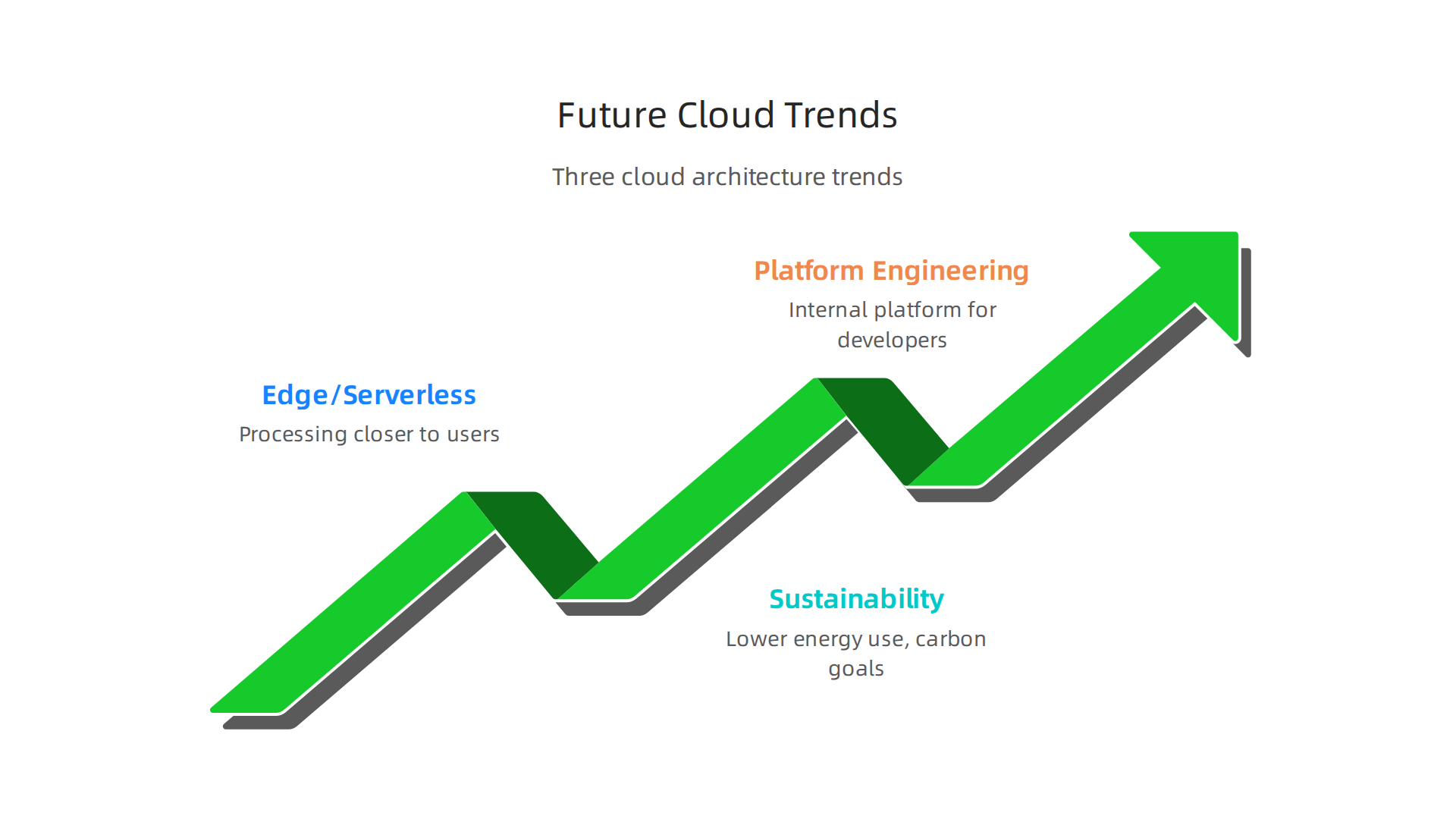
You have seen how AI is changing the cloud engineer role today. But the architecture underneath is shifting just as fast. In 2026, three big trends are reshaping how we build cloud systems.
Understanding them will help you plan smarter and keep your team ahead.
First, edge computing and serverless are moving from niche to mainstream. Edge brings processing closer to users, cutting latency. Serverless lets you run code without managing servers. Together they make apps faster and cheaper to run. A modern cloud engineer now needs to design for these patterns on platforms like AWS Cloud or a Google Cloud project. The Pulumi report on cloud trends calls this a core shift in modern infrastructure.
Second, sustainability is driving real change. Companies face pressure to lower energy use and meet carbon goals. Green cloud practices like right sizing resources and choosing efficient regions are becoming standard. FinOps, the practice of managing cloud costs and waste, is now tied to environmental targets too. The Capgemini top tech trends report for 2026 names sustainability as a key pillar of enterprise architecture. A tech ops engineer who knows FinOps will be in high demand.
Third, the line between development and operations keeps fading. This is pushing more teams toward a platform engineering model. Instead of separate ops teams, you build an internal platform that developers can use on their own. This speeds up delivery and cuts down on repetitive work. You can learn more about this approach in our guide on platform engineering in 2026.
So what does this mean for your team? Start investing now. Help your cloud engineers learn edge and serverless skills. Introduce FinOps tools to track both cost and carbon. Explore platform engineering as a way to scale your team without burning them out.
The future of cloud architecture is more distributed, more sustainable, and more automated. The best way to stay ready is to keep learning every day. For daily updates on where tech is heading, subscribe to The Deep View Newsletter.
Summary
This article gives enterprise leaders a practical, data-backed roadmap for hiring, building, and retaining modern cloud engineering talent in 2026. It explains how the role has shifted from hands-on operations to strategic architecture that blends Kubernetes, Terraform, CI/CD, FinOps and AI pipeline skills. You’ll find a clear skills checklist, which certifications matter, and which specializations (AI, security, data) drive faster promotion and higher pay. The piece also covers salary benchmarks, hiring strategies that prioritize skills over pedigree, and how to upskill internal teams. It highlights how AI automates routine ops while raising demand for engineers who can deploy and monitor ML workloads. Finally, it outlines future architecture trends—edge, serverless, sustainability—and what teams must do to stay competitive. After reading, you’ll be able to update job specs, structure hiring tests, and plan training and compensation to attract top cloud talent.