
Decoding Turing AI and Limitless AI for Enterprise Leaders in 2026

The world of Artificial Intelligence (AI) is changing super fast. Because of this, many AI words and ideas are also changing quickly. It’s easy for business leaders to get lost in all the new terms, which can lead to big mistakes in how they use technology. In 2026, it is more important than ever to have a clear understanding of key AI concepts to make smart choices for your company.

When terms like "Turing AI" and "Limitless AI" are used without clear definitions, it can make strategic planning difficult. Leaders might struggle to understand what these advanced types of AI truly offer for areas like new product development or what is business intelligence really capable of with these tools. Not knowing the real meaning can mean missing out on good chances or investing in the wrong solutions. For example, the original idea of the Turing Test, created by Alan Turing, was to see if a machine could "think" like a human in a conversation Turing test | Definition & Facts | Britannica. But over time, what people think the "Turing Test" means has changed a lot, often becoming simpler than the original idea The Turing Test and our shifting conceptions of intelligence. This shows how easily AI ideas can get fuzzy.
This guide will give senior tech and business leaders a clear, facts-based look at "Turing AI" and "Limitless AI." We want to help you understand what these terms mean, how they affect your business, and how to bring them into your company without making mistakes. Our goal is to help you make informed decisions and build a strong best AI for business 2026 enterprise strategy guide.
To stay updated on the latest AI trends and insights every day, consider subscribing to The AI Newsletter Worth Reading.
Core concepts: what enterprise leaders should mean by ‘Turing AI’ and ‘Limitless AI’
Now, let’s get down to what "Turing AI" and "Limitless AI" truly mean for your business. It’s important to separate big ideas from what real AI products can do in 2026. This helps you make smart choices when buying new tools, planning your systems, and checking for risks.
Understanding ‘Turing AI’
The term Turing AI comes from the famous "Turing Test" proposed by Alan Turing in 1950. He created a game to see if a machine could act so much like a human that a person couldn’t tell the difference during a conversation Turing Test in Artificial Intelligence. Think of it like a text chat: a human talks to both another human and a computer, and tries to guess which is which. If the computer can fool the human judge often, it passes the test.
However, in 2026, when we talk about Turing AI, we’re often talking about an ideal or a goal, not something fully available in products. Many current AI systems, like advanced chatbots, can talk in ways that seem very human-like. But they aren’t truly "thinking" or understanding in the same way a human does Limitations of Reasoning Models in 2026. They are very good at using patterns from huge amounts of data to give good answers. This means that when you are looking at AI for things like new product development or improving what is business intelligence, you should not expect current AI to have true human-level intelligence or understanding.
For leaders, this means:
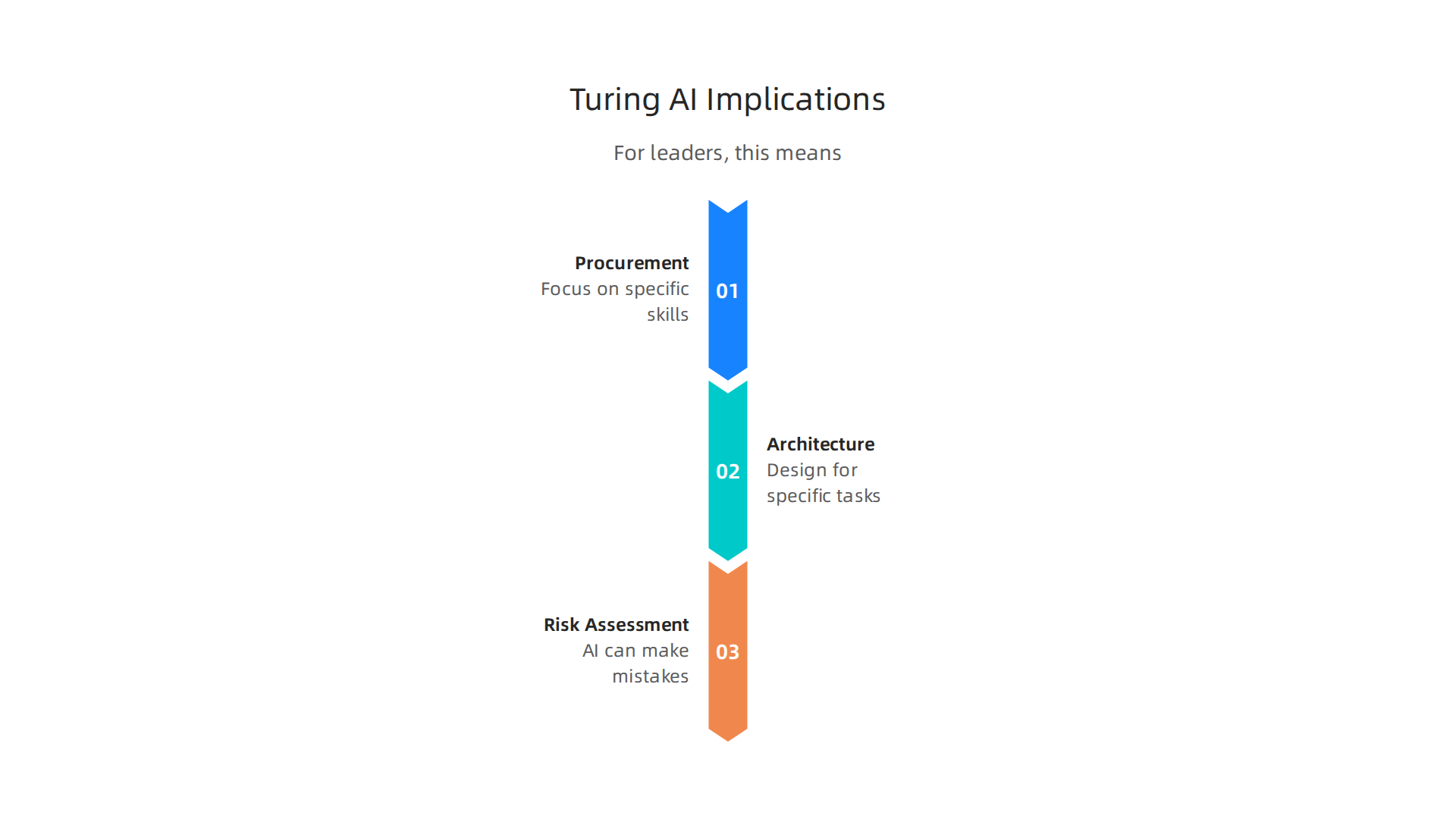
- Procurement: Don’t buy AI tools thinking they’ll have human-like general intelligence. Focus on their specific skills, like understanding language or finding patterns.
- Architecture: Design your AI systems to handle specific tasks well, not to act as all-knowing digital brains.
- Risk Assessment: Be aware that even the most human-sounding AI can still make mistakes or "hallucinate," giving wrong information International AI Safety Report 2026.
The Reality of ‘Limitless AI’
The idea of Limitless AI sounds amazing: an AI that can do anything with no boundaries. It brings to mind endless processing power or knowledge. But the quiet truth in 2026 is that there is no truly "unlimited" AI plan or system available. Every AI tool, from the simplest to the most advanced, has limits Is AI Still "Unlimited"? What Changed in 2026.
These limits can be about:
- How much information the AI can process at once.
- The types of tasks it can do.
- How well it performs outside of its training data.
Experts agree that today’s large language models (LLMs) have basic limits that cannot be overcome just by making them bigger Understanding AI in 2026: Current Realities and Future Directions. They are very good at recognizing patterns and creating content, but they still struggle with real-world understanding or planning over a long time Current AI Capabilities and Limitations (2026).
For enterprise leaders, understanding these limits is key:
- Procurement: Don’t pay for "unlimited" claims that are not real. Look closely at the actual features and performance caps of any AI service.
- Architecture: When you build systems using AI, make sure to plan for its current limitations. Don’t expect it to solve problems it can’t.
- Risk Assessment: If an AI can’t invent new ideas or tell truth from made-up stories, it brings risks that need human oversight. You can learn more about how to build trust with AI by exploring building enterprise AI trust with human oversight and guardrails.
By truly understanding these terms, you can better guide your company’s use of AI, ensuring you invest wisely and build systems that work in the real world.
Now, let’s look closer at where the idea of Turing AI actually came from and what it means for businesses in 2026. This helps us understand the path from an old test to how we talk about AI today.
Turing AI — origins, technical meaning, and modern usage
The term Turing AI starts with Alan Turing, a smart thinker who, in 1950, asked a big question: Can machines think like humans? He came up with the "Turing Test," sometimes called the "imitation game." In this test, a human judge talks through text to two hidden players: one is a person, and the other is a computer.

The judge’s job is to figure out which one is the computer. If the computer can fool the judge into thinking it’s human, it passes the test What Is the Turing Test? Definition, Examples, and More.
Back then, passing this test meant a machine could show intelligence that was really close to a human’s. It was a goal, a benchmark for what truly intelligent machines might be able to do. The goal was to make AI seem so human that you couldn’t tell the difference.
Over the years, the meaning of "Turing" in AI has changed. In 2026, when someone talks about a system being "Turing AI," they usually mean it can interact in ways that feel very human-like. This is especially true for things like chatbots or virtual assistants that can hold long conversations. These tools are often praised for their ability to understand and create language that sounds natural, making them seem almost human The Turing Test and our shifting conceptions of intelligence.
However, it’s key to remember that even if an AI sounds human, it does not truly "think" or "understand" in the human way. These systems are incredibly good at finding patterns in huge amounts of data and using those patterns to give helpful or creative answers. For enterprise leaders looking into new product development or how to improve what is business intelligence, this means using Turing AI tools for their amazing ability to process language and information. But it’s wise not to expect them to have real human-like awareness or general smarts.
For example, an AI could help gather facts for a new product, or sort through customer feedback to find trends. It can make these tasks faster and more efficient. But it won’t invent a completely new product idea out of nowhere, or understand deep human emotions on its own. It’s about how the AI helps with specific tasks that look smart, rather than the AI being truly smart like a person.
To guide your company’s use of AI, it’s helpful to know how to pick the right tools. You can learn more in our Best AI for Business 2026 Enterprise Strategy Guide. When you are thinking about bringing in new AI tools, look at what they actually do, not just how human-like they sound. Make sure they solve real problems for your business.
Want to keep up with the latest in AI and technology without all the noise?
The AI Newsletter Worth Reading
Even with our understanding of Turing AI and its human-like talks, a new idea called "limitless AI" often pops up. This term tries to make us believe AI can do anything, learn forever, and even work just like a human brain. But what does "limitless AI" really mean, and is it truly possible in 2026?
The idea of limitless AI often brings up exciting thoughts. It suggests AI systems that can:
- Learn new things all the time: Not just from a fixed set of data, but by taking in new information constantly, like people do.
- Handle any kind of task: Go beyond specific jobs and become good at many different things, sometimes called "generalization."
- Work closely with humans: Create new ways for people and AI to team up, making each other stronger.
These ideas paint a picture of AI that is truly amazing. However, it’s important to know the difference between what’s marketed and what’s actually possible in engineering today.

In reality, there’s no truly "unlimited" AI right now. Even popular AI tools often have limits on how much you can use them, even if you pay a lot of money Is AI Still "Unlimited"? What Changed in 2026. AI systems, even those that seem very smart, have some clear boundaries. They can sometimes make up false information, which we call "hallucinations," or give different answers even when asked the same question. They don’t have true understanding or common sense like humans. A leading AI expert and Turing Award winner, Yann LeCun, has even said that the current large language models, or LLMs, are not the way to get human-level intelligence Turing Award winner Yann LeCun argues LLMs cannot achieve …. He believes that simply making these models bigger won’t lead to superhuman smarts.
So, while Turing AI can impress us with human-like conversation, it doesn’t mean it’s "limitless." For business leaders looking into new product development or thinking about what is business intelligence, this means being smart about AI. Don’t expect AI to solve every problem or think exactly like a human. Instead, focus on how AI can help with specific, hard tasks like sorting huge amounts of data, finding patterns, or writing first drafts.
Understanding these realistic boundaries helps you build a strong plan for using AI. It’s about knowing AI’s strengths for things like making tasks faster and its weaknesses, so you don’t expect it to do things it can’t. To truly get the most out of AI for your company, you need a clear strategy that deals with these facts. Learning how to put together such a plan is key for future success. You can find more details on how to use AI wisely in your company by understanding how to implement a larger plan for these tools. This will help you make sure your company uses AI in the smartest ways possible.
Now, let’s look at how understanding these real differences between Turing AI and the dream of limitless AI changes things for businesses. It’s not just about what AI can do, but how you buy it, how you set it up, and how you measure if it’s worth the money.
Business and operational implications: procurement, architecture, and ROI
Companies are very interested in AI right now. In 2026, many businesses are using AI, with adoption doubling in large companies compared to last year Enterprise AI Adoption Doubled in 2026: Key Statistics. However, bringing AI into a company can be tricky. Many organizations, almost 79% in 2026, face problems when trying to use AI Enterprise AI adoption in 2026: Why 79% face challenges …. This often means the way they buy and set up AI tools needs a closer look.
Smart Procurement for AI
When you’re buying AI tools, don’t get lost in promises of limitless AI. Instead, focus on what the AI can actually do for your business. Think about specific tasks, like making a process faster or improving business intelligence by finding hidden insights in your data.
Here’s what to think about when choosing an AI vendor:
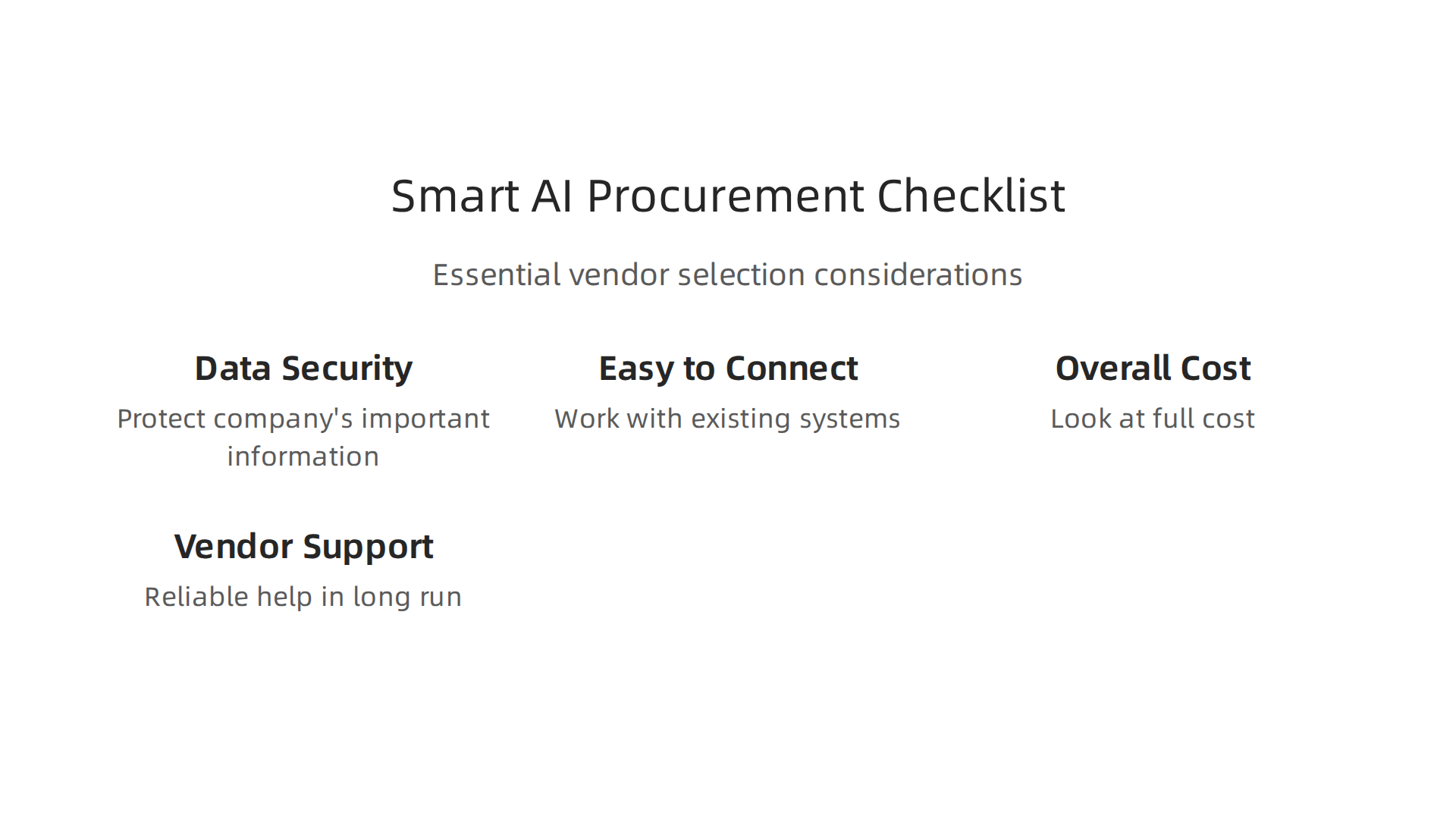
- Data Security: How well does the AI system protect your company’s important information? This is a top concern for 92% of businesses Enterprise AI Vendor Comparison 2026: Top 15 Platforms for ….
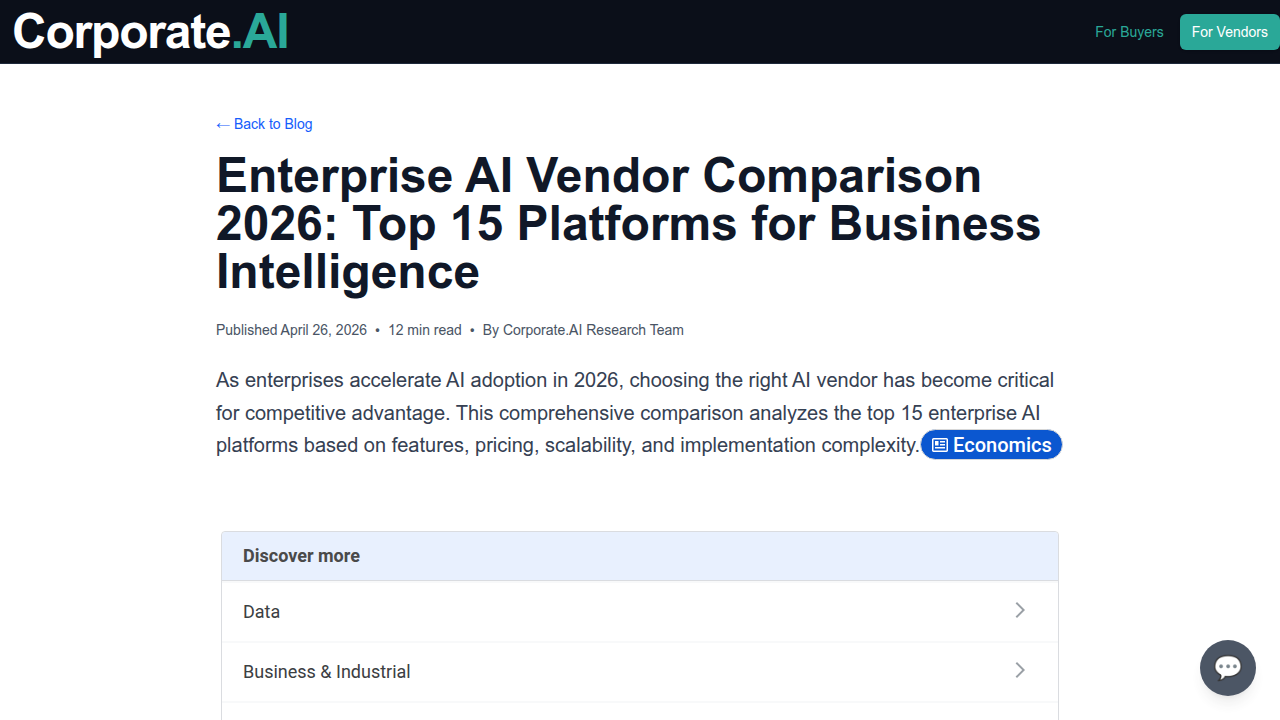
- Easy to Connect: Can the AI tool easily work with your existing computer systems? About 87% of companies say this is very important.
- Overall Cost: Look at the full cost of the AI over time, not just the starting price. This matters to 84% of businesses.
- Vendor Support: Is the company selling the AI reliable and will they be there to help you in the long run?
These points help you make smart choices that fit your company’s needs, not just buy into hype. If you want to learn more about selecting the right AI, check out this guide on how CIOs and CTOs should evaluate AI companies in 2026.
Building the Right AI Architecture
Once you pick an AI tool, you need to set it up correctly. This means creating a strong plan for how the AI will fit into your company’s computer systems. Think of it like building a house: you need a good foundation and a clear blueprint.
- Start with Data: Before you even think about AI, make sure your data is organized and ready. This "invisible work" of process documentation and data architecture is key to success, according to a report from Stanford Digital Economy Lab The Enterprise AI Playbook – Stanford Digital Economy Lab.
- Flexible Systems: Build an AI system that can use different AI models, not just one. This means you can adapt as AI technology changes and get the best tool for each job.
- Clear Rules: Have clear rules for how AI will be used. This is called AI governance and it helps prevent problems down the road. Inconsistent AI governance is a big barrier for many companies adopting AI AI Adoption: The Complete Enterprise Guide 2026.
This thoughtful approach helps ensure your AI systems are stable and ready for future needs, especially for things like new product development where adaptability is key.
Measuring Return on Investment (ROI)
It’s easy to spend a lot of money on AI. In fact, many companies are investing over $1 million each year in AI technology Key findings from our 2026 AI adoption survey. But just spending money doesn’t mean success. Only a small number of companies are seeing big returns from their AI investments.
To make sure your AI spending pays off, you need to:
- Set Clear Goals: Know exactly what you want the AI to achieve before you start.
- Measure Progress: Track how well the AI is doing against those goals. Don’t wait until the end; start measuring early.
- Be Realistic: Understand that not every AI project will be a huge success. Focus on projects that offer clear value.
Many enterprise AI projects fail to meet their ROI expectations, sometimes 70-85% of them The Enterprise Vision AI Adoption Report 2026. This shows how important it is to have a solid plan and not just chase the idea of limitless AI.
To stay on top of the latest advancements and get clear, daily AI updates that can help you make these crucial business decisions, consider subscribing.
Get clear daily AI updates from The AI Newsletter Worth Reading.
Getting a good return on your AI investment, as we discussed, also means knowing about the risks. Using AI, especially the kind that promises to do everything, can bring big challenges. It’s important for companies to know about these dangers and how to handle them.
Risks, compliance, and security: how to evaluate and mitigate hazards
Understanding the AI Risk Landscape
When we talk about advanced AI, sometimes called Turing AI in a broader sense of machines acting human-like, it’s exciting. But it’s also like giving a powerful tool to someone who needs clear rules and safety checks. There are three main kinds of risks companies face with AI:
Technical Pitfalls
- Bad Data, Bad AI: AI learns from data. If the data is wrong, old, or has unfair ideas built into it, the AI will make bad decisions. This is known as bias.
- Black Box Problem: Sometimes, it’s hard to understand why an AI made a certain choice. This "black box" makes it tough to fix errors or explain decisions to customers or legal teams.
- System Failure: Just like any software, AI systems can break down. If your business depends too much on one AI, a failure can stop important work.
Legal and Compliance Challenges
The world of AI is changing fast, and so are the rules. Governments are making new laws to keep AI safe and fair.
- New Regulations: In 2026, many countries are putting new AI laws into place. For example, the EU AI Act is becoming very important.
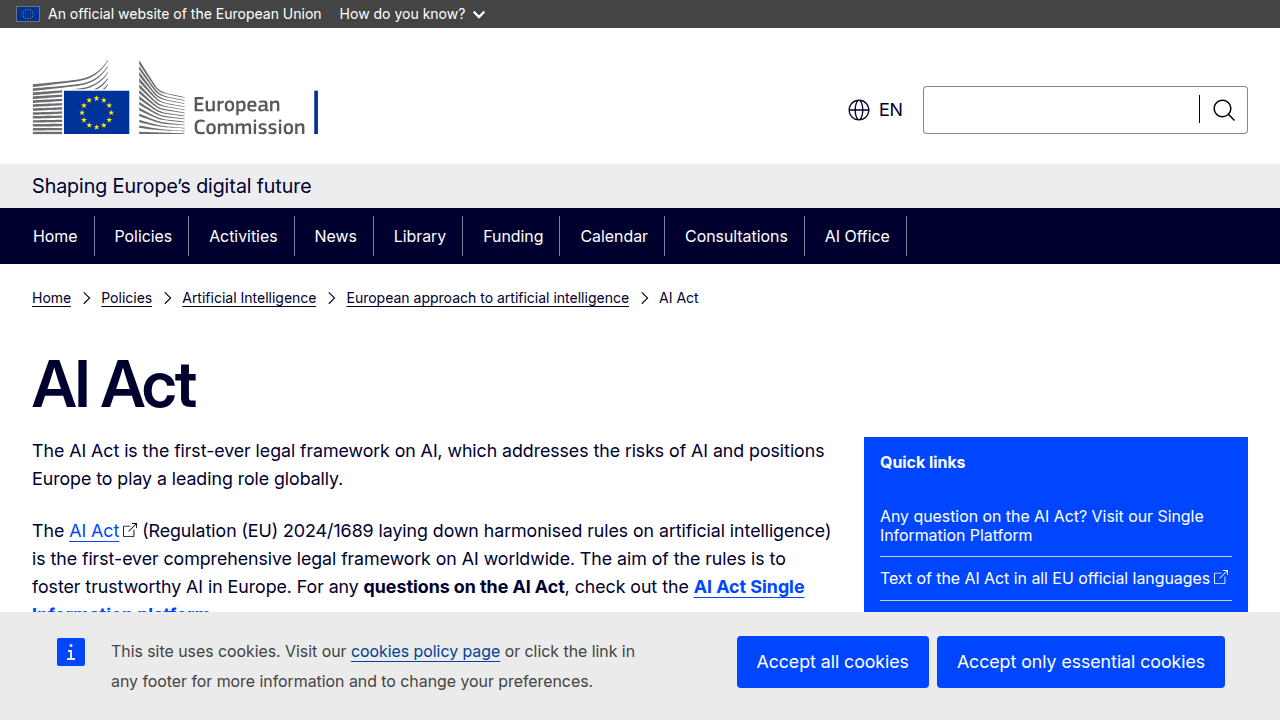
Countries like the US (with California’s Transparency in Frontier AI Act) and the UK are also making new rules, as seen in a 2026 guide to AI regulations around the world. These laws tell companies what they must do to use AI correctly, especially for "high-risk" systems.
- Privacy Rules: AI often uses lots of personal data. Companies must be very careful to follow privacy laws, or they could face big fines.
Ethical and Governance Concerns
Beyond laws, there are questions about what’s right and fair.
- Fairness: Does your AI treat all people fairly, no matter their background? If not, it can cause harm and damage your company’s name.
- Accountability: Who is responsible when an AI makes a mistake? Is it the company, the developer, or the AI itself? Having clear rules for AI governance is vital. An EY survey in 2026 showed that while many tech companies are quickly using advanced AI, the rules and oversight for these systems are not keeping up, which can lead to problems EY survey: autonomous AI adoption surges at tech ….
Your AI Risk Assessment Checklist
To avoid these problems, businesses need a clear plan. Here’s a simple checklist to help you look at AI risks:
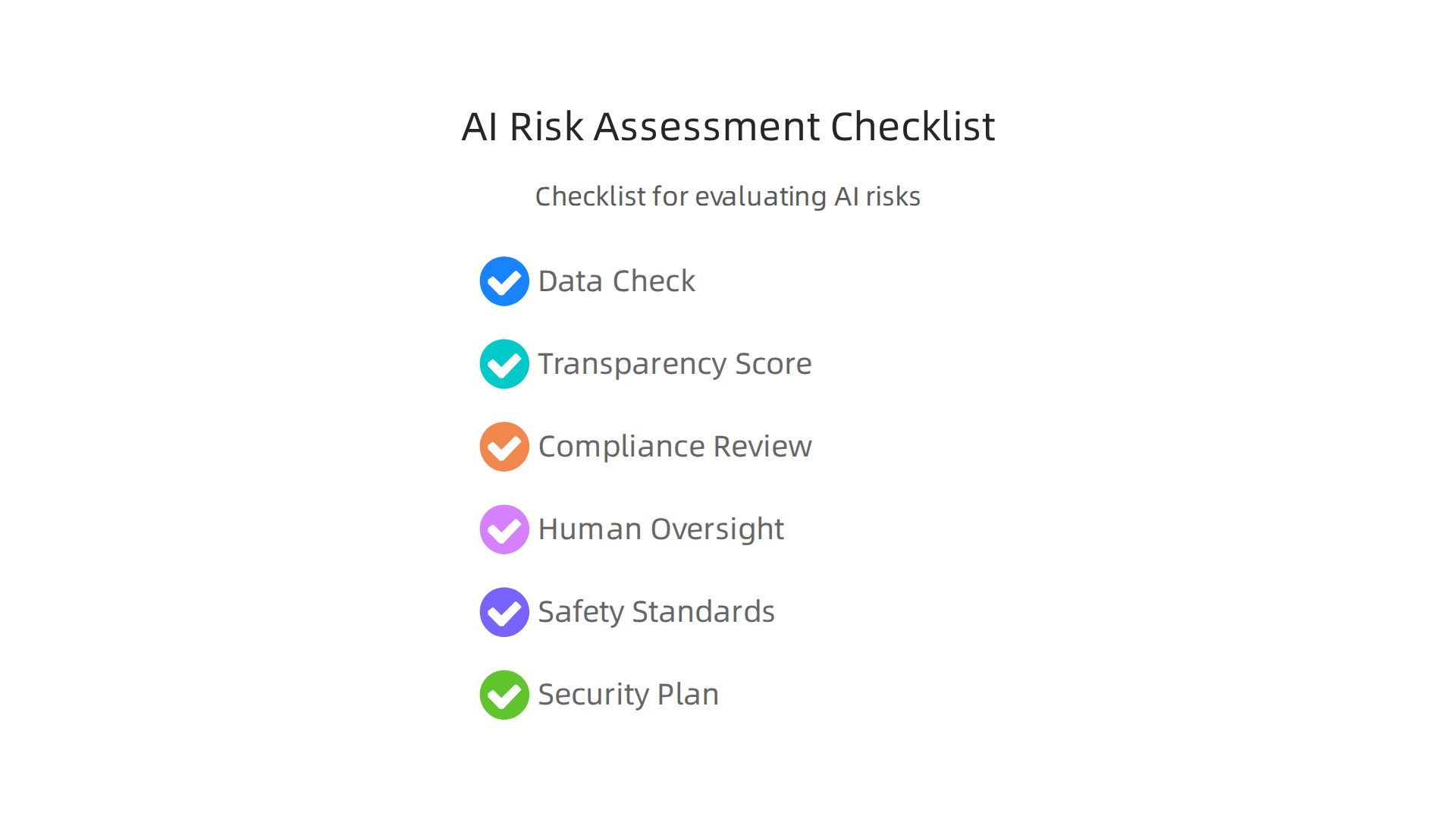
- Data Check: Is your data clean, fair, and secure? Do you know where it came from and how it was collected?
- Transparency Score: Can you understand how the AI makes its decisions? How easy is it to explain to others?
- Compliance Review: Do you know all the AI laws that apply to your business? Are you following rules for data privacy and safety? The EU AI Act, for instance, has high-risk obligations broadly applying from August 2026, according to a report on AI regulations around the world for 2026.
- Human Oversight: Are there real people watching what the AI does? Can they step in if something goes wrong?
- Safety Standards: Does your AI meet recognized safety standards, like those from NIST (National Institute of Standards and Technology)?
- Security Plan: How will you protect the AI system from cyberattacks and misuse?
Mitigating AI Hazards
Handling AI risks means being smart and proactive.
- Start Small: Don’t try to use Turing AI for every task at once. Pick small projects where you can learn and fix issues easily.
- Invest in Data Quality: Make sure your data is the best it can be. This will make your AI better and less risky.
- Develop Clear Policies: Create rules for how your company will use AI. Who gets to decide? What are the ethical limits? Building trust with clear human oversight and guardrails is key. For a deeper dive into creating a solid AI plan, look at this data-backed enterprise AI strategy roadmap for 2026.
- Stay Informed on Laws: Keep up with new AI laws and rules in your country and around the world. Companies need to be ready for these changes to avoid trouble, as highlighted in a 2026 AI regulation guide for leaders.
- Train Your Team: Teach your staff about AI risks and how to spot problems. This helps make everyone a part of the solution.
- Plan for Failure: Even with the best plans, things can go wrong. Have a backup plan for when your AI doesn’t work as expected.
By taking these steps, your company can use AI safely and responsibly, turning the promise of smart tools into real value without getting caught by the idea of limitless AI. This careful approach is especially important for areas like new product development, where unexpected AI behavior could lead to big problems or missed opportunities.
Moving from understanding the risks of advanced AI, or Turing AI, the next big step is to make a smart plan for using it. CIOs, CTOs, and product leaders need a clear path to bring AI into their companies safely and in a way that truly helps. It’s not about using limitless AI everywhere at once, but about smart choices and careful steps.
Sadly, many companies face challenges when adopting AI. A report from 2026 showed that 79% of organizations have trouble bringing AI into their work, even when they spend a lot of money on it. Another study found that while most businesses use AI, only a small number say it’s truly at the core of how they work, and many struggle to get real value from it.
Your Roadmap for AI Success
To make sure your AI plans work well, here’s a step-by-step guide:
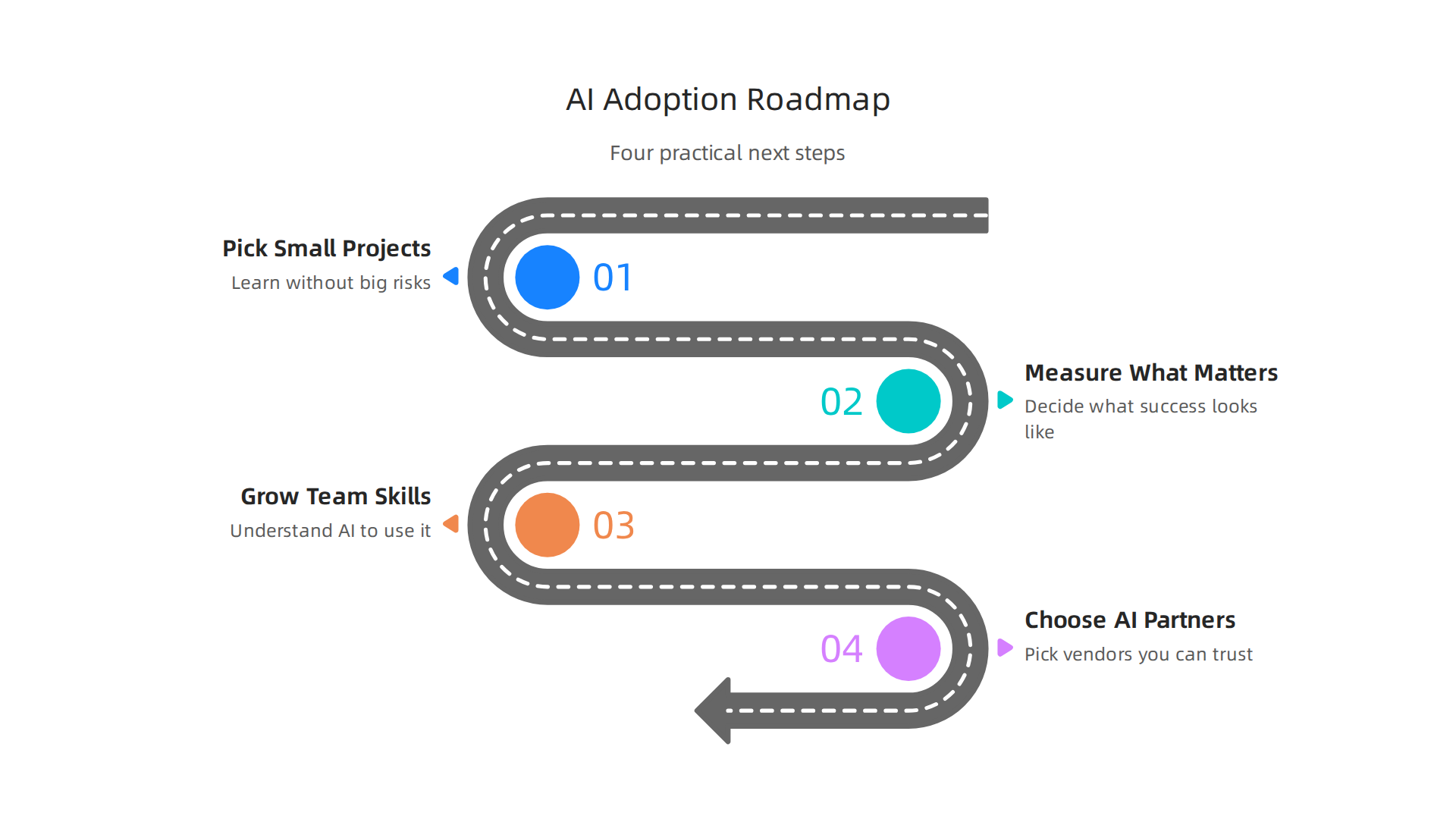
1. Pick Small, Smart Projects (Pilot Selection)
Don’t try to change everything with AI at once. Start with small, clear projects where you can learn without big risks. Think of a simple task that AI could help with, like sorting customer emails or helping with common questions. This "crawl-walk-run" approach lets you test ideas and fix problems early. For example, Fortune 500 companies often use this staged deployment pattern, starting AI in a few areas and then growing from there.
2. Measure What Matters (Metrics)
Before you start, decide what success looks like. How will you know if the AI is helping? You need clear ways to measure if it’s saving time, making customers happier, or boosting sales. It’s important to set these goals early so you can track your progress. You can also dive into a comprehensive data-backed enterprise AI strategy roadmap for 2026 to define your measures.
3. Grow Your Team’s AI Skills
Your team needs to understand AI to use it well. This means training them on how AI works, what it can do, and how to spot problems. Having people who are good at AI is just as important as the tools themselves. If you want to build a strong AI team, you can learn more about the enterprise AI engineer roadmap for 2026.
4. Choose Your AI Partners Wisely (Vendor Governance)
Many companies sell AI tools and services. It’s like choosing a partner for new product development. You need to pick vendors you can trust, whose tools fit your company’s needs and follow all the rules. Think about how secure their systems are and how easily they can work with your existing tools. To learn more about selecting the right partners, read about how CIOs and CTOs should evaluate AI companies in 2026.
Checklist for Smart AI Investment
Here’s a simple checklist to make sure your AI investments are on the right track:
- Goals: Do your AI projects clearly support your company’s main goals?
- Small Starts: Are you beginning with small, manageable projects that can show quick wins?
- Money Talk: Do you have a clear idea of how much you’re spending and what kind of return you expect? Many companies invest over $1 million annually in AI, but only 29% see significant returns, according to a 2026 AI adoption survey.
- Right People: Do you have the right people with the right skills to build and manage AI?
- Rules and Safety: Are you following all AI laws and making sure your AI is safe and fair?
- Backup Plan: What happens if the AI doesn’t work as planned? Do you have a plan B?
By following these steps, you can help your company adopt AI in a way that brings real value and avoids common problems.

It’s about using smart tools thoughtfully.
Ready for daily, in-depth insights into AI and technology? Get clear daily AI updates from The AI Newsletter Worth Reading.
Summary
This article explains the practical meanings of the buzzwords "Turing AI" and "Limitless AI" for senior tech and business leaders in 2026, separating marketing hype from engineering reality. It reviews the origins of the Turing Test, why human-like conversation does not equal human understanding, and why no AI today is truly unlimited. The guide covers procurement, architecture, ROI measurement, and a risk checklist—highlighting data quality, transparency, and legal compliance as central concerns. Readers will learn how to evaluate vendor claims, design systems that play to AI strengths, and build governance and human oversight to reduce harm. The piece also provides a staged roadmap (pilot, measure, scale) and concrete checklists for procurement, security, and regulatory readiness. By the end, leaders will be able to choose the right AI projects, set realistic expectations, and create plans that deliver measurable business value safely.