
Originality AI How Enterprises Detect AI Content at Scale

Introduction
AI-generated content is everywhere. In 2026, that’s both a blessing and a headache for enterprise teams. The same tools that help you produce blog posts, reports, and marketing copy at lightning speed also make it nearly impossible to tell what’s human-written and what’s machine-generated. For businesses that rely on trust, originality, and brand voice, that blurry line can become a real problem.

That’s where Originality AI comes in.
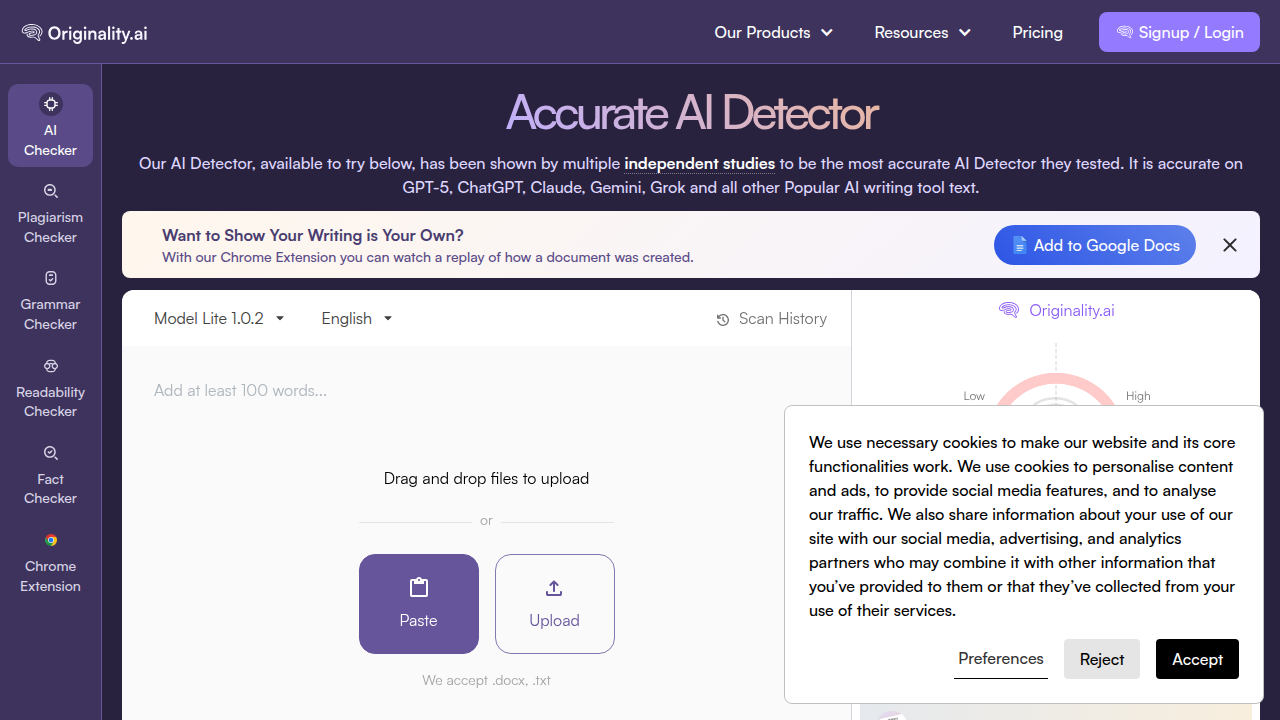
It’s a tool built specifically to detect AI-written text, and it’s quickly becoming a go-to solution for enterprises that need to verify content authenticity at scale. The global AI content detector market is projected to reach $5.45 billion by 2035, growing at a 16.35% CAGR.

That kind of growth tells you this isn’t a niche concern anymore. Companies across every industry are investing in detection technology to protect their reputation, maintain editorial standards, and comply with emerging regulations.
But here’s the thing: most organizations still don’t fully understand what Originality AI can do or how to implement it effectively. Maybe you’ve heard the name but aren’t sure if it fits your workflow. Maybe you’re worried about false positives or integration headaches. Those are fair questions, and they deserve clear answers.
This guide gives you an objective, evidence-based look at Originality AI. We’ll cover how its technology works, real enterprise use cases, best practices for rolling it out, and the return on investment you can expect. If you’re responsible for content quality, compliance, or AI strategy in your organization, you’ll walk away with a practical roadmap.
Before we dive deep, it helps to step back and see how content verification fits into the bigger picture of enterprise technology. If you’re evaluating multiple tools or platforms right now, you might find our enterprise technology analyst insights for 2026 useful for making smarter decisions.
Let’s start by unpacking the real challenge: why AI-generated content is so hard to spot, and why detection tools like Originality AI are no longer optional.
What Is Originality AI and Why Enterprises Need It
If you manage content for a large organization, you already know the struggle.

AI tools are fast and cheap, but they come with hidden costs. That is why Originality AI has become a must-have tool for marketing, legal, and editorial teams in 2026.
So, what exactly is it? At its core, Originality AI is a content authenticity platform. Think of it as a trust layer for everything you publish. It helps you answer three critical questions:
- Was this text written by a human or an AI?
- Is this content original or copied from somewhere else?
- Are the facts in this article actually true?
That last point is key. With the rise of AI tools that sometimes get facts wrong, having a built-in fact-checker saves your team from very public mistakes.
Why Enterprises Face Unique Risks
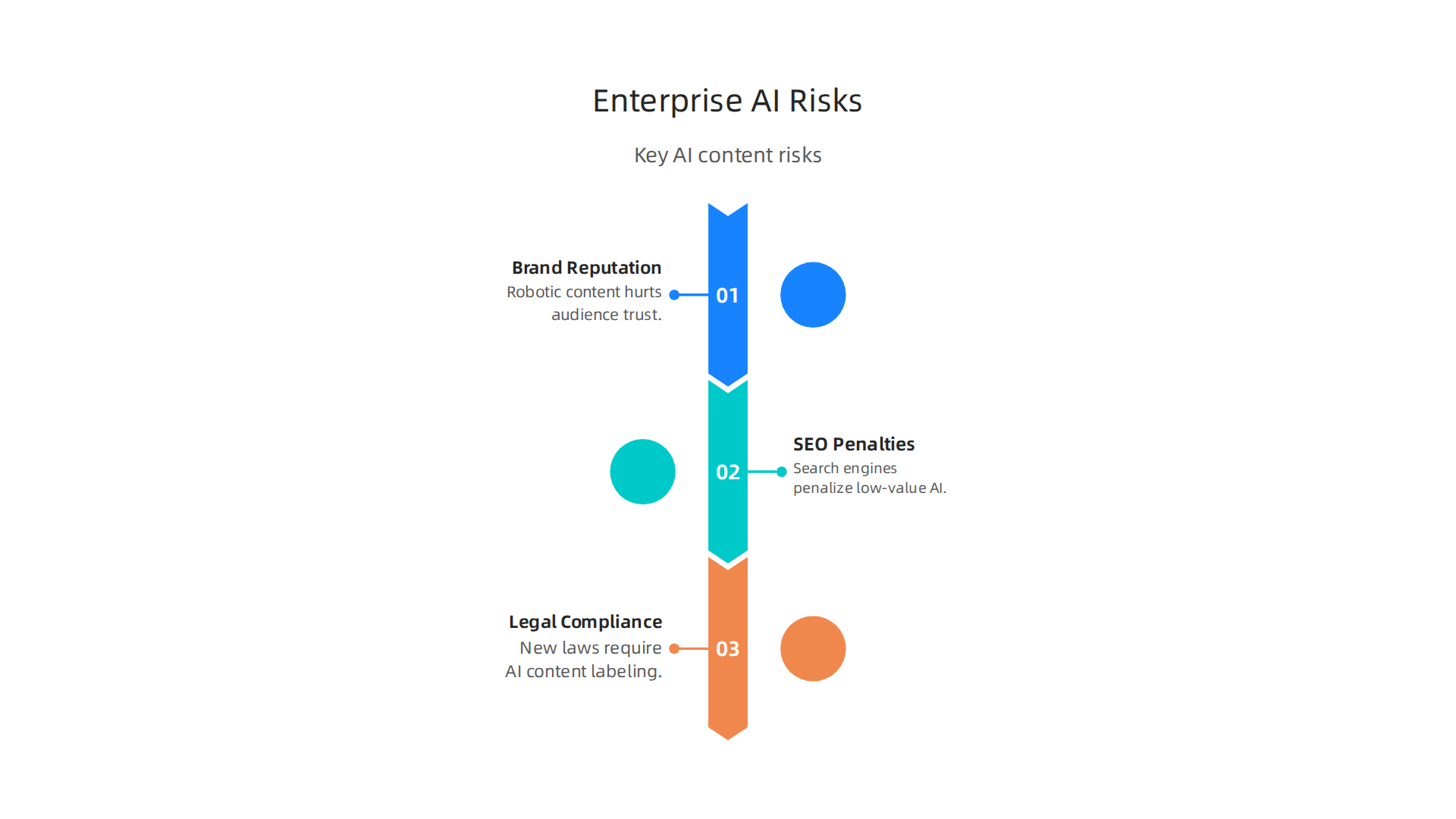
You might think any free AI detector is good enough. Here is the thing: the risks are much bigger when you run a large organization.
- Brand Reputation: Publishing content that sounds robotic or wrong hurts the trust you have built with your audience. Once you lose that trust, it is hard to get back.
- SEO Penalties: Search engines in 2026 are very good at spotting low-value AI content. They actively penalize sites that rely on it. Google’s E-E-A-T system rewards content that shows real expertise. Using Originality AI helps you catch issues before they hurt your search rankings.
- Legal Compliance: This is a rapidly growing area. New laws like the EU AI Act require companies to label AI-generated content.
The FTC is also pushing for more transparency. If you are not checking your content properly, you could face fines or more government scrutiny.
What Makes Originality AI Different
Most AI detectors are built for one person to use on a single article. Originality AI is built for teams. That is a big difference for enterprises.
It comes with team workflows. You can invite writers and editors, set different permission levels, and review scans all in one place. It also has a powerful API. This means you can connect it directly to your existing cloud based productivity and collaboration tools. Every blog post, white paper, or report gets scanned automatically before it goes live.
The demand for this type of tool is exploding for good reason. The global AI content detector market is projected to reach $5.45 billion by 2035. That kind of growth shows that enterprises everywhere are realizing they need a more robust solution.
The bottom line? In 2026, ignoring AI content detection is a risk most enterprises cannot afford to take. Having a tool like Originality AI gives you a layer of protection for your brand, your search traffic, and your legal standing.
The Technology Behind Originality AI: Detection, Accuracy, and Data
You might be wondering how Originality AI actually tells the difference between human writing and machine output. It is not magic. It is some pretty smart math and machine learning.
How the Detection Engine Works
Originality AI uses a few key techniques to analyze text. The main one is something called perplexity. Think of it as a measure of surprise. AI models like ChatGPT tend to pick the most likely next word every time. That makes their writing more predictable. Human writing has more surprises, more unexpected word choices. The tool measures that.
Another technique is burstiness. Humans naturally vary their sentence length. We write short sentences. Then we write longer ones that go on for a while with more detail. AI tools tend to keep sentence length more even. Originality AI looks for that pattern too.
Under the hood, the platform uses transformer models, the same type of architecture that powers the AI tools it is trying to detect. It has been trained on massive datasets of both human and machine text to spot the subtle differences. This is not a simple rule-based checker. It learns and adapts as writing styles change.
How Accurate Is It Really?
No tool is perfect, and it is important to be honest about that. Independent tests in 2026 show that Originality AI performs well, especially when compared to others.
One detailed comparison found that Originality AI was the least likely to throw a false positive on polished student writing compared to Turnitin and GPTZero. That matters a lot for enterprises. You do not want to wrongly accuse a human writer of using AI.
However, accuracy does drop on heavily edited or paraphrased AI content. That is a common challenge across all detectors. Originality AI has been recognized as the most accurate tool across multiple studies for overall precision and recall.
For enterprise use, the real value is in the consistency. You can set a threshold that matches your risk tolerance and scan everything at scale.
Data Privacy and Compliance
Here is where Originality AI really shines for large organizations. The platform takes data privacy seriously. When you scan content through Originality AI, your text is not stored or used to train other models. This is critical for legal teams, financial documents, and proprietary research.
The architecture is built with enterprise compliance in mind. It aligns with frameworks like GDPR and supports the transparency requirements of regulations such as the EU AI Act. You can integrate it directly into your existing workflows through the API, meaning sensitive content never leaves your secure environment. For teams that are already managing complex data systems, having this layer of protection is essential. In fact, understanding your data collection methods for enterprise AI is crucial to maintaining that security.
The bottom line? The technology is sophisticated, the accuracy is industry-leading for enterprise use, and the privacy setup is built for compliance. That is a combination most free tools simply cannot match.
Enterprise Use Cases: From Content Marketing to Compliance
So you understand how Originality AI works and why the data privacy setup matters for big teams. Now let’s talk about where this tool actually fits into your daily operations. The real value shows up when you apply it to specific workflows that already keep you busy.

Content Marketing and SEO
This is the most common use case for a reason. If you run a content marketing program, you are probably dealing with guest posts, freelance writers, and maybe even AI-generated drafts. You need a way to verify everything before it goes live.
Imagine you get a guest post that claims to be human-written. You run it through Originality AI. If the score flags it as AI-generated, you can send it back or rewrite the sections that look machine-made. This protects your site’s search rankings and your brand reputation.
The same goes for your own blog drafts. Many teams use AI tools to speed up first drafts. That is fine. But you need to check that the final version reads like a human wrote it. Originality AI lets you do that at scale. You can scan every piece of content before publishing and avoid the penalty risk that comes with thin AI content.
For teams that rely on cloud based productivity and collaboration tools, this workflow fits right into your existing systems. You can add the detection step right after your editing process.
Academic and Training Materials
If your organization runs e-learning courses, certifications, or internal training programs, you need to keep the content honest. AI can help create training materials faster, but students and trainees deserve accurate, original content.
You can use Originality AI to audit your course materials before launch. Check that the explanations are not just copied from an AI model. Check that the quiz questions are original. This matters for maintaining the credibility of your certifications.
It also helps with academic integrity in corporate training. If employees submit written assignments as part of a program, you can verify their work is their own. This is a growing concern as more people use AI to complete coursework.
Internal Documentation and Legal Compliance
This is where things get serious. Many enterprises produce massive amounts of internal documentation, reports, contracts, and regulatory filings. You do not want those documents to contain AI-generated text that could mislead or create compliance issues.
Enterprise AI use cases in 2026 include monitoring compliance risks, analyzing contracts, and detecting financial anomalies. Originality AI fits into this picture by giving you a way to audit written materials for AI involvement.
Think about it. Your legal team drafts a contract. Someone feeds it into an AI tool for "editing." Now that contract contains AI-generated clauses that could be inaccurate or inconsistent with your policies. Running those documents through Originality AI catches those issues before the document leaves your team.
The same applies to regulatory filings. In highly regulated industries, regulators expect transparency. If your filing contains undisclosed AI content, you could face penalties. Originality AI helps you maintain that transparency by flagging AI-generated sections so you can review and adjust them.
For teams already focused on compliance and risk management, adding an AI detection step is a natural extension of your existing processes. It is just another layer of protection.
Why These Use Cases Matter Together
The beauty of Originality AI is that it works across all these areas with one consistent approach. You do not need separate tools for marketing, training, and compliance. You set your threshold, scan everything, and get consistent results.
This is especially important as more organizations adopt AI tools across departments. By 2026, the majority of companies are using AI in some form. Having a detection tool that covers every department helps you maintain control without adding complexity.
If you are ready to see how this works in your own environment, you can set up a scan and start testing with your real content. The process is straightforward, and the results give you immediate visibility into where AI is showing up in your organization.
Implementation and Integration: A Step-by-Step Guide for IT Leaders
You now see how Originality AI fits into content marketing, training, and compliance. But making it work in your organization requires planning. IT leaders need to think about deployment, security, and getting the team on board. Let’s break it down step by step.
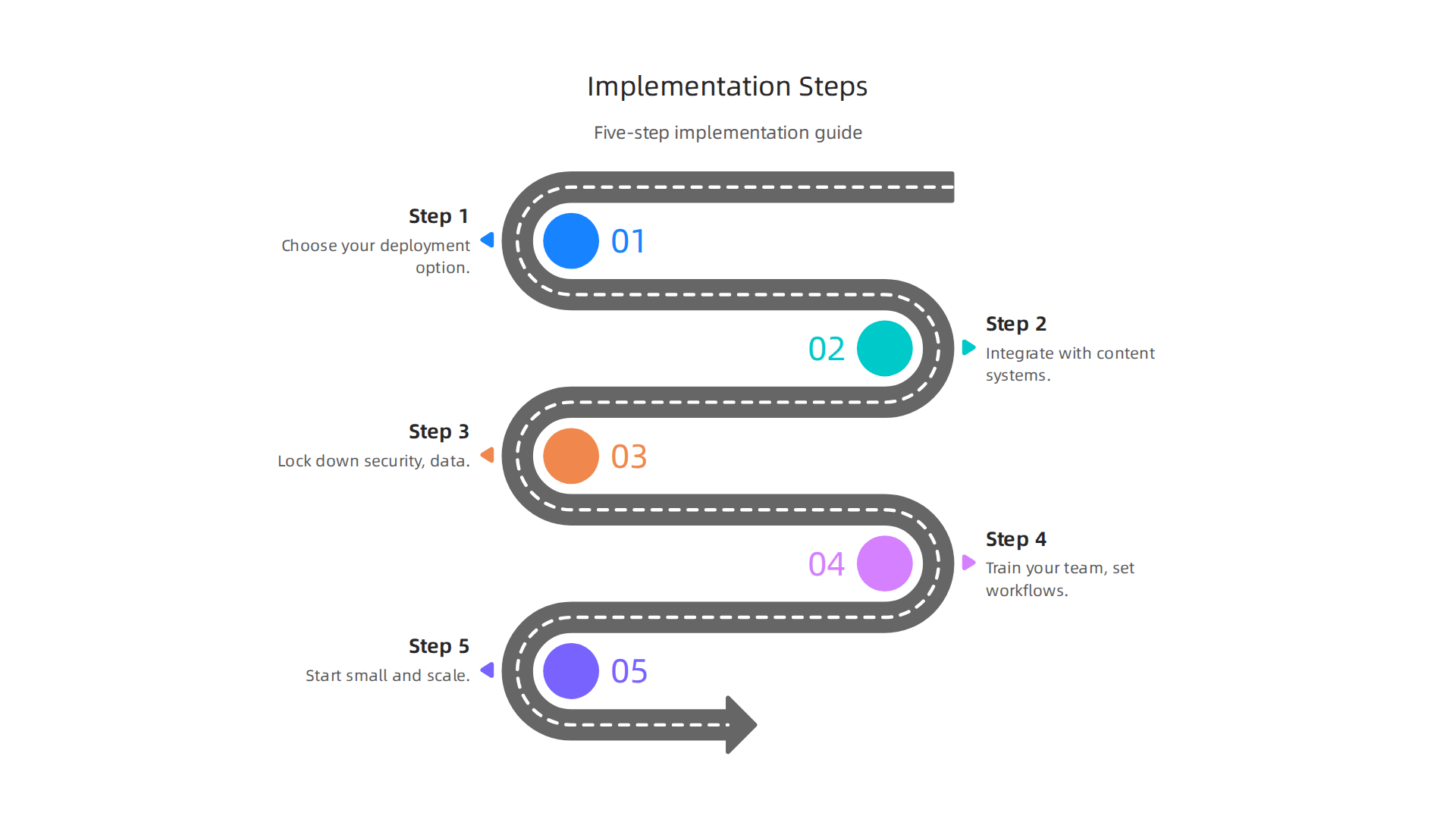
Step 1: Choose Your Deployment Option
Originality AI offers two main deployment paths. The simplest is the cloud version. You sign up, start scanning, and everything runs on their servers. This works for most teams because there is no hardware to manage. You get updates automatically and can scale quickly.
For organizations with strict data rules, an on-premise option might be better. You run the tool inside your own network. This keeps all your content behind your own firewall. The tradeoff is that your IT team handles maintenance and updates.
According to the SSNTPL enterprise AI implementation guide for 2026, most companies start with a cloud pilot before moving to on-premise if needed.
That is a smart way to test without heavy upfront investment.
Step 2: Integrate with Your Content Systems
The real power comes when you connect Originality AI to your existing tools. Most teams use a content management system like WordPress or a document hub. Originality AI has an API that lets you plug detection checks directly into your publishing workflow.
This means every time someone submits a draft or hits publish, the system runs an automatic scan. No extra clicking. No manual uploads. The API integration keeps everything smooth and saves your editors time. If you already use cloud based productivity and collaboration tools, the API can sit right inside that ecosystem.
Step 3: Lock Down Security and Data Governance
AI detection tools handle sensitive content. Drafts, proprietary reports, internal communications. You need to trust that this data stays safe.
Originality AI uses encryption both at rest and in transit. Access controls let you decide who in your team can see results or change settings. The platform also complies with major standards like SOC 2 and GDPR. As AI regulations tighten in 2026, with the EU AI Act transparency rules coming into effect in August, having a compliant detection tool protects you from fines.
For data governance, you should also set clear policies on what types of content get scanned. Do you scan internal memos or only external-facing copy? Define that early. This aligns with steps recommended in the Straive AI deployment strategy framework, which emphasizes readiness assessments and data pipeline design.
Step 4: Train Your Team and Set Workflows
A tool is only useful if people use it correctly. Run training sessions for your content team, editors, and compliance staff. Show them how to read the scores and what action to take when a flag appears.
Set a clear policy: what score threshold triggers a rewrite? Who reviews disputed results? Create a simple workflow that everyone understands. For example:
- Writer submits draft
- Editor runs scan
- If score is below threshold, publish
- If score is above threshold, send back for revision
As noted in the TechClass guide on maximizing AI training ROI, training is one of the biggest factors in successful AI adoption. Without it, your team might ignore the tool or use it incorrectly.
Step 5: Start Small and Scale
Do not try to scan everything on day one. Pick one department, maybe your blog team, and run a two-week pilot. Gather feedback. Adjust your thresholds. Once the process feels natural, expand to other teams like legal, training, or customer communications.
The Enterprise AI Playbook from Stanford Digital Economy Lab suggests that moving from pilot to full rollout can take weeks to months depending on organizational complexity. Be patient and iterate.
Following these steps will get Originality AI running in your organization without chaos. You get consistent detection, strong data protection, and a team that knows exactly what to do when AI content shows up. Next, let’s look at how to measure the return on that investment.
Measuring ROI: The Business Case for Enterprise AI Content Verification
You have set up Originality AI, trained your team, and built your workflows. Now comes the question every IT leader hears: What did we get for our investment?
The answer goes beyond a single number. But there are real, measurable returns when you use AI content verification at scale.

Direct Cost Savings
The most obvious win is fewer hours spent on manual review. Before AI detection, editors and compliance teams read every piece of content looking for AI-generated text. That is slow and expensive. With an automated tool, a scan takes seconds instead of hours.
According to the NVIDIA State of AI Report 2026, 70% of organizations in North America are already actively using AI, and many are seeing direct productivity gains. For a content team producing 500 pieces per month, cutting review time by even 50% can save thousands in labor costs.
Then there are SEO penalties. Search engines penalize low-quality or AI-generated content. Getting flagged can drop your traffic overnight. Avoiding that alone can justify the cost of a detection tool.
Legal risk is another factor. If your organization publishes content that violates disclosure rules under regulations like the EU AI Act, fines can be severe. The global AI content detector market is expected to hit $5.45 billion by 2035, which shows how many companies are taking this seriously.
Indirect Benefits That Add Up
Brand protection is harder to measure but just as real. Publishing authentic, human-written content builds trust with your audience. One viral scandal around AI-generated misinformation can damage a reputation built over years.
Improved content quality also means higher engagement, better conversion rates, and stronger customer loyalty. When your readers trust what you publish, they come back. This competitive advantage is especially important as more companies rush to adopt AI tools. The enterprise AI market is projected to grow from $98 billion in 2025 to $558 billion by 2035, so the landscape is getting crowded fast.
Quantifying the Numbers
So what does the ROI actually look like? For most large-scale deployments, payback periods range from 3 to 6 months. That is fast for enterprise software. The total cost of ownership includes the subscription cost, integration time, and training. But the savings in manual review time alone often cover the expense within the first quarter.
Track a few key metrics before and after deployment: average review time per piece, number of flagged pieces requiring rewrite, and changes in search rankings or traffic. The Stanford Digital Economy Lab Enterprise AI Playbook suggests that organizations tracking these metrics are far more likely to successfully scale their AI investments.
If you want to see how AI detection fits into your broader workflow strategy, check out our guide on cloud based productivity and collaboration tools.
The bottom line is simple. Originality AI pays for itself through direct savings, risk reduction, and stronger brand equity. As AI content continues to grow, the cost of not having detection is far higher than the cost of implementing it.
Originality AI vs. Competitors: A Market Comparison for Decision Makers
So you know the ROI story. Now comes the hard part. Which tool do you actually pick?
The AI detection market is crowded in 2026. You have big academic names like Turnitin, popular standalone tools like GPTZero, enterprise-focused platforms like Copyleaks, and newer players like Pangram Labs and Plagly. Each one makes different promises about accuracy, false positives, and enterprise readiness. Let’s cut through the noise.
How the Top Tools Stack Up
Independent testing in 2026 reveals some clear patterns. Here is what the data actually shows.
Turnitin claims a 98% accuracy rate with less than 1% false positives on documents that contain more than 20% AI text. But its accuracy drops significantly on heavily paraphrased or edited content, landing between 60% and 80% according to benchmark tests. That is a problem if your team edits AI drafts before publishing.
GPTZero markets itself as the best detector on the RAID benchmark with around 99% accuracy. But independent reviews note a 20% to 30% false positive rate in some scenarios. That means you could flag a lot of human-written content for review that does not need it.
Originality AI lands in a different spot. It is designed for professional publishing teams, not just classrooms. According to a meta-analysis of multiple accuracy studies, Originality AI delivers high precision and recall across the board. In direct comparisons, it was the least likely to throw a false positive on polished human writing. That matters when you are reviewing content at scale.
Here is the tradeoff. Originality AI accepts a slightly higher false positive rate on professional content, around 5% to 9%, by design. The reason is simple. They would rather catch more AI content and let you verify borderline cases than miss AI text entirely.
Enterprise Features That Count
For IT leaders, accuracy is just one checkbox. You also need API performance, team management controls, integration with existing workflows, and support for your compliance requirements. Originality AI offers team dashboards, custom API settings, and detailed reporting that fits into an enterprise stack.
GPTZero and Turnitin are strong in education. But they were built for that world. Originality AI was built for publishers, marketing teams, and enterprise content operations. That design difference shows up in how the tool handles volume, speed, and team permissions.
If you are still evaluating how AI tools fit into your broader technology stack, check out our guide on enterprise technology analyst insights for 2026. It helps CTOs and CIOs think through vendor selection frameworks.
A Simple Decision Framework
Here is how to evaluate your options.
- Test for your use case. Run your own content through each tool before buying. Accuracy varies depending on whether you check marketing copy, technical documentation, or student essays.
- Prioritize false positive management. For enterprise publishing, a tool that wrongly flags human writing costs you time and trust. Originality AI’s design leans toward catching more AI text, but you need a clear review workflow to handle the edge cases.
- Check API and integration fit. Can the tool plug into your CMS or existing content pipeline? If not, you will lose the time savings you are trying to gain.
- Look at team scalability. Can you add users, set permissions, and run reports without friction? Enterprise teams need admin controls, not just a detection button.
The bottom line is clear. Originality AI competes well on accuracy, but its real strength is in enterprise readiness. For teams producing content at scale, it offers the right balance of detection power and practical workflow support.
Summary
This article is an enterprise-focused guide to Originality AI, a platform that detects AI-generated text, checks originality, and assists with fact verification to help organizations protect brand trust, SEO, and regulatory compliance. It explains the underlying detection methods (perplexity, burstiness, transformer models), summarizes independent accuracy comparisons, and highlights the tool’s enterprise strengths: team workflows, API integrations, and privacy controls that prevent scanned text from being used to train other models. The guide walks through practical deployment steps (cloud vs. on-premise), integration with content systems, security and governance best practices, and a phased rollout approach. It also lays out real use cases across marketing, training, and legal teams, and shows how to quantify ROI through review-time savings, reduced compliance risk, and preserved search rankings. Decision makers will learn how to evaluate competitors, set thresholds, train teams, and measure impact so they can implement detection at scale without disrupting existing workflows.