
Enterprise Cloud LMS Decisions: A Leader’s 2026 Blueprint

Why cloud LMS decisions matter for enterprise leaders in 2026
In 2026, how businesses teach their employees new skills is super important. This is where a learning management system, or LMS, comes in. More and more, companies are choosing a cloud LMS. This means the learning tools and materials are stored online, not on their own computers. The market for these systems is growing fast. Reports show the global LMS market is worth over $34 billion this year, and it is expected to reach over $123 billion by 2033, with cloud-based options leading the way with more than 70% of the market share
The Latest Learning Management Systems Statistics (2026) Learning Management System (LMS) Statistics and Facts (2026).
For business leaders, picking the right cloud LMS is a big deal.

It helps companies make sure their employees are always learning and growing. This is key for keeping talent, especially for important roles like those doing various computer jobs or specific training like a devops engineer course. A good cloud LMS also makes sure that training follows all the rules and laws, which is called compliance. This helps businesses stay out of trouble and keep up with their rivals. Basically, it’s about staying competitive and making sure your team is ready for what’s next.
But choosing a cloud LMS isn’t always easy. Enterprise leaders face several big challenges.
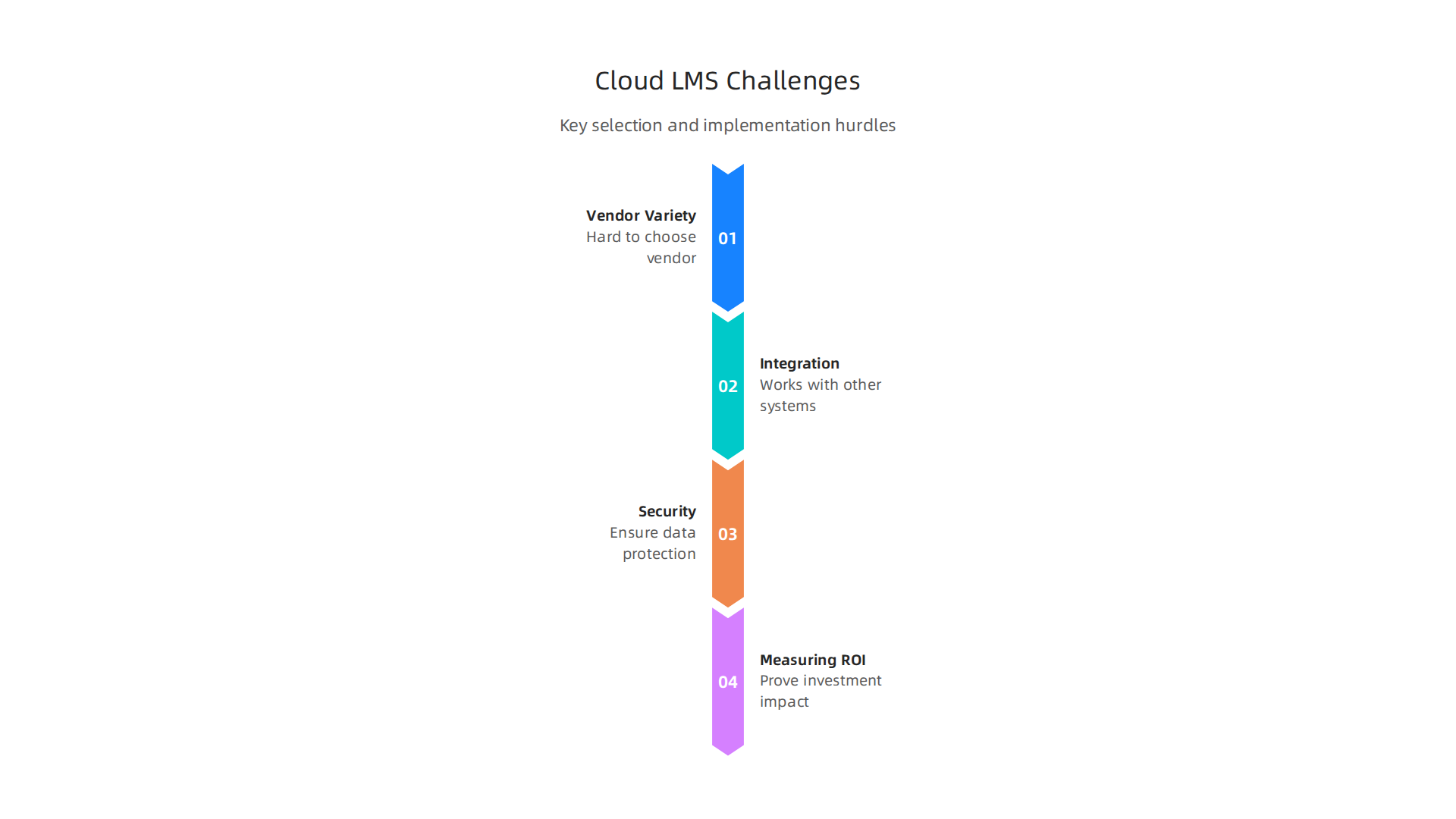
One is dealing with many different companies that offer these systems. It can be hard to know which vendor is best. Another challenge is making sure the new cloud LMS works well with all the other computer programs a company already uses. This is known as integration. In fact, many enterprises find integration problems to be a major hurdle when adopting an LMS Enterprise Learning Management System Size 2026.
Keeping information safe, or security, is also a top concern. With everything online, businesses must be sure their data is protected. And finally, leaders need to know if the money spent on a cloud LMS is actually giving them good results. This is called measuring ROI, or return on investment. It means checking if the system helps employees learn better, boosts productivity, and improves the company’s bottom line. When thinking about your overall digital strategy, it’s helpful to understand the Cloud provider ecosystem enterprise strategy for 2026.
Staying informed about the latest technology trends, like those in AI and cloud solutions, is a must for any enterprise leader today.
Get clear daily AI updates from The AI Newsletter Worth Reading.
2026 market and adoption trends for cloud LMS
Moving on from the challenges, let’s look at the big picture of why so many companies are choosing a cloud LMS in 2026. There are a few main reasons.
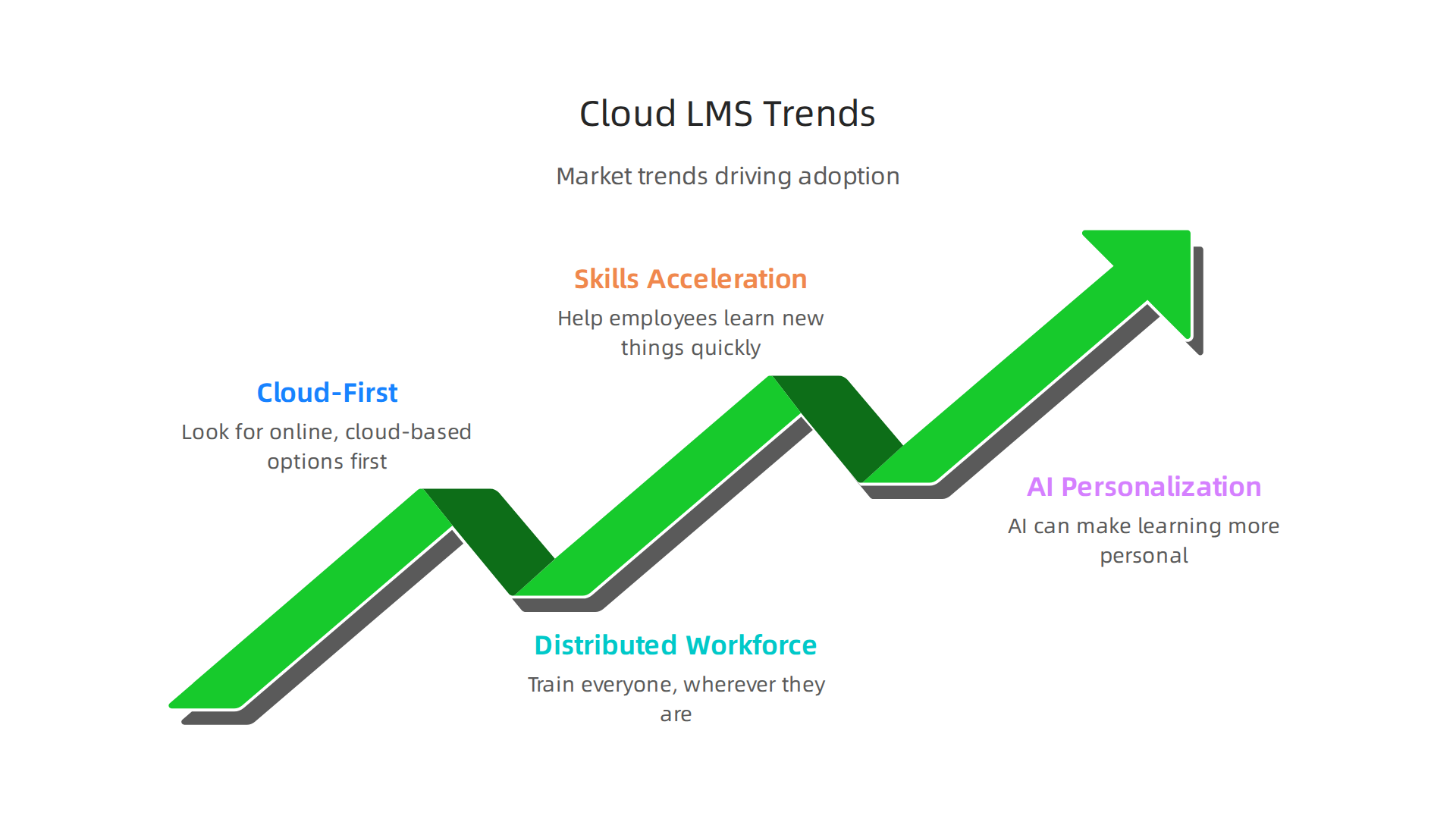
First, most businesses now think "cloud-first." This means when they need new tools, they look for online, cloud-based options first. They want software that is easy to use and can grow with their needs. Reports show that cloud use is still going strong in 2026, almost everyone is using it in some way 80+ Cloud Computing Statistics You Need to Know in 2026. This push means a cloud LMS is often the top choice for training.
Second, many people now work from different places. They are not all in one office. This is called a distributed workforce. A cloud LMS makes it easy to train everyone, no matter where they are. This is very helpful for teams, even for specialized roles

like those in mastering remote hiring for technical product manager jobs in 2026. It also lets employees learn at their own speed and when it’s best for them.
Third, skills are changing faster than ever. What you learned yesterday might not be enough for tomorrow. This is called skills acceleration. Companies need to help their employees learn new things quickly to stay competitive. This is true for all sorts of computer jobs. A good cloud LMS helps businesses offer up-to-date training. To keep up with all the new tech, leaders need to understand key enterprise technology domains every leader must understand in 2026.
Beyond these big trends, new features are also making a cloud LMS even better. Artificial intelligence, or AI, is a big part of this. AI can make learning more personal. It can suggest courses just for you, or even help create new learning materials. Many companies are quickly adopting AI. In fact, over 80% of businesses are expected to use generative AI by 2026 50+ Mind Blowing LLM Enterprise Adoption Statistics in 2026. This makes AI a top trend for LMS in 2026 LMS Industry Trends 2026: Statistics, AI Innovations & …. Working with a skilled e-learning software development company can help bring these smart new tools into your training programs.
The market for these learning systems keeps growing. Experts expect the global LMS market to grow from about $28.6 billion in 2025 to $70.8 billion by 2030 The Ultimate 2026 LMS Statistics Report: 100+ Data Points You Can Cite. This shows how important a cloud LMS is for businesses today.
Key enterprise features to prioritize in a cloud LMS
With so many businesses adopting a cloud LMS in 2026, it is important to know which features are most helpful. Not all learning systems are the same.
For companies, certain tools within a cloud LMS make a real difference.
Essential Core Capabilities
First, let’s look at the basic things every good cloud LMS should have:
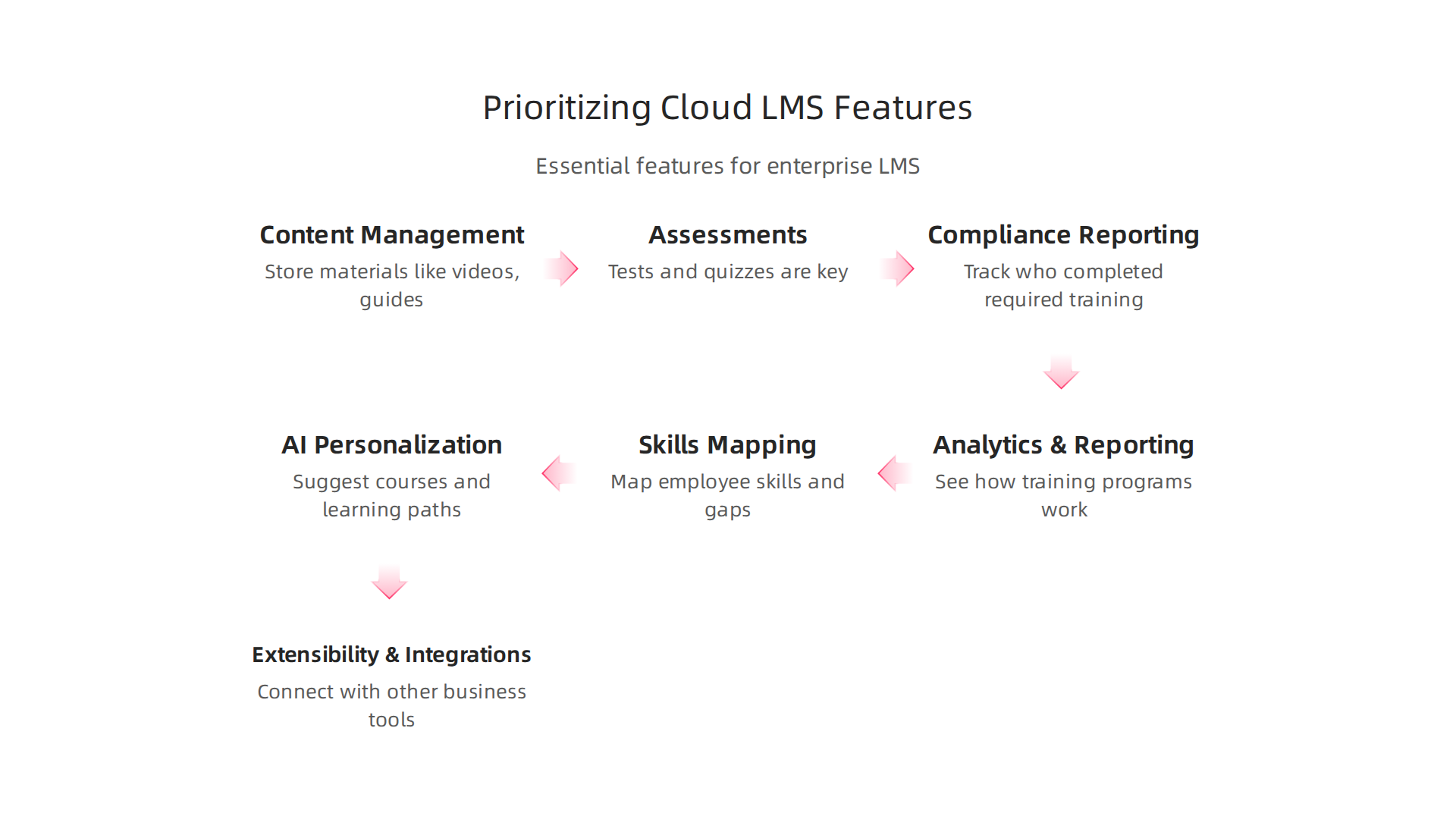
- Content Management: This is where you store all your learning materials like videos, guides, and lessons. A good system makes it easy to upload, organize, and share these.
- Assessments: How do you know if people are learning? Tests and quizzes, called assessments, are key. They help check if employees understand the training. Enterprise LMS platforms often include interactive features like quizzes and discussion forums to make learning better Guide to enterprise learning management system.
- Compliance Reporting: Many businesses need to follow special rules. A cloud LMS can track who has completed required training, which helps prove that your company is following these rules. This is vital for staying out of trouble.
- Analytics and Reporting: This lets you see how well your training programs are working. You can find out which courses are popular, who is learning what, and where improvements are needed. Strong analytics help measure and improve your training efforts
Ultimate enterprise learning platform checklist: features …. Understanding these reports is key for leaders, and you can learn more about the topic by checking out analytics definition what enterprise leaders must know for 2026.
Advanced Capabilities for Growth
Beyond the basics, a great cloud LMS for a growing company in 2026 will also offer more advanced features:
- Skills Mapping: This helps companies see what skills their employees have and what new skills they need. For example, if you need more people with specific computer jobs skills, like a devops engineer course, the system can help you find and train them. This can also help with it talent 2026 building your engineering workforce from within.
- AI Personalization: Remember how we talked about AI making learning smart? A good cloud LMS uses AI to suggest courses and learning paths just for you, based on your job and what you need to learn next. This creates a custom learning experience, which many top systems offer 7 Best Enterprise Learning Management Systems in 2026. To stay on top of new AI developments, you might want to consider what is the AI Newsletter Worth Reading.
- Extensibility and Integrations: This means the cloud LMS can easily connect with other tools your business uses, like HR systems or video call platforms. This makes everything work together smoothly. Many systems offer ready-made connections to hundreds of applications 15 Best Enterprise Learning Management Systems.
Choosing a cloud LMS with these features can help your business train its team better and faster, making sure everyone has the skills they need for success.
The next step after knowing what features you need is to pick the right cloud LMS vendor. It can feel like a big puzzle. With so many choices out there in 2026, it’s easy to get stuck trying to decide. This is often called "analysis paralysis."
How to Pick the Best Cloud LMS
To make choosing easier, think about these main points:
- Does it Fit Your Needs? First, does the cloud LMS have all the important features we talked about before? Does it offer what your specific computer jobs require, like a devops engineer course? Make a list of your must-have features. The best system is one that truly helps your team learn what they need.
- Can It Connect With Your Other Tools? A good cloud LMS should work well with the other software your company uses. Think about your HR systems or other business tools. If they connect easily, it saves time and makes everything smoother. This is part of looking at your overall Cloud Provider Ecosystem Enterprise Strategy For 2026.
- What’s the Real Cost? The price tag isn’t always the whole story. You need to think about the "Total Cost of Ownership" (TCO). This includes not just the monthly fee, but also setup costs, support, and how much it will cost as your company grows. Prices for a cloud LMS can be very different. Some might start at around $1 to $10 per user each month, while bigger systems for large companies can cost $18,000 to $25,000 per year 10 Best SaaS LMS Platforms in 2026. Understanding these different costs is important LMS Pricing Guide 2026: Models, Costs & Comparison.
- Does it Grow With You? Look at the vendor’s plans for the future. Will their cloud LMS keep getting better? Will it still meet your needs as your company changes and grows? This is important for a long-term investment.
Different Kinds of Cloud LMS Options
When you look at vendors, you’ll see different types of e-learning software development company offerings:
- Full-Suite LMS: These are all-in-one systems that have many features for everything you might need. They are great for big companies. Platforms like iSpring or Docebo are often seen as top choices for enterprise-level needs The Best Learning Management Systems For 2026.
- Learning Experience Platforms (LXP): These focus more on making learning fun and personal. They are like a smart assistant that suggests courses just for you.
- Specialized Compliance Platforms: Some industries have very strict rules. These LMS platforms help make sure all employees get the right training to follow those rules, and they keep good records to prove it.
By using these points, you can make a clear choice without getting lost in too many options.
After you think about the features and types of cloud LMS options, it’s time to ask even deeper questions. For leaders in IT, like CIOs, choosing a cloud LMS means also looking closely at how it connects with other systems and how safe it keeps your company’s information.
Integration, security and compliance: questions CIOs must ask
Picking a cloud LMS is more than just finding good training courses. It is about making sure the new system works well with everything else your company uses and that it keeps your data safe. Here are the important things CIOs and other leaders should think about in 2026:
How well does it connect with your other tools?
A good cloud LMS needs to talk to your existing software. These connections are called integrations. They help save time and stop mistakes.
- Single Sign-On (SSO): This lets your employees use one username and password to get into many systems, including the LMS. It makes things easier and more secure. A good LMS should support this, and if not, it should at least offer strong features like Multi-factor Authentication (MFA) to keep accounts safe AshleyPeralta – Finalized Thesis .docx – Adelphi University.
- HRIS (Human Resources Information System): Connecting to your HR system means employee details like new hires or job changes can automatically update in the LMS. This makes managing training for all your computer jobs, like a devops engineer course, much simpler.
- Data Warehouses and Analytics Pipelines: These connections help you gather learning data into a central place. This way, you can see how well training is working and make better plans for the future. You can build reliable data infrastructure by planning for these connections early Data Pipeline 2026 Blueprint For Building Real-Time Reliable Infrastructure.
When choosing an e-learning software development company to work with, check if their tools can easily connect with your current setup. It’s best to use cloud platforms and tools that your IT team has already approved

Best Practices – Cloud Platforms & SaaS Integrations.
How safe is your data and does it follow the rules?
Security and compliance are super important. You want to make sure your training data is private and that your company follows all the necessary laws and rules.
- Data Residency: Where will your data be stored? Some laws require company data to stay in a certain country or region. You need to know that your cloud LMS vendor can meet these rules.
- Encryption: This is like locking up your data with a secret code so only authorized people can see it. Your LMS should encrypt data when it’s stored and when it’s being moved. Experts agree that secure protocols like HTTPS and strong encryption are key for protecting data Strategies and Methods Used by Information Technology ….
- Certifications: Look for vendors with important security badges like ISO 27001 or GDPR compliance. These show they meet high standards for protecting information. Staying one step ahead in securing your learning management system is always a good practice One Step Ahead: Use Your Learning Management System Securely.
- Audit Trails: This means the system keeps a record of who did what, and when. If there is ever a problem, you can trace it back to find out what happened. Having strong cloud security practices is a must for any enterprise in 2026 Best Practices for Cloud Security | CMU Software Engineering Institute.
Making sure your chosen cloud LMS meets these strict requirements helps protect your company and its employees.
For daily insights into advancements in technology and enterprise AI, stay informed with The AI Newsletter Worth Reading.
Once you have picked a cloud LMS that fits your company’s needs for features, safety, and connections, the next big step is to bring it to life across your whole business. This means planning how to introduce it, help people use it, and make sure it can grow with your company.
Implementation, change management and scaling a cloud LMS across the enterprise
Putting a new cloud LMS into a big company is a journey. It is not just about turning on a new system.

It is about helping your employees learn and embrace a new way of training. Here are some smart ways to do this in 2026:
Starting small and getting everyone on board
It’s usually best not to roll out a new system to everyone all at once.
- Pilot Programs: Start with a small group of users, like one department or a few teams. This helps you find any problems early and get feedback. You can fix things before the whole company sees them. This small group can try out important courses, like a new devops engineer course, to make sure everything works well.
- Phased Rollouts: After a successful pilot, slowly bring in more groups of employees. This gives everyone time to get used to the new system and reduces stress.
- Getting Stakeholders Aligned: Make sure everyone from top leaders to managers and regular employees understands why the new cloud LMS is important. Explain how it will help them grow their skills and make their computer jobs easier. When people see the benefits, they are more likely to use it. Enterprise learning systems should offer customized training paths based on roles and goals to ensure relevance and improve engagement Enterprise Learning System Development Guide For ….
Making it work for the whole company as it grows
As your company uses the cloud LMS more and more, you need a plan for how it will handle more users and content.
- Governance: This means setting clear rules for who can add new courses, update information, and manage users. It keeps the learning platform organized and working smoothly. A good enterprise LMS should be scalable to handle many users and courses without issues Top enterprise LMS platforms: Learning and employee training.
- Content Lifecycle: Think about how new training materials will be created, reviewed, updated, and eventually removed. Having a clear process ensures that your training content stays fresh and helpful.
- Support Models: Decide how employees will get help if they have questions or run into problems with the cloud LMS. This could be through a help desk, online guides, or special training sessions. Knowing that support is there makes people feel more comfortable using new tools. As you scale, having a clear strategy for your wider cloud provider ecosystem enterprise strategy for 2026 can make a big difference.
By thinking about these steps, your e-learning software development company can help you bring a cloud LMS into your business in a way that works for everyone and helps your company grow.
Once your company has its cloud LMS up and running, the next big question is: Is it actually working? It’s not enough to just have a new system. You need to know if it’s helping your employees learn better and making your business stronger. This is where looking at numbers and proof of success comes in.
Measuring impact: KPIs, analytics, and proving ROI for a cloud LMS
To really see the value of your cloud LMS, you need to measure its impact.

This means using special numbers, called Key Performance Indicators (KPIs), and looking at data (analytics) to show that the money and effort put into the system are paying off. Proving Return on Investment (ROI) helps everyone understand how the LMS helps the company grow.
What to track with your cloud LMS
Here are some important things to watch closely:
- Completion Rates: How many employees finish their training courses? High completion rates mean people are engaged. For example, if you offer a new
devops engineer course, seeing many people finish it is a good sign. - Time-to-Proficiency: How quickly do employees learn new skills and become good at their
computer jobsafter taking a course? This shows if the training is fast and effective. - Role-Based Competency Gains: Does the training actually make employees better at their specific job roles? You can check if their skills improve after using the
cloud LMS. - Business KPIs: These are the big numbers that show how the whole business is doing. For instance, did customer service scores improve after new training? Did sales go up? Connecting learning to these big business goals is key to proving ROI. When measuring, you need to balance user actions with learning outcomes to diagnose issues early and confirm your ROI guesses How should you measure LMS pilot metrics and success?.
Making learning outcomes connect to business success
Designing a way to measure success means thinking about how what people learn in the cloud LMS helps the company meet its goals.
- Start with Clear Goals: Before you even pick a
cloud LMS, decide what you want it to achieve. Do you want to reduce training costs? Make employees more skilled? Improve product quality? Knowing your goals helps you pick the right things to measure. - Use Data from the LMS: Your
cloud LMScollects a lot of information. This includes who took what course, how long they spent, and their quiz scores. This data helps you see patterns and understand how well the learning is going. For more on what these terms mean, check out our guide on Analytics Definition What Enterprise Leaders Must Know for 2026. - Compare Before and After: Look at your company’s performance before the
cloud LMSand compare it to after. For example, if you trained your IT team on new software, track how many support tickets they get about that software before and after the training. This helps show the direct impact. - Listen to Feedback: Ask employees what they think about the courses and how the training helps them in their daily tasks. Their opinions can give you insights that numbers alone might miss. A pilot program, for instance, should clearly define the success criteria that matter to leaders, such as completion rates and time to proficiency How does a pilot program LMS prove value in 8–12 weeks?.
By carefully tracking these numbers and connecting them to your business goals, your e-learning software development company can help show how valuable your cloud LMS truly is.
Get clear daily AI updates from The AI Newsletter Worth Reading.
Once you know your cloud LMS is making a difference, the next step is to make sure everyone keeps using it and that it’s managed well over time. This means thinking about how people will adopt the system, how you’ll set rules (governance), and how you’ll keep learning fresh and exciting for years to come.
Governance models: Roles, content ownership, and policy for learning programs
Good governance is like having a clear rulebook for your cloud LMS. It makes sure everything runs smoothly and securely. This involves three main parts:
- Clear Roles and Responsibilities: Everyone needs to know their part. Who will add new courses? Who will help employees if they have trouble logging in? Who makes sure the training matches company goals? For example, an
e-learning software development companymight help set up these roles. - Content Ownership and Updates: Who owns the training materials? Is it the HR team, a specific department, or external experts? It’s important to know who is in charge of keeping courses updated, especially for fast-changing topics like a
devops engineer coursefor people incomputer jobs. You also need policies for adding new tools or plugins to the LMS, making sure they meet company rules and privacy needs analysis of third parties in learning management systems. - Policies and Security: Your company needs rules about how the
cloud LMSis used. This includes things like data privacy, how to keep information safe, and who can access what. Protecting your data in the cloud is very important, requiring robust security measures like data encryption and secure data transfers [Cloud security in practice: A technical guide to confidentiality, integrity, and availability at scale](https://www.academia.edu/129413262/Cloud_security_in_practice:_A technical_guide_to_confidentiality,_integrity,_and_availability_at_scale). Always back up your LMS data and use secure methods to protect it One Step Ahead: Use Your Learning Management System Securely. For more on managing cloud technologies securely, consider exploring a broader cloud provider ecosystem enterprise strategy for 2026.
Tactics to drive learner engagement and sustain long-term usage
Even with great content, people might stop using the cloud LMS if it’s not engaging. Here’s how to keep them interested:
- Make Learning Fun and Relevant: Offer courses that directly help employees in their daily tasks or career growth. Think about making courses interactive, with quizzes, games, or real-world examples.
- Personalize Learning Paths: Not everyone needs the same training. Let employees choose courses that fit their goals or job roles. For someone aiming for leadership in
computer jobs, they might need different courses than an entry-level professional. - Promote and Remind: Regularly share what new courses are available. Send friendly reminders about training that needs to be completed. Celebrate successes and give recognition for learning new skills.
- Collect Feedback and Improve: Ask learners what they like and don’t like. Use their suggestions to make courses better and keep the
cloud LMSuseful. - Integrate Learning into Work: Make it easy for employees to access training right when they need it, as part of their work routine, rather than seeing it as an extra task. Keeping content fresh and relevant will encourage continuous use.
Summary
This article explains why enterprise leaders must treat cloud learning management systems (LMS) as a strategic decision in 2026, outlining market momentum, business drivers, and the stakes for talent, compliance and competitive advantage. It reviews adoption trends—cloud‑first buying, distributed workforces, skills acceleration—and shows how AI and personalization are reshaping learning experiences. The piece lists essential and advanced LMS features (content management, assessments, analytics, skills mapping, AI), practical vendor selection criteria (fit, integrations, total cost of ownership, scalability), and the integration, security and compliance questions CIOs must ask. It then covers rollout best practices—pilot programs, phased launches, governance—and explains how to measure value through KPIs like completion rates, time‑to‑proficiency and business outcomes. Read it to learn how to evaluate, implement, secure and measure a cloud LMS so your organization trains faster, stays compliant and proves ROI.