SAP ERP 2026 Modules Benefits and Migration Strategies

Introduction: Why SAP ERP Remains the Backbone of Digital Transformation
Digital transformation is a big topic in 2026. But here is the thing: none of it works without a solid foundation. That foundation is often an ERP system. And for many large organizations, that system is SAP ERP.
Enterprise resource planning systems like SAP S/4HANA are more critical than ever. As businesses digitize core operations from finance to supply chain, they need a platform that can keep up. SAP has been doing this for decades. And in 2026, it is still one of the top choices for companies that want to modernize.
But choosing the right ERP is not easy. Decision-makers need clarity on which features actually deliver measurable ROI and a real competitive advantage.

With so many options from different software companies, it can feel overwhelming. That is why independent comparisons are so helpful. For example, this ERP comparison guide breaks down how SAP stacks up against Microsoft Dynamics 365 in 2026.
This guide gives you an evidence-based overview of SAP ERP capabilities, cloud innovations, and integration strategies. Whether you work for a large enterprise or a fast growing software services company, you will find practical insights here.
For deeper context, check out our coverage of enterprise technology analyst insights for 2026.
It is designed to help CIOs and CTOs navigate the changing tech landscape.
If you want to stay current on the latest in enterprise technology and AI, Subscribe Free to The Deep View Newsletter. It delivers clear daily insights straight to your inbox.
Core Modules of SAP S/4HANA in 2026
SAP S/4HANA is the latest version of the SAP ERP system. It uses a modular design. That means you can choose only the modules your business really needs. In 2026, the core modules cover finance, supply chain, procurement, and human resources. Each one comes with embedded AI and real-time analytics to speed up your decision making.
Here are the key modules you will find:
- FICO (Finance and Controlling) – Handles accounting, budgeting, and financial reporting.
- MM (Materials Management) – Manages procurement, inventory, and warehouse stock.
- SD (Sales and Distribution) – Covers order management, pricing, and customer billing.
- PP (Production Planning) – Plans and schedules manufacturing.
- WM (Warehouse Management) – Controls warehouse operations and logistics.
For a complete breakdown of all modules and how they integrate, see this SAP S/4HANA modules list for 2026. It is a great reference for any evaluation.
What sets these modules apart today is the built-in intelligence. The system can forecast supply chain issues or suggest optimal pricing. That helps you react faster and improve your return on investment. If you want to dig deeper into how data powers these features, read our guide on data collection methods for enterprise AI in 2026.
Understanding the module scope helps you plan your SAP ERP implementation and estimate costs more accurately. You only pay for what you use. That is a big plus whether you run a large enterprise or a growing software services company.
Get Free Updates to the Deep View Newsletter for daily insights on enterprise technology and AI.
Finance and Compliance (FI/CO)
Let’s look closer at the most important module for any business: Finance and Compliance, or FI/CO.
In 2026, this module does way more than just track money. It uses a tool called the Universal Journal. This keeps all your accounting and management reports in one single place. No more messy data from different systems. This unified view is a key part of the modern SAP S/4HANA Modules architecture.
It also helps you stay compliant. Tax laws and financial standards change all the time. The system automatically updates for rules like IFRS, GAAP, and country-specific tax rules. This saves your team hours of manual work and reduces costly mistakes.
Here is the best part for an erp system user. The system can now run real-time financial closes. It also forecasts your cash flow using AI predictions. This helps you spot problems before they happen. For software companies or any advance business systems provider, this speed is a game changer.
To prepare your data for these AI features, check out our guide on data collection methods for enterprise AI in 2026. If you want a broader strategic view, our enterprise technology analyst insights for 2026 provides a clear roadmap.
Want daily insights on how AI is changing the sap erp landscape? Subscribe Free to The Deep View Newsletter.
Supply Chain & Logistics (MM, PP, EWM)
Now let’s look at supply chain and logistics. This is where the sap erp system really helps advance business systems and software companies move faster.
In 2026, the Supply Chain module in SAP S/4HANA covers three key tools: Materials Management (MM), Production Planning (PP), and Extended Warehouse Management (EWM).
Here is what makes this module so powerful. First, it connects planning and execution through tools like SAP IBP and Ariba. This means you can plan demand, work with suppliers, and adjust production in real time. The system helps you react to disruptions instantly as noted by Accely.
Second, warehouse automation with IoT gives you real-time inventory tracking. You always know exactly where your stock is. The Extended Warehouse Management feature makes this easy to manage according to ERP Research.
Third, demand sensing uses AI to predict what customers will want. This builds a more resilient supply chain. You can avoid stockouts and reduce excess inventory with better demand planning.
For software services company leaders, this is a huge win. It turns your supply chain from a cost center into a real competitive advantage.
To learn more about the bigger picture, read our enterprise technology analyst insights for 2026.
Want simple daily updates on how AI is transforming supply chains and other erp system tools? Get Free Updates from The Deep View Newsletter.
Talent Management and HR (SuccessFactors Integration)
Just as the supply chain module keeps your inventory moving, the Talent Management and HR module keeps your people growing. In 2026, the SAP ERP system offers deep integration with SAP SuccessFactors. This brings workforce planning and payroll into one smooth flow.
The real power comes from embedded people analytics. You can run skill gap analysis and spot retention risks before they become problems. This helps software companies and software services company leaders make smarter hiring and training decisions. SAP S/4HANA enables rapid response to changes, as noted by Accely. The same speed applies to talent management when you can see skill gaps instantly.
Employees and managers also get streamlined dashboards. Self-service tools let staff update their info, request time off, and view pay. Managers can approve requests and track team performance without IT help.
For advance business systems teams, this integration means your HR data lives inside your erp system. No more juggling separate tools. To see how data collection methods support people analytics, check out our article on data collection methods for enterprise AI in 2026.
Want to stay ahead on how AI and ERP tools are reshaping HR? Subscribe Free to The Deep View Newsletter for daily updates.
Key Benefits Driving ROI for Enterprises
You might have heard some buzz that not all SAP customers are convinced about the return on investment from moving to SAP S/4HANA. A 2021 survey found that 85 percent of licensees were not committed to the new system, with 68 percent citing unclear ROI as the main reason. That skepticism is understandable. Big migrations cost money and take time. But here is the thing. When you look at the actual benefits that a modern SAP ERP system delivers, the picture changes fast.
Standardized processes reduce costs and manual effort.
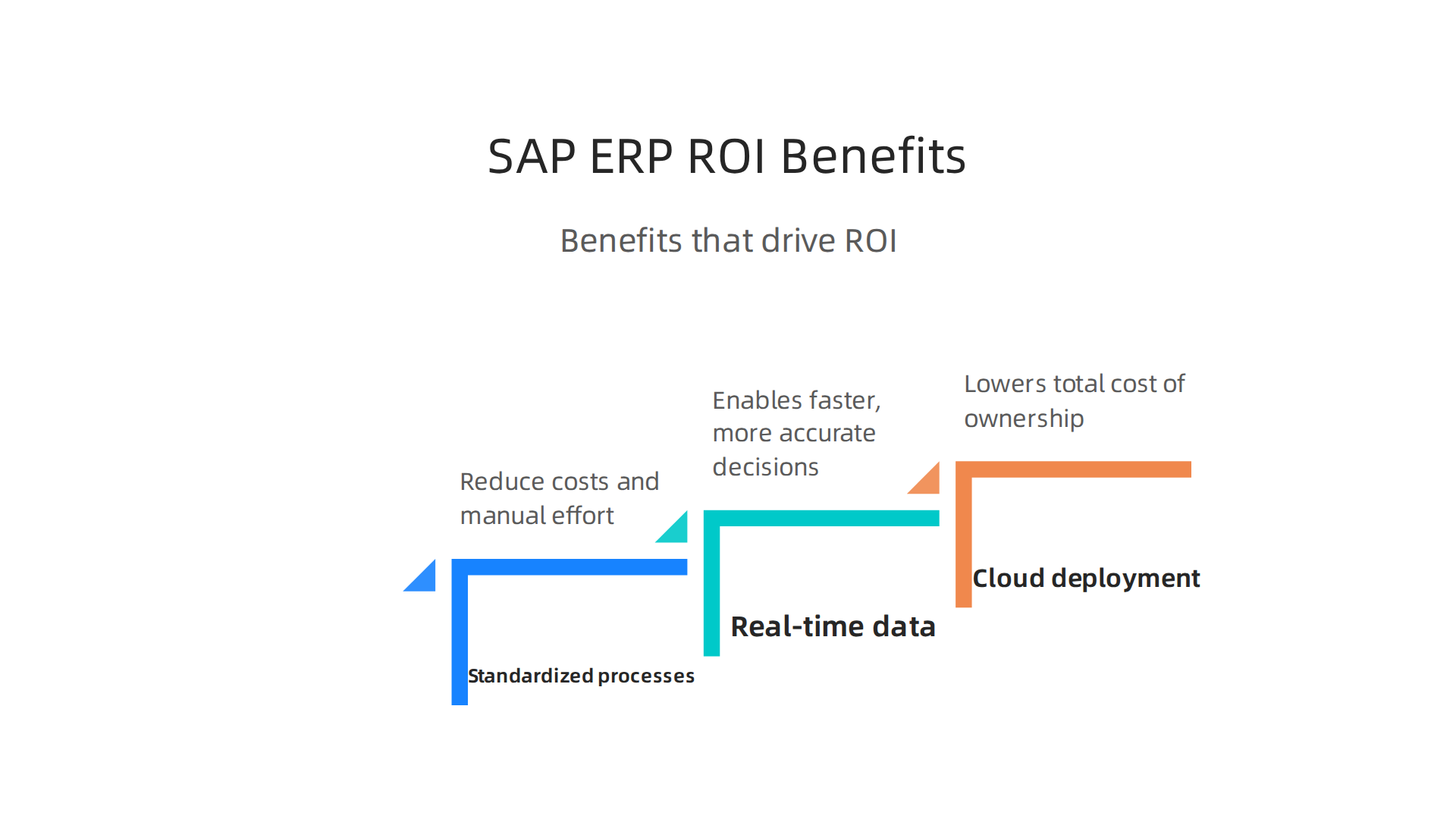
One of the biggest hidden drains on your budget is the time your team spends fixing data errors or re-entering information across old systems. With SAP S/4HANA, processes like order-to-cash and procure-to-pay run the same way every time. A real-world lesson? Archiving old data before you migrate can save significant time and money. That is a simple step many companies skip, but it pays off.
Real-time data enables faster, more accurate decisions. In 2026, you cannot afford to wait for monthly reports. The SAP ERP system gives you live insights into sales, inventory, and cash flow. When a problem pops up, you see it immediately and can respond before it grows. In fact, the ability to make rapid decisions is one of the key drivers of ROI, as noted in migration strategy guides.
Cloud deployment lowers total cost of ownership and increases scalability. You are not locked into buying expensive hardware that sits idle half the time. With a cloud ERP system, you pay for what you use. Industry data shows that 61% of organizations plan to leverage SAP Business Technology Platform (BTP) alongside their S/4HANA investment. That tells you the cloud is not just a cost saver, it is a launchpad for innovation.
For software companies and software services company leaders, these benefits stack up quickly. The real ROI comes from combining all three: lower costs, faster decisions, and a flexible cloud foundation.

If you want to dig deeper into how enterprise technology analysts are evaluating these investments in 2026, check out our guide on enterprise technology analyst insights for CIOs and CTOs. And for daily updates on how AI and ERP systems are reshaping business, Subscribe Free to The Deep View Newsletter.
Cloud, AI, and Automation Innovations
The ROI benefits we just covered don’t happen by accident. They come from three specific innovations built into the modern SAP ERP system.
If you are evaluating an erp system for your business, these are the features that actually change how your team works every day.
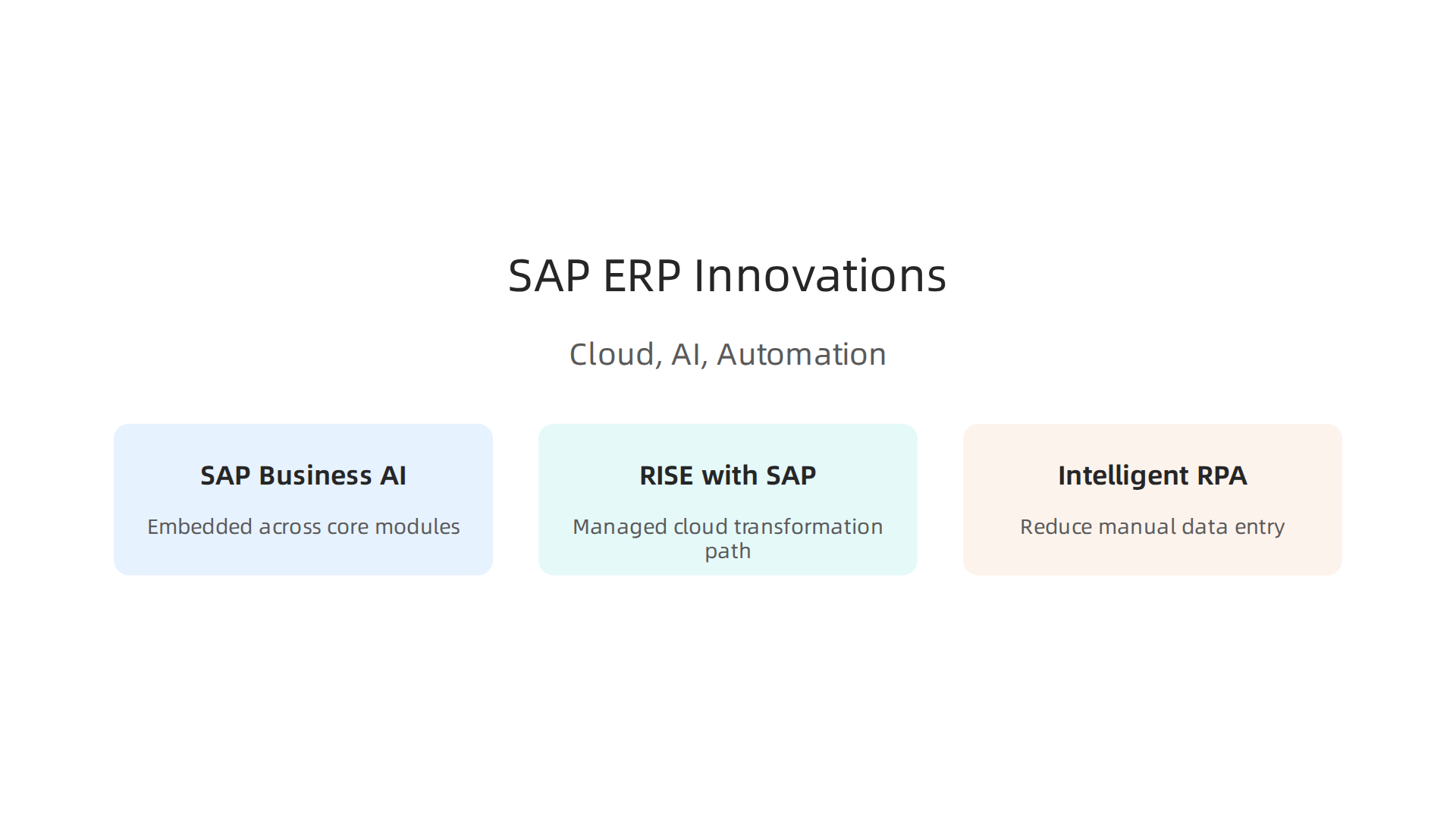
SAP Business AI is embedded across core modules. You do not need to buy a separate AI tool. The intelligence lives inside the software. For example, your supply chain module can predict a delay before it happens and suggest a fix. Your finance module can flag unusual transactions in real time. These are predictive and prescriptive insights that help software companies and software services company leaders act faster. According to a 2026 migration guide, this kind of live decision support is one of the top reasons companies finally move off old ECC systems.
RISE with SAP offers a managed cloud transformation path with artificial intelligence capabilities. This is not just a hosting service. RISE bundles infrastructure, application management, and AI tools into one package. It takes the guesswork out of the cloud migration. Industry data shows that 61% of organizations plan to use SAP BTP alongside their S/4HANA investment. That confirms the cloud is where the innovation happens. If you are still wondering about the total cost of ownership, a 2026 breakdown for CFOs covers realistic budgeting and ROI expectations.
Intelligent RPA and automation reduce manual data entry and reconciliation. Your finance and operations teams likely spend hours each week copying data between spreadsheets and old systems. With robotic process automation built into the SAP ERP platform, those repetitive tasks vanish. The system handles them in seconds with no errors. This frees your people to focus on strategic work that actually grows the business.
These three innovations are not futuristic. They are available now in 2026. For a deeper look at how enterprise technology analysts evaluate these tools, read our guide on enterprise technology analyst insights for CIOs and CTOs. And if you want daily updates on how AI and ERP systems are reshaping business, Subscribe Free to The Deep View Newsletter.
Integration Capabilities: Connecting SAP with the Modern Stack
Those cloud, AI, and automation innovations we just covered work best when your SAP ERP can talk to the rest of your tools.

In 2026, most software companies run a mix of cloud apps, legacy systems, and third‑party platforms. Your erp system needs to connect with all of them without months of custom coding.
Here’s how modern SAP integration makes that happen.
SAP Integration Suite gives you pre‑built connectors for cloud and on‑premise systems. Instead of building each link from scratch, you get ready‑made adapters for common platforms. The suite brings together capabilities like Cloud Integration, API Management, and Event Mesh in one place SAP Integration Suite capabilities. That means your finance module can pull live data from Salesforce, or your supply chain system can push updates to a warehouse management tool, quickly and securely.
An API‑first design makes microservices and event‑driven architectures possible. Open APIs allow you to link your SAP ERP with AI and machine learning systems for predictive insights Using Open APIs in SAP Integrations.

You can also set up API Management to design, publish, and oversee secure APIs at scale Set Up API Management from Integration Suite. This flexibility is a big reason why software services company leaders choose SAP for hybrid environments.
Integration with Microsoft, Salesforce, and AWS is a top demand for hybrid enterprises. Many organizations already use these platforms. Modern SAP ERP connects directly with them, so your team doesn’t have to jump between systems. For example, you can sync customer data from Salesforce into SAP without manual exports. If you are running a mixed cloud and on‑prem stack, this kind of connectivity saves hours every week.
Want to stay on top of how these integration trends affect your technology decisions? Subscribe Free to The Deep View Newsletter for daily, plain‑language updates on enterprise AI and ERP systems. And if you are evaluating data strategies, our guide on data collection methods for enterprise AI in 2026 covers best practices.
Security, Governance, and Compliance Features
That kind of connectivity raises an important question: how do you protect all that data? Security and compliance are built right into the core of modern sap erp.
Role-based access control (RBAC) and data masking keep sensitive info safe. Not everyone in a software company needs to see payroll details or customer payment records. With RBAC, you give each user access based on their job. Data masking goes further by hiding parts of sensitive data. A customer support rep might see the last four digits of a credit card, but not the full number.
Audit trail encryption helps you meet rules like GDPR and SOX. Every time someone views or changes data, your erp system logs it. Encryption keeps those logs safe from tampering. If you are a software services company that needs to prove compliance to clients, these built-in tools save you time and stress. You can run reports that show exactly who accessed what and when.
Cloud security certifications build trust. If you run SAP in the cloud, you need to know the platform is solid. SAP holds certifications like ISO 27001 and SOC 2, which are independent checks of their security practices SAP Integration Suite governance capabilities. These certifications cover how they protect the physical and virtual infrastructure. But security is a shared responsibility. SAP handles the platform, and your team manages user access and configurations. Working with trusted advance business systems partners can help you get this balance right.
Want a clearer picture of how enterprise technology strategies are evolving? Our guide on enterprise technology analyst insights for 2026 breaks down what top analysts are recommending.
Keeping up with security updates can feel like a lot. Subscribe Free to The Deep View Newsletter for simple, everyday updates on AI and ERP security.
Implementation Best Practices and Migration Paths
So you have decided your sap erp setup needs an upgrade. That is a big step, especially for software companies that rely on smooth operations. The migration path you choose can save or cost you a lot of money and time. Here is what you need to know.
The SAP Activate methodology gives you a clear roadmap. It breaks the project into phases: discover, prepare, explore, realize, deploy, and run.

This framework helps software services companies stay on schedule and avoid guessing what comes next. Many teams use it to manage the complexity of moving to S/4HANA.
You have three main ways to migrate. The choice depends on your current system and goals.
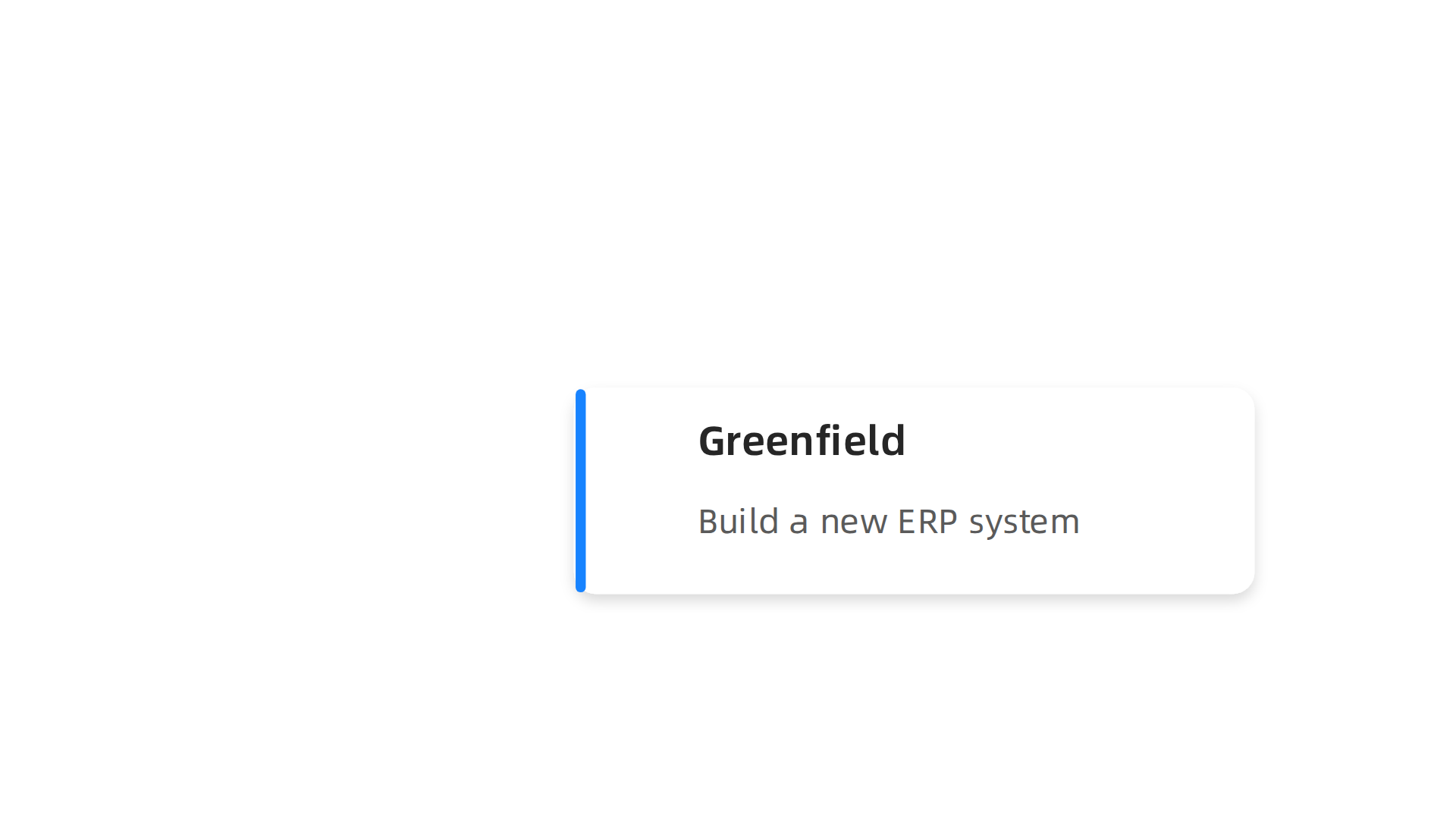
A greenfield approach means starting fresh. You build a new erp system from scratch and only bring over the data you really need. This gives you the cleanest setup but takes more planning.
A brownfield approach is a technical conversion. You keep your existing processes and just move them to the new platform. It is faster but can carry old problems with it.
A selective data transition lands in the middle. You pick and choose which data and processes to move. This lets you keep what works and redesign what does not. According to a detailed guide on SAP S/4HANA migration strategies, each approach has clear trade offs SAP S/4HANA Migration: Strategies & Best Practices. A 2026 checklist from Syniti compares greenfield, brownfield, and selective data transition step by step The Ultimate SAP Data Migration Checklist for 2026.
What are the common pitfalls that lead to cost overruns?
Scope creep is the biggest one. Teams try to do too much at once. Data quality issues also slow everything down. If your old data is messy, the new system will be messy too. A list of success factors from Prolifics highlights that readiness assessment and change management are often overlooked 6 SAP S/4HANA Migration Success Factors.
How do you keep costs under control?
Start with a thorough data cleanup before the move. Use the SAP Activate methodology to stick to a phased timeline. And bring in experienced partners like advance business systems providers who know the common traps. For more on organizing your data strategy, read our guide on data collection methods for enterprise AI in 2026.
Migration does not have to be painful. With the right approach, you can move your sap erp forward without blowing your budget.
Want to stay ahead of changes in enterprise technology? Subscribe Free to The Deep View Newsletter for simple daily updates on AI and ERP.
Vendor Landscape: How SAP Stacks Up Against Competitors
You have heard a lot about sap erp. But how does it compare to other big names like Oracle, Microsoft, or Workday? If you are a software companies leader shopping for an erp system, the choice is not always clear. Let’s break down how SAP holds up in 2026.
SAP S/4HANA is strongest for large manufacturers and supply chain heavy industries. Oracle Fusion Cloud ERP brings deep financial management and a strong cloud story. Microsoft Dynamics 365 connects tightly with the Microsoft ecosystem you probably already use. Workday focuses on human resources and financials for service oriented businesses. An independent comparison of SAP vs Microsoft Dynamics 365 shows SAP wins on end to end manufacturing and logistics, while Microsoft wins on ease of use for teams already on Office 365 SAP vs Microsoft Dynamics 365 2026: Independent ERP Comparison. A broader comparison of SAP, Oracle, and Microsoft confirms each platform has clear strengths depending on your industry and company size SAP vs. Oracle Cloud ERP vs. Microsoft Dynamics.
So who leads the market in 2026? According to a 2026 ERP systems comparison, the top cloud ERP solutions include Oracle NetSuite, Microsoft Dynamics 365 Business Central, SAP S/4HANA, and others ERP Systems Comparison 2026 Revealed!. SAP still holds a large share in the enterprise segment, but Oracle and Microsoft are growing fast with cloud native offerings. For software services company teams that need to integrate with other platforms, the ecosystem matters just as much as features.
What about running more than one system? Many advance business systems setups actually combine SAP for core operations with a second vendor for specific needs like HR or customer relationship management. This multi vendor approach can give you the best of each world. But it also adds complexity. You need good data integration and clear ownership. To learn how to manage data across multiple platforms, check out our guide on data collection methods for enterprise AI in 2026.
The bottom line: SAP is still a powerhouse, especially for manufacturing and supply chain. But the right choice depends on your industry, size, and existing tech stack. Take time to compare features and total cost before you commit.
Want simple daily updates on ERP and AI trends? Subscribe Free to The Deep View Newsletter.
Summary
This article explains why SAP S/4HANA remains a foundational ERP choice for large enterprises in 2026 and how its modern modules, cloud services, and embedded AI deliver measurable ROI. It walks through core modules—finance, materials management, sales, production, and warehouse management—and shows how features like the Universal Journal, demand sensing, and SuccessFactors integration speed decision making and reduce manual work. The guide covers cloud and automation innovations such as RISE with SAP, SAP Business AI, and intelligent RPA, and explains practical integration options through SAP Integration Suite and APIs to connect Salesforce, Microsoft, and AWS. Security, governance, and compliance controls like RBAC, data masking, and audit trails are described to show how to protect hybrid deployments. Implementation advice outlines SAP Activate, three migration strategies (greenfield, brownfield, selective), common cost drivers, and steps to control scope and clean data. Readers will leave able to evaluate S/4HANA benefits, plan integration and migration choices, and spot the features that most directly drive ROI for their business.