
Why System Development Life Cycle Software Remains Critical for Enterprise IT Leaders

Why the System Development Life Cycle Remains Critical for Enterprise IT Leaders
If you are an enterprise IT leader, you already feel the pressure. Your teams are asked to ship software faster than ever.

But at the same time, you cannot afford to cut corners on security, compliance, or quality. This is where the system development life cycle software framework becomes your most important ally.
The system development life cycle software, often called SDLC, is the structured process that teams use to plan, build, test, deploy, and maintain software. Think of it as a roadmap. It turns a messy development process into something repeatable and predictable. As IBM explains in their overview of the Software Development Lifecycle, each phase from planning to maintenance has clear objectives and deliverables. That structure is what makes enterprise software reliable.
But the development cycle of software is not just about keeping things organized. In 2026, it is also about staying compliant. International standards like ISO/IEC/IEEE 12207 provide a common framework for software life cycle processes. Adopting these standards helps your organization improve quality, traceability, and governance across every project.
Here is the thing. A modern life cycle software development process must do more than just deliver code. It has to align with your business strategy. It has to meet regulatory demands. And it has to make room for emerging technologies like AI. If your SDLC is rigid or outdated, it will slow you down instead of helping you move faster.
Your software development life cycle software also works best when paired with how you structure your engineering teams. Many enterprise leaders now use platform engineering to speed up delivery while keeping control. Our platform engineering guide for 2026 walks through how to set this up.
For enterprise leaders, the real question is not whether to use a software life development cycle approach. The question is whether your current SDLC is built for the speed and complexity of 2026. If you want to stay ahead, it pays to rethink how your teams plan, build, and release software.
Want to cut through the noise on AI and enterprise technology? The AI Newsletter Worth Reading delivers clear daily updates straight to your inbox.
What Is the System Development Life Cycle? Defining the Enterprise SDLC Framework
The system development life cycle software process, or SDLC, is the structured roadmap your teams follow from the very first idea all the way to retiring an old system. In enterprise environments, that roadmap includes extra layers like governance rules, security checkpoints, and formal approvals from stakeholders. Without those layers, your SDLC becomes just a list of steps instead of a controlled delivery machine.
At its core, the SDLC breaks software creation into clear phases. According to the SDLC overview by ThousandEyes, the standard phases include planning, analysis, design, coding, testing, deployment, and maintenance. Each phase has its own goals and deliverables. That structure makes it possible for large teams to coordinate without confusion.
But for enterprise leaders, the development cycle of software goes beyond those basic phases. You need to add governance at every gate. Security reviews must happen before code moves to production. Compliance checks need to be built into the design phase, not tacked on at the end. Stakeholders from legal, security, and business units must sign off at the right moments. That is what turns a simple life cycle software development process into an enterprise-grade framework.
Understanding these phases helps you communicate better with your teams. When you know what the planning phase requires, you can set clearer expectations. When you understand the testing phase, you can ask the right questions about quality. This shared language between leadership and engineering reduces misunderstandings and keeps projects on track.
If your teams are using different tools for different phases, you might benefit from a Trello vs Jira 2026 comparison for project management to see which platform aligns best with your chosen SDLC approach.
A modern software development life cycle software framework also adapts to how you work. Whether your teams use agile, waterfall, or a hybrid model, the core phases stay the same. What changes is how you execute them. The enterprise SDLC framework is flexible by design, so you can apply it across different project types while still keeping control and visibility.
Strategic Alignment: How the SDLC Drives Business Outcomes and Mitigates Risk
A system development life cycle software framework is not just about writing code. When you align each phase with business goals, the development cycle of software becomes a tool for delivering real value.

Every line of code should trace back to a business objective. Every release should move a metric.
Here is the thing. Without strategic alignment, teams build features nobody asked for. They spend months on functionality that does not move the needle. An enterprise SDLC prevents that by forcing stakeholders to define success before development starts. During the planning phase, product owners and executives agree on what good looks like. During the design phase, they review prototypes against those same business criteria. By the time code ships, everyone knows exactly why it matters.
Risk mitigation works the same way. A well-governed life cycle software development process bakes checks into every gate. Security reviews catch vulnerabilities before they reach production. Compliance audits verify that the software meets regulatory standards. Formal testing reduces the chance of a costly bug slipping through. According to the Agile statistics for 2026 published by Businessmap, organizations using structured project management approaches see much higher project success rates compared to those without formal governance. That is the power of building risk reduction into the software development life cycle software.
Executive sponsorship makes all of this work. When a senior leader owns the software life development cycle process, cross-functional teams collaborate instead of pointing fingers. The legal team reviews early. Security signs off before code freeze. Business owners test features before launch. That shared accountability reduces project failure and keeps your software investments on track.
If you want to see how modern enterprises apply these principles with AI tools, check out this guide on building enterprise AI trust with human oversight and guardrails. And to stay ahead of the biggest trends shaping enterprise software in 2026, get The AI Newsletter Worth Reading — a daily dose of clear insights that help leaders make smarter technology decisions.
Choosing the Right SDLC Methodology: Waterfall, Agile, DevOps, and AI-Assisted Approaches
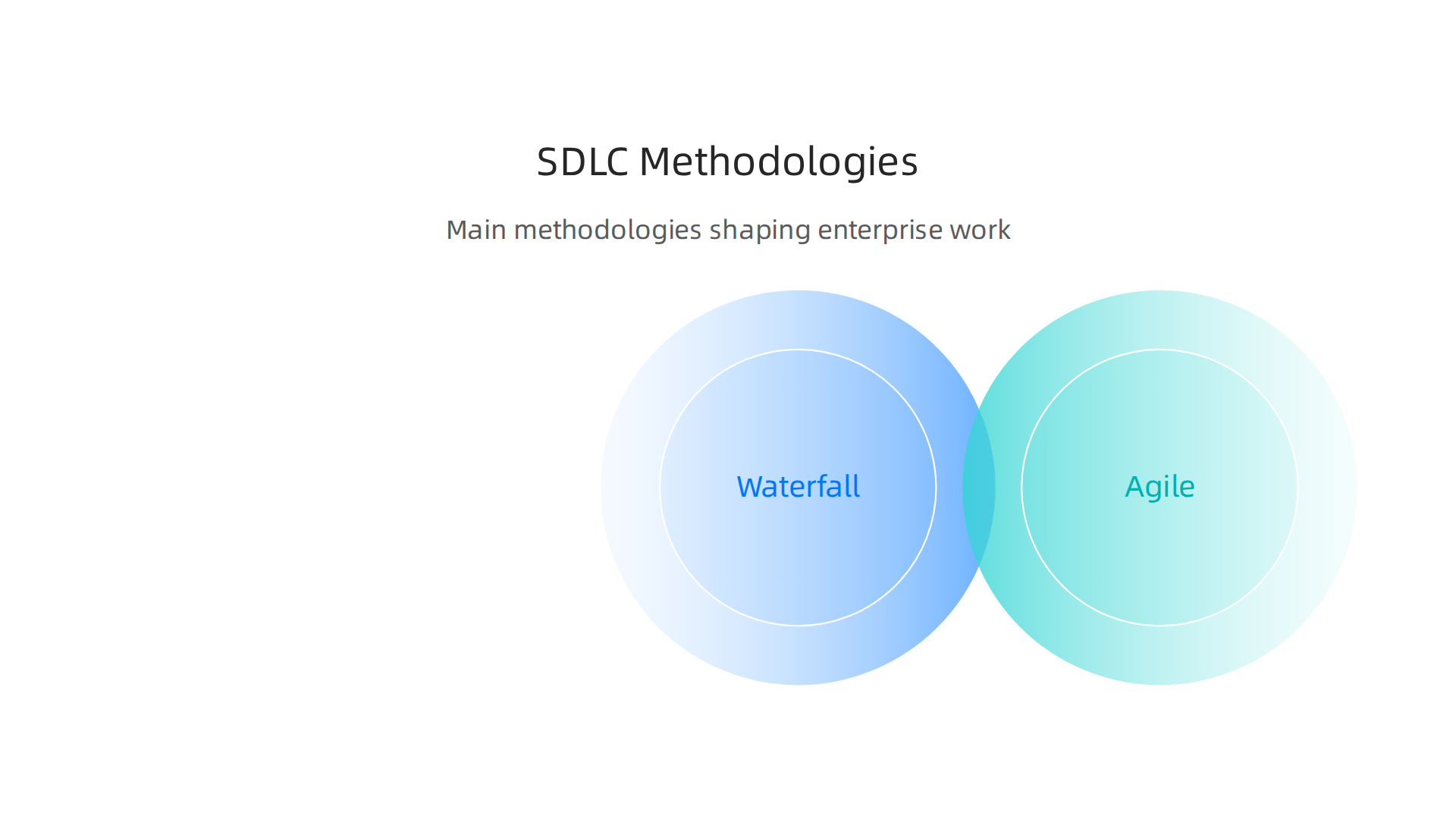
Having the right governance is pointless if your system development life cycle software runs on the wrong framework. The way you structure your development cycle of software directly affects delivery speed, team morale, and how well you handle unexpected changes. Here is a breakdown of the main methodologies shaping enterprise work in 2026.
Waterfall: Safety and Structure
Waterfall has been around for decades and it still has a clear role. Work flows down through distinct phases: requirements, design, implementation, testing, deployment. You cannot move backward easily. That sounds rigid, but it is exactly what heavily regulated industries like banking and aerospace need. If your requirements are set in stone and your documentation needs to be airtight, Waterfall gives you predictable milestones and clear control gates. For a full breakdown of when this approach works best, check out this comparison of Agile, Waterfall, and DevOps methodologies.
Agile: Built for Speed and Feedback
Agile turns the process into short iterative cycles called sprints. Teams ship small features, learn what users actually need, and adjust the plan. This reduces the risk of wasting months on something nobody wants. According to the Complete 2026 Guide on Software Development Methodologies, more than 86% of organizations now use Agile in some form. It is the dominant way modern software teams work.
Hybrid Models: What Most Enterprises Actually Use
Here is the truth about enterprise development in 2026. No single methodology fits everything. That is why nearly half of large companies now use a hybrid model that blends Waterfall planning with Agile execution. A team might spend two weeks writing a detailed requirements document (Waterfall style) and then break that work into two-week development sprints (Agile style). This gives executives the predictability they want and developers the flexibility they need. The 2026 enterprise technology trends report from Keyhole Software confirms that blended approaches are now the standard for large organizations.
DevOps: Continuous Delivery from Code to Production
DevOps goes beyond Agile by merging the development and operations teams into one continuous pipeline. Code moves from commit to deployment seamlessly because the barriers between Dev and Ops are removed. Continuous integration and continuous delivery tools automate the handoffs. The State of DevOps Report from Perforce shows that strong DevOps maturity is now a prerequisite for successfully scaling AI capabilities inside an organization.
AI-Assisted Development: The 2026 Game Changer
The most exciting shift in the life cycle software development space is the rise of AI assistance. AI tools now help with code generation, test creation, and even pipeline optimization. They handle the repetitive work that slows teams down. Developers focus more on solving real business problems and less on boilerplate code. For enterprise leaders evaluating how to bring AI into the software development life cycle software process, understanding these tools is essential. Start preparing your teams by learning how to build real AI literacy within your teams before adopting new AI-assisted workflows.
Phase Deep Dive: Planning and Requirements Analysis
Every successful project starts the same way: with a plan that actually makes sense. The planning phase in the system development life cycle software process is where you set the scope, agree on the budget, lock in timelines, and make sure every stakeholder is on the same page. Skip this step and you are building on sand.
Most enterprise teams kick off by running cross-functional workshops. Business analysts sit down with product owners, engineers, compliance officers, and sometimes customers. Everyone shares what they need. Then the team turns those conversations into documented requirements. This stage also includes regulatory analysis and feasibility studies. A good requirements management process connects every feature back to a real business goal, preventing the kind of scope creep that blows budgets. For a practical walkthrough of how to structure this, check out the Enterprise Requirements Management: Agile Guide 2026 from aqua cloud.
Here is the hard truth. Poorly defined requirements are still the top reason projects go over budget and miss deadlines. When teams rush this phase, they end up reworking the same features multiple times. That costs money and frustrates everyone. Following best practices like clear acceptance criteria and regular validation catches problems early. The Requirements Management guide from SEBoK explains how structured traceability keeps every requirement linked to a real need and a test.
Getting requirements right also means picking the right tools and methods for your team. When you are collecting input from dozens of people across departments, having a clear process for data gathering matters just as much as the technology you use. Learning about data collection methods for enterprise AI can help you design better feedback loops during the planning phase.
Investing time here pays off through the entire life cycle software development process. And because technology changes fast, staying on top of new tools and best practices is key. One easy way to keep learning is to get clear daily AI updates from The Deep View Newsletter. It helps leaders like you make smarter technology decisions without the noise.
Phase Deep Dive: Design and Implementation
Once the planning and requirements phase gives you a clear roadmap, it is time to build. The design and implementation phase is where your system development life cycle software project takes shape. This stage has two big parts: architecture design and the actual coding work.
Design for the Long Haul
Good architecture design does not just work today. It has to scale when your user base grows, integrate with existing systems your company already runs, and stay easy to maintain years from now. You need to think about how each piece connects to the rest of your enterprise stack. A modular design makes future updates much simpler. Teams that skip this step often end up rebuilding entire systems later.
During design, you also set the technical standards. Which programming languages will you use? How will services communicate? What are the security rules? Answering these early prevents arguments during implementation.
Implementation That Stays Clean
Implementation means writing the actual code. In enterprise settings, this is not a free-for-all. Teams follow strict coding standards, run peer reviews on every pull request, and use continuous integration (CI) pipelines to catch bugs fast. CI tools automatically build and test each change before it hits the main branch. This process keeps quality high and reduces costly rework later.
The best enterprise teams treat implementation as a repeatable process, not a one-time event. They rely on shared code repositories, automated testing suites, and clear deployment workflows. If you are building a platform for your developers, you might want to check out this platform engineering guide for enterprise leaders to see how internal tools can speed up delivery.
AI Is Changing the Game
Here is where things get exciting. Automated tools and AI-assisted coding are transforming the implementation phase in 2026. AI code assistants help developers write boilerplate faster, suggest fixes for common bugs, and even generate unit tests. But the real value comes from integrating these tools into your CI pipeline. When code is automatically reviewed and tested by AI, human reviewers can focus on bigger design decisions and business logic.
Following proven requirements management best practices for MBSE helps keep implementation aligned with what was planned. The same traceability and automation principles that work for requirements also improve how you build and test code.
The takeaway? Design thoughtfully, implement with discipline, and let automation handle the repetitive work. Your life cycle software development process will deliver higher quality results faster.
Phase Deep Dive: Testing, Deployment, and Maintenance
Your code is written. Now comes the real test. The testing, deployment, and maintenance phase is where your system development life cycle software proves it can handle real-world pressure. Skip this stage, and you invite expensive outages and unhappy users.
Testing That Catches Everything
Enterprise testing is not a single checkbox. It is a layered process.
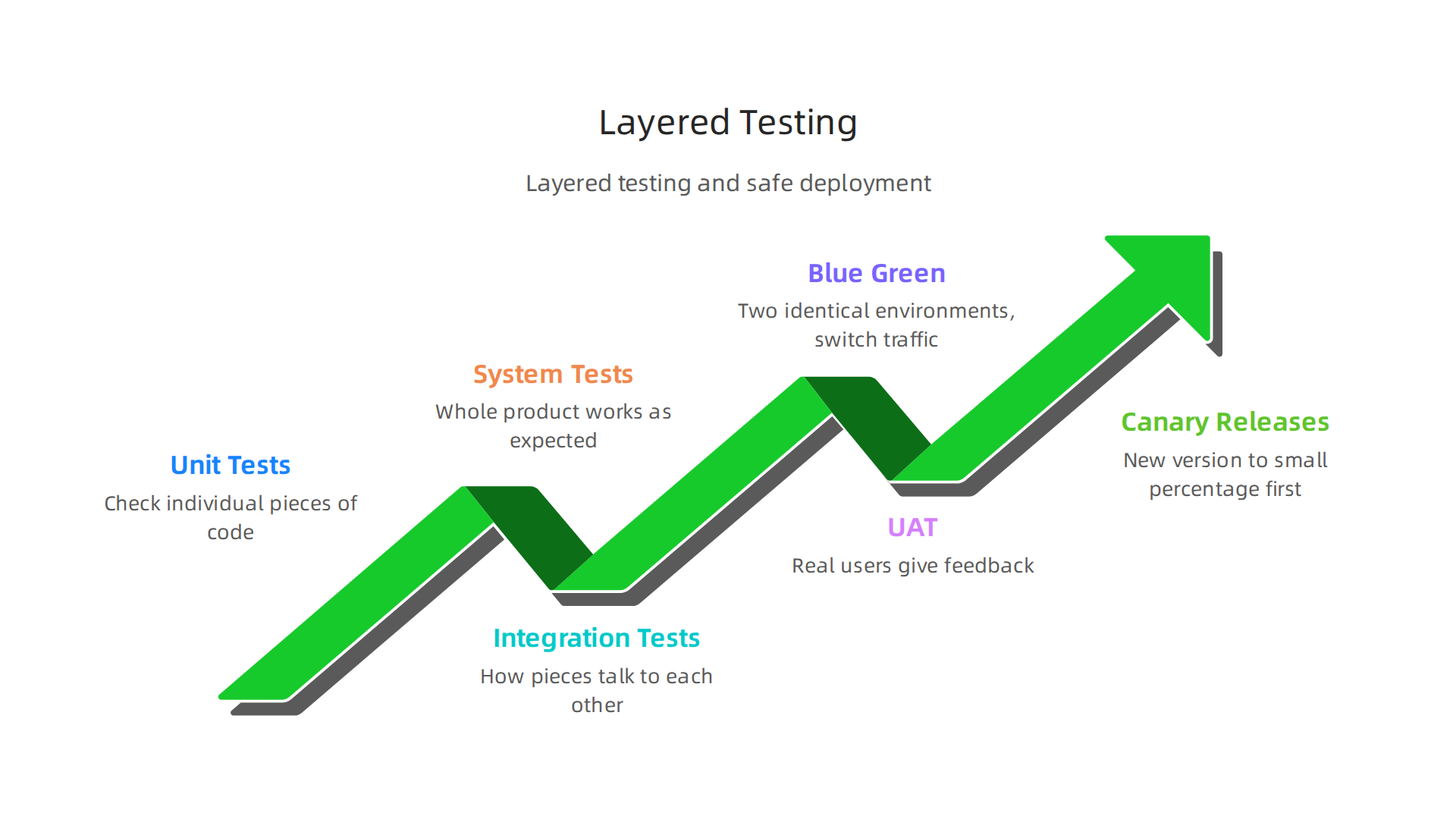
You start with unit tests that check individual pieces of code. Then you run integration tests to see how those pieces talk to each other. System tests confirm the whole product works as expected. Finally, user acceptance testing (UAT) lets real users give feedback before launch.
In 2026, most of this testing is automated. Automated tests run every time someone pushes new code. They catch bugs before they reach production. Modern teams also add security testing early in the pipeline. Following automated security testing in CI/CD pipelines helps you find vulnerabilities before they become breaches. This "shift left" approach saves time and money.
Deployment Without the Drama
Deploying new software to production used to be scary. Teams would work late nights and cross their fingers. Not anymore. Smart deployment strategies like blue green and canary releases let you roll out changes with almost zero risk.
With a blue green deployment, you run two identical environments. One is live (blue). The other is ready (green). You switch traffic to the green environment when it passes all tests. If something goes wrong, you flip back in seconds. Canary releases work differently. You send the new version to a small percentage of users first. If it behaves well, you slowly increase that percentage. Both approaches mean you never push a bad update to everyone at once.
Maintenance That Keeps Costs Down
Here is a truth most teams learn the hard way: ongoing maintenance eats up the biggest chunk of your budget. Studies show that keeping software running and updated can cost more than building it in the first place. The secret to controlling those costs is good life cycle software development practices from day one.
When you design clean code, write thorough tests, and document everything, you create less technical debt. Technical debt is the hidden cost of taking shortcuts. It makes future changes slow and risky. Teams that reduce technical debt spend less time fighting old bugs and more time adding value. For a deeper look at how to build infrastructure that stays reliable over time, check out this guide on building real-time reliable data infrastructure.
Stay Ahead of the Curve
Technology moves fast. Testing tools get smarter. Deployment methods evolve. Maintenance strategies improve. The best way to keep your skills sharp is to follow trusted sources that cut through the noise. If you want clear daily updates on AI and enterprise tech, get The AI Newsletter Worth Reading. It delivers actionable insights straight to your inbox.
The bottom line? Test early, deploy carefully, and maintain with discipline. Your software development life cycle software will reward you with fewer headaches and lower costs over the long run.
Embedding Security and Compliance: The DevSecOps Imperative
Testing and maintenance keep your software running. But what about the bad guys trying to break in? In 2026, you cannot bolt security on at the end. It has to be part of every step. That is what DevSecOps is all about.
DevSecOps means security and compliance are not separate phases. They live inside your development cycle of software from the first idea to the final deployment.

Instead of a security team checking everything after you finish, developers, operations, and security people work together the whole way.
Build Security Into Every Phase
The old way was simple. You wrote code, then handed it to security. They found problems, and you fixed them. That took forever. DevSecOps flips the script. You think about security during planning. You run threat modeling before you write a single line. You scan your code for vulnerabilities as you type. This is called shifting left, and it is one of the core DevSecOps best practices to prioritize in 2026.
Automated tools do the heavy lifting. Static application security testing (SAST) checks your source code for flaws. Dynamic application security testing (DAST) tests your running application. Software composition analysis (SCA) scans your open source libraries for known vulnerabilities. All of this runs automatically in your pipeline. If a high risk issue appears, the build stops. No bad code gets through.
Compliance That Never Sleeps
Regulations like GDPR, HIPAA, and SOX require proof. You need audit trails showing exactly who did what and when. DevSecOps handles this with policy as code. You write your compliance rules into automated pipelines. Every deployment is checked against those rules. If something violates a rule, the pipeline blocks it. You get continuous compliance without manual checklists.
For example, infrastructure as code templates get scanned for policy violations automatically. This way your cloud configurations always follow security standards. You never accidentally leave a storage bucket open to the public.
Security Is Everyone’s Job
The real power of DevSecOps is culture. Security is not just for a dedicated team. Developers learn secure coding. Operations teams monitor runtime traffic for strange behavior. Security engineers help design the architecture upfront. When everyone owns security, you catch problems early and fix them fast.
Adopting this approach requires changes in how your teams work. A good starting point is learning from others who have done it. Check out this strategic platform engineering guide to see how leading enterprises bake security into their foundations.
Faster, Not Slower
Many people worry that adding security will slow things down. The truth is the opposite. Automating security scanning and compliance checks removes manual bottlenecks. You find and fix issues while they are cheap and easy. You avoid emergency patches after a breach. Your system development life cycle software becomes both safer and faster.
Embedding security and compliance is not optional anymore. It is the only way to ship software you can trust.
Measuring SDLC Success: Key Metrics and KPIs for Enterprise Leaders
But shipping software you can trust is only half the battle. You also need to know if your system development life cycle software is actually performing well. That is where metrics and key performance indicators (KPIs) come in. Without them, you are flying blind. With them, you can spot bottlenecks, celebrate wins, and keep improving.
The DORA Metrics: Industry Standard for Speed and Stability
The most widely used set of measures comes from the DORA (DevOps Research and Assessment) team.
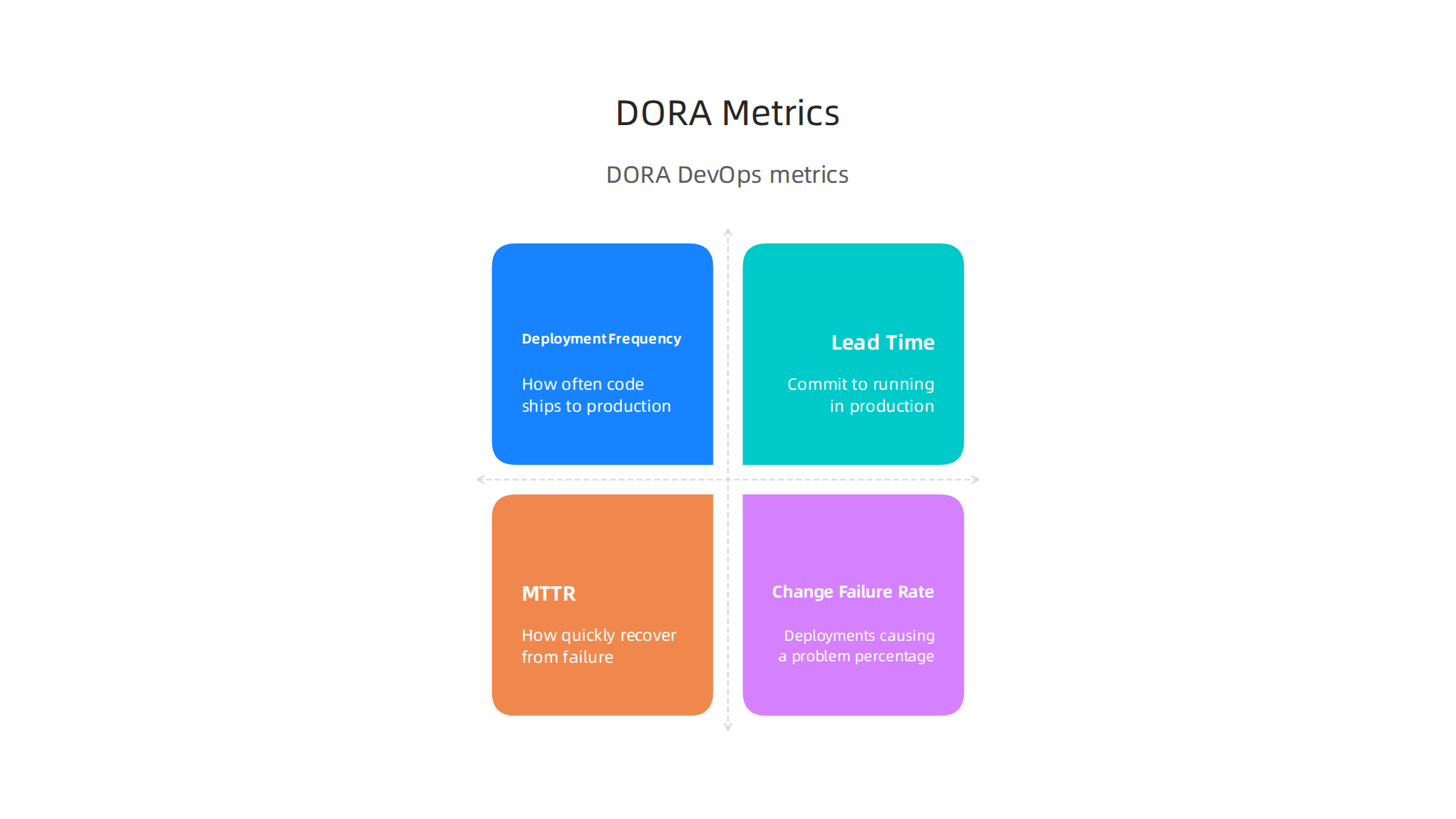
These four numbers tell you a lot about your development cycle of software:
- Deployment frequency – How often you ship code to production.
- Lead time for changes – How long it takes from code commit to running in production.
- Mean time to recovery (MTTR) – How quickly you bounce back from a failure.
- Change failure rate – The percentage of deployments that cause a problem.
Tracking these gives you a clear picture of your team’s speed and reliability. According to the 2026 Software Development Metrics & KPIs Guide, elite performers deploy many times per day and have lead times under one hour. That is a benchmark to aim for.
Business-Aligned KPIs That Matter to Leaders
DORA metrics are great for engineering teams. But as an enterprise leader, you also need numbers that connect directly to business outcomes. Consider adding these to your dashboard:
- Time to value – How long before a new feature delivers real business results.
- Release ROI – Did the cost of building and deploying a feature pay off?
- Defect escape rate – How many bugs make it to production versus being caught earlier.
- Sprint goal success rate – What percentage of planned work actually gets finished.
These life cycle software development metrics help you answer the big question: is your investment in software paying off?
Real-Time Dashboards Keep You Informed
You cannot improve what you do not see. Modern observability tools give you live dashboards that show all of these metrics in one place. Leaders can check the health of the entire software development life cycle software at a glance. If cycle times start climbing or failure rates jump, you see it immediately and can act.
A good starting point is to understand how your current tools and processes support data-driven decisions. This enterprise analytics definition guide explains how leaders use analytics to track software performance.
Pick a Few, Not All
The biggest mistake is trying to track everything. Start with the DORA four plus one or two business KPIs. Review them every sprint. Use the data to ask better questions, not to blame people. When you measure the right things, your software life development cycle gets faster, safer, and more valuable.
If staying on top of technology trends sounds like a challenge, you are not alone. Get clear daily AI updates from The AI Newsletter Worth Reading so you never miss a shift that could impact your SDLC strategy.
Summary
This article explains why the system development life cycle (SDLC) remains essential for enterprise IT leaders who must deliver software faster without sacrificing security, compliance, or quality. It defines the SDLC framework and its standard phases, then shows how enterprise needs—governance, traceability, and stakeholder signoffs—change how those phases are run. The piece compares common methodologies (Waterfall, Agile, DevOps and hybrid models) and highlights where AI and platform engineering accelerate delivery. It dives into best practices for planning, design, testing, deployment, and maintenance, and explains how DevSecOps embeds security and compliance across the pipeline. Finally, it recommends which KPIs to track (including the DORA metrics and business-aligned measures) so leaders can spot bottlenecks, reduce risk, and align software work to business outcomes.