
Exploratory Data Analysis The Critical First Step for Enterprise Data Science

Introduction
Let’s be honest. Your enterprise is probably swimming in data right now. Customer records, sales figures, system logs, sensor data. You name it. The goal, of course, is to use all that information to make smarter, faster decisions.
But here is the hard truth. Most raw data is a mess before you even start.

You might be surprised to learn that industry reports show data scientists spend between 60% and 80% of their time just on data preparation and exploration. That is not time spent building models or generating insights. It is time spent cleaning up duplicates, fixing missing values, and trying to understand what the data actually means. For marketing analysts alone, that number can reach up to 40% of their working hours.
So how do you fix this?
This is where Exploratory Data Analysis (EDA) comes into the picture. Think of EDA as the essential quality check and discovery phase for your data. Before you build any complex AI model or run a major business report, EDA helps you uncover hidden patterns, spot unusual anomalies, and check your core assumptions.

It is the difference between guessing and knowing.
Mastering this process is a major step for any organization, whether you are a data science major undertaking your first big project or a seasoned enterprise team. EDA connects directly to everything from refining data annotation reviews to improving your electronic data gathering analysis and retrieval systems. When you do it right, you directly lower project risk, improve data quality, and cut the time it takes to turn raw numbers into real business value.
For enterprise leaders, getting a handle on this starts with knowing how to bring in good data in the first place. You can read more about our proven approaches to collecting high-quality information in our guide on data collection methods for enterprise AI.
The landscape of data and AI is changing fast. Staying informed is the only way to stay ahead. The AI Newsletter Worth Reading delivers clear, daily updates straight to your inbox so you never miss a critical development.
What Is Exploratory Data Analysis?
So what exactly is exploratory data analysis? Let me break it down simply.
EDA is a way to get to know your data before you make any big moves with it. You go in with an open mind. No fixed hypothesis. No assumptions. Your only job is to understand the structure of your data, see how values are distributed, and spot relationships between different variables.
Think of it as the getting-to-know-you phase for your data set.
Here is the thing. The whole concept of EDA was popularized by a statistician named John Tukey back in the 1970s. Tukey believed that data analysis should not start with a pre-set question. Instead, he argued, you need tools and techniques to look at your data from many different angles first. Only then do patterns, outliers, and surprises reveal themselves naturally. His work essentially created the foundation for what we now call modern data science practice.
That is a big deal for any data science major or enterprise team building AI systems today.
Now let me draw an important line. There is a difference between exploratory data analysis and confirmatory data analysis.
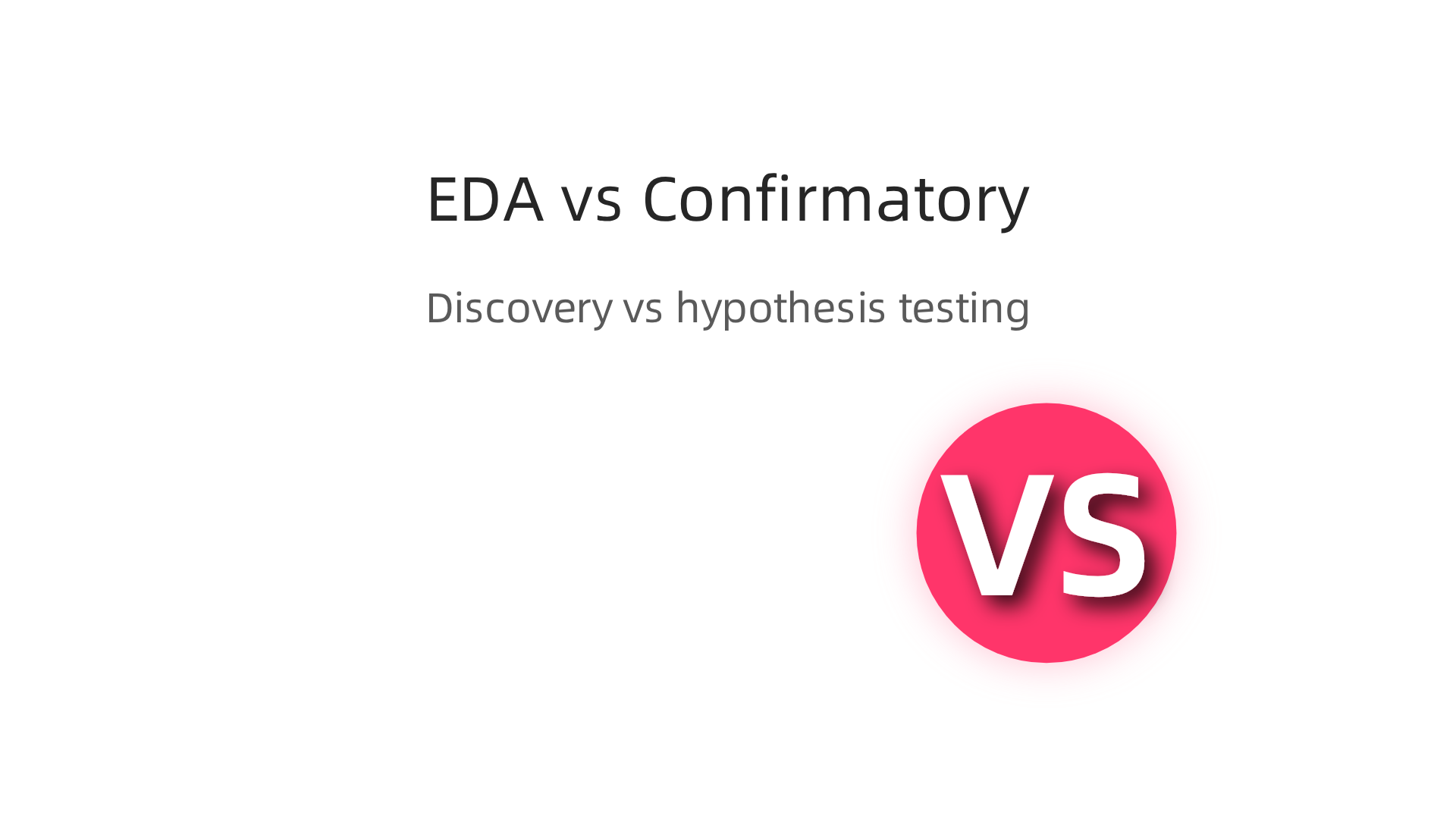
With confirmatory analysis, you start with a hypothesis. You test it. You get a clear yes or no answer. It is like running a formal experiment. With EDA, you do the opposite. You go in curious. You let the data show you what is interesting. No fixed destination.
EDA is detective work. Confirmatory analysis is a courtroom trial. Both matter. But you need the detective work first.
This distinction is critical in 2026. Despite all the advances in enterprise data management, recent research shows that 61% of organizations still list data quality as a top challenge. That statistic comes from enterprise data management research shared by Integrate.io.

When your data quality is shaky, skipping EDA is a fast track to failed models and bad business calls.
Good EDA practice directly supports stronger data annotation reviews, cleaner feature engineering, and more reliable AI outputs across the board.
Once you finish exploring your data, the natural next step is feature engineering. You can learn more about that process in our guide on how AWS SageMaker streamlines feature engineering for enterprise data science.
The world of enterprise AI and data technology moves fast. Staying on top of these changes takes real effort. The AI Newsletter Worth Reading delivers clear daily updates straight to your inbox so you never miss a critical development.
Core EDA Techniques Every Data Scientist Should Know
So you have a fresh dataset. Where do you even start? Before you build any models or run any fancy algorithms, you need to run through a set of core exploratory data analysis techniques. These are the tools that help you understand your data quickly and spot issues before they ruin your results.
Let me walk you through the most important ones.
Descriptive Statistics and Summary Metrics
Your first move is to calculate basic summary numbers. Things like the mean, median, interquartile range (IQR), skewness, and kurtosis. These metrics give you a quick snapshot of how your data behaves.
Think of descriptive statistics as your data’s vital signs. The mean tells you the average value. The median shows you the middle point. The IQR reveals how spread out the middle 50% of your data is. Skewness and kurtosis tell you about the shape of the distribution.
According to the LeewayHertz guide, EDA relies on multiple techniques including summary statistics and visualization to understand data.
These numbers alone can flag potential problems. For example, if the mean and median are far apart, you likely have skewed data. That matters for many machine learning models.
Data Visualization Techniques
Numbers are great, but your eyes are better at spotting patterns. Visualization is where EDA really shines.
Start with univariate plots. That means looking at one variable at a time. Histograms show you the distribution of a single numeric column. Box plots highlight outliers and show the spread. Density plots give a smooth version of a histogram.
The BlueDragon article explains that univariate graphical EDA uses tools like histograms, box plots, and density plots to visually represent data and spot patterns and outliers.
Now move to multivariate plots. Scatter plots let you see relationships between two numeric variables. Pair plots show you scatter plots for every combination of variables in your dataset. These are incredibly useful for spotting correlations and clusters.
For example, if you are a data science major working on a customer churn project, a scatter plot of usage frequency versus support calls might reveal a clear pattern. Customers who call support a lot tend to churn more. Without visualization, you might miss that.
Correlation Analysis, Missing Values, and Distribution Checks
Once you have the basics, dig deeper.
Correlation analysis helps you understand how variables move together. A high positive correlation means when one goes up, the other tends to go up too. A negative correlation means they move in opposite directions. This is critical for feature selection. If two features are highly correlated, you may only need one of them in your model.
DataMites, in their coverage of top EDA techniques for 2026, emphasizes that correlation analysis is essential for improving data quality.
Next, check for missing values. Missing data can break your analysis. You need to know how much data is missing, and whether it is missing randomly or systematically. This directly impacts your data cleaning strategy and any data annotation reviews you might do later.
Finally, examine the distribution of each numeric variable. Some models assume data follows a normal distribution. If your data is heavily skewed, you may need to transform it. Simple log transformations often help.
A comprehensive guide from DASCA outlines these steps as part of mastering EDA: data collection, data wrangling, exploratory visualization, and descriptive analysis.
Why These Techniques Matter in 2026
The data landscape is evolving fast. Automation and AI tools can handle some EDA tasks, but they cannot replace your judgment. The most sought after data analysts in 2026 are those who can design data transformations and understand the story behind the numbers.
Mastering these core techniques will save you from building models on bad data. It will help you catch errors early. And it will make your final results more reliable.
If you want to stay current on how enterprise teams handle data quality and AI adoption, check out our guide on data collection methods for enterprise AI in 2026. It covers how to gather clean, usable data from the start.
And for daily insights on AI and data science trends, The AI Newsletter Worth Reading delivers clear updates to your inbox so you never miss what matters.
Essential Tools for EDA in 2026
Now that you know the core exploratory data analysis techniques, let’s talk about the tools that make them possible. The right tools save you hours of manual work and help you spot patterns faster. In 2026, you have more choices than ever.
Python Is Still the King
If you code, Python is your best friend for EDA. It has a rich ecosystem of libraries that handle almost every task. pandas lets you load, clean, and reshape data. NumPy handles math operations. Matplotlib and Seaborn create beautiful plots. Plotly adds interactive charts.
According to the Splunk guide, Python makes complex data manipulation and visualization easy. These libraries work together smoothly, so you can move from summary stats to a scatter plot in just a few lines of code. That speed matters when you are exploring a new dataset.
R is also widely used, especially in statistical analysis and academic research. If you come from a statistics background, RStudio and the tidyverse packages are powerful options.
AutoEDA Libraries Save You Hours
What if you could get a full report of your dataset with one line of code? That is what AutoEDA libraries do. Tools like pandas-profiling (now called ydata-profiling), Sweetviz, and Lux automatically generate distributions, correlations, and missing value summaries.
One article on Dev Genius highlights Lux, Sweetviz, and DataPrep as beginner-friendly tools that speed up the initial exploration phase. You simply load your data, run the command, and get a rich report in seconds. These are perfect for a quick first pass before you dive deeper.
Enterprise Platforms for Team Work
When you work in a company with large datasets and multiple stakeholders, you need enterprise tools. Tableau, Power BI, and Alteryx let you drag and drop to build visualizations and run analyses without writing code.
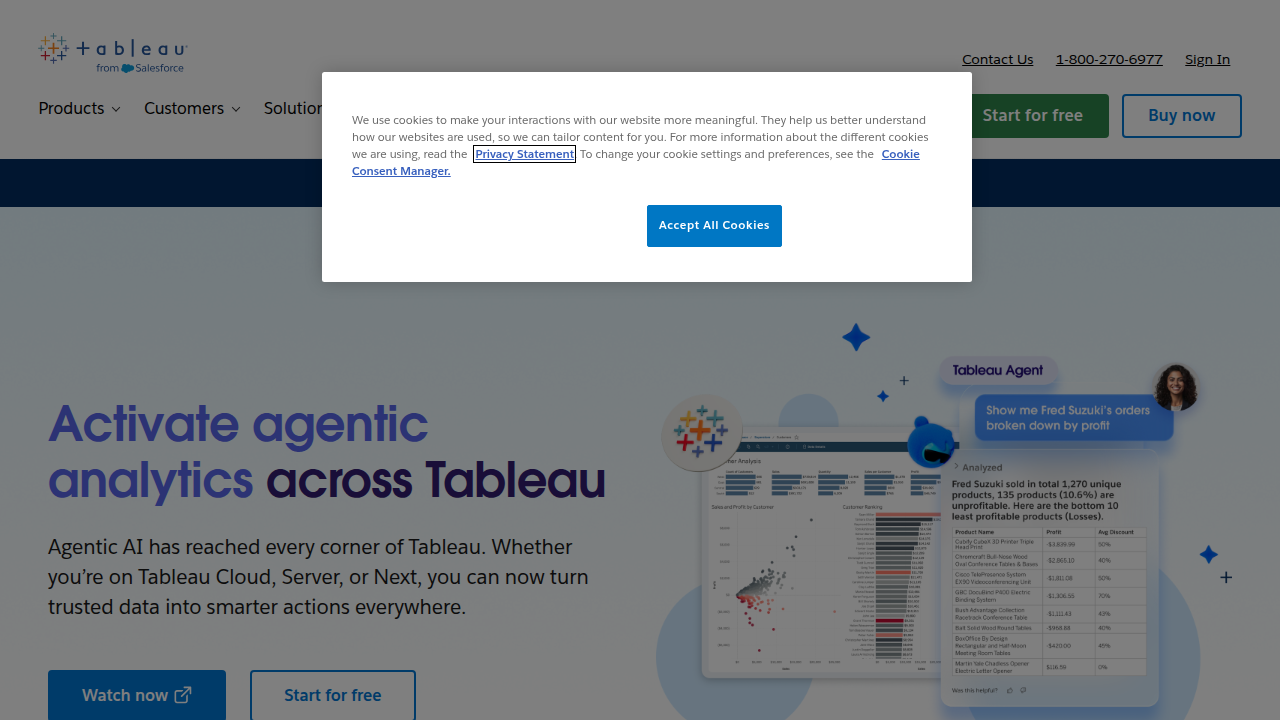
They also integrate with cloud storage and databases.
Cloud-native tools like AWS QuickSight and Google Cloud Datalab make it easy to explore data directly where it lives. The Domo article notes that AI features in these platforms now automatically generate insights from trends. That reduces the time you spend manually hunting for patterns.
AI Powered Tools Are Rising
In 2026, AI tools like ChatGPT with Advanced Data Analysis can handle basic EDA tasks. You upload a CSV, ask questions in plain English, and get charts and summaries back. This is great for non-technical team members or quick checks. But the search for skilled analysts continues. According to Monte Carlo, the most sought after analysts will design data transformations and automate reporting, not just visualize outputs.
Which Tool Should You Pick?
It depends on your skill level and data size. If you code, start with Python libraries. If you want speed, try an AutoEDA library. If you work on a team, use an enterprise platform. No matter what you choose, the goal stays the same: understand your data before building anything else.
For a broader look at how teams evaluate and adopt new tools, check out our guide on cloud-based productivity tools for 2026.
And if you want to keep learning about the latest in data science and enterprise technology, The AI Newsletter Worth Reading delivers clear daily updates straight to your inbox. It helps you stay ahead without the noise.
From EDA to a Data Science Career
Here is the thing: mastering exploratory data analysis is not just about cleaning data and making charts. It is the skill that sets you apart when you apply for your first data role. Recruiters look for candidates who can think critically about data before jumping into modeling. Strong EDA skills show you understand the story behind the numbers.
EDA Is Your Entry Ticket
In 2026, the demand for data talent is still climbing. According to the U.S. Bureau of Labor Statistics, data scientist jobs are projected to grow 34 percent over the next decade. But landing that first job requires more than a data science major on your resume. You need to prove you can actually handle messy, real-world data.
That is where your EDA knowledge shines. When you walk into an interview and can explain how you handled missing values, spotted outliers, or simplified a complex dataset with a few smart visualizations, you stand out. It shows you can deliver insights quickly. That builds trust with stakeholders who are tired of waiting weeks for answers.
Career Progression from Analyst to Leader
Most data careers follow a clear ladder. You might start as a data analyst, earning between $60,000 and $100,000 per year according to 365 Data Science. In this role, your EDA skills help you answer business questions and create dashboards.
As you grow, you move to data scientist. Salaries jump to $160,000 to $200,000 in the US. At this level, you design experiments and build predictive models. But EDA remains your foundation. You still need to understand the data before you train any model.
The next step is senior data scientist, then data science manager or chief data officer. At each level, your ability to quickly explore and communicate data patterns becomes more valuable. According to Syracuse University, the median data science salary in 2026 is $122,000, with top earners making well over $200,000.
How EDA Accelerates Your Growth
When you are good at EDA, you reduce the time it takes to generate insights. That means you deliver value faster. Your manager notices. Your stakeholders trust you. That trust leads to bigger projects and faster promotions.
EDA also helps you avoid costly mistakes. If you skip the exploration phase and go straight to modeling, you might build something that looks good but fails in production. Catching issues early saves time and money. That makes you a reliable team member.
Your Next Steps
If you are serious about a data science career, invest in your EDA skills first. Take a course, practice on real datasets, and learn the tools covered earlier. Many universities now offer a data science major that includes heavy EDA coursework. Even without a formal degree, you can build a portfolio that shows your ability to explore, clean, and summarize data.
For those who want to stay current, keeping up with industry trends is important. The AI Newsletter Worth Reading delivers clear daily updates on AI and data science. It helps you stay informed without the noise.
And if you are interested in how data fuels AI in enterprises, check out our guide on data collection methods for enterprise AI. It covers how high-quality data pipelines tie back to the EDA work you do every day.
Your journey from EDA to a data science career starts with the first dataset you truly understand. Make that your goal, and the rest will follow.
EDA Best Practices for Enterprise Data
By now you know EDA is your ticket into data science. But working at a big company is different from running EDA on a personal project. Enterprise data comes with more rules, more people, and higher stakes. Let me walk you through the best practices that help you succeed in that environment.
Treat EDA Like Collaborative Software Development
In a professional setting, your EDA work is not just for you. Other team members need to understand what you did and why. So treat your analysis like code.
Use version control for your notebooks and scripts. This means saving your work in a shared repository like Git. When you explore data, document your decisions. Why did you drop those outliers? Why did you choose that visualization? Write it down.
This practice makes your work reproducible. A colleague can run your notebook and get the same results. According to IBM, exploratory data analysis is the process of investigating datasets to summarize their main characteristics. But that summary is useless if nobody else can see how you got there.
Use tools like Jupyter Notebooks or R Markdown. Keep your code clean. Add comments. Think of your EDA as a living report, not a one-time exercise.
Put Data Governance First
Enterprise data often contains sensitive information. Customer names, financial records, health data. You cannot just look at raw data without thinking about privacy.
That is where data governance comes in. In 2026, the data governance market is growing fast, valued at USD 5.70 billion according to recent research. Companies are investing heavily in protecting data.
When you perform EDA on sensitive data, follow these rules:
- Mask personal identifiers. Replace names and emails with fake values.
- Use data sampling. Work with a small, representative subset instead of the full dataset.
- Apply differential privacy. Add noise to your results so individual records cannot be identified.
These steps keep you compliant and build trust with your organization. Data breaches are expensive and damaging. Following governance best practices protects everyone.
Automate the Repetitive Parts
Enterprise datasets can be huge. Running the same EDA steps by hand on a million-row table wastes time. That is where automated profiling tools help.
Tools like pandas-profiling or Sweetviz create summary reports in seconds. They show you missing values, distributions, and correlations without writing dozens of lines of code.
But automation is not a replacement for thinking. Use it to speed up the boring parts. Then spend your energy on the interesting questions. What patterns stand out? What does the business need to know?
A key part of scaling EDA is bringing in business domain knowledge early. Before you even open a dataset, talk to stakeholders. What do they care about? What decisions will they make with this data? That context turns raw exploration into real insights.
Your Next Step for Enterprise EDA
These best practices separate hobbyists from professionals. When you apply them, you show you are ready for real-world data work.
If you want to keep learning about how data drives enterprise decisions, check out our guide on enterprise AI adoption in 2026. It covers how companies use data exploration to power AI initiatives.
And for daily updates on AI and data science trends, The AI Newsletter Worth Reading delivers clear insights straight to your inbox. It helps you stay ahead without the noise.
Master EDA the right way, and you become the person everyone trusts with their data. That is a career maker.
Building a Data Science Career: Skills, Certifications, and Networking
You have mastered exploratory data analysis and learned the enterprise best practices. Now what? The next step is building a career that turns those skills into a real job. The data science field is growing fast. According to the U.S. Bureau of Labor Statistics, employment of data scientists is projected to grow 34 percent over the next decade. That is much faster than most other jobs. But landing a great role takes more than just knowing how to analyze data.
Here is what you need to focus on in 2026.
The Technical Skills You Cannot Skip
First, get the hard skills right. Python and R are the two main languages for data work. Python has tools like pandas and NumPy that make data manipulation easy. SQL is non-negotiable because almost all data lives in databases. You also need statistics to understand distributions and tests. Visualization libraries like Matplotlib or Seaborn help you communicate findings. And do not forget version control using Git. Treat your code like a software project. A good resource is Splunk’s guide on data analysis tools, which covers Python and SQL ecosystems.
For exploratory data analysis specifically, tools like Sweetviz or pandas-profiling can speed up your initial look at a dataset. But you still need to know how to interpret the output.
Soft Skills That Make You Valuable
Technical skills alone will not get you promoted. In a business setting, you need to connect data to decisions. That takes business acumen. Understand what your stakeholders actually care about. Can you explain a complex model to a non-technical manager? Can you tell a story with your charts? That is communication and storytelling. It is what separates a data scientist who delivers insights from one who just delivers numbers.
Certifications: Worth It or Not?
Certifications can help you stand out, especially early in your career. Consider Google Data Analytics Professional Certificate, AWS Certified Data Analytics, or the Certified Data Management Professional (CDMP). These show employers you are serious. But they are not a replacement for real experience. Use them to fill gaps in your resume.
Join the Community and Keep Learning
Data science changes fast. The best way to stay current is to learn with others. Join Kaggle competitions to practice. Attend local Meetups or virtual events.

Follow industry news to see what tools and techniques are trending in 2026.
If you are thinking about pursuing a data science major or switching careers, remember that the median data scientist salary in 2026 is around $122,000 according to Syracuse University research. Senior roles can go much higher. The payoff is real.
Take Your Next Step
You now know the path. Pick one certification to start. Join one community this week. And keep practicing your exploratory data analysis skills on real datasets.
For daily insights into AI and data science trends, The AI Newsletter Worth Reading delivers clear updates straight to your inbox. It helps you stay ahead without the noise.
And if you want to learn more about building your engineering workforce, check out our guide on IT talent strategies for 2026. It covers how top companies find and grow their data talent.
Summary
This article explains exploratory data analysis (EDA) as the essential discovery phase before modeling or reporting, showing why teams should never skip it. It covers core techniques—descriptive statistics, univariate and multivariate visualization, correlation checks, missing-value analysis and distribution testing—plus the practical tools that make them fast, from Python libraries to AutoEDA reports and enterprise BI platforms. The piece also outlines enterprise-specific best practices such as version-controlled notebooks, data governance, sampling and automation, and explains how strong EDA skills accelerate career growth. Readers will learn how to run a reliable EDA workflow, choose the right tools for their role, avoid common pitfalls, and apply findings into feature engineering and production-ready models.