
Context Engineering vs Prompt Engineering The Strategic Choice for Enterprise AI Teams

Introduction
If you work with AI systems, you have probably heard the terms "prompt engineering" and "context engineering" thrown around. They sound similar. But they are not the same thing. Actually, they solve different problems at different levels of the AI stack. Understanding the difference between context engineering vs prompt engineering is no longer just a nice-to-have for technical teams. For enterprise leaders in 2026, it has become a strategic necessity.

Prompt engineering is about crafting the exact instructions you give to an AI model. You write a question or a set of rules, and the model responds. It works well for quick, one-off tasks. Context engineering, on the other hand, designs the entire information environment that surrounds the prompt. It manages system instructions, retrieved documents, conversation history, tool definitions, and memory. As one source describes it, the context engineering vs prompt engineering comparison shows that prompt engineering focuses on a single input while context engineering takes a broader, system-wide view.
Why does this matter to you? If you are a CTO, CIO, or product leader making decisions about AI talent and tools, you need to know which discipline your teams actually need. Hiring a prompt engineer when you really need a context engineer is like hiring a copywriter when you need an architect. Both are valuable, but they build different things. The 2026 AI jobs landscape insights can help you understand the evolving skill demands.
This article breaks down the key differences between context engineering and prompt engineering. We will look at scope, approach, and real-world use cases. By the end, you will have a clear framework to guide your hiring, upskilling, and technology investments.
To stay ahead of these fast-moving changes, The AI Newsletter Worth Reading delivers daily updates on the latest in AI and enterprise technology.
1. Understanding the Landscape: Prompt Engineering vs. Context Engineering
To truly grasp the difference between context engineering vs prompt engineering, let’s look at them side by side.
They operate at different levels, solve different problems, and require different skill sets. But in a production AI system, both matter.
Prompt engineering is the practice of writing the exact instruction you give to a language model. You craft a question, add a few examples, and specify the tone or format you want. It works well for quick, one-shot tasks where the model already knows enough from its training data. The Prompt Engineering definition and scope explains that prompt engineering shapes how the model is asked. It is about wording, structure, and clear instructions. Think of it as the art of being very clear when you tell the AI what to do.
Context engineering takes a much broader view. Instead of just writing a sentence, you design the entire information system that feeds the model at every step. This includes system instructions that set behavioral rules, retrieved documents from a database, the full conversation history, and the tools or APIs the model can use. The Context Engineering for AI Agents guide describes it as "the set of strategies for curating and maintaining the optimal set of tokens during LLM inference, including all the other information that may land there outside of the prompts." It is about what the model knows before it even reads your question.
Another way to see the split is by the questions each discipline asks. As one Prompty engineering vs context engineering practical guide explains, prompt engineering asks "How should the model behave for this task?" while context engineering asks "What is the model allowed to know and use for this task?" That shift in focus is huge.
For enterprise leaders in 2026, both roles matter. But they are not interchangeable. A prompt engineer can shape the language of a chatbot reply. A context engineer builds the data pipeline that makes sure the chatbot has the right customer records and policy documents before it responds. If you are planning your AI team structure, you need to know which one you need. Our 2026 prompt engineering guide for enterprise teams can help you decide what skills to prioritize as you scale.
The landscape is clear: prompt engineering is about the instruction, and context engineering is about the environment. In the next section, we will dive into the four pillars of context engineering and how they work in real production systems.
2. The Rise of Context Engineering: Why It Matters in 2026
So prompt engineering has a clear limit. It works great when you ask one question and get one answer. But what happens when your AI system needs to remember what a user said three conversations ago? Or when it has to pull the latest inventory data from a database before replying? That is where simple prompts fall apart.
Context engineering fills that gap. Instead of relying on a single well-written instruction, it builds an entire information system around the model.

This system handles long-term memory, real-time data retrieval, conversation history, and tool access. The result is an AI that does not just answer well but understands the full situation before it speaks.
Think about a customer support chatbot for a large enterprise. A prompt engineer can write a clear greeting and troubleshooting script. But without context engineering, that chatbot will forget the customer’s order history, ignore the company’s return policy updates, and treat every question like a fresh start. That leads to frustration. A context engineer builds the pipeline that feeds the chatbot the right customer records, policy documents, and past interactions at every step. The difference is night and day.
This shift matters in 2026 because enterprises are moving beyond simple Q&A bots. They are building AI agents that handle complex workflows across multiple systems. These agents need to maintain state, access external tools, and adapt their behavior based on changing conditions. According to the Context Engineering vs Prompt Engineering key differences article, context engineering manages the entire information ecosystem while prompt engineering only focuses on the instruction. For production systems, that ecosystem is everything.
The rise of context engineering also creates new career paths. The role of the narrow prompt engineer is fading. In its place, companies are hiring for broader skills. They need people who understand data engineering, retrieval systems, and memory architecture. Some of these roles look like traditional software engineering jobs. Others are entirely new. For example, as AI agents take on more physical tasks, we see demand for robotics software engineer jobs that combine context management with real-world control. Even tools like vast ai platforms now require context engineering to manage the massive data flows they generate.
If you are leading an enterprise team, your hiring strategy needs to reflect this change. The 2026 AI jobs landscape critical insights for enterprise leaders breaks down which roles are growing and which skills matter most. Context engineering is at the top of that list.
Here is the bottom line. Prompt engineering gave us the first wave of useful AI interactions. But 2026 is the year context engineering takes over. Companies that invest in building robust context pipelines will get reliable, stateful AI that actually works in production. Those that stick with clever prompts alone will struggle to scale.
Want to stay ahead of these trends? Subscribe to The AI Newsletter Worth Reading for daily updates on the technologies shaping enterprise AI.
3. Deep Dive: Core Skills for Prompt Engineers
While context engineering handles the big picture, prompt engineering still requires real skill. The two are not enemies. They work together. Think of it this way: context engineering builds the stage, but prompt engineering still needs to deliver the performance.
So what does a strong prompt engineer actually know how to do in 2026?
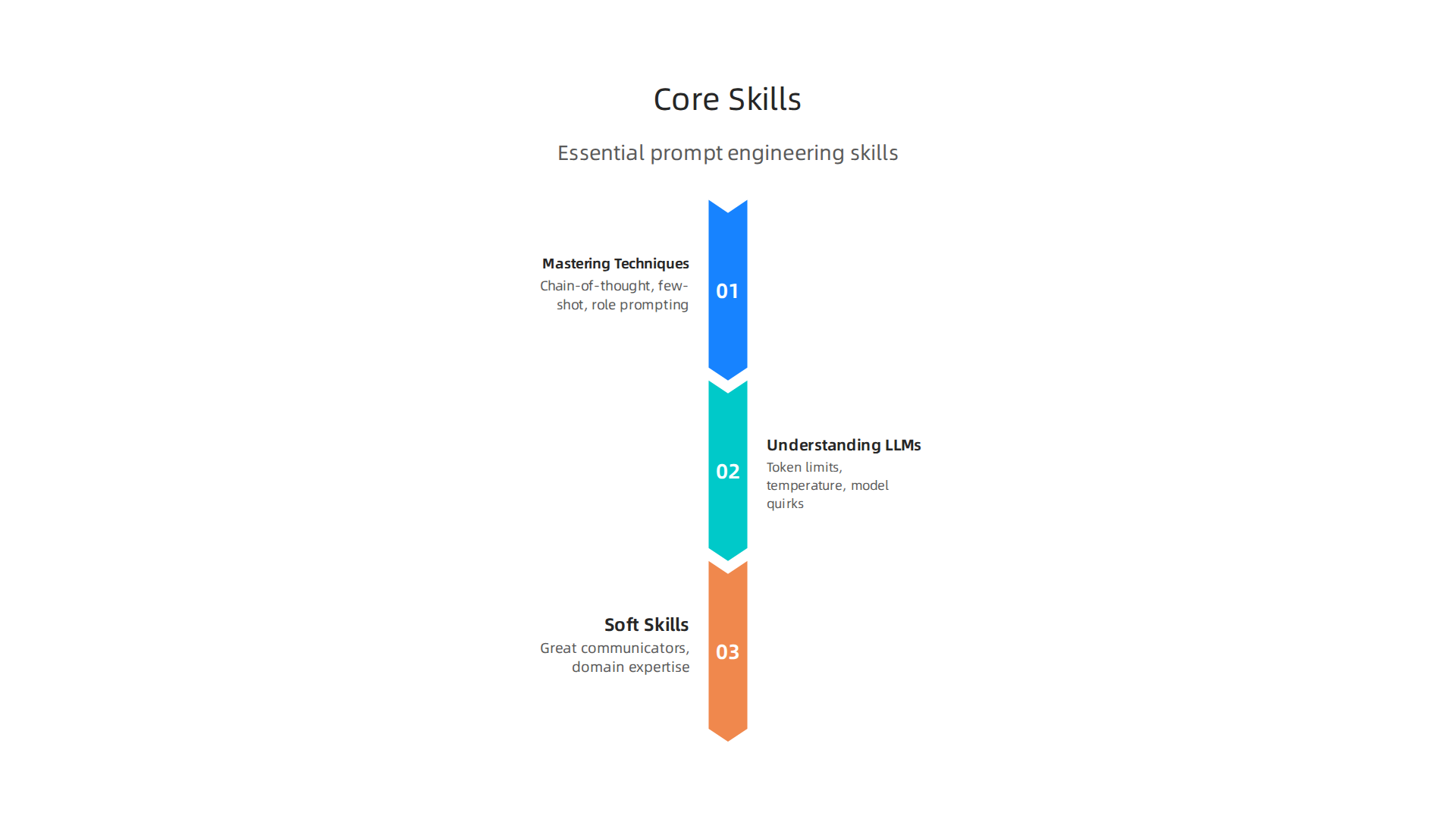
The list goes beyond just writing a clever sentence.
Mastering prompt techniques
Three techniques stand out. First is chain-of-thought prompting. This means asking the model to think step by step before answering. It dramatically improves accuracy on math, logic, and multi-step reasoning tasks. Second is few-shot learning. You give the model a couple of worked examples inside the prompt so it understands the pattern. Third is role prompting. You assign a persona like "you are a senior data analyst" to shape the style and depth of the output. Each of these requires practice and testing to get right.
Understanding how LLMs actually work
You cannot prompt well if you do not understand the model you are talking to. Prompt engineers in 2026 need a solid grasp of LLM behavior: how token limits affect responses, how temperature controls creativity, and how different models (GPT-4, Claude, Gemini) each have their own quirks. You also need to know about token economics. Every prompt costs money. A good prompt engineer writes instructions that produce accurate answers while using as few tokens as possible.
This understanding extends to the technical side. According to the Why is Prompt Engineering a Critical Skill for AI Professionals in 2026 article, prompt engineers should know concepts like natural language processing, machine learning basics, and even Python for automating prompts and running A/B tests.
Soft skills that set you apart
Here is the part people overlook. The best prompt engineers are great communicators. They can explain complex technical tradeoffs to product managers who do not code. They listen to what a business actually needs before writing a single prompt. Domain expertise matters a lot too. A prompt engineer who understands healthcare regulations will build better prompts for a medical chatbot than a generalist ever could.
If you want to explore these skills in more detail, check out the 2026 prompt engineering guide for enterprise teams on our site.
The bottom line: context engineering may be the rising star, but prompt engineering remains a core craft. Companies still need people who can talk to models with precision, efficiency, and creativity. Master these skills, and you will have a strong foundation for the AI work that matters in 2026.
4. Deep Dive: Core Skills for Context Engineers
Now let’s flip the coin. Context engineering demands a different but equally valuable set of skills.
While prompt engineers focus on crafting the perfect instruction, context engineers build the entire information environment around the model.
Think of it like this: a prompt engineer writes the script, but a context engineer designs the stage, the lighting, and the sound system. Both roles matter. But the skills could not be more different.
Working with vector databases and RAG pipelines
At the heart of context engineering lies retrieval-augmented generation, or RAG. This means fetching the right information from a knowledge base in real time and feeding it to the model. To do this well, you need to understand vector databases. These databases store information as mathematical vectors so the model can find the most relevant pieces instantly.
You also need to design RAG pipelines that pull context from internal company docs, customer data, or live APIs. This requires solid data engineering skills. You need to know how to clean, chunk, and index data so the model gets exactly what it needs.
According to a 2026 guide on high-paying AI roles, the 5 Skills That’ll Make You a $300K AI Engineer in 2026 lists context engineering as the second most important skill. Strong context engineers are the ones who build production systems that actually work at scale.
Understanding LLM architecture and system design
You cannot design a good context system without knowing how large language models think. You need to understand token limits, attention mechanisms, and how models handle long conversations. Context engineers also design memory management systems. These track what the model remembers across multiple user interactions and decide when to forget or summarize old context.
System design is huge here. You need to think about latency, cost, and reliability. A well-designed context system might cache common queries, batch similar requests, or fall back to a smaller model when the answer is simple. These decisions separate a prototype from a real product.
Proficiency in APIs and orchestration frameworks
Context engineers do not just work with models. They wire together APIs for databases, search engines, and external tools. They use orchestration frameworks like LangChain or LlamaIndex to chain together retrieval, reasoning, and generation steps.
If you want to see how these skills fit into a bigger strategy, check out our platform engineering guide for 2026. It covers how enterprises build the technical foundations that context engineers rely on every day.
Why context engineering matters more each month
The field moves fast. New vector database options and fine-tuning techniques appear constantly. So staying updated is not optional. That is why many AI engineers turn to daily briefings to keep their edge.
If you want to stay sharp, grab The AI Newsletter Worth Reading. It delivers clear, daily updates on the AI landscape so you never miss a shift in tools, frameworks, or best practices.
The bottom line: context engineering requires a systems thinker who understands data, models, and infrastructure. Master these skills, and you will be the person companies trust to build the scaffolding their AI systems need to succeed.
5. Career Paths and Salary Trends: Prompt Engineer vs Context Engineer
So you have learned what each role does and the skills you need. Now comes the big question: what do these jobs pay?

And where can they take your career?
Let’s start with prompt engineers. According to the Prompt Engineering Salary: A 2026 Guide on Coursera, the median total pay for a prompt engineer in the US is about $126,000 per year. Entry level starts around $109,000. With over 15 years of experience, that number can reach $216,000. The Prompt Engineer Salary Guide 2026 from Hire in South gives a similar picture. Entry level with 1 to 2 years of LLM experience earns $90,000 to $120,000. Senior prompt engineers who build entire prompting systems earn $160,000 to $200,000.
Industry also matters. The Prompt Engineer Salary Guide 2026 from KORE1 notes that healthcare and financial services pay 10 to 20 percent more because of the extra complexity and compliance rules. So a prompt engineer in banking could outearn one in retail by a wide margin.
Now what about context engineers? There is less public data because the role is newer. But context engineers combine prompt skills with data engineering, system design, and RAG pipeline knowledge. They are the people who make AI work at scale. That broader skill set pushes salaries higher. Many senior context engineers earn well into the $200,000 range, and top ones cross $300,000. The key is that context engineers solve harder, more infrastructure heavy problems. Companies pay for that.
Career paths go in different directions
A prompt engineer often moves into research roles. They dive deeper into model behavior, evaluation frameworks, and fine tuning. Some become AI safety specialists or domain experts in fields like law or medicine.
A context engineer, on the other hand, typically grows into an architect role. They design the entire AI infrastructure for a company. They own the vector databases, the retrieval systems, and the integration with cloud platforms. For a closer look at how these roles fit into the bigger hiring picture, read the 2026 AI jobs landscape guide for enterprise leaders.
Job growth is strong for both roles
Demand for both prompt and context engineers is outpacing average tech sector growth. As of 2026, companies cannot find enough people who understand how to build production ready AI systems. That keeps salaries high and job security strong. The best part? You do not need a decade of experience to start. Entry level paths exist for both roles. What matters most is the willingness to keep learning as the field changes every few months.
So whether you lean toward the scripting side or the infrastructure side, 2026 is a great year to enter this space. The pay is solid, the career paths are clear, and the future only looks brighter.
6. How to Choose Your Path: Factors for Enterprise Leaders
You have seen how prompt engineers and context engineers differ in skills, pay, and career growth. Now comes the hard part for enterprise leaders. Which one should your team invest in? The answer depends on where your organization is today and where you want to go.
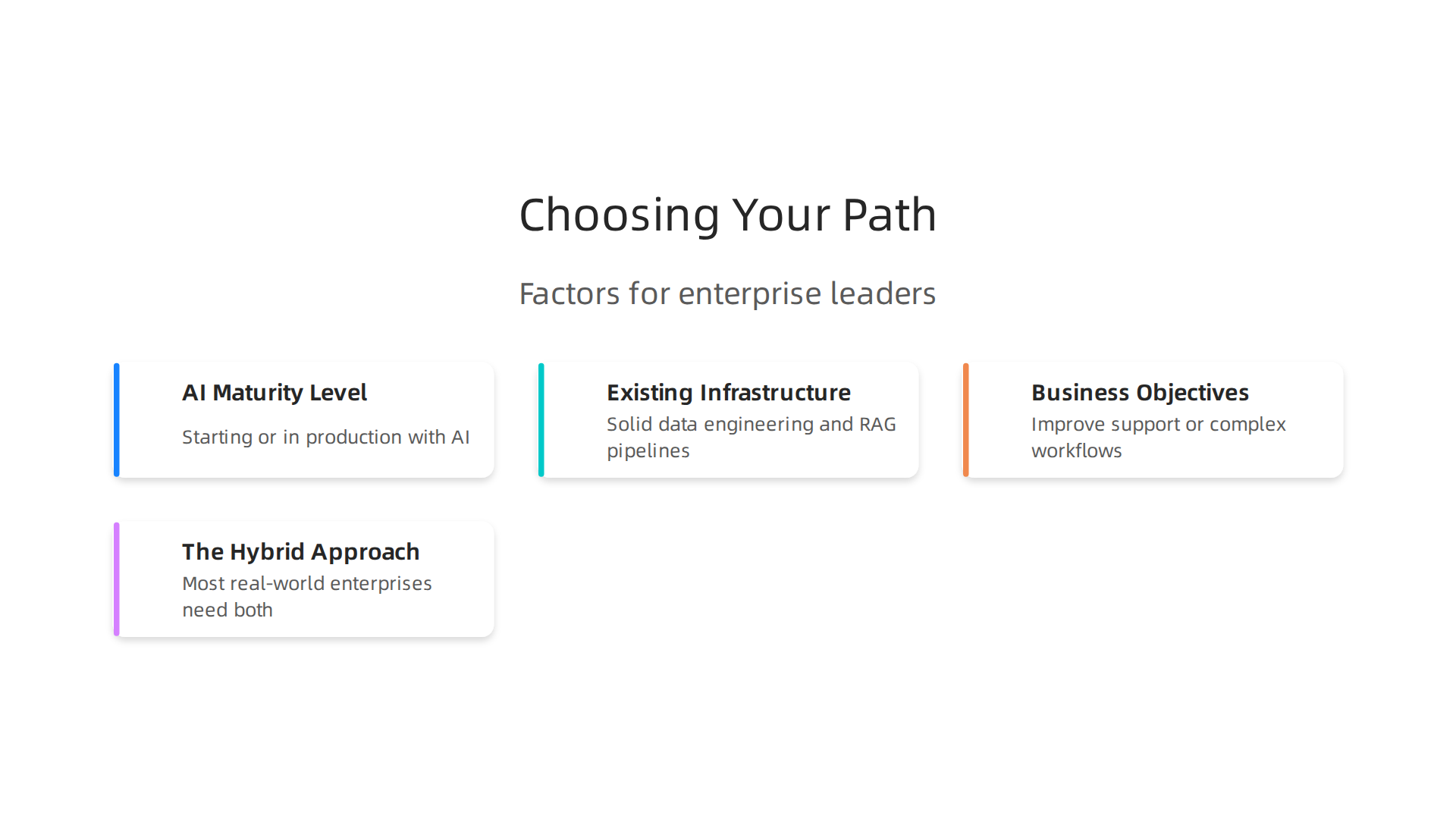
Your AI maturity level matters most
If your enterprise is just starting with AI, prompt engineering often delivers the fastest wins. You can train a few people to write better prompts and see better outputs from existing models in weeks. The cost is low, and the risk is small. This is a great way to build internal confidence and show quick ROI.
But if your organization already has AI systems in production, context engineering becomes the bigger priority. When you have multiple AI agents, complex data pipelines, and strict compliance rules, you cannot rely on clever prompts alone. You need governed infrastructure that feeds the right information to every model at the right time. As the Glean article on key differences explains, context engineering is system oriented and developer facing. It sets the rules and conditions under which AI operates.
Your existing infrastructure shapes the choice
Do you already have solid data engineering and RAG pipelines? Then expanding context engineering capacity makes sense. Do you have none of that and just want to use an off the shelf LLM? Start with prompt engineering. You can always build more infrastructure later as your needs grow.
Your business objectives point the direction
If your goal is to improve customer support responses or generate marketing copy quickly, prompt engineering is your friend. If your goal is to build a reliable AI agent that handles complex workflows across departments, context engineering is non negotiable. The Atlan article on prompt engineering puts it well: the best enterprise teams use context engineering for what the agent knows and prompt engineering for how the agent communicates.
The hybrid approach often wins
In most real world enterprises, you need both. A small prompt engineering team handles the day to day interactions and fine tuning of outputs. A context engineering team builds the systems that make those outputs consistent, secure, and scalable. For a practical guide on building this combination into your strategy, check out the enterprise AI adoption roadmap.
The smartest move? Start where you are. If you are early, invest in prompt engineering first. As your AI usage grows, layer in context engineering. By 2026, this balanced approach is what separates successful AI deployments from the ones that never leave the pilot phase.
If you want to stay ahead of these trends without the noise, consider The AI Newsletter Worth Reading. It delivers clear daily updates on what actually matters in enterprise AI.
7. Building a Team: Hiring and Upskilling Strategies
Once you have decided on your approach, the next challenge is building the right team.

Hiring for prompt engineering and context engineering roles requires looking at both technical skills and domain expertise. Get this wrong, and even the best strategy will fail.
What to look for when hiring
For prompt engineers, search for people who have a strong grasp of language and logic. They need to write clear instructions, test different phrasings, and iterate fast. Experience with specific LLM tools helps, but the real skill is understanding how models respond to different inputs. Look for curiosity and patience. Good prompt engineers test dozens of variations before settling on one.
For context engineers, look for candidates with systems thinking and data engineering backgrounds. They need to build RAG pipelines, manage vector databases, and design the infrastructure that feeds models the right information at the right time. They also need to think about security and governance from day one. As the Anthropic guide on effective context engineering for AI agents explains, this discipline involves curating and maintaining the optimal set of information during model inference. It is a system-level skill, not a one-off task.
Upskilling is often the faster path
Hiring experienced talent is expensive and slow. A smarter move for many enterprises is upskilling existing employees. Your current data engineers can learn context engineering fairly quickly. They already understand data pipelines and system architecture. Your technical writers and product managers can become strong prompt engineers with the right training. They already know how to communicate clearly. This approach builds loyalty and keeps institutional knowledge inside your organization. For a deeper look at this cost-effective strategy, check out this IT talent hiring and upskilling guide.
How to structure your team
The most effective teams do not keep these roles separate. Prompt engineers, context engineers, data engineers, and product managers work together in a shared structure. The context engineers build the information systems. The prompt engineers craft the interactions. Data engineers make sure the data flows correctly. Product managers keep everything aligned with business goals.
This team structure helps avoid silos. Everyone understands how their work connects to the bigger picture. And when done right, it creates AI systems that are both smart and reliable. The best enterprise teams in 2026 treat this as a collaborative effort, not a competition between roles.
Summary
This article explains the difference between prompt engineering and context engineering and why that distinction matters for enterprise AI in 2026. Prompt engineering focuses on crafting the exact instruction you give a model, while context engineering designs the broader information environment—system prompts, retrieved documents, conversation history, tools, and memory—that the model uses. The piece covers core skills for both roles, practical use cases, and why context engineering is becoming essential as companies move from one-off prompts to stateful, production AI agents. It also compares career paths and pay, and gives hiring and upskilling advice so leaders can decide where to invest first based on AI maturity. Readers will finish with a clear framework to prioritize talent, structure teams, and plan infrastructure investments for reliable, scalable AI systems.