SDLC Methodologies for Enterprises Choosing the Right Software Development Life Cycle

Why SDLC Methodologies Matter More Than Ever for Enterprises
The global software market is massive. In 2025 alone, it was worth over $823 billion. Enterprises are under huge pressure to ship features faster, integrate AI tools, and meet strict compliance rules all at the same time. That is why understanding the sdlc software development life cycle is more critical than ever. Choosing the right path for your software life cycle development can make or break a project.

Picking the wrong model for your lifecycle software development leads to real headaches. Projects run late. Costs go through the roof. Security problems appear because teams rush through testing. With AI agents being embedded into most new enterprise apps, these risks are even bigger. The right approach helps you balance speed, quality, and safety.
This article walks you through the most common models of software development life cycle. You will learn what each one does well, where it falls short, and how to match one to your team’s needs for better results.
If you want to dig deeper into why structure matters, check out our post on why the system development life cycle software remains critical for enterprise IT leaders.
Staying ahead of these changes requires constant learning. One simple way to keep up is to subscribe to The AI Newsletter Worth Reading. It delivers clear daily AI and tech updates straight to your inbox.
The Evolution of SDLC: From Waterfall to Agile and Beyond
The way teams approach the sdlc software development life cycle has changed a lot over the years. In the early days, most teams followed a strict step by step plan. You finished one phase, like gathering requirements, before moving to the next. That model is called Waterfall.
Waterfall worked well for simple projects with clear goals. But as enterprise software got more complex, Waterfall started to show cracks. Teams would spend months planning, only to find out late in the process that they built the wrong thing. Making changes was slow and expensive. With the global software market expanding rapidly, that rigid approach to software life cycle development just could not keep up.
Then Agile came along and changed everything. Instead of long planning phases, Agile teams work in short cycles called sprints. They build a little, test it, get feedback, and repeat. This iterative model made lifecycle software development much more flexible. Cross-functional teams could respond faster without waiting for approvals from other departments. According to recent data on software development trends in 2026, the industry now counts over 28 million developers worldwide, many of whom rely on Agile practices daily.
But even Agile has limits. Many enterprises today need more than just speed. They also need security, compliance, and the ability to deploy updates continuously. That is why hybrid models and DevOps are becoming the new normal. These approaches blend the structure of older methods with the flexibility of Agile. They help teams balance the life cycle of software development with modern demands like AI agent integration and automated testing. Some organizations now combine elements from multiple models of software development life cycle to create custom workflows that fit their exact needs.
For teams looking to modernize their workflow, understanding the right tooling is key. Our comparison of Trello vs Jira in 2026 can help you decide which platform fits your team’s preferred approach.
Historical Context of SDLC Frameworks
The Waterfall model first appeared in the 1970s. It gave teams a clear roadmap with phases like requirements, design, and testing. For projects with stable goals, that structure worked great. But in fast changing markets, the rigid order caused delays. Teams could not easily go back and fix things.
Then came the Agile Manifesto in 2001. It pushed for shorter cycles and closer customer contact. Teams loved the flexibility. Yet scaling Agile across large enterprises turned out to be tough. Big organizations struggled to keep coordination while staying fast. Many turned to frameworks like SAFe to bring Agile to the whole company.
By 2026, most enterprises use some mix of methods. According to the Software Development Life Cycle Guide for 2026, hybrid models are now the norm. They blend the structure of older methods with Agile speed. If you are evaluating your own software process, understanding why the system development life cycle remains critical for enterprise IT leaders can guide your approach.
For leaders navigating these changes, staying current on tech trends is crucial. The The AI Newsletter Worth Reading delivers clear daily updates to help you make smarter decisions.
A Comparative Analysis of Top SDLC Methodologies for Enterprise
Hybrid models are now the norm, but that doesn’t mean every team uses the same playbook. Picking the right methodology for your sdlc software development life cycle comes down to your project’s needs, your team’s maturity, and your industry’s rules.
Let’s look at how the three big options stack up.
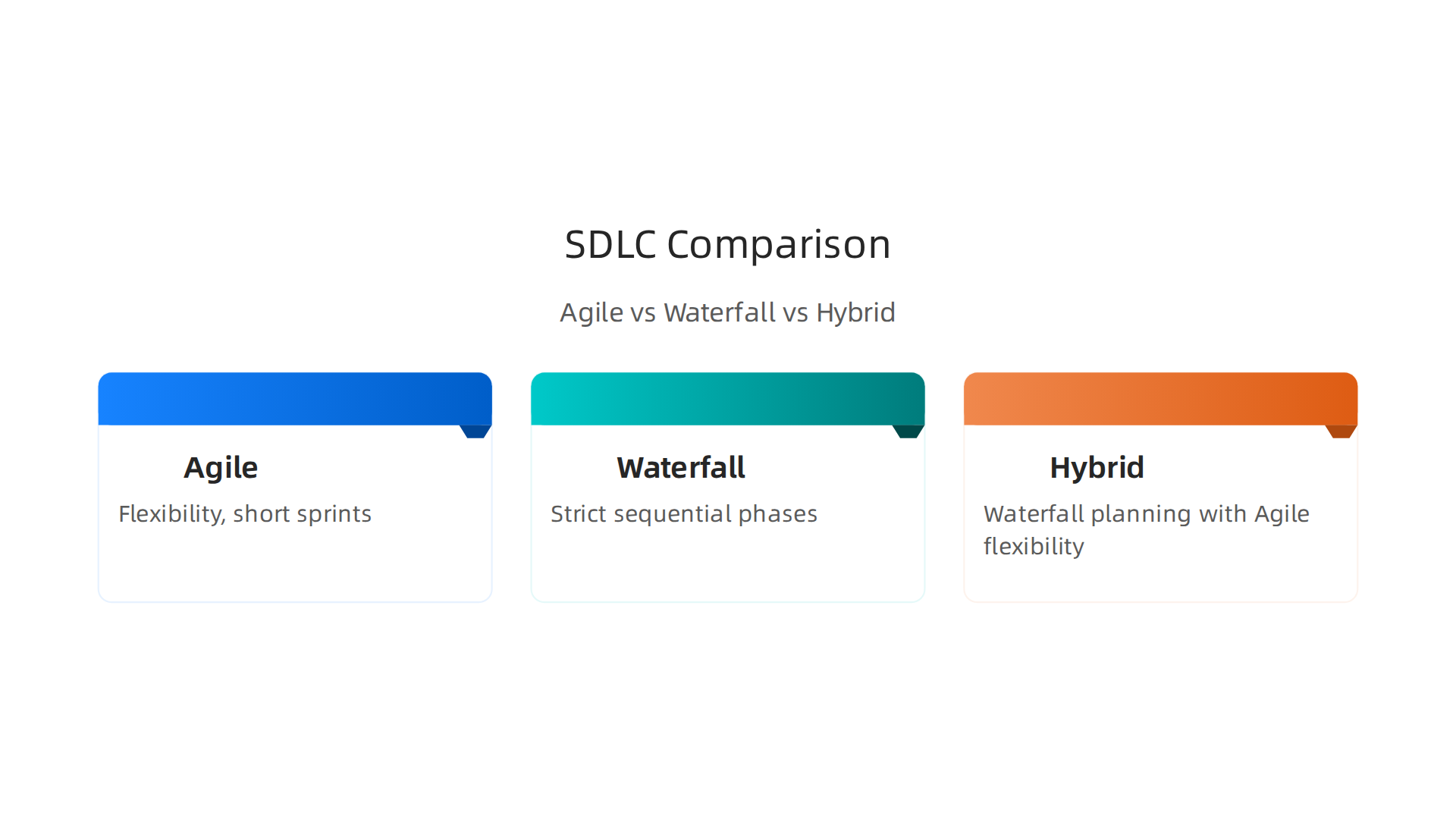
Agile gives you flexibility. Teams work in short sprints, adjust to feedback quickly, and keep customers in the loop. But this only works well when your team has a high level of autonomy and stakeholders are ready to stay involved throughout. According to the Agile vs. Waterfall project management guide from Atlassian, Agile is iterative and built for change. If your team can handle that pace, Agile can speed up delivery.

Waterfall is the opposite. It follows strict, sequential phases: requirements, design, implementation, testing, deployment. That structure makes it predictable. You know the cost and timeline upfront. That’s a big advantage in regulated industries like healthcare or finance where documentation is non-negotiable. However, if a requirement changes mid project, going back is painful.
Hybrid models try to take the best from both worlds. They blend Waterfall’s upfront planning with Agile’s flexibility. This is often the smartest choice for enterprises that need control but can’t afford to be rigid. A Hybrid Waterfall/Agile model guide explains that hybrid approaches work well for projects with a fixed budget and delivery date while still allowing room for adjustments. Many large organizations now adopt hybrid methods to balance speed and governance.
If you are leading a team that’s scaling its software life cycle development approach, understanding these tradeoffs is essential. For more on how teams structure their workflows at scale, check out this guide on platform engineering in enterprise teams. It covers how modern infrastructure choices support whichever methodology you pick.
Critical Success Factors for Implementing SDLC in Large Organizations
Once you have chosen a methodology, the real work begins. Implementing SDLC at scale in a large organization takes more than just picking a framework. You need to get the people, processes, and tools all working together. Here are the three factors that make or break a successful rollout.
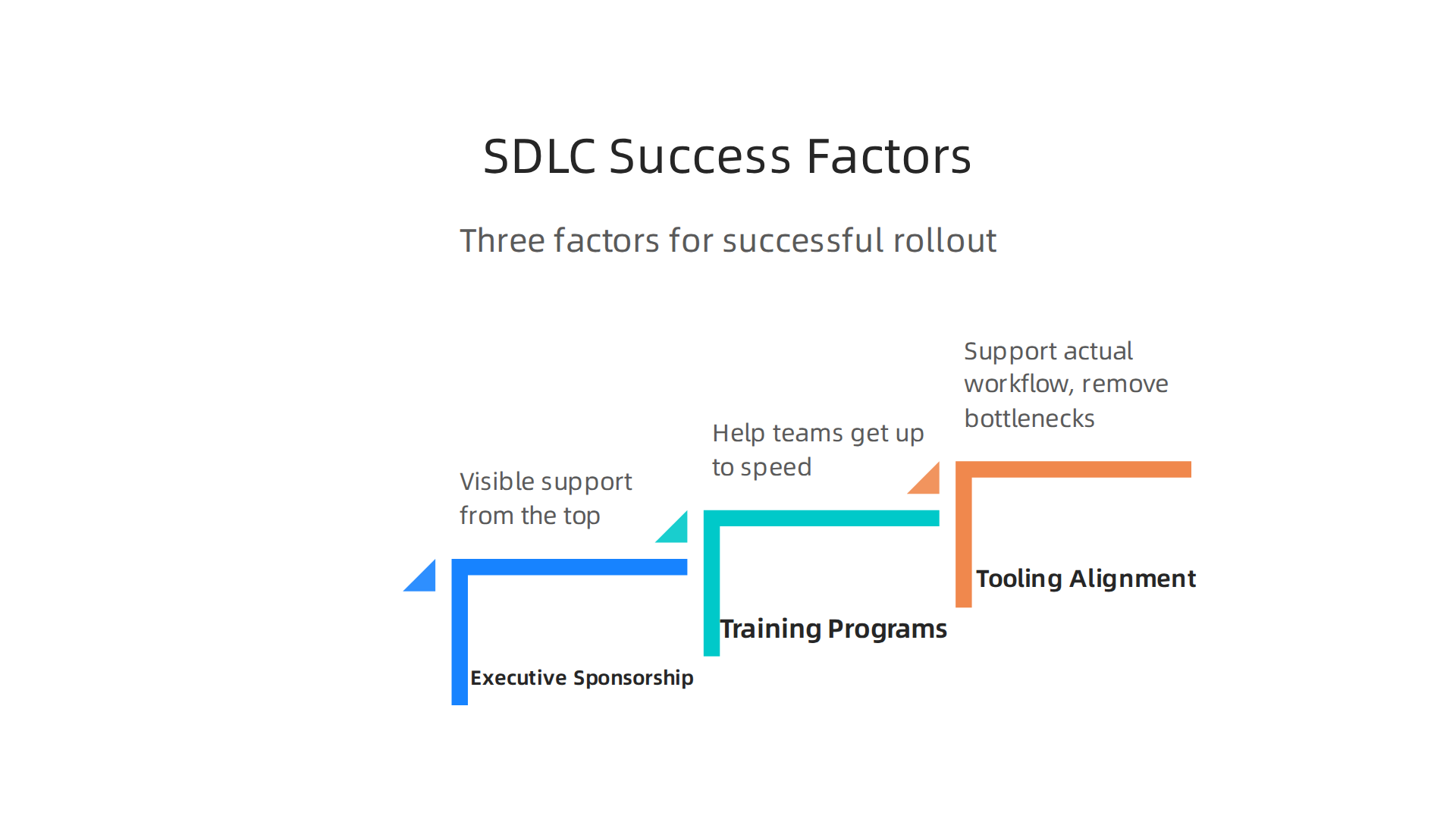
First, executive sponsorship is a must. Without visible support from the top, teams struggle to adopt new workflows. Leaders need to champion the chosen lifecycle software development approach and remove roadblocks. When executives actively endorse the change, teams feel confident investing time in the new process.
Second, training and change management programs help teams get up to speed quickly. Even the best methodology fails if your developers and stakeholders do not understand how to use it. According to recent Key findings from our 2026 AI adoption survey, many companies invest heavily in technology but only a fraction see real returns. That gap often comes down to a lack of proper training and support. A structured change management plan reduces resistance and accelerates proficiency. If you are looking to build the right skills within your organization, this guide on IT talent development for 2026 offers practical steps.
Third, tooling and automation must align with your chosen methodology. If you pick Agile but your project management tools are built for Waterfall, you will face constant friction. Teams need tools that support their actual workflow. For a detailed look at how to choose the right tool, check out this Trello vs Jira 2026 comparison for team workflows. Getting this alignment right removes bottlenecks and keeps the software life cycle development process smooth.
Getting these three factors right makes the difference between a smooth transition and a stalled initiative. As you refine your practices, staying informed about new tools and trends is key. For daily insights that help you stay ahead, consider subscribing to The AI Newsletter Worth Reading.
Integrating Security and Compliance into Enterprise SDLC (DevSecOps)
Once your tooling and methodology are aligned, the next major challenge is keeping your sdlc software development life cycle secure and compliant. In 2026, security can no longer be an afterthought. It must be built into every phase of the process.

That is where DevSecOps comes in.
DevSecOps stands for development, security, and operations. It embeds security practices directly into the continuous integration and continuous delivery (CI/CD) pipeline. The goal is to catch vulnerabilities early, before they reach production. Instead of having a separate security review at the end, you run automated checks at every step. This "shift left" approach reduces risk without slowing down delivery. Following a solid DevSecOps best practices for a secure SDLC can help your teams get started quickly.
Compliance is another big piece of the puzzle. Large enterprises often must meet standards like SOC 2, HIPAA, or GDPR. Each of these requires specific controls at different stages of the life cycle of software development. For example, you might need to log who approved a code change for audit purposes. Or you might need to encrypt sensitive data while it is being tested. The best way to handle this is through "policy as code." That means writing your compliance rules as automated checks that run inside your pipeline. If a change violates a policy, the pipeline stops automatically. This saves your team from manual gatekeeping and reduces human error.
Automated security scanning tools make this possible at scale. Tools like static application security testing (SAST) and software composition analysis (SCA) scan your code and dependencies for known vulnerabilities. They flag issues in real time so developers can fix them immediately. To understand why embedding security into your process matters, read up on system development life cycle software importance for enterprise leaders.
By weaving security and compliance into your software life cycle development flow, you protect your organization from costly breaches and regulatory fines. And you keep your delivery speed high, which is exactly what modern enterprises need.
Compliance Automation in Enterprise SDLC
Compliance automation takes the DevSecOps principles we just covered and makes them repeatable at scale. With policy-as-code tools, you write your compliance rules once and run them automatically against every change in your sdlc software development life cycle. Instead of manually checking each release against SOC 2 or HIPAA requirements, your pipeline enforces the rules for you. This is where lifecycle software development meets automated governance.
When regulations change, you update a single policy file and the control mapping propagates across all your environments. This cuts weeks of manual audit prep down to minutes. According to the 2026 Agency Guide to SDLC, companies are increasingly adopting SDLC models based on compliance needs, making automation a must have.
For enterprise teams building a strong compliance automation framework, understanding the broader technology landscape matters. Our guide on platform engineering in 2026 for CIOs and CTOs explores how modern infrastructure supports these practices.
Staying current on AI driven compliance tools is easier with the right resource. Get clear daily updates from The AI Newsletter Worth Reading to keep your team ahead of regulatory shifts.
The Role of AI and Automation in Modern SDLC
AI is no longer a future concept in software development. It is already changing how teams build, test, and ship code. In 2026, AI tools are woven into every phase of the sdlc software development life cycle, from planning to deployment and monitoring.
But using AI well means knowing where it helps and where it needs guardrails.
AI Assisted Coding Tools
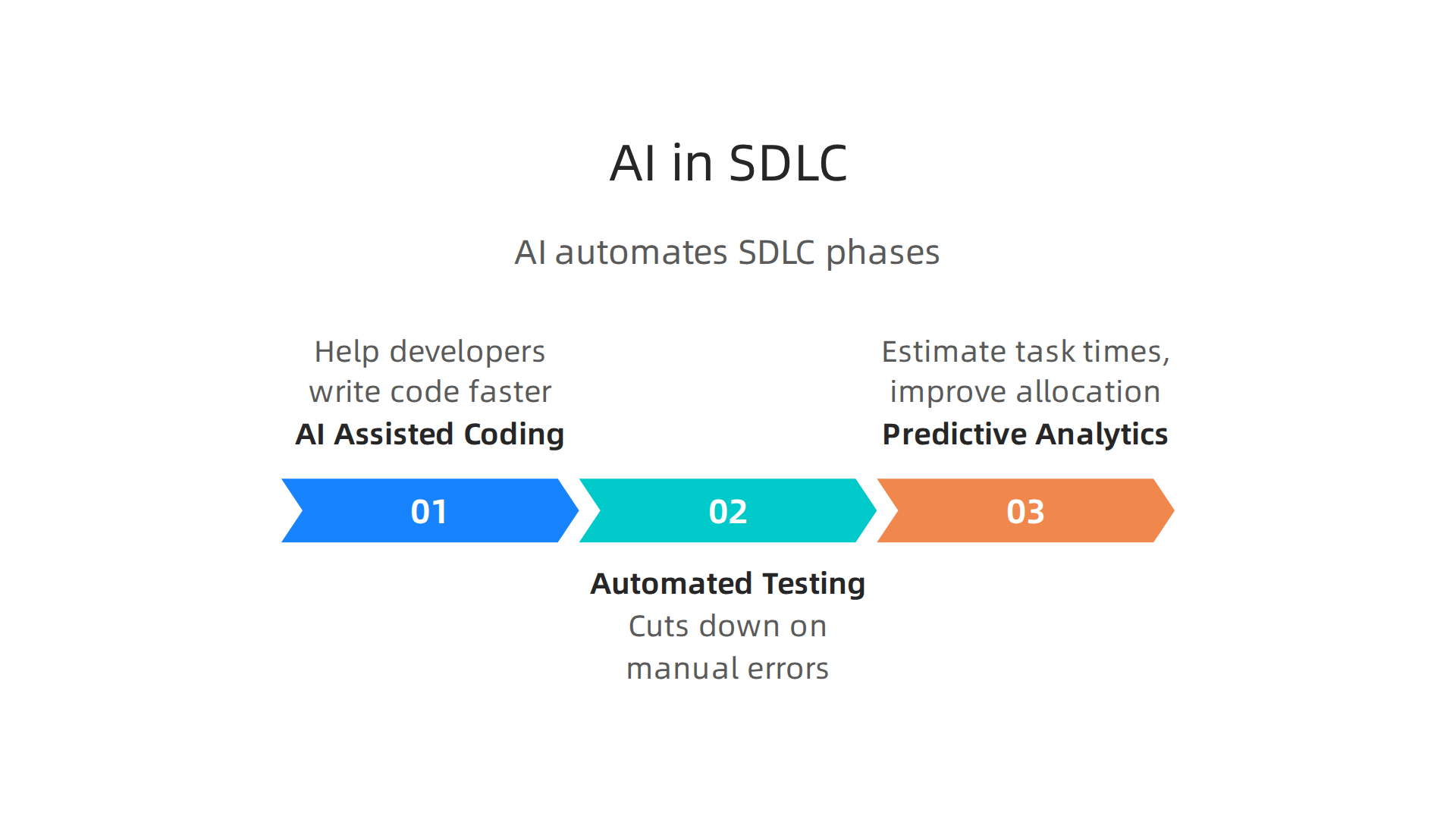
Tools like GitHub Copilot and Claude Code help developers write code faster. They suggest functions, fix syntax, and even generate entire blocks from a comment. This speed boost is real. But there is a catch: AI generated code can hide security flaws or license problems. Teams need to review and test AI output just like human written code. Without governance, AI assisted coding can introduce risk into your software life cycle development. According to the 2026 Boldare guide on AI augmented development and LLM tools in the SDLC, embedding LLM tools thoughtfully across all stages is key to balancing speed with safety.
Automated Testing and Deployment Pipelines
Automation in testing and deployment cuts down on manual errors. When you have a strong CI/CD pipeline, every code change runs through unit tests, integration tests, and security scans before it ever reaches production. This means fewer bugs slip through and releases happen more often. For enterprise teams, automating these steps is part of making your lifecycle software development predictable and reliable.
Predictive Analytics in Planning
Here is another area where AI shines. Predictive analytics uses historical data to estimate how long tasks will take and where bottlenecks might form. Instead of guessing timelines, your team can base plans on real patterns. This improves resource allocation and helps avoid the crunch at the end of a sprint.
For teams looking to adopt AI tools safely, understanding how to evaluate and integrate them matters. Our guide on enterprise LLM adoption in 2026 covers deployment, fine tuning, and measuring ROI for these systems.
The bottom line: AI and automation are powerful additions to your life cycle of software development. But they work best when paired with human oversight and solid governance.
Measuring SDLC Success: Metrics and KPIs for Enterprise Leaders
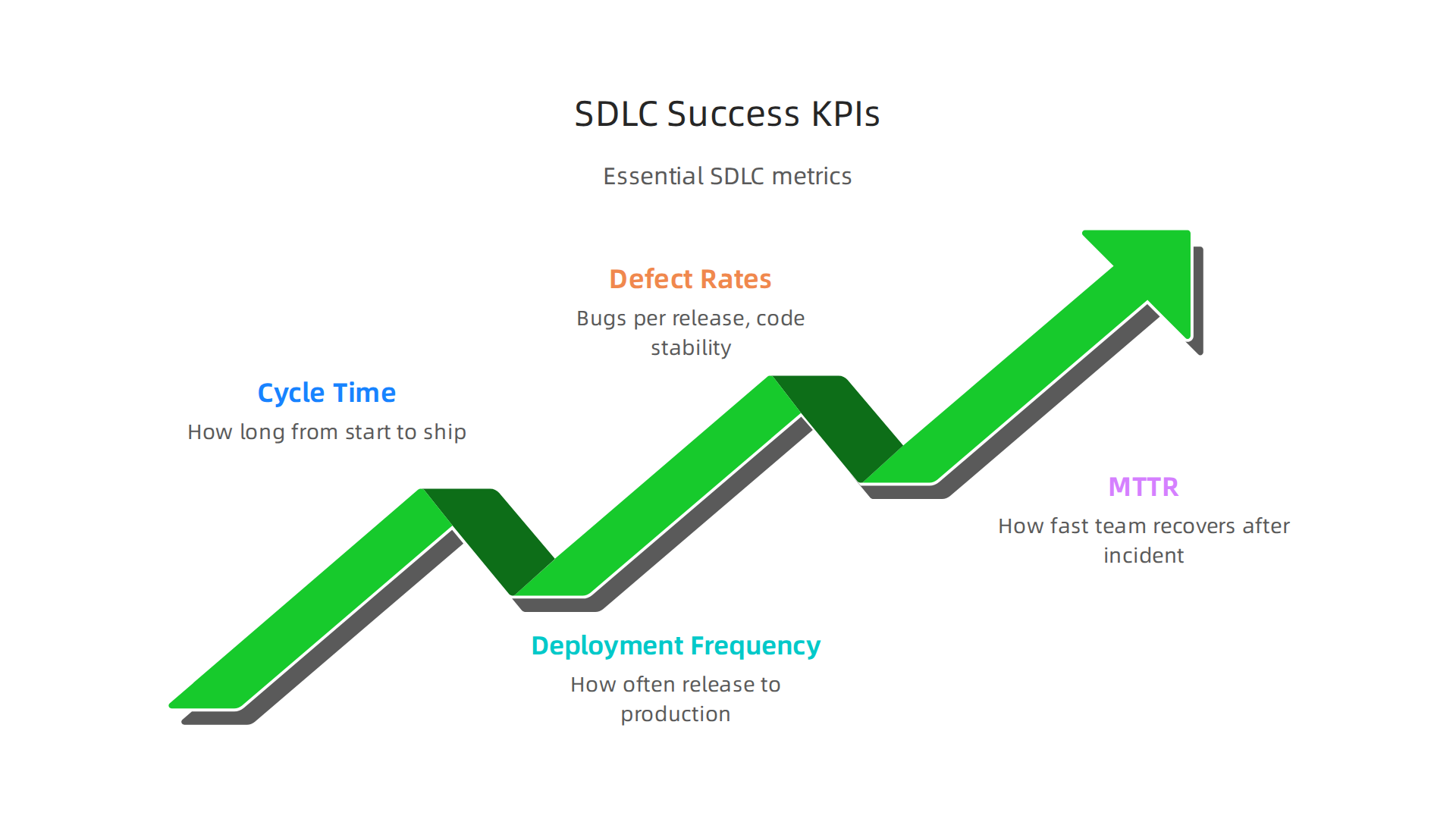
Adopting AI and automation in your SDLC is one thing. Knowing if those changes actually work is another. Enterprise leaders in 2026 need clear metrics to measure whether their sdlc software development life cycle is getting faster, more reliable, and more valuable.
Without the right KPIs, you are guessing instead of leading.
Cycle Time and Deployment Frequency
These two metrics tell you how fast your team is moving. Cycle time measures how long it takes from when work starts on a task until it ships. Deployment frequency tracks how often you release to production. Shorter cycle times and more frequent deployments mean your team can respond to market changes quickly. AI tools can help shrink both, but only if your pipeline is clean. The 2026 Ciklum report on AI revolutionizing the SDLC shows that teams seeing real speed gains are the ones that measure these metrics first.
Defect Rates and Mean Time to Recovery
Speed means nothing if quality suffers. Defect rates (bugs per release) tell you how stable your code is. Mean time to recovery (MTTR) measures how fast your team bounces back after an incident. Low defect rates and fast recovery times signal a mature software life cycle development process. When AI generated code enters the picture, tracking these numbers becomes even more critical because automated output can introduce unexpected issues. Review all AI contributions with the same rigor you apply to human code.
Business Value Metrics
Here is where the rubber meets the road. Customer satisfaction scores, feature adoption rates, and revenue per release tie your lifecycle software development directly to business outcomes. If you ship faster but customers hate the product, you have a problem. Measure what matters to your users, not just what is easy to count.
For a deeper look at why these principles still anchor enterprise IT strategy, see our guide on why system development life cycle software remains critical.
The best leaders build a dashboard with all three types of metrics. That way, you catch problems early and celebrate real wins. And if you want daily insights on how AI and enterprise technology are reshaping development, subscribe to The AI Newsletter Worth Reading. It delivers clear, actionable updates straight to your inbox.
Selecting the Right SDLC Methodology for Your Enterprise
Now that you know how to measure success, the next big question is which sdlc software development life cycle methodology to use. No single approach works for every company. The right choice depends on your organizational size, risk tolerance, and industry regulations.
Factors That Shape Your Decision
Large enterprises with strict compliance needs often lean toward Waterfall. It gives you clear stages, fixed budgets, and detailed documentation. But if your team needs to respond fast to customer feedback, Agile offers flexibility. The tradeoff is real. Speed can come at the cost of predictability.
A good way to understand these tradeoffs is by looking at a detailed Agile vs Waterfall methodology comparison from BMC Software. That resource breaks down when each model shines and where it falls short. For example, Waterfall works well when requirements are locked in early. Agile handles change gracefully but can feel chaotic without strong process discipline.
A Decision Framework for Leaders
Instead of picking a methodology based on habit, build a simple decision framework. Weigh three things:
- Speed – How fast do you need to ship?
- Compliance – What regulations govern your industry?
- Scalability – Can the method grow with your team?
If you need both structure and flexibility, a hybrid model might be your best path. The hybrid approach combines Waterfall’s upfront planning with Agile’s iterative cycles. It works especially well for projects with fixed budgets that still need room to adapt.
Start Small Before Going Big
Here is one of the smartest moves you can make. Pilot your chosen methodology on a small, low-risk project first. That way you learn what works before rolling it out to the whole enterprise. You avoid a costly mistake and give your team time to adjust.
Piloting also helps you pick the right tools to support your new workflow. For instance, if you decide on Agile, you will want project management software that matches. Check out our guide on the Trello vs Jira 2026 tool comparison to see which platform fits your team’s style.
The life cycle of software development is not something you set and forget. Revisit your methodology every year. As your company grows and technology changes, what worked last year may not work today. Choose with intention, test before scaling, and always keep your business goals in the driver’s seat.
Tools and Platforms for SDLC Selection
Now that you have a methodology in mind, the next step is picking the platforms that bring it to life. Enterprise sdlc software development life cycle platforms like Jira, Azure DevOps, and GitLab offer integrated solutions for the whole process. They connect planning, coding, testing, and deployment in one place. But not every tool fits every team.
When evaluating platforms, focus on three things. First, tool maturity — how long has the product been around and how stable is it? Second, ecosystem compatibility — does it work well with your existing tech stack? Third, vendor support — will you get responsive help when things go wrong? These criteria matter more than flashy features.
Security is also a big part of modern SDLC platforms. A good tool should help you catch vulnerabilities early. For a deep look at what to look for, check out this guide on DevSecOps tools for 2026 from Checkmarx.
It covers how tools automate security testing across every stage of the lifecycle.
If you want to dig deeper into why system development life cycle software remains essential, our article on why SDLC is critical for enterprise IT leaders explains the long-term value. And to stay ahead of how AI is reshaping these platforms, get clear daily AI updates from The AI Newsletter Worth Reading from The Deep View Newsletter. It helps you track the changes that affect your tool choices.
Future-Proofing Your SDLC Strategy
You have chosen your platforms and set up your sdlc software development life cycle. But the work does not stop there. The world of software development keeps moving fast. What works today might not work next year. That is why future-proofing your SDLC strategy is so important.

The lifecycle software development landscape is changing fast. AI tools, automated testing, and new delivery models are reshaping how teams build software. According to the SDLC AI Radar 2026 report from LTM, leading companies are not just adding AI to old workflows. They are rebuilding their entire SDLC around AI capabilities. This shift means you cannot rely on the same processes forever. You need to stay flexible.
Enterprises that invest in adaptive methodologies stay ahead of the competition. That means regularly updating your models of software development life cycle to fit new realities. In 2026, many organizations use a mix of Agile and DevOps because they offer flexibility and automation. The Software Development Life Cycle (SDLC) Guide 2026 from Mobiddiction confirms that these hybrid models work best for continuous delivery. They help you respond to changes without breaking your whole system.
Reviewing and refining your approach should be a regular habit. Check your software life cycle development practices every quarter. Ask yourself: Are we using the right tools? Are we keeping up with security needs? Is our team learning new skills? Continuous improvement keeps you competitive and ready for what comes next.
For a deeper look at how to build adaptable teams and systems, check out this guide on platform engineering in 2026. It walks you through the structures that support long-term growth.
The key takeaway is simple. Future-proofing is not a one-time project. It is an ongoing practice. The companies that treat their SDLC as a living system will thrive. The ones that stay stuck in old ways will fall behind.
Summary
This article explains why choosing and running the right Software Development Life Cycle (SDLC) is crucial for large organizations facing pressures like faster delivery, AI integration and stricter compliance. It reviews the historical shift from Waterfall to Agile, the rise of hybrid models and DevOps, and the tradeoffs of each approach so leaders can match methodology to project needs. The piece covers practical implementation levers—executive sponsorship, training, and tooling alignment—and shows how DevSecOps and policy-as-code embed security and compliance into CI/CD pipelines. It explores where AI and automation add value (coding assistance, automated testing, predictive planning) while warning about governance and review needs. The article also lays out the most useful KPIs—cycle time, deployment frequency, defect rates, MTTR and business-value metrics—and gives a simple decision framework to pilot and scale a methodology. Finally, it highlights the need for continuous review and adaptive processes to future-proof enterprise SDLC choices.